Insulation decoded
Work Boot Insulation Grams, Explained
The number is a weight of fabric, not a temperature rating. Most people buy twice what their winter actually needs.
The gram number on an insulated boot is the weight of insulating fabric per square meter, not a temperature rating. For most working people the right answer is 200g: enough for genuinely cold outdoor work while you are moving, and not so much that the boot is miserable in April. Choose 400g if you are outdoors and relatively still, 600-800g for standing in deep cold, and 1000g or a removable liner only for sustained sub-zero work. Activity level matters more than the number, which is why most buyers end up with too much.
What the number actually measures
Insulation in footwear is sold by the weight of the insulating batting used - 200g means 200 grams per square meter of fabric, the same convention used in jackets and sleeping bags. Thinsulate, Thermolite and PrimaLoft are common trade names for the synthetic battings involved; they trap air in a lofted structure, and air is what insulates. The number therefore tells you how much material is in there, and nothing at all about the temperature you will be comfortable at.
That is why two 400g boots can feel different. A roomy boot with space for air around your foot outperforms a tight boot with the same batting, because compressed insulation does not loft and a foot squeezed by a thick sock has restricted circulation. The shell matters too - a rubber shell blocks wind completely, while a leather upper breathes and loses some heat with the moisture.
Why most people buy too much
Because insulation is marketed as a safety feature, and because the cost of being cold is obvious while the cost of being too warm is not. Over-insulation makes your foot sweat; sweat soaks the liner and the sock; a wet liner conducts heat away roughly twenty times faster than a dry one. The practical result is that an 800g boot worn while you are active can leave you colder by hour six than a 200g boot would have. If your complaint is sweat rather than cold, work boots for sweaty feet is the more useful page.
The second mistake is buying one boot for the whole year. Insulation you do not need is the most common winter-boot error we see, and the honest answer for anyone who works through both seasons is two pairs - which is also better for the leather, because alternating lets each pair dry.
Quick picks
Ranked by our published scoring rubric. Tap any row for the full write-up.
| # | Product | Best for | Score | Price |
|---|---|---|---|---|
| 1 | 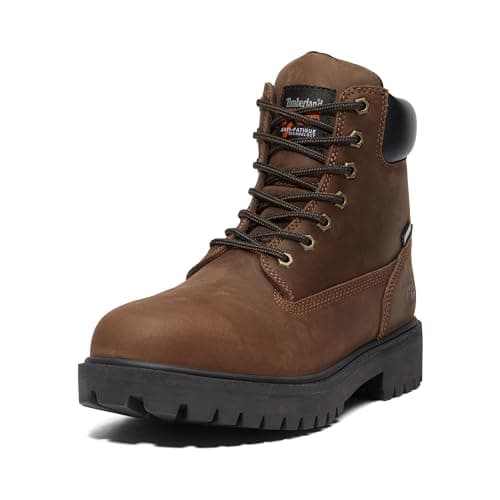 Timberland PRO Direct Attach 6" Steel Toe Insulated Waterproof200g Thermolite in waterproofed leather with a steel toe - the right amount for a working winter. | Most cold outdoor work | 9.4 | |
| 2 | 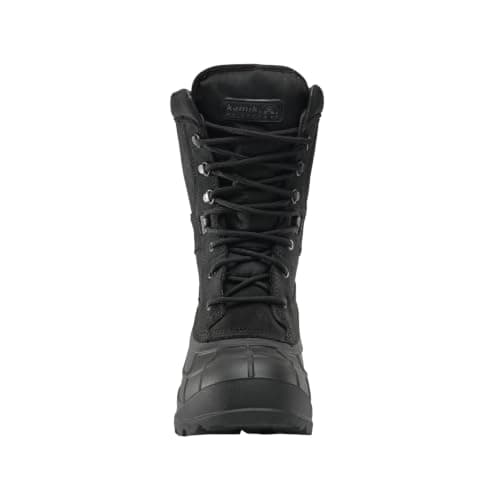 Kamik Nation Plus Waterproof Winter BootA removable liner rated to -40 F - the feature that matters more than the gram count. | Deep cold, and boots that must dry overnight | 9.4 | |
| 3 | 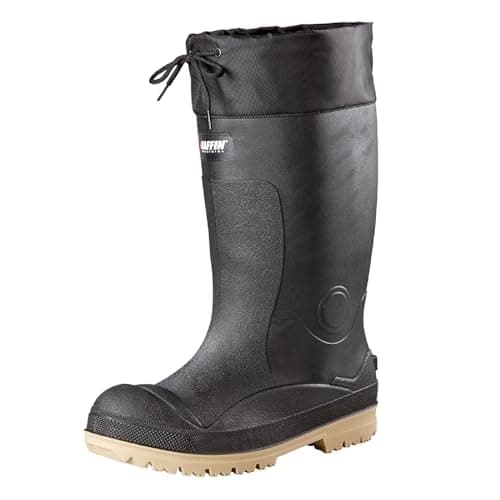 Baffin Titan Waterproof Steel Toe & Plate Slip-OnA steel toe, a steel puncture plate and a removable multi-layer liner - the serious end. | Sustained sub-zero industrial work | 9.3 |
#ad Prices pulled from Amazon and stamped as of November 14, 2026; they change, and we show no number we cannot verify. How we are funded.
Best 200g · Most cold outdoor work
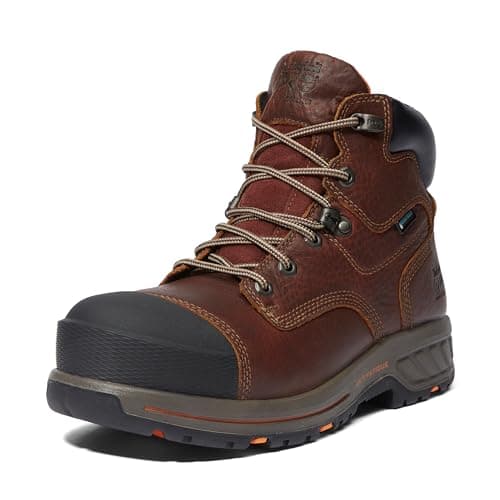
Timberland PRO Direct Attach 6" Steel Toe Insulated Waterproof
200g Thermolite in waterproofed leather with a steel toe - the right amount for a working winter.
#ad Price as of November 14, 2026. How we are funded
- Our score
- 9.4/10
Outstanding
If you are active outdoors in a normal American winter, 200g is almost always the correct answer, and this is the long-standing value benchmark for it. The waterproofing is in the leather rather than a membrane bag, so there is less inside the boot to delaminate, and it carries a steel toe and an EH rating at a price that has barely moved in years.
Steel conducts cold, which works against the insulation on the worst mornings - a composite-toe insulated boot is warmer at the same gram count. It is also far too warm indoors, and the direct-attach sole cannot be resoled. Treat it as a winter-only boot and keep a second pair for the rest of the year.
Specs that matter
- Toe:
- Steel toe, ASTM F2413 I/C, EH rated
- Insulation:
- 200g Thermolite
- Waterproof:
- Yes, waterproof leather upper
- Sole:
- TPU MaxTRAX, oil- and slip-resistant, non-marking
Rubric profile
Raw per-criterion marks out of 10, before weighting — this is the shape of the pick, not its published score. A low mark is a scope limit, not a fault: how we score.
- Warmth
- 8.0
- Dry-out
- 6.0
- Weight
- 7.4
- Protection
- 8.2
- Value
- 9.0
Why we picked it
- 200g is the right amount of insulation for cold outdoor work without cooking your feet indoors
- Waterproofed leather rather than a membrane, so there is less to delaminate
- One of the cheapest insulated waterproof safety boots from a major brand
Good to know: Insulated and waterproof, which makes it a cold-weather boot specifically; too warm for anything indoors.
Best removable liner · Deep cold, and boots that must dry overnight
Kamik Nation Plus Waterproof Winter Boot
A removable liner rated to -40 F - the feature that matters more than the gram count.
#ad Price as of November 14, 2026. How we are funded
- Our score
- 9.4/10
Outstanding
Once you are past about 400g, the limiting factor stops being insulation and becomes moisture: a liner that is damp from yesterday's sweat is a cold liner, however thick it is. A removable liner solves that, because it comes out to dry overnight while the shell stays by the door - which is why this style dominates genuinely cold outdoor work. The rubber shell shrugs off slush and road salt, and the manufacturer rates the boot to -40 F.
There is no safety toe, it is bulky with poor feel for ladder rungs, and the outsole compound stiffens in extreme cold. It is a standing-and-walking-in-snow boot rather than a site boot - which is exactly what a lot of winter work is.
Specs that matter
- Toe:
- Soft toe
- Liner:
- Removable 8 mm Zylex liner
- Waterproof:
- Waterproof rubber shell
- Rated:
- Manufacturer rates it to -40 F
Rubric profile
Raw per-criterion marks out of 10, before weighting — this is the shape of the pick, not its published score. A low mark is a scope limit, not a fault: how we score.
- Warmth
- 9.4
- Dry-out
- 9.6
- Weight
- 6.0
- Protection
- 4.5
- Value
- 8.8
Why we picked it
- Removable liner can be dried separately — the single most useful winter-boot feature
- Rubber shell shrugs off slush and road salt
- Cheap relative to the warmth
Good to know: A winter boot with no rated toe: warm and cheap, with little feel for a ladder rung.
No. 3 · Sustained sub-zero industrial work
Baffin Titan Waterproof Steel Toe & Plate Slip-On
A steel toe, a steel puncture plate and a removable multi-layer liner - the serious end.
#ad Price as of November 14, 2026. How we are funded
- Our score
- 9.3/10
Outstanding
This is the boot for people who stand still outdoors below zero: multi-layer removable insulation, a steel toe, a steel plate underfoot and a waterproof pull-on shell. Toe, plate and deep insulation in one boot is a genuinely rare combination, and the liner comes out to dry, which is the only way that much insulation stays warm on day three.
It is heavy and bulky, far too warm above freezing, and expensive. Nobody should own this as their only pair of boots - it is a specialist tool for a specific kind of cold, and winter work boots covers the broader field.
Specs that matter
- Toe:
- Steel toe, ASTM F2413
- Underfoot:
- Steel puncture plate
- Liner:
- Removable multi-layer insulation
- Style:
- Slip-on
Rubric profile
Raw per-criterion marks out of 10, before weighting — this is the shape of the pick, not its published score. A low mark is a scope limit, not a fault: how we score.
- Warmth
- 9.8
- Dry-out
- 9.0
- Weight
- 4.5
- Protection
- 9.4
- Value
- 7.2
Why we picked it
- Toe, plate and deep insulation in one boot — rare combination
- Removable liner dries overnight
- Built for genuine extreme cold, not just a cold morning
Good to know: Extreme-cold specialist with a steel toe and plate — far too warm above freezing, and heavy by any standard.
Grams by temperature and activity
| Insulation | Rough band, active | Rough band, standing still | Typical use |
|---|---|---|---|
| None | Above 50 °F / 10 °C | Above 60 °F / 15 °C | Year-round indoor and shoulder-season work |
| 200g | 20-45 °F / -7 to 7 °C | 35-50 °F / 2-10 °C | Most cold outdoor trades; the default winter boot |
| 400g | 0-25 °F / -18 to -4 °C | 20-35 °F / -7 to 2 °C | Outdoor work with periods of standing |
| 600-800g | Below 0 °F / -18 °C | 0-20 °F / -18 to -7 °C | Deep cold, ice work, prolonged exposure |
| 1000g or removable liner | Sustained sub-zero | Sustained sub-zero | Arctic-grade industrial, extended still work |
The things that beat grams
- A dry liner. Removable liners are the single most useful cold-weather feature, because they come out to dry overnight. Day two in a damp boot is the usual reason people think their boots are not warm enough.
- Room for air. Insulation works by lofting. A boot crammed with a thick sock insulates worse than a slightly larger boot with the same sock, and restricts circulation on top of it - size insulated boots with the sock you will wear.
- A non-metallic toe. Steel conducts cold straight to your toes and works directly against the insulation. A composite toe at the same ASTM rating is meaningfully warmer - see composite toe work boots.
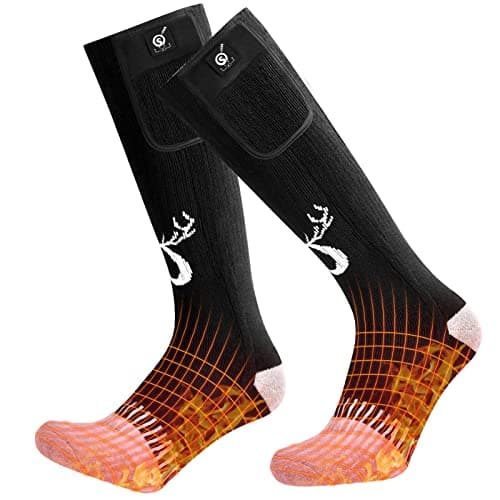
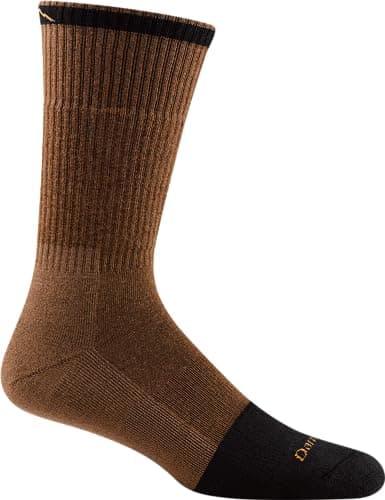
- Wool socks, not thicker socks. Merino keeps insulating when damp, which cotton does not; best work socks covers the choice. For the coldest work, heated socks do more than any gram count.
- Standing on something other than frozen ground. Conductive heat loss through the sole is a large share of the problem; an insulating insole or a mat where you stand helps more than people expect.
If your cold-weather problem is the whole body rather than the feet, the kit that helps is in heated work jackets and heated vests. And for the broader winter boot comparison, including rubber shells and pac boots, read winter work boots alongside this page.
Frequently asked
How many grams of insulation do I need in work boots?
For most cold outdoor work while you are active, 200g is right. Step up to 400g if you are outdoors and relatively still, 600 to 800g for standing in deep cold, and 1000g or a removable liner only for sustained sub-zero work. Activity level changes the answer more than air temperature does.
What does 400g insulation mean in boots?
It means the boot uses an insulating batting weighing 400 grams per square meter - a measure of how much material is in there, not a temperature rating. There is no standardized degree rating for footwear insulation, so the number is only comparable between boots with similar shells and fit.
Is 200g insulation enough for winter?
For most working people, yes - if you are moving. 200g covers roughly the 20 to 45 °F band for an active wearer and is the default choice for cold outdoor trades. If you stand still for long periods or work well below freezing, go to 400g or higher.
Can work boots have too much insulation?
Yes, and it is the most common mistake. Over-insulated boots make your feet sweat, and a wet liner conducts heat away far faster than a dry one, so you can end up colder in an 800g boot than in a 200g one. It also makes the boot unusable outside deep winter.
Are removable liners better than more insulation?
Past about 400g, generally yes. The limit on warmth in sustained cold is moisture rather than material, and a liner you can pull out and dry overnight is warm again the next morning where a built-in liner is not. It also lets one boot cover a wider range of conditions.
Our recommendation
If you read nothing else on this page, these are the two to look at — the one we would buy, and the one to take instead if its trade-off suits you better.
Best 200g · Most cold outdoor work
Timberland PRO Direct Attach 6" Steel Toe Insulated Waterproof
200g Thermolite in waterproofed leather with a steel toe - the right amount for a working winter.
#ad Price as of November 14, 2026. How we are funded
Runner-up · Deep cold, and boots that must dry overnight
Kamik Nation Plus Waterproof Winter Boot
A removable liner rated to -40 F - the feature that matters more than the gram count.
#ad Price as of November 14, 2026. How we are funded
Prices are read live from Amazon and stamped with the date. How we pick.
Sources
Back to Guides, or see how we pick. Spotted something wrong? We publish corrections — see our editorial policy.