Best for hot weather
Best Work Pants for Hot Weather
Lighter weave, same fiber. And no, shorts are usually not the answer on a jobsite.
Hot-weather workwear gets less engineering attention than cold-weather gear and causes more lost productivity. The honest truth is that there is no clever fabric that makes working in genuine heat comfortable - what exists are incremental improvements, and the biggest of them is simply wearing less fabric while keeping the protection your work actually requires.
Less fabric, same fiber
Two levers, in order of effect. First, weave: cotton ripstop is a lighter, more open weave than cotton duck and moves air considerably better at a modest cost in abrasion resistance. Second, layers: a double front is a second thickness of fabric over your knee and thigh, and if you do not kneel for a living it is pure heat for no benefit.
What not to change is the fiber. Cotton breathes better than polyester, absorbs and evaporates sweat rather than sealing it against you, and - the safety point - chars instead of melting near heat. Synthetic workwear marketed as moisture-wicking has its place in athletic clothing and is a poor choice around hot work.
Quick picks
Ranked by our published scoring rubric. Tap any row for the full write-up.
| # | Product | Best for | Score | Price |
|---|---|---|---|---|
| 1 | 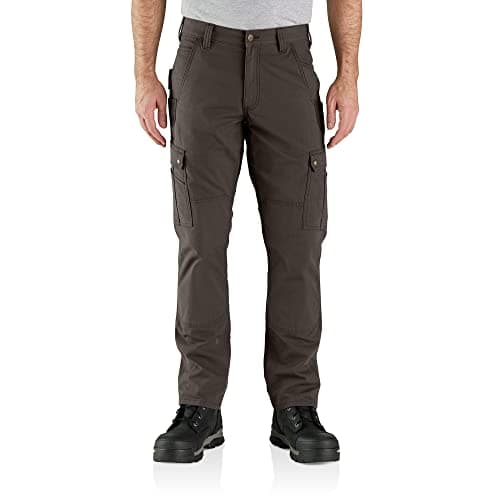 Carhartt Rugged Flex Ripstop Double-Front CargoRipstop is noticeably cooler than duck while keeping the double front. | Summer site work | 8.6 | |
| 2 | 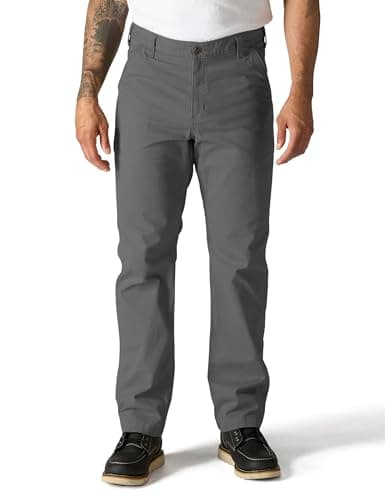 Carhartt Rugged Flex Rigby DungareeLighter without the double-front layer, which is what makes it cooler. | Hot weather with no kneeling | 8.2 | |
| 3 | 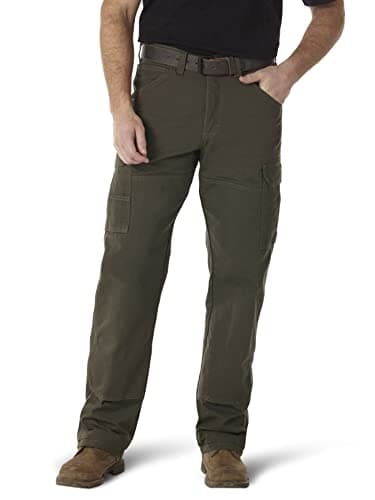 Wrangler Riggs Workwear Ranger Cargo PantCotton ripstop with no elastane - breathable, and cheaper than the stretch options. | A cooler pant with real pockets | 8.0 |
#ad Prices pulled from Amazon and stamped as of October 6, 2026; they change, and we show no number we cannot verify. How we are funded.
Top pick · Summer site work
Carhartt Rugged Flex Ripstop Double-Front Cargo
Ripstop is noticeably cooler than duck while keeping the double front.
The practical summer answer for anyone who still needs real site protection. Ripstop is a lighter, more open weave than cotton duck, so it moves air far better, and the reinforcing grid keeps it from tearing despite the lower weight. You keep the double front and the pad pocket.
It still has elastane, so wash cold and hang dry. Lighter than duck means less abrasion resistance - the trade you are deliberately making for the cooling.
Specs that matter
- Fabric:
- Rugged Flex stretch ripstop
- Knees:
- Double front, knee-pad compatible
- Pockets:
- Cargo and utility
- Fit:
- Relaxed straight
Our scoring
- Breathability
- 8.4
- Mobility
- 8.8
- Protection retained
- 8.6
- Durability
- 8.0
- Value
- 8.0
What works
- Double front and stretch together, which few pants manage
- Ripstop is noticeably cooler than 12 oz duck
- Cargo pockets sit flat enough not to snag
What to know
- Ripstop will not outlast firm duck
- Priciest pant here
- Stretch content means careful washing
No. 2 · Hot weather with no kneeling
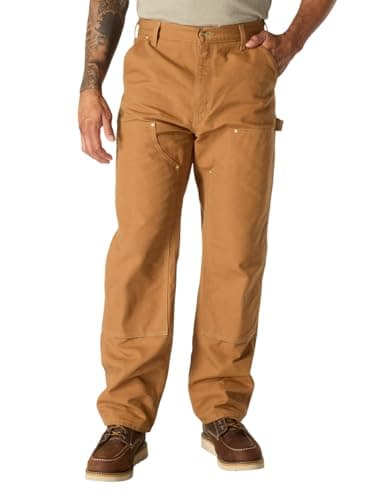
Carhartt Rugged Flex Rigby Dungaree
Lighter without the double-front layer, which is what makes it cooler.
The single biggest contributor to heat in a work pant is simply how much fabric is against you, and a double front is a second layer over the knee and thigh. If you do not kneel, dropping it is the easiest heat saving available.
Stretch canvas moves well and holds up to site abrasion. No knee reinforcement at all, so a kneeling trade will wear through quickly.
Specs that matter
- Fabric:
- Rugged Flex stretch canvas
- Fit:
- Relaxed straight
- Knees:
- Single front (no double knee)
- Pockets:
- Utility pocket, hammer loop
Our scoring
- Breathability
- 8.0
- Mobility
- 9.2
- Protection retained
- 6.4
- Durability
- 8.0
- Value
- 8.6
What works
- Stretch means squatting and ladder work stop fighting you
- Canvas holds up far better than a denim jean
- Sizing is broad and consistent
What to know
- No double knee — kneeling trades will wear through
- Stretch fabric is warmer than a plain duck
- Elastane degrades with hot washing
No. 3 · A cooler pant with real pockets
Wrangler Riggs Workwear Ranger Cargo Pant
Cotton ripstop with no elastane - breathable, and cheaper than the stretch options.
Plain cotton ripstop with no stretch content is one of the cooler work-pant fabrics there is: an open weave, pure cotton, and no synthetic elastane trapping heat. It is also cheaper than the stretch pants and has the best pocket layout here.
No stretch means less mobility, which in heat is a real cost since you are working harder already. No double knee.
Specs that matter
- Fabric:
- Ripstop cotton
- Pockets:
- Cargo pockets, tool pockets, hammer loop
- Knees:
- Room for knee-pad inserts
- Fit:
- Relaxed
Our scoring
- Breathability
- 8.6
- Mobility
- 7.0
- Protection retained
- 6.8
- Durability
- 8.0
- Value
- 8.8
What works
- Best pocket layout here for carrying fasteners and meters
- Ripstop weave stops a small tear from running
- Cheaper than Carhartt at similar durability
What to know
- Loaded cargo pockets sag and catch
- No stretch
- Ripstop is thinner than duck canvas
The shorts question
People ask, and the honest answer is that on most jobsites shorts are the wrong call despite the obvious appeal. Long pants protect against three things that matter more in summer than in winter: sun exposure, which is cumulative and a genuine skin-cancer risk for outdoor trades; abrasion and contact burns from hot surfaces, which in summer includes metal, concrete and roof decking; and insects and plant contact in landscaping and groundwork.
Many sites prohibit shorts outright for exactly these reasons, and most that permit them still require long pants for hot work and for anything involving kneeling. A lighter long pant is almost always the better answer than shorts, and it does not cost as much comfort as people expect once the weave is right.
The rest of the summer kit
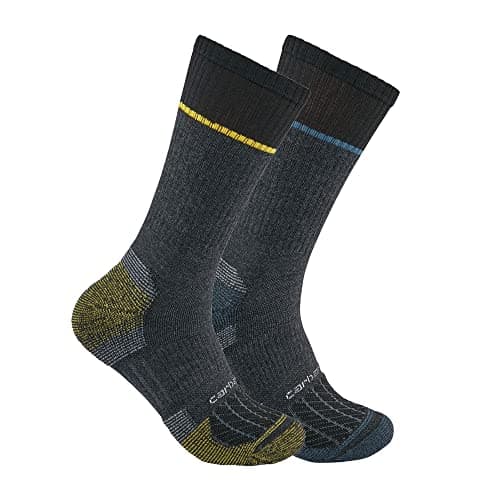
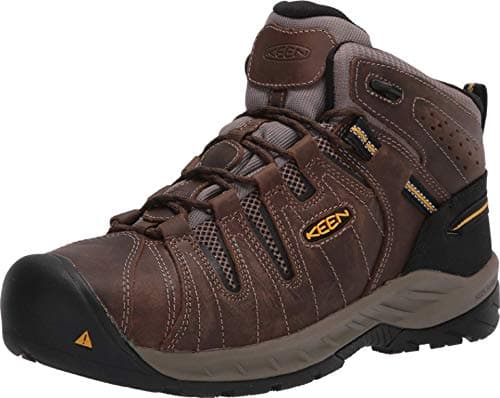
Pants are one part of it, and the other parts have the same logic. Hot weather work boots explains why a waterproof membrane makes summer worse. Socks for hot weather and socks for sweaty feet cover the fiber question for feet. Gloves for hot weather covers the palm-coated versus fully dipped distinction that decides breathability in gloves.
What we would skip
Skip synthetic work pants in heat, especially anywhere near hot work. Skip double fronts if you do not kneel. Skip shorts on a site - the sun and contact-burn exposure outweighs the comfort. And skip tight fits in summer: a slightly looser pant moves air across your skin, which is most of what breathability actually means in practice.
Frequently asked
What are the best work pants for hot weather?
Lightweight cotton ripstop, ideally without a double front if you do not kneel. Ripstop is a more open weave than cotton duck so it breathes considerably better, and the reinforcing grid keeps it from tearing despite the lower weight.
Should I wear shorts for work in summer?
Usually not on a jobsite. Long pants protect against cumulative sun exposure, abrasion, and contact burns from hot metal, concrete and roof decking - all of which are greater risks in summer. Many sites prohibit shorts outright. A lighter long pant is the better answer.
Is cotton or polyester better for hot weather work?
Cotton. It breathes better, absorbs and evaporates sweat rather than sealing it against your skin, and critically it chars rather than melting near heat sources. Synthetic workwear is a poor choice for any work near hot surfaces, sparks or flame.
How do you stay cool in work pants?
Wear less fabric: a lighter weave, no double front if you do not kneel, and a slightly looser fit so air moves across your skin. Then focus on the things that actually prevent heat illness - water, rest, shade and acclimatization - because clothing is the smallest lever available.
Sources
Back to Work Pants, or see how we pick. Spotted something wrong? We publish corrections — see our editorial policy.