ASTM ratings decoded
ASTM F2413 Safety Ratings Explained
The marking inside your boot tongue, decoded - and which codes your trade actually needs.
Top pick: Timberland PRO Helix HD 6" Composite Toe Waterproof
$157.84· Amazon10 shortlists · live Amazon prices
The specs, standards and fit problems behind every buying decision on this site, explained once and linked everywhere.
Boots by trade
Timberland PRO Helix HD 6" Composite Toe Waterproof
#ad Price as of October 6, 2026. How we are funded
ASTM ratings decoded
The marking inside your boot tongue, decoded - and which codes your trade actually needs.
Top pick: Timberland PRO Helix HD 6" Composite Toe Waterproof
$157.84· Amazon
Cut levels decoded
The full ANSI/ISEA 105 cut scale, how it is measured, and which level each trade actually needs.
Top pick: COOLJOB A5 Cut-Resistant Gloves (Fiberglass-Free)
$8.99· Amazon
Fit & sizing
How to measure, what a correct fit feels like, and why a safety toe punishes length errors.
Top pick: KEEN Utility Pittsburgh 6" Steel Toe Waterproof
$199.95$209.95· Amazon
Break-in guide
A sensible break-in schedule, the difference between breaking in and bad fit, and the methods that wreck boots.
Top pick: Darn Tough Steely Boot Midweight Cushion Sock
$26.95· Amazon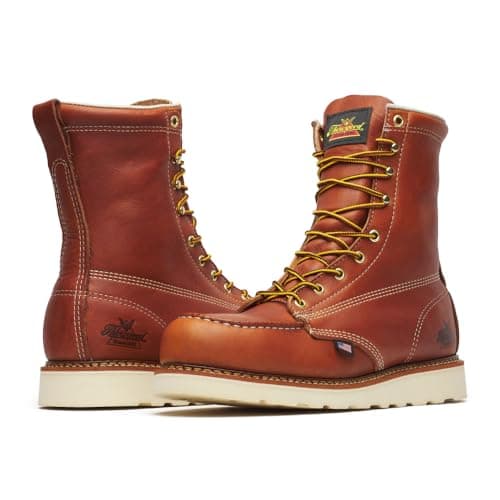
Replacement timing
Expected lifespan by usage, the replacement signals that matter, and when resoling is the better call.
Top pick: Thorogood American Heritage 8" Steel Toe
$284.95· Amazon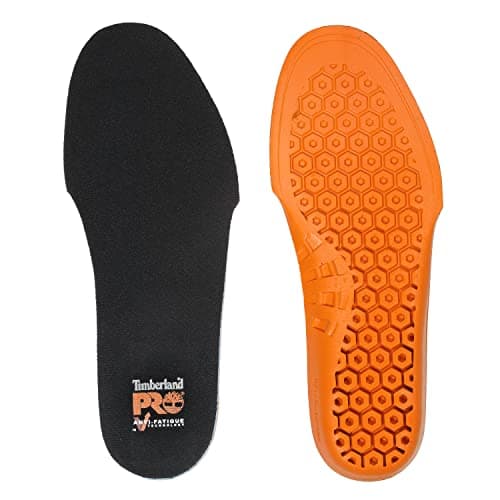
Insole types
Cushioning versus support, volume, and matching the insole type to your actual symptom.
Top pick: Timberland PRO Anti-Fatigue Technology Replacement Insole
$28.99· Amazon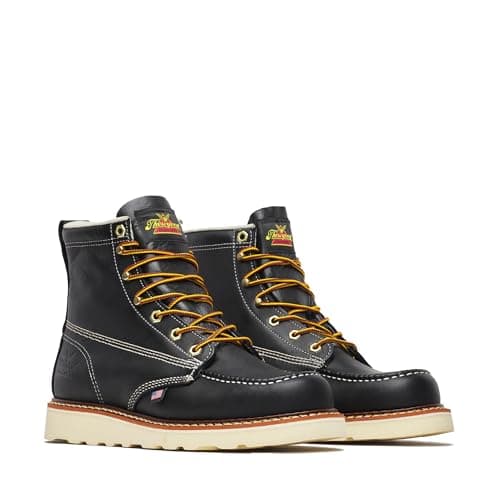
Sole types
Wedge against lug, cemented against welted, and what slip-resistance ratings actually measure.
Top pick: Thorogood American Heritage 6" Moc Toe
$264.95· Amazon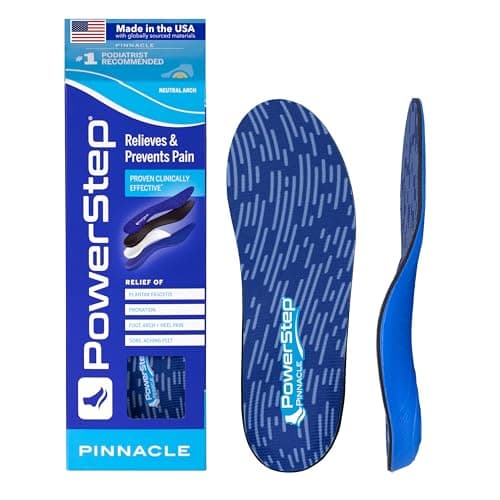
Diagnose the pain
A symptom-by-location map for foot pain in work boots, with the specific fix for each.
Top pick: PowerStep Pinnacle Orthotic Insoles
$49.99· AmazonCare & conditioning
A practical care routine, the right products, and the heat mistake that ruins boots.
Top pick: Thorogood American Heritage 6" Moc Toe
$264.95· AmazonBoots by trade
The trade-to-spec mapping table - safety codes, sole type and features, by job.
Top pick: Timberland PRO Helix HD 6" Composite Toe Waterproof
$157.84· Amazon
Most bad gear purchases are not really product mistakes. They are the result of a spec nobody explained: buying a steel toe when the site needed non-metallic, buying an A1 glove for a job that needed A5, buying a gel insole for a problem that needed a rigid shell, or sizing a boot by the number on an old pair instead of by length. This library exists so each of those is explained properly once, in plain English, and then linked from everywhere the decision comes up.
Two standards cover most of what is on this site, and both are more useful than they look. ASTM F2413 safety ratings explained decodes the marking stamped inside your boot tongue - the impact and compression ratings, metatarsal protection, electrical hazard, puncture resistance - and tells you which of those your trade actually needs. ANSI cut levels explained does the same for gloves, with the full A1 to A9 table and the honest statement of how big the gap between A2 and A5 really is.
If you only read one thing before buying, read whichever of those two covers the gear you are buying. They will save you more money than any individual product recommendation.
Work boot fit and sizing is the most-used guide here, because a well-chosen boot in the wrong size performs worse than a mediocre boot that fits. It covers measuring length properly, why a safety toe makes length errors painful rather than merely annoying, how width letters actually work, and when to stop trying to make a boot fit.
How to break in work boots is the companion, and its most important content is the list of things not to do - the microwave, the freezer bag, the soaking methods that circulate online and wreck boots. Why work boots hurt works backwards from the symptom instead: where it hurts tells you fairly reliably what is wrong, and often the fix is an insole or a sock rather than a return.
Insole types explained sets out the distinction that makes the whole category make sense - cushioning versus support, and why the soft one that feels better in the shop is the wrong choice for structural foot pain. Work boot sole types covers wedge against lug, the construction methods that let a boot be resoled, and what slip resistance ratings mean on a wet floor.
How long work boots last gives usage-banded expectations instead of a single meaningless number, and - more useful - the specific signs that your boots have stopped protecting you even though they still look fine. Boot care and conditioning is the routine that genuinely extends boot life, including the drying mistake that destroys more work boots than wear does.
And choosing boots by trade is the single table that maps trades to the specs they need, which is the fastest way in if you would rather not read the standards at all.
Each guide ends with a small number of products from our own registry, placed after the section that establishes what to look for rather than before it. That ordering is deliberate: a recommendation should be earned by the explanation, not substituted for it. Where no product in our registry honestly fits a guide's subject - pure safety and technique content - we leave it without picks rather than bolting on a tenuous one.
All prices come from a live Amazon lookup, stamped with the date they were checked, and vanish rather than going stale if our refresh stops. The scoring rubric behind every pick is published on the methodology page, and our editorial policy covers corrections and independence. If you would rather start from a shortlist, the work boots hub is the main entrance, and comparisons handles the two-boot decisions.
They are the ASTM F2413 marking. The line typically reads something like ASTM F2413-24 M I/75 C/75 EH: M for male last, I/75 and C/75 for impact and compression resistance at 75 foot-pounds and 2,500 pounds respectively, then additional codes such as EH for electrical hazard, Mt for metatarsal, PR for puncture resistance. Our ASTM guide decodes each one.
Snug at the heel and instep, with roughly a thumb's width of room ahead of your longest toe. Measure length while standing, late in the day when your feet are at their largest, in the socks you actually work in. With a safety toe, length errors cannot be absorbed by the boot flexing, so getting length right matters more than in ordinary footwear.
A cement-construction boot with a soft upper is often comfortable within a few days. A welted, full-grain, 8-inch boot commonly takes two to four weeks of real wear. Wear them in increasing stretches rather than straight into a full shift, and never use heat or soaking methods - they damage the leather and the adhesives.
Match the type to the problem. Standing fatigue on hard floors is a cushioning problem. Arch collapse, overpronation and plantar fasciitis are support problems that need a rigid or semi-rigid shell, and soft gel will not help. Always remove the factory insole before fitting a new one, and watch total volume in a snug boot.