Best for oilfield
Best Work Boots for Oilfield Work
Heavy pipe, hydrocarbon exposure and site rules that are stricter than anywhere else in the trades.
Oilfield work has the most prescriptive footwear requirements in the trades, and that is actually helpful: a great deal of the decision is made for you by the operator's site rules. What is left is choosing a boot that meets the spec and that you can stand to wear for a twelve-hour tour. Start with the written requirement, not with a buying guide - including this one.
Metatarsal protection, and why it is mandated here
A safety toe protects the toes. The metatarsals - the long bones running from your ankle to your toes, across the top of the foot - sit entirely unprotected in an ordinary safety boot. In an environment where you are handling drill pipe, tongs, elevators and hand tools that weigh a great deal, that is the likelier injury, and it is a serious one: those bones are hard to repair well.
ASTM F2413 rates metatarsal protection separately with an Mt marking, at two impact levels. Two construction styles exist: an external bib that sits over the laces, and an internal guard built into the boot. The internal version protects the same bones, is far less intrusive, and is the one people actually keep wearing - which makes it the safer choice in practice. See metatarsal guard boots and the ASTM guide.
Quick picks
Ranked by our published scoring rubric. Tap any row for the full write-up.
| # | Product | Best for | Score | Price |
|---|---|---|---|---|
| 1 | 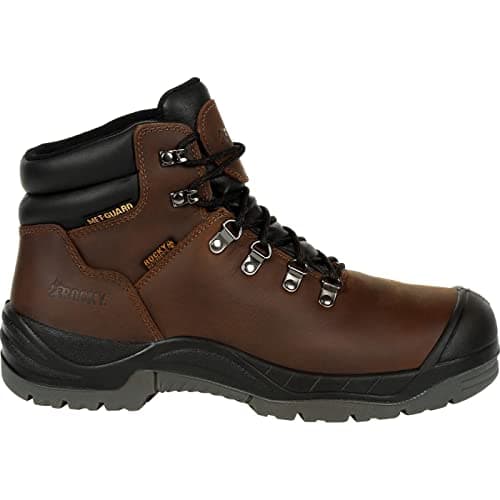 Rocky Worksmart Composite Toe Internal Met GuardAn internal met guard, composite toe and waterproof - the spec most sites want, without the bib. | Meeting a met-guard requirement | 8.8 | |
| 2 | 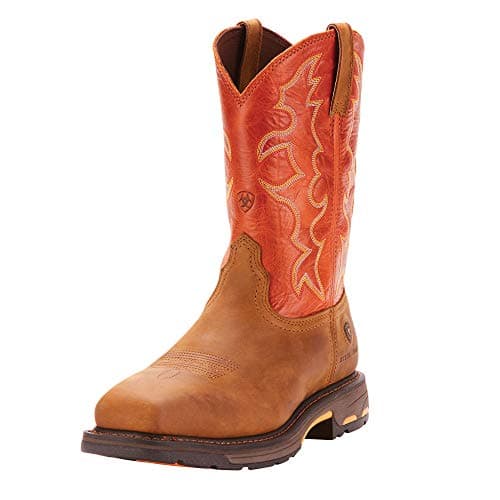 Ariat WorkHog Wide Square Toe Steel ToeThe pull-on most oilfield hands actually wear, with proper shank support. | Pull-on wear on a lease road | 7.4 | |
| 3 | 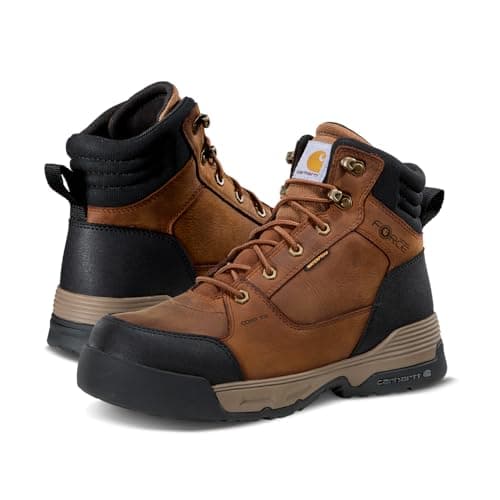 Carhartt Force HD 6" Composite Toe WaterproofOil-tanned leather, which survives the fluid exposure that destroys ordinary uppers. | Hydrocarbon and chemical exposure | 7.6 | |
| 4 | 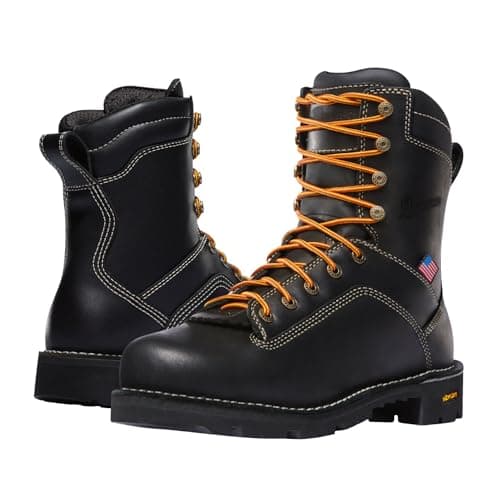 Danner Quarry 8" Waterproof Alloy ToeRecraftable, Gore-Tex, alloy toe - the long-haul option for a hand who stays in the patch. | Buying one pair for years | 7.6 |
#ad Prices pulled from Amazon and stamped as of October 6, 2026; they change, and we show no number we cannot verify. How we are funded.
Top pick · Meeting a met-guard requirement
Rocky Worksmart Composite Toe Internal Met Guard
An internal met guard, composite toe and waterproof - the spec most sites want, without the bib.
Oilfield sites are among the strictest in the trades about footwear, and metatarsal protection is frequently mandatory rather than optional - because the hazard is heavy pipe, tongs and tools landing across the top of the foot, which a toe cap does absolutely nothing about.
This is the most practical way to meet that requirement. ASTM Mt-rated internal guard, composite toe, waterproof, and critically not an external bib - which is the style everyone takes off within a week. Check your site's exact written spec before buying, because requirements vary by operator.
Specs that matter
- Toe:
- Composite toe, ASTM F2413
- Met guard:
- Internal metatarsal guard, ASTM Mt rated
- Waterproof:
- Yes
- Height:
- 6 inch
Our scoring
- Met protection
- 9.4
- Oil resistance
- 8.6
- Durability
- 8.6
- Comfort
- 7.2
- Value
- 9.0
What works
- Internal met guard is far less bulky than the external bib style
- Met protection at a price most met-guard boots do not touch
- Non-metallic toe and guard
What to know
- The guard stiffens the instep — expect pressure at first
- Heavier than a plain composite-toe boot
- Fit runs narrow through the midfoot
No. 2 · Pull-on wear on a lease road
Ariat WorkHog Wide Square Toe Steel Toe
The pull-on most oilfield hands actually wear, with proper shank support.
Pull-ons are popular in the oilfield for the same reason they are on farms: nothing to lace, nothing for mud and pipe dope to get into, and quick on and off. The WorkHog adds a genuinely supportive shank, which matters when the walking surface is a rutted lease road or a muddy pad.
Steel toe and EH rated. It has no metatarsal rating, so if your site requires Mt this is not the boot - take the Rocky instead or add an approved strap-on guard.
Specs that matter
- Toe:
- Steel toe, ASTM F2413
- Style:
- Pull-on, wide square toe
- Footbed:
- 4LR shank and footbed
- Electrical hazard:
- EH rated
Our scoring
- Met protection
- 4.0
- Oil resistance
- 7.8
- Durability
- 9.0
- Comfort
- 8.0
- Value
- 7.2
What works
- Supportive shank genuinely helps on uneven ground and in stirrups
- Wide square toe gives the toes room a cowboy boot usually does not
- Durable enough for livestock and oilfield work
What to know
- Heeled western sole is poor on flat concrete
- Expensive
- Pull-on fit is unforgiving if your calf or instep is unusual
No. 3 · Hydrocarbon and chemical exposure
Carhartt Force HD 6" Composite Toe Waterproof
Oil-tanned leather, which survives the fluid exposure that destroys ordinary uppers.
Oilfield work means constant contact with crude, drilling mud, pipe dope, diesel and solvents. Ordinary chrome-tanned leather dries and cracks under that exposure; oil-tanned leather is impregnated with oils from the start and tolerates the cycle far better.
Composite toe, waterproof, available in wide. No met guard, so again check your site requirement. Heavy, which on a rig floor is not the drawback it would be in a warehouse.
Specs that matter
- Toe:
- Composite toe, ASTM F2413
- Height:
- 6 inch
- Waterproof:
- Yes
- Upper:
- Oil-tanned full-grain leather
Our scoring
- Met protection
- 4.0
- Oil resistance
- 9.4
- Durability
- 9.0
- Comfort
- 7.4
- Value
- 8.0
What works
- Oil-tanned leather resists the chemical splash that cracks cheaper uppers
- Non-metallic toe keeps the cold out better than steel
- Available in wide widths from stock
What to know
- Heavy for a 6-inch boot
- Break-in is real — expect a week
- Cement construction, not resoleable
No. 4 · Buying one pair for years
Danner Quarry 8" Waterproof Alloy Toe
Recraftable, Gore-Tex, alloy toe - the long-haul option for a hand who stays in the patch.
If you are in this work for the long run, the economics of a recraftable boot are hard to argue with. A stitchdown Danner can be rebuilt when the outsole is finished, which on a rig is well inside a year, so the boot amortizes over many years rather than one.
Gore-Tex is the most reliable waterproof lining made, and an alloy toe is lighter than steel at the same rating. No met guard, and it is a stiff, heavy boot - which on broken ground is support rather than a penalty.
Specs that matter
- Toe:
- Alloy toe, ASTM F2413
- Height:
- 8 inch
- Waterproof:
- Gore-Tex lined
- Build:
- Stitchdown, recraftable
Our scoring
- Met protection
- 4.0
- Oil resistance
- 8.4
- Durability
- 9.6
- Comfort
- 7.0
- Value
- 7.4
What works
- Danner will recraft it, so the price is spread over many years
- Gore-Tex is the most reliable waterproof lining in footwear
- Alloy toe is lighter than steel at the same rating
What to know
- Expensive up front
- Stiff and heavy for flat-concrete work
- Long break-in
Hydrocarbon exposure and what it does to boots
Crude, diesel, drilling mud and pipe dope attack boots on two fronts. The sole compound can swell and soften if it is not an oil-resistant rubber, which destroys both the grip and the structure. And the upper leather has its natural oils stripped out, then dries and cracks at the flex crease. Oil-tanned leather and a stated oil-resistant outsole are the two specs that address those, and they are different claims from slip resistance - the same distinction we cover on boots for mechanics.
Twelve-hour tours and the comfort problem
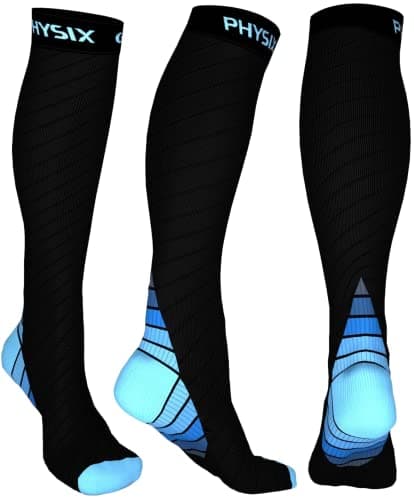
Oilfield shifts are long, often on steel decking or compacted pad surfaces, which is a hard-surface fatigue problem on top of everything else. The boots are necessarily heavy, so the leverage you have is inside them: a decent cushioning insole and real socks make a bigger difference here than anywhere else on this site. The reasoning on boots for standing on concrete and the picks at insoles for concrete apply directly, and compression socks are genuinely worth trying for leg fatigue on long tours.
What we would skip
Skip external bib met guards if your site allows an internal guard - the bib is why met-guard boots have a reputation for being abandoned. Skip any boot without a stated oil-resistant outsole. Skip heated insoles and heated socks if you are in FR clothing. And skip buying anything before you have read the operator's written footwear policy, because in this sector it genuinely is the spec sheet that decides.
Frequently asked
Do oilfield boots need metatarsal guards?
Many operators require them, and the hazard justifies it: drill pipe, tongs and heavy hand tools land across the top of the foot, where a toe cap offers nothing. ASTM F2413 marks metatarsal protection separately as Mt. Always check your site's written footwear policy, because requirements vary by operator.
What is the difference between internal and external metatarsal guards?
An external guard is a bib that sits over the laces; an internal guard is built into the boot's tongue area. Both can meet the ASTM Mt rating. Internal guards are far less intrusive and much more likely to still be worn after a month, which makes them safer in practice.
Are pull-on boots allowed in the oilfield?
On many sites yes, and they are popular because there are no laces to deal with and they come off quickly. Some operators specify laced boots or a minimum height, and a pull-on without an Mt rating will not satisfy a metatarsal requirement. The site policy decides.
Can I wear heated socks or heated insoles in FR clothing?
No. Battery-heated garments contain wiring and a lithium battery and are not flame resistant, so they have no place in an FR environment. Use wool layers and properly insulated winter boots instead, and avoid synthetic socks for hot work since synthetics melt onto skin.
Sources
Back to Work Boots, or see how we pick. Spotted something wrong? We publish corrections — see our editorial policy.