Best for carpenters
Best Work Boots for Carpenters
Nails underfoot, sawdust on the floor, and finished surfaces you cannot mark. A specific brief.
Carpentry is really two trades wearing one job title, and the boots that suit them diverge sharply. Rough carpentry and framing happen on a hazardous, uneven, often muddy site with nails all over the floor. Finish carpentry happens inside a nearly complete building where the floors are expensive and the main risk to your boots is what they do to somebody else's surfaces. Be honest about which half your week is, or carry two pairs.
The injury a toe cap does not prevent
Puncture wounds from nails through the sole are one of the most common foot injuries in carpentry, and a steel toe is entirely irrelevant to them - the nail goes through the bottom of the boot, not the front. What protects you is a puncture-resistant plate, marked PR under ASTM F2413, or failing that a genuinely stiff and thick midsole that a nail cannot easily penetrate.
If you frame, look for PR specifically rather than assuming a heavy boot is a protective one. Our ASTM ratings guide covers the marking, and it is one of the specs most worth seeking out in this trade.
Quick picks
Ranked by our published scoring rubric. Tap any row for the full write-up.
| # | Product | Best for | Score | Price |
|---|---|---|---|---|
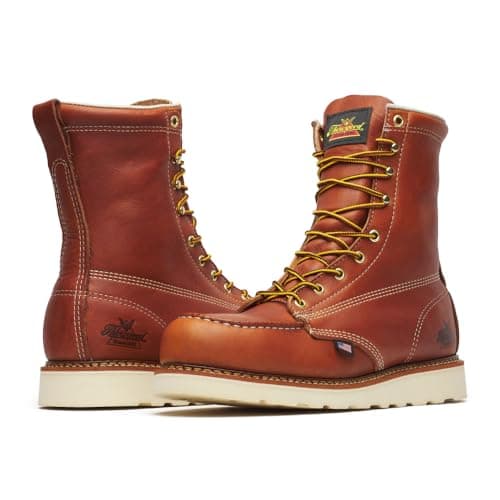
| 1 | 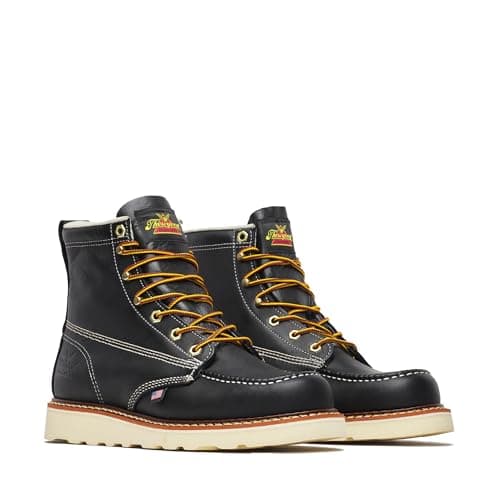 Thorogood American Heritage 6" Moc ToeThe traditional carpenter's boot, and the flat wedge is why. | Finish carpentry and interior work | 8.5 | |
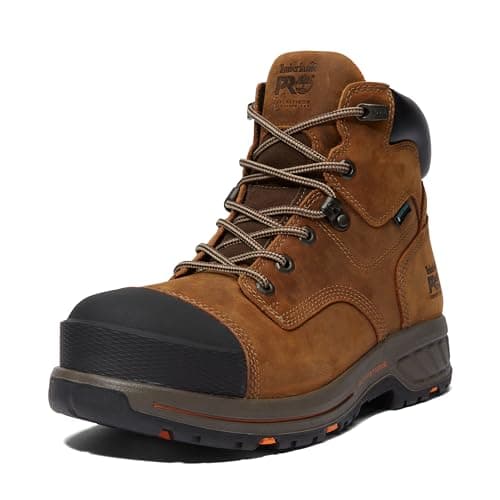
| 2 | 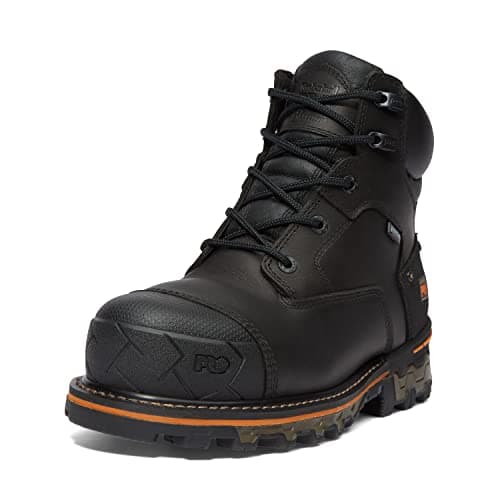 Timberland PRO Boondock 6" Composite Toe WaterproofThe stiff midsole is the point: nails underfoot stop being an event. | Framing and rough carpentry | 8.3 | |
| 3 | 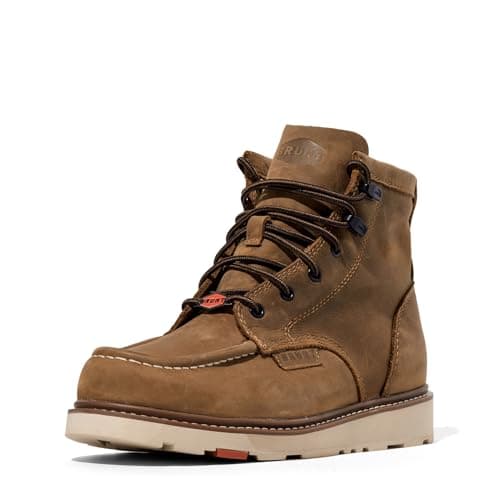 BRUNT Marin Composite Toe WedgeComposite-toe wedge at a working price - the compliant version of the classic. | A light safety-toe wedge | 8.2 | |
| 4 | 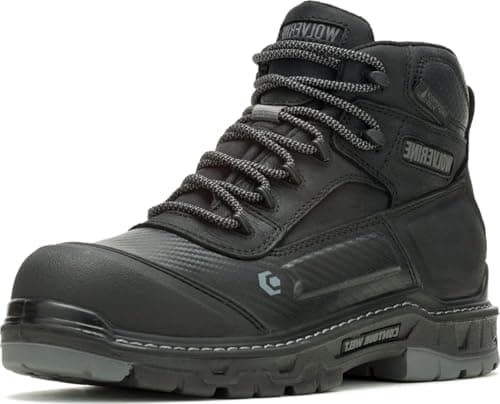 Wolverine Overpass 6" Composite Toe WaterproofFlexes at the forefoot, which is what you want on a rung or a top plate. | Ladders, trusses and roof framing | 8.2 |
#ad Prices pulled from Amazon and stamped as of October 6, 2026; they change, and we show no number we cannot verify. How we are funded.
Top pick · Finish carpentry and interior work
Thorogood American Heritage 6" Moc Toe
The traditional carpenter's boot, and the flat wedge is why.
There is a reason moc-toe wedge boots have been the carpenter's default for generations. A flat wedge does not mark a finished floor, does not pack sawdust and shavings into a tread pattern you then track through the house, and spreads load evenly when you are standing on plywood decking or a subfloor all day.
It is also resoleable, which matters in a trade where the sole wears out long before good leather does. Soft toe, so check your site - and if yours requires a safety toe, the 8-inch steel version is the same boot with a cap.
Specs that matter
- Toe:
- Soft toe (no safety rating)
- Height:
- 6 inch
- Sole:
- MAXwear wedge, slip-resisting
- Build:
- Goodyear storm welt, resoleable
Our scoring
- Underfoot protection
- 7.0
- Floor manners
- 9.4
- Grip on sawdust
- 8.4
- Durability
- 9.2
- Value
- 8.2
What works
- Welt construction means a cobbler can resole it instead of you rebuying
- Flat wedge does not pack mud and does not scuff finished floors
- Removable footbed, so an aftermarket insole drops straight in
What to know
- Soft toe only — not legal where a safety toe is required
- Wedge sole gives up grip on wet steel and ladder rungs
- Premium price for a boot with no safety rating
No. 2 · Framing and rough carpentry
Timberland PRO Boondock 6" Composite Toe Waterproof
The stiff midsole is the point: nails underfoot stop being an event.
Framing is the carpentry phase where the floor is a hazard. Offcuts with nails through them are everywhere, and stepping on one is routine rather than exceptional. A genuinely stiff midsole is what stops a nail reaching your foot, and it is the single most useful property a framing boot can have.
The Boondock is the stiffest, most protective boot on this page, waterproof for exterior framing, with a lug sole that bites on muddy ground around a new build. The cost is weight and a hard ride on flat decking.
Specs that matter
- Toe:
- Composite toe, ASTM F2413
- Height:
- 6 inch
- Waterproof:
- Yes, membrane lined
- Sole:
- Aggressive lug, slip and oil resisting
Our scoring
- Underfoot protection
- 9.4
- Floor manners
- 6.4
- Grip on sawdust
- 8.0
- Durability
- 9.0
- Value
- 7.6
What works
- Composite toe is non-metallic, so it clears metal detectors and conducts less cold
- Waterproof membrane plus a gusseted tongue genuinely keeps water out
- Outsole bites on broken ground where a wedge slides
What to know
- Heavy and stiff — a hard boot to stand on concrete in all day
- Long break-in; the outsole stays rigid for weeks
- Lug pattern tracks mud indoors
Best value · A light safety-toe wedge
BRUNT Marin Composite Toe Wedge
Composite-toe wedge at a working price - the compliant version of the classic.
This is the boot that squares the circle for a lot of carpenters: the flat wedge sole and floor manners of a traditional moc toe, with a composite safety toe so it passes on sites that require one, at a price well below the heritage brands.
Unlined, so it breathes well and offers no water resistance at all. The brand is young and its long-term durability record is shorter than the incumbents', which is worth knowing when you compare it against a resoleable welted boot.
Specs that matter
- Toe:
- Composite toe, ASTM F2413
- Height:
- 6 inch
- Sole:
- Flat wedge
- Weight:
- Lightweight, unlined
Our scoring
- Underfoot protection
- 7.4
- Floor manners
- 9.0
- Grip on sawdust
- 8.2
- Durability
- 7.4
- Value
- 9.0
What works
- Composite-toe wedge at an entry-level price
- Unlined, so it breathes better than membrane boots
- Very little break-in
What to know
- Unlined means no waterproofing at all
- Young brand with a shorter durability record than the incumbents
- Wedge sole limits it on ladders and loose ground
No. 4 · Ladders, trusses and roof framing
Wolverine Overpass 6" Composite Toe Waterproof
Flexes at the forefoot, which is what you want on a rung or a top plate.
Carpentry involves more ladder and elevated work than most trades - setting trusses, sheathing a roof, standing on a top plate. All of that rewards a boot that bends where your foot bends and has a heel breast to catch a rung, and penalizes a stiff flat-soled boot.
The Overpass is the best of both here: flexible forefoot, waterproof, safety-rated, with a lugged heel that actually works on a ladder where a wedge slides. If you spend real time vertical, take this over the wedge boots.
Specs that matter
- Toe:
- Composite toe, ASTM F2413
- Height:
- 6 inch
- Waterproof:
- Yes
- Build:
- Contour Welt, flexible forefoot
Our scoring
- Underfoot protection
- 7.8
- Floor manners
- 7.4
- Grip on sawdust
- 8.6
- Durability
- 8.2
- Value
- 8.4
What works
- Flexes at the forefoot, so climbing and kneeling feel natural
- Light for a waterproof composite-toe boot
- Good ankle hold without an 8-inch shaft
What to know
- Flexibility costs some underfoot protection on rebar and rubble
- Outsole wears faster than a stiffer boot's
- Not a cold-weather boot
Sawdust is slippery, and lugs do not help
A layer of fine sawdust on plywood or a sealed floor acts as a dry lubricant - it rolls underfoot rather than gripping. The mechanism is the same as water on tile, and so is the solution: contact area and fine siping rather than deep aggressive lugs, which simply ride on top of the dust layer. A flat wedge sole genuinely performs better on a dusty shop or jobsite floor than a mountain-style lug does.
The exception, as always, is vertical work. A wedge has no heel breast, so it does not catch a ladder rung, and on a rung you want that. Wedge sole vs heel is the full argument.
Finished floors and the cost of a scuff
In finish carpentry, your boots are walking across the client's investment. A non-marking outsole is worth specifying, and a flatter tread carries less grit indoors. This is one of the quiet reasons the wedge-sole boot became traditional in interior trades, long before anyone wrote spec sheets about it.
The rest of the kit
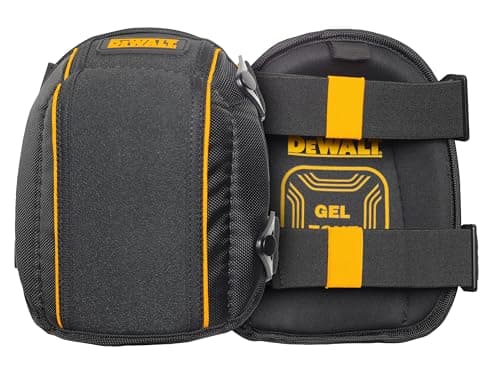
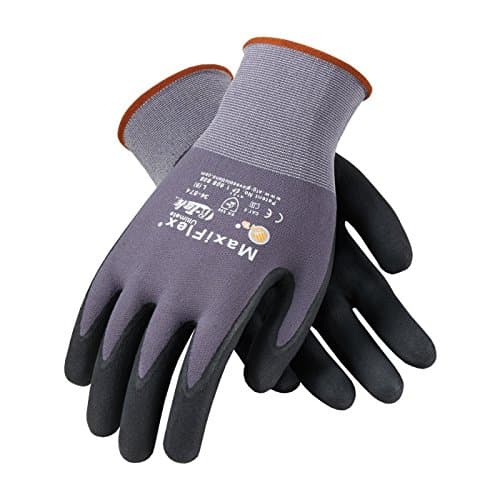
Carpentry is hard on hands - splinters, saw-cut edges, sheet goods, and vibration from nailers and saws. A padded-palm glove with enough dexterity to hold a nail is the realistic answer: see gloves for construction, and impact gloves if you are swinging a hammer all day. For kneeling on subfloor and running trim, knee pads for flooring use the flat-cap design that suits finished surfaces.
What we would skip
Skip 8-inch boots for finish work; the extra shaft restricts ankle movement for no benefit indoors. Skip deep aggressive lug soles unless you are framing on broken ground - they slide on sawdust and track grit through finished rooms. And skip the assumption that a heavy boot protects your sole: thickness and stiffness in the midsole are what stops a nail, and plenty of light boots have a PR plate while plenty of heavy ones do not.
Frequently asked
What boots do carpenters wear?
Traditionally a moc-toe wedge boot, because a flat wedge sole does not mark finished floors, does not pack sawdust, and spreads load on decking. Framers often prefer a stiffer, more protective boot with a puncture-resistant plate because nails underfoot are the real hazard in rough carpentry.
Do work boots protect against nails?
Only if they have a puncture-resistant plate - marked PR under ASTM F2413 - or a genuinely stiff, thick midsole. A steel toe does nothing about a nail through the sole, which is the most common puncture injury in carpentry.
Are wedge sole boots good for carpentry?
For finish and interior carpentry, yes - they are non-marking, do not trap sawdust, and grip better on dusty smooth floors than deep lugs do. For framing on muddy ground or any significant ladder work, a lugged heel is the better choice because it bites into soft ground and catches a rung.
Should carpenters wear steel toe boots?
On most commercial and new-build sites it is required. For finish carpentry in occupied homes it often is not, though dropped sheet goods and lumber make a safety toe sensible anyway. If you are buying for framing, prioritize puncture resistance underfoot alongside the toe cap.
Sources
Back to Work Boots, or see how we pick. Spotted something wrong? We publish corrections — see our editorial policy.