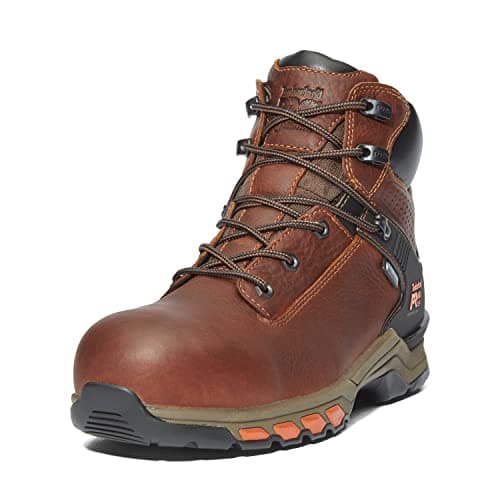
Best for wide feet
Best Work Boots for Wide Feet
There is a difference between a boot stocked in EE and a boot that is just cut generously. You want the first one.
Wide feet are the most common reason people conclude that work boots are simply uncomfortable. They are not - the boots were the wrong shape. And the reason this is so hard to fix is that the footwear industry handles width badly: most boots are built on one medium last, "wide" often means the same last with a looser upper, and almost nobody stocks the full width range in a work boot.
How width letters actually work
US width letters run roughly B (narrow), D (standard men's), EE or 2E (wide), EEEE or 4E (extra wide). The critical thing people do not know: a width letter is a proportion, not a measurement. A D width at size 13 is physically wider than a D at size 8, because width scales with length. So two boots both marked EE in different sizes are different widths, and ordering by letter without trying the boot is a gamble.
This also explains a common trap. If your feet are wide, buying a longer boot does make it wider - and it also makes it too long, which under a safety toe means your toes slide forward and hit the rigid cap. Going up a size is not a width fix; it swaps one problem for a worse one. Work boot fit and sizing explains the right way to measure.
Why a safety toe makes this unforgiving
In an ordinary boot, a slightly tight forefoot will give a little as the leather stretches. A safety toe does not: it is a rigid steel or composite shell, and no amount of wearing in or stretching changes its shape. Whatever width the cap is, that is the width you have for the life of the boot.
That is why toe cap geometry - the shape of the cap, not just the last - is the thing to shop for, and why asymmetrical caps matter. A cobbler can stretch a leather upper; nobody can stretch a composite cap.
Quick picks
Ranked by our published scoring rubric. Tap any row for the full write-up.
| # | Product | Best for | Score | Price |
|---|---|---|---|---|
| 1 | 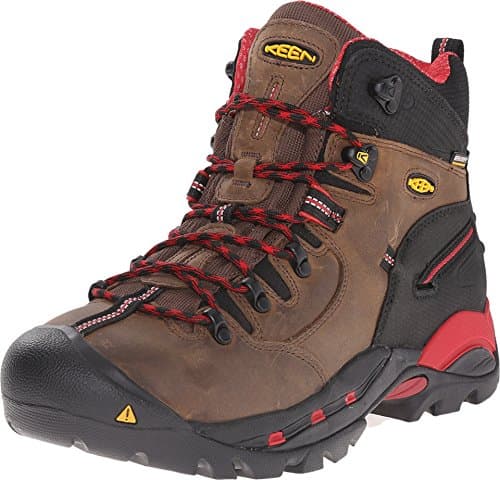 KEEN Utility Pittsburgh 6" Steel Toe WaterproofAsymmetrical caps shaped left and right - the toe box is foot-shaped, not symmetrical. | The widest toe box in safety footwear | 9.0 | |
| 2 | 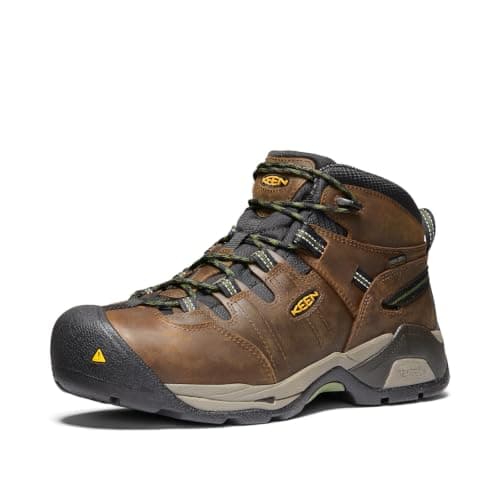 KEEN Utility Detroit XT Mid Steel Toe WaterproofActually stocked in EE wide, which very few safety boots are. | A true EE from stock | 8.9 | |
| 3 | 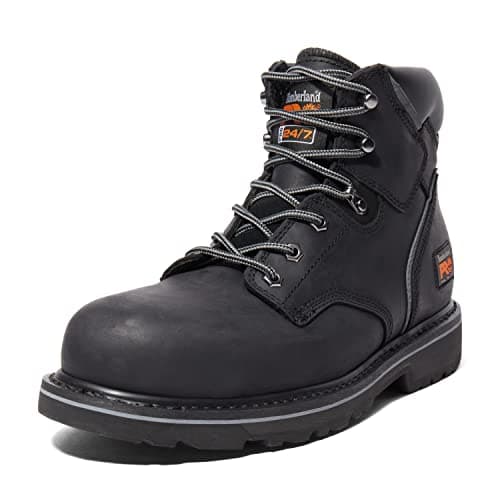 Timberland PRO Pit Boss 6" Steel ToeA famously roomy square toe box at an entry price - the cheap answer that works. | Width on a budget | 8.2 | |
| 4 | 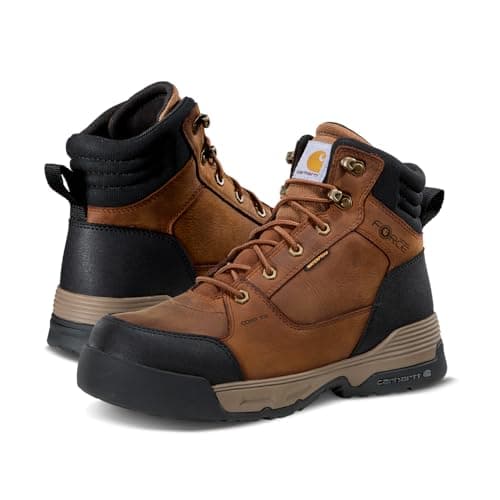 Carhartt Force HD 6" Composite Toe WaterproofGenuinely stocked in wide, in a boot tough enough for industrial work. | Wide widths in a heavy-duty boot | 8.2 |
#ad Prices pulled from Amazon and stamped as of October 6, 2026; they change, and we show no number we cannot verify. How we are funded.
Top pick · The widest toe box in safety footwear
KEEN Utility Pittsburgh 6" Steel Toe Waterproof
Asymmetrical caps shaped left and right - the toe box is foot-shaped, not symmetrical.
Almost every safety toe cap is a symmetrical dome, which means it is the same shape over your big toe as over your little toe. Your foot is not symmetrical, so that design wastes room on the outside and pinches on the inside. KEEN's caps are made left-and-right specific, which is a genuinely different approach and the reason this is the standard recommendation for wide feet.
It is also a wide last overall and welted, so it can be resoled. Note it runs large: most buyers size down a half. Steel toe on this model.
Specs that matter
- Toe:
- Asymmetrical steel toe, ASTM F2413
- Height:
- 6 inch
- Waterproof:
- Yes, KEEN.DRY membrane
- Build:
- Goodyear welt
Our scoring
- Forefoot width
- 9.6
- Toe box height
- 9.2
- Width options
- 8.0
- Comfort out of box
- 8.0
- Value
- 7.6
What works
- Left and right specific toe caps, so the toe box is shaped like a foot
- Welted, so it can be resoled
- The go-to recommendation for wide feet in a safety toe
What to know
- Runs large — most buyers size down a half
- Steel toe in a waterproof boot is heavy
- Toe box looks bulky if that bothers you
No. 2 · A true EE from stock
KEEN Utility Detroit XT Mid Steel Toe Waterproof
Actually stocked in EE wide, which very few safety boots are.
This is the practical answer to the real problem, which is availability. Plenty of brands claim a roomy fit; very few actually stock a wider width you can order. The Detroit XT comes in both D and EE, and the EE is a genuinely different last rather than the same boot with a looser upper.
It also flexes immediately, which matters because a wide foot in a stiff boot gets the worst of the break-in. Cement construction, so no resoling.
Specs that matter
- Toe:
- Steel toe, ASTM F2413
- Height:
- Mid / 6 inch
- Waterproof:
- Yes
- Widths:
- D and EE
Our scoring
- Forefoot width
- 9.2
- Toe box height
- 8.4
- Width options
- 9.5
- Comfort out of box
- 9.2
- Value
- 8.2
What works
- Actually stocked in EE wide, not just a roomy D
- Flexes out of the box rather than demanding a break-in
- Lighter than the Pittsburgh at the same protection
What to know
- Cement construction — no resoling
- Softer upper creases and scuffs quickly
- Less ankle support than a true 8-inch boot
Best value · Width on a budget
Timberland PRO Pit Boss 6" Steel Toe
A famously roomy square toe box at an entry price - the cheap answer that works.
The Pit Boss has a reputation among wide-footed buyers that is entirely deserved: the square toe box is cut generously and the last is roomy, and it costs a fraction of specialist wide boots. For many people it is simply enough.
It is a roomy D rather than a true wide, so if your feet are genuinely EE or wider it will not fix the problem - and it is not waterproof, with a thin stock insole. For a 4E foot, take one of the KEENs.
Specs that matter
- Toe:
- Steel toe, ASTM F2413
- Height:
- 6 inch
- Electrical hazard:
- EH rated
- Waterproof:
- No
Our scoring
- Forefoot width
- 8.2
- Toe box height
- 8.6
- Width options
- 7.0
- Comfort out of box
- 7.6
- Value
- 9.4
What works
- Among the cheapest genuinely EH-rated steel-toe boots sold
- Wide, square toe box suits thick socks and swollen feet
- Oiled nubuck shrugs off the abuse that kills cheaper uppers
What to know
- Not waterproof — wet trades will soak through
- Stock insole is thin and wants replacing on day one
- Cement construction, so it cannot be resoled
No. 4 · Wide widths in a heavy-duty boot
Carhartt Force HD 6" Composite Toe Waterproof
Genuinely stocked in wide, in a boot tough enough for industrial work.
Most of the wide-fitting options in work footwear are light, flexible boots. If your feet are wide and your job is hard on boots, that leaves a gap - and this fills it: oil-tanned leather, composite toe, waterproof, available in wide.
It is heavy and needs breaking in, which with a wide foot means being patient about it. The upside is a boot that survives chemical and abrasive work in a width you can actually wear.
Specs that matter
- Toe:
- Composite toe, ASTM F2413
- Height:
- 6 inch
- Waterproof:
- Yes
- Upper:
- Oil-tanned full-grain leather
Our scoring
- Forefoot width
- 8.4
- Toe box height
- 7.8
- Width options
- 8.8
- Comfort out of box
- 6.8
- Value
- 8.2
What works
- Oil-tanned leather resists the chemical splash that cracks cheaper uppers
- Non-metallic toe keeps the cold out better than steel
- Available in wide widths from stock
What to know
- Heavy for a 6-inch boot
- Break-in is real — expect a week
- Cement construction, not resoleable
Width versus volume: two different things
Worth separating, because people with wide feet often buy wide boots and still have problems. Width is how far across the forefoot the boot is. Volume is the total internal space, including height over the top of the foot. A high-volume foot - a high instep - needs depth, not width, and a wide boot with a low instep height will still press on the top of your foot.
If your discomfort is across the top of your foot rather than at the sides, that is a volume and lacing problem rather than a width one, and the fix is a boot with more depth or a different lacing pattern. If you are also running a rigid insole, remember that it consumes volume too - see insoles for flat feet, since flat feet and wide feet very often go together.
What we would skip
Skip sizing up to gain width - it creates a length problem that a safety toe turns into bruised toenails. Skip boots described only as "roomy" when your feet are genuinely 4E; you need a stocked width. Skip thick socks as a fix for a loose boot in the wrong width. And skip persevering past a proper break-in: a boot that pinches your forefoot in week three will pinch it in year two, and break-in guide explains how to tell a break-in problem from a fit problem.
Frequently asked
What work boots are best for wide feet?
Boots built on a genuinely wide last with a wide toe cap - not a standard boot described as roomy. KEEN's asymmetrical toe caps are the most-recommended option because the cap is shaped left-and-right rather than symmetrically, and several models are stocked in a true EE width.
Should I buy a bigger size for wide feet?
No. Sizing up does add width, but it also makes the boot too long, and with a rigid safety toe that means your toes slide forward and hit the cap - which is how toenails get bruised. Buy the correct length in a wider width instead.
What does EE mean in boot sizes?
EE (or 2E) is a wide width, one step above the standard men's D. The important caveat is that width letters are proportional to length, not absolute measurements - an EE at size 13 is physically wider than an EE at size 8 - so the same letter fits differently across sizes.
Can wide work boots be stretched?
The leather upper can be stretched a little by a cobbler. The safety toe cap cannot - it is rigid steel or composite and will not change shape. So if the pinch is at the toe cap, stretching will not help and you need a different boot.
Sources
Back to Work Boots, or see how we pick. Spotted something wrong? We publish corrections — see our editorial policy.