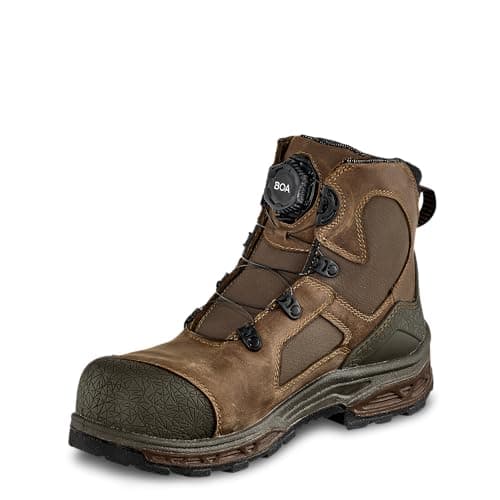
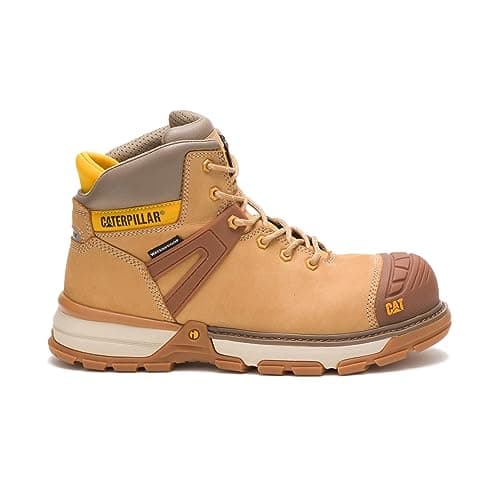
Best Carhartt boot
Carhartt Work Boots, Model by Model
A clothing brand that makes genuinely competent boots, and one of them is built completely differently from the rest of the line.
The short answer: buy the Rugged Flex unless you have a specific reason not to, the Force HD if you need wide widths or work around oil and chemicals, the 8-inch welted logger if your ground is rough and you want a sole you can replace, the 11-inch Wellington if laces are a hazard in your trade, and the Ground Force if you want waterproof for the least money and no safety toe is required.
Carhartt is a workwear company that also makes footwear, and that is worth saying plainly because it sets expectations correctly. The boots are made under license rather than in a Carhartt factory, and the line is priced and specified to sit alongside the brand's clothing: competent, widely stocked, available in sizes and widths real people need, and not trying to compete with the welted heritage brands on repairability. Judge them on that and they are good value. Judge them against Red Wing or Thorogood on resoleability and they lose, because almost all of them are glued.
The one exception matters enough to repeat: the 8-inch logger is Goodyear-welted. If the thing you want from a work boot is a sole you can have replaced twice before the upper gives up, that is the only boot on this page that will do it, and it changes the cost-per-year arithmetic completely. Are expensive work boots worth it runs that calculation properly.
What the names on the listings mean
- Rugged Flex. Carhartt's stretch-and-flex platform, used across both clothing and boots. On footwear it means a softer upper and a cushioned EVA midsole - comfortable immediately, compresses over time.
- Force. The heavier-duty tier. Oil-tanned leather, stiffer chassis, more underfoot protection, and where the wide widths tend to live.
- Storm Defender. The brand's waterproof membrane. Reliable, and like every membrane it is also a vapor barrier that makes the boot warmer than an unlined one.
- Insite. Carhartt's contoured arch-support footbed. Genuinely better than a flat insert, and removable, so you can still swap in your own if you have a diagnosed arch problem.
- Goodyear welt. On the 8-inch logger only. The sole is stitched to a welt, so it can be replaced - the single biggest build difference inside this lineup.
Quick picks
Ranked by our published scoring rubric. Tap any row for the full write-up.
| # | Product | Best for | Score | Price |
|---|---|---|---|---|
| 1 | 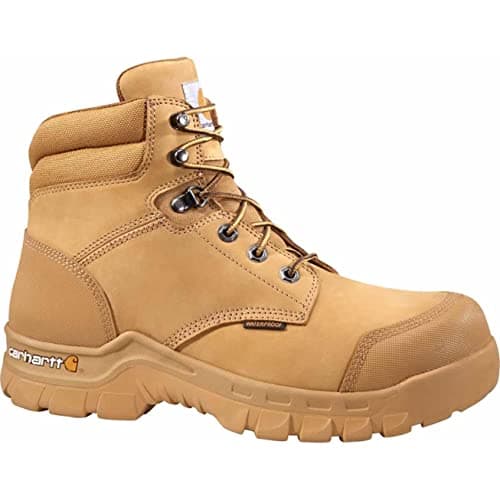 Carhartt Rugged Flex 6" Composite Toe WaterproofThe one to buy by default: waterproof composite toe, cushioned midsole, and almost no break-in. | All-day wear on hard floors | 9.5 | |
| 2 | 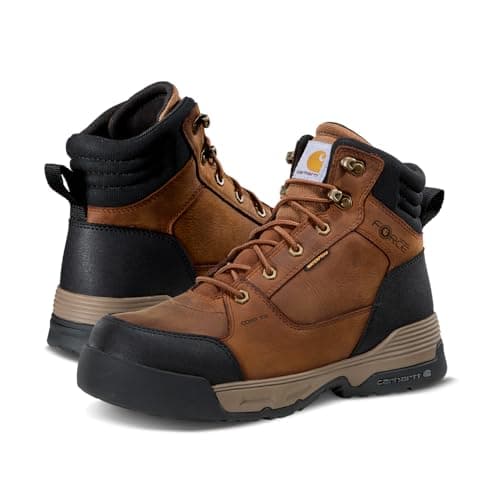 Carhartt Force HD 6" Composite Toe WaterproofThe heavier, tougher Carhartt in oil-tanned leather - and the one stocked in wide widths. | Wide feet and chemical splash | 9.4 | |
| 3 | 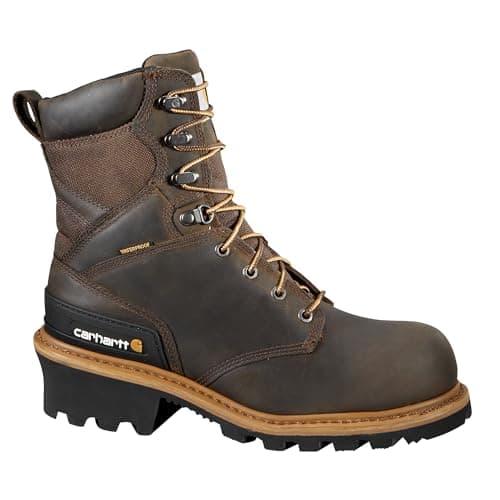 Carhartt 8" Waterproof Logger, Composite ToeThe outlier: a Goodyear-welted 8-inch waterproof logger, and the only Carhartt a cobbler can resole. | Brush, mud and a sole you can replace | 9.4 | |
| 4 | 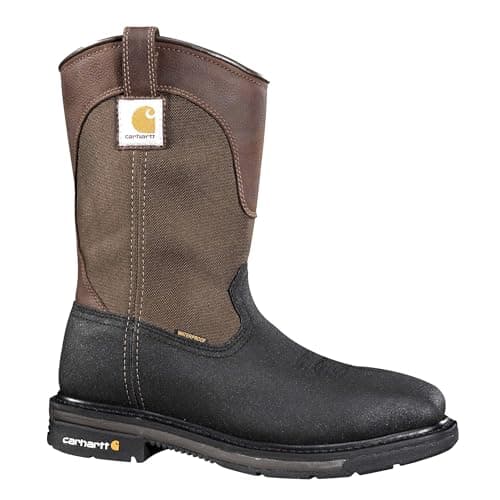 Carhartt 11" Square Toe Waterproof Steel Toe WellingtonEleven inches of waterproof leather and a steel toe, with nothing to lace or burn through. | No laces and standing water | 9.2 | |
| 5 | 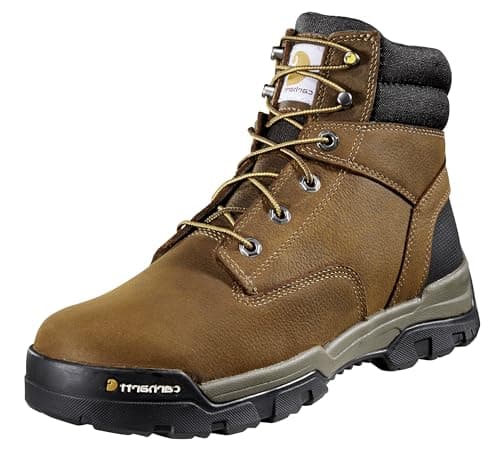 Carhartt Ground Force 6" Waterproof Soft ToeThe cheapest waterproof Carhartt, with a real arch-support footbed and no safety toe. | A waterproof boot on a tight budget | 9.1 |
#ad Prices pulled from Amazon and stamped as of November 14, 2026; they change, and we show no number we cannot verify. How we are funded.
Top pick · All-day wear on hard floors
Carhartt Rugged Flex 6" Composite Toe Waterproof
The one to buy by default: waterproof composite toe, cushioned midsole, and almost no break-in.
#ad Price as of November 14, 2026. How we are funded
- Our score
- 9.5/10
Category-defining
The Rugged Flex is the Carhartt boot that suits the most people, and the reason is the one nobody markets: it is comfortable on day one. The upper flexes immediately instead of fighting you for a fortnight, the EVA midsole is cushioned rather than merely supportive, and it carries a non-metallic composite toe rated to ASTM F2413 with a waterproof membrane behind it. For warehouse shifts, general construction and anything that involves standing on a hard floor rather than climbing over rubble, that package is hard to argue with at this price.
The cushioning is also the weak point. EVA compresses, and a year of daily wear takes a measurable amount of the bounce out of it - which is exactly the trade you make for immediate comfort. The upper is softer than the Force HD and shows scuffing sooner, the membrane runs hot in summer, and it is cement-constructed, so when the sole wears through the boot is finished. If hard-floor fatigue is your specific complaint, read work boots for standing on concrete before you commit to any brand.
Specs that matter
- Toe:
- Composite toe, ASTM F2413
- Height:
- 6 inch
- Waterproof:
- Yes
- Midsole:
- Cushioned EVA
Rubric profile
Raw per-criterion marks out of 10, before weighting — this is the shape of the pick, not its published score. A low mark is a scope limit, not a fault: how we score.
- Comfort
- 9.0
- Durability
- 7.4
- Protection
- 8.2
- Weather
- 8.4
- Value
- 8.6
Why we picked it
- Flexes immediately — close to no break-in
- Lighter than the Force HD with the same toe protection
- Cushioned midsole helps on hard floors
Good to know: The softest Carhartt here out of the box, which also means the EVA midsole settles over a year of daily wear.
Best for wide feet · Wide feet and chemical splash
Carhartt Force HD 6" Composite Toe Waterproof
The heavier, tougher Carhartt in oil-tanned leather - and the one stocked in wide widths.
#ad Price as of November 14, 2026. How we are funded
- Our score
- 9.4/10
Outstanding
The Force HD is what you buy when the Rugged Flex is not enough boot. The upper is oil-tanned full-grain leather, which resists the oil and chemical splash that dries out and cracks cheaper uppers, and the whole build is stiffer and more protective underfoot. It carries the same waterproof composite-toe specification, and critically it is stocked in wide as well as standard widths - a genuinely short list at this price point, and the single most common reason people end up here rather than on the Rugged Flex.
It is heavy for a 6-inch boot and the break-in is real; expect a week of the leather telling you about it. It is also cement construction like most of the line, so it cannot be resoled, and the membrane makes it warm. If width is the reason you are reading this, the brands that build genuinely wide lasts rather than roomy D-widths are in work boots for wide feet.
Specs that matter
- Toe:
- Composite toe, ASTM F2413
- Height:
- 6 inch
- Waterproof:
- Yes
- Upper:
- Oil-tanned full-grain leather
Rubric profile
Raw per-criterion marks out of 10, before weighting — this is the shape of the pick, not its published score. A low mark is a scope limit, not a fault: how we score.
- Comfort
- 7.8
- Durability
- 8.4
- Protection
- 8.6
- Weather
- 8.6
- Value
- 8.2
Why we picked it
- Oil-tanned leather resists the chemical splash that cracks cheaper uppers
- Non-metallic toe keeps the cold out better than steel
- Available in wide widths from stock
Good to know: A substantial boot: allow a week of break-in, and expect real weight in exchange for the protection.
Best for rough ground · Brush, mud and a sole you can replace
Carhartt 8" Waterproof Logger, Composite Toe
The outlier: a Goodyear-welted 8-inch waterproof logger, and the only Carhartt a cobbler can resole.
#ad Price as of November 14, 2026. How we are funded
- Our score
- 9.4/10
Outstanding
This is the most interesting boot Carhartt sells, because it breaks the pattern of the rest of the line. It is Goodyear-welted, which means the sole is stitched to a welt rather than glued to the upper, and that makes it repairable - a cobbler can replace the outsole and midsole while keeping the expensive part of the boot. Add 8 inches of waterproof leather, a composite toe rated to ASTM F2413, EH protection and a heeled logger outsole and you have a boot for brush, mud, dirt work and anywhere the ground is neither flat nor clean.
It is also the heaviest, stiffest and most expensive boot on this page, and the raised logger heel is actively wrong on a flat concrete slab - it concentrates load under the heel instead of spreading it, which is the opposite of what fatigue wants. Break-in is long. Buy it for the ground and the welt, not because it is the premium option; Goodyear welt vs direct attach explains exactly what the welt is worth to you.
Specs that matter
- Toe:
- Composite toe, ASTM F2413
- Height:
- 8 inch
- Waterproof:
- Yes
- Build:
- Goodyear welt, EH rated
Rubric profile
Raw per-criterion marks out of 10, before weighting — this is the shape of the pick, not its published score. A low mark is a scope limit, not a fault: how we score.
- Comfort
- 6.8
- Durability
- 9.2
- Protection
- 8.8
- Weather
- 9.0
- Value
- 8.0
Why we picked it
- Goodyear welt — resoleable, unlike the rest of the Carhartt boot line
- Eight inches of waterproof leather for mud, brush and tear-off debris
- Heeled logger outsole holds on loose ground and ladder rungs
Good to know: A logger heel is a tool for slopes and climbing; on flat concrete pick the Force HD instead. Stiff for the first couple of weeks.
Best pull-on · No laces and standing water
Carhartt 11" Square Toe Waterproof Steel Toe Wellington
Eleven inches of waterproof leather and a steel toe, with nothing to lace or burn through.
#ad Price as of November 14, 2026. How we are funded
- Our score
- 9.2/10
Outstanding
The Wellington is a shape decision rather than a quality decision. Eleven inches of waterproof leather with a square toe and a steel cap, pulled on rather than laced, is the right answer for welding spatter, grain dust, slurry and mud - the hazards where laces are a liability and where a 6-inch collar is simply an opening. It also goes on and off in seconds, which matters more than people expect if you are in and out of a vehicle or a house all day.
The costs are the standard pull-on costs and they are not small. Fit is the hardest problem here, because the shaft has to clear your calf and then hold your heel with no laces to help; it is hot, because that much leather does not breathe; and a steel toe is the heavy, cold-conducting toe option. If the pull-on shape is what you want, compare it against the rest of pull-on work boots, which includes lighter and taller options.
Specs that matter
- Toe:
- Steel toe, ASTM F2413
- Height:
- 11 inch pull-on
- Waterproof:
- Yes
- Closure:
- Pull-on, no laces
Rubric profile
Raw per-criterion marks out of 10, before weighting — this is the shape of the pick, not its published score. A low mark is a scope limit, not a fault: how we score.
- Comfort
- 6.6
- Durability
- 8.4
- Protection
- 8.8
- Weather
- 8.6
- Value
- 8.0
Why we picked it
- No laces, which is the right shape for welding spatter and grain dust
- Eleven inches keeps mud, chips and standing water out
- Waterproof and safety-rated together at a mid-market price
Good to know: Pull-on sizing lives in the calf and instep — measure both, because there are no laces to adjust afterwards.
Best value · A waterproof boot on a tight budget
Carhartt Ground Force 6" Waterproof Soft Toe
The cheapest waterproof Carhartt, with a real arch-support footbed and no safety toe.
#ad Price as of November 14, 2026. How we are funded
- Our score
- 9.1/10
Outstanding
The Ground Force is the budget entry and it is better than its price suggests, with two real features behind it: the Storm Defender waterproof membrane, and Carhartt's Insite footbed, which is a contoured arch-support unit rather than the flat die-cut insert most boots at this price ship with. It is light, flexible, and ready to work the day it arrives. For light maintenance, delivery, farm chores and shop floors with no PPE rule, that is a lot of boot for the money.
The catch is the toe: this version is soft-toe, so it fails any safety-toe requirement outright, and no amount of waterproofing changes that. The upper is thinner than the Force HD and wears accordingly, and it is cement construction, so it is a replace-it boot. If the budget is the real constraint but you do need a rating, work boots under $100 has rated options in the same money.
Specs that matter
- Toe:
- Soft toe (no safety rating)
- Height:
- 6 inch
- Waterproof:
- Storm Defender membrane
- Footbed:
- Insite arch-support footbed
Rubric profile
Raw per-criterion marks out of 10, before weighting — this is the shape of the pick, not its published score. A low mark is a scope limit, not a fault: how we score.
- Comfort
- 8.4
- Durability
- 6.8
- Protection
- 2.8
- Weather
- 8.4
- Value
- 9.0
Why we picked it
- Waterproof construction at roughly half the price of the rated Carhartts
- Insite footbed is genuine arch support, not a flat die-cut insert
- Light and flexible with next to no break-in
Good to know: Soft toe, so it will not satisfy a safety-toe rule; a lighter upper than the Force HD in exchange for comfort and price.
The lineup at a glance
| If your day is | Buy | Because |
|---|---|---|
| Hard floors, long shifts, general site work | Rugged Flex 6" Composite Toe | Waterproof rated toe with cushioning and almost no break-in |
| Wide feet, oil and chemical splash | Force HD 6" Composite Toe | Oil-tanned leather, stiffer build, stocked in wide widths |
| Brush, mud, dirt work - and you want it resoled | 8" Waterproof Logger, Composite Toe | Goodyear welt, 8-inch waterproof shaft, heeled logger outsole |
| Welding, grain, slurry - laces are a liability | 11" Waterproof Steel Toe Wellington | Pull-on shaft, no laces, waterproof and rated |
| Waterproof on a budget, no rating required | Ground Force 6" Waterproof Soft Toe | Storm Defender membrane and the Insite footbed at the lowest price here |
Cement construction, and why it is not automatically bad
Four of the five boots here are cement-constructed: the upper is glued to a pre-made sole unit under pressure. The category snobbery against that is overdone. Cemented boots are lighter, more flexible out of the box, watertight at the joint without a storm welt, and cheaper to make - which is why they dominate the mid-market. The honest objection is not quality, it is lifespan: when the outsole wears through, the boot is done, because there is nothing to stitch a new sole to.
So the question is behavioral rather than technical. If you wear out a pair of boots in twelve to eighteen months and replace them without ceremony, cement construction costs you nothing and saves you money up front. If you are the kind of buyer who would actually send boots away for three weeks to have them rebuilt, the welted logger - or the welted boots on our most comfortable work boots and Thorogood pages - is the rational purchase instead.
Sizing Carhartt
Carhartt boots run close to true to size in length, and the brand's width availability is one of its genuine advantages - wide is a stock option on the Force HD rather than a special order. Order your measured length and take the width if you need it; do not size up to buy toe room, because a safety cap is a hard ceiling and a boot that is slightly long lets your foot slide forward into it on every step. That is the mechanism behind most black-toenail complaints, and work boot fit and sizing has the in-store checks that catch it.
The 11-inch Wellington is the one to try on in person. A pull-on shaft has to clear your calf and then hold your heel with no laces to adjust, and no amount of reading will tell you whether your calf is the right shape for it. The logger wants attention too: an 8-inch welted boot feels stiff and flat-footed for the first week because the sole has not creased yet, which is break-in rather than misfit - how to break in work boots covers the difference.
What we would skip
Skip the logger if your day is mostly flat slab - the heel is wrong for it and you will be carrying weight you do not need. Skip the Ground Force anywhere a safety toe is required now or might be required later, because an unrated boot becomes useless the day the site rule changes. And skip the Rugged Flex if you are hard on uppers: it is the most comfortable boot here and the softest, and those are the same fact.
If you came here because you already wear Carhartt clothing, that is a reasonable reason to start - the sizing and the stocking are consistent, and the boots are honest for the money. Just make the toe and the construction a deliberate choice rather than an accident of which listing came up first, because the five boots above are not variations of one boot. They are five different tools.
Frequently asked
Which Carhartt work boot is the best?
The Rugged Flex 6-inch waterproof composite toe for most buyers - it is comfortable immediately, carries a rated non-metallic toe and a waterproof membrane, and suits hard floors and general site work. If you need wide widths or work around oil and chemicals, the Force HD is the better boot.
Are Carhartt work boots any good?
Yes, for what they are: competent, widely stocked mid-market boots with reliable width availability, made under license rather than in a Carhartt factory. They are not built to compete with welted heritage boots on repairability - four of the five models here are glued, and only the 8-inch logger can be resoled.
Can Carhartt boots be resoled?
Only the Goodyear-welted models, which in this lineup means the 8-inch waterproof logger. The Rugged Flex, Force HD and Ground Force are cement-constructed, so the sole is glued to the upper and cannot be replaced - when the outsole wears through, the boot is finished.
Do Carhartt work boots run true to size?
Close to it in length, and the brand is better than most at stocking wide widths rather than expecting you to size up. Order your measured length and take a wide if you need width; sizing up to gain toe room lets your foot slide forward into the safety cap, which is how most people end up with a black toenail.
Are Carhartt boots waterproof?
Most of these are. The Rugged Flex, Force HD, 8-inch logger and 11-inch Wellington are all waterproof, and the Ground Force uses the brand's Storm Defender membrane. Carhartt does also sell unlined versions of similar-looking boots, so check the specific listing rather than the model name.
Who makes Carhartt boots?
They are produced under license rather than in Carhartt's own factories, which is normal for a clothing brand with a footwear line. It matters less than people expect for quality and more than people expect for consistency: specifications change between generations of the same model name, so read the current listing rather than an old review.
Our recommendation
If you read nothing else on this page, these are the two to look at — the one we would buy, and the one to take instead if its trade-off suits you better.
Top pick · All-day wear on hard floors
Carhartt Rugged Flex 6" Composite Toe Waterproof
The one to buy by default: waterproof composite toe, cushioned midsole, and almost no break-in.
#ad Price as of November 14, 2026. How we are funded
Runner-up · Wide feet and chemical splash
Carhartt Force HD 6" Composite Toe Waterproof
The heavier, tougher Carhartt in oil-tanned leather - and the one stocked in wide widths.
#ad Price as of November 14, 2026. How we are funded
Prices are read live from Amazon and stamped with the date. How we pick.
Sources
Back to Work Boots, or see how we pick. Spotted something wrong? We publish corrections — see our editorial policy.