Best for linemen
Best Work Boots for Linemen
If you wear climbers, the heel and the shank matter more than anything else on the spec sheet.
Line work splits into two quite different footwear problems, and buying the wrong one is expensive. If you climb wood poles with gaffs, your boots are structural equipment and the specification is unusually demanding. If your work is bucket, substation, underground or ground crew, the brief is closer to the standard electrical trade spec covered on boots for electricians. Many linemen end up owning both.
What a climbing boot actually needs
Three things, and they are not the things boot marketing talks about.
- A stiff shank. Climbing transfers your weight through the gaff into the boot's midfoot. A flexible boot lets the foot bend around that point, which is tiring within an hour and reduces your control on the pole. Stiffness here is support, not harshness.
- A defined heel. The climber's stirrup needs a positive heel shelf to seat against. A flat wedge sole has no heel breast at all, which is why wedge boots - excellent for most trades - are the wrong boot for pole work.
- Height and lacing control. An 8-inch or taller laced shaft lets you control the tension through the ankle, which stabilizes the foot against the side-loading that climbing creates. This is one of the few cases where a laced boot is clearly better than a pull-on.
Always follow your climber manufacturer's own guidance on boot compatibility - gaff geometry and stirrup fit vary, and the climber maker's instructions outrank any buying guide, including this one.
Quick picks
Ranked by our published scoring rubric. Tap any row for the full write-up.
| # | Product | Best for | Score | Price |
|---|---|---|---|---|
| 1 | 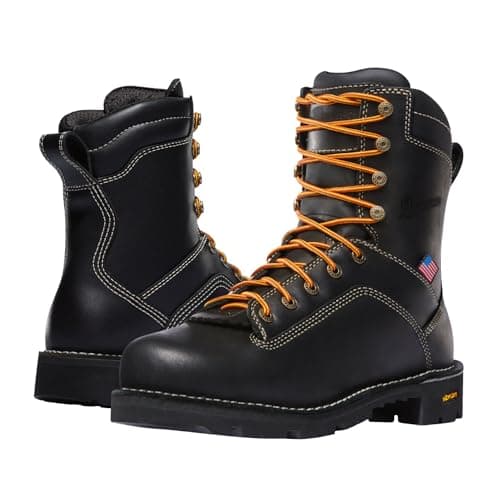 Danner Quarry 8" Waterproof Alloy ToeA stiff shank and a defined heel - the two things a climbing boot genuinely needs. | Climbing and all-day pole work | 8.9 | |
| 2 | 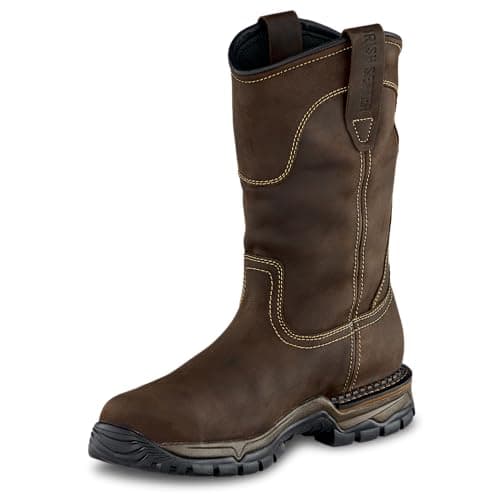 Irish Setter Two Harbors 11" Steel ToeAn 11-inch steel-toe pull-on with real leather quality for ground and line work. | Height and spatter-free pull-on wear | 7.8 | |
| 3 | 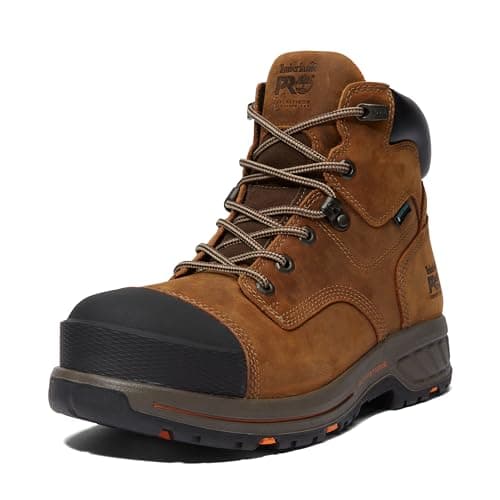 Timberland PRO Helix HD 6" Composite Toe WaterproofEH rated, fully non-metallic, waterproof - the clean spec for aerial and substation work. | Bucket truck and substation work | 7.9 | |
| 4 | 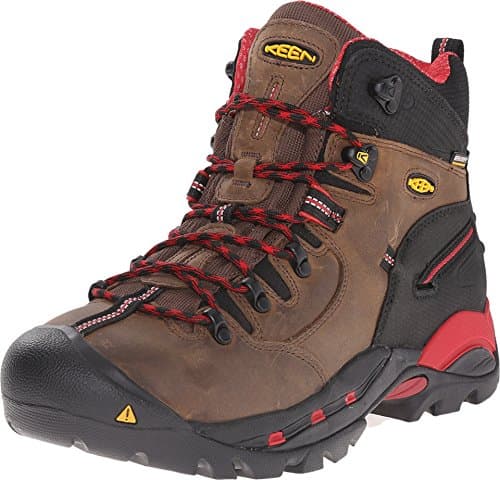 KEEN Utility Pittsburgh 6" Steel Toe WaterproofResoleable, waterproof and the widest toe box here - for feet other boots punish. | Wide feet in a welted boot | 8.0 |
#ad Prices pulled from Amazon and stamped as of October 6, 2026; they change, and we show no number we cannot verify. How we are funded.
Top pick · Climbing and all-day pole work
Danner Quarry 8" Waterproof Alloy Toe
A stiff shank and a defined heel - the two things a climbing boot genuinely needs.
Pole climbing puts your entire body weight through the gaff and the boot's shank, concentrated across a narrow band under the arch. A soft, flexible boot lets your foot deform around that load, which is both exhausting and a control problem. A stiff shank distributes it, and a defined heel gives the climber a positive shelf to sit against.
The Quarry is a stitchdown 8-inch Gore-Tex boot with an alloy toe, and crucially it is recraftable, so a boot that fits properly can be rebuilt rather than replaced. For a trade where boots are both expensive and fit-critical, that matters.
Specs that matter
- Toe:
- Alloy toe, ASTM F2413
- Height:
- 8 inch
- Waterproof:
- Gore-Tex lined
- Build:
- Stitchdown, recraftable
Our scoring
- Climber compatibility
- 9.2
- Shank support
- 9.4
- EH protection
- 8.4
- Waterproofing
- 9.2
- Value
- 7.4
What works
- Danner will recraft it, so the price is spread over many years
- Gore-Tex is the most reliable waterproof lining in footwear
- Alloy toe is lighter than steel at the same rating
What to know
- Expensive up front
- Stiff and heavy for flat-concrete work
- Long break-in
No. 2 · Height and spatter-free pull-on wear
Irish Setter Two Harbors 11" Steel Toe
An 11-inch steel-toe pull-on with real leather quality for ground and line work.
Not every lineman climbs. A great deal of the trade is ground work, trenching, transformer and underground work, and there a tall pull-on with full-grain leather and an EH rating is a strong and simple answer - no laces to deal with, plenty of shaft to keep debris and brush out.
It is hot and heavy, and the pull-on fit needs to be right at purchase since you cannot cinch it. For a climber, a laced boot generally gives better control.
Specs that matter
- Toe:
- Steel toe, ASTM F2413
- Height:
- 11 inch pull-on
- Electrical hazard:
- EH rated
- Upper:
- Full-grain leather
Our scoring
- Climber compatibility
- 6.4
- Shank support
- 8.2
- EH protection
- 8.6
- Waterproofing
- 7.2
- Value
- 7.8
What works
- 11 inches of leather is real protection against spatter and debris
- No laces to burn through when welding
- Red Wing-family leather quality
What to know
- Hot — that much leather does not breathe
- Heavy
- Hard to size when your calf is large or small
No. 3 · Bucket truck and substation work
Timberland PRO Helix HD 6" Composite Toe Waterproof
EH rated, fully non-metallic, waterproof - the clean spec for aerial and substation work.
Where you are not climbing poles, the priorities swing back to the ordinary electrical-trade spec: EH rated, non-metallic, waterproof, stable to stand on in a bucket for hours. The Helix HD does all of that and is comfortable enough for a full week.
It is not a climbing boot - the sole and shank are not built for gaffs - so if climbers are part of your work, this is a second pair rather than the only pair.
Specs that matter
- Toe:
- Composite toe, ASTM F2413
- Height:
- 6 inch
- Waterproof:
- Yes
- Electrical hazard:
- EH rated
Our scoring
- Climber compatibility
- 4.0
- Shank support
- 7.4
- EH protection
- 9.5
- Waterproofing
- 9.0
- Value
- 7.8
What works
- Balances cushioning and support better than either Boondock or Hypercharge
- Wide platform feels stable on ladders and scaffold planks
- EH rated and non-metallic
What to know
- Middle-of-the-range in every dimension, best at nothing
- Membrane means warm feet in summer
- Cement construction, not resoleable
No. 4 · Wide feet in a welted boot
KEEN Utility Pittsburgh 6" Steel Toe Waterproof
Resoleable, waterproof and the widest toe box here - for feet other boots punish.
Linemen spend all day in boots that are laced tight for support, and a narrow toe box in that situation becomes genuinely painful. KEEN's asymmetrical steel caps give the widest real toe room in safety footwear, and the Goodyear welt means it can be resoled.
Steel rather than composite, so check whether your utility specifies non-metallic footwear. The moderate heel is usable with climbers but less defined than a purpose-built climbing boot's.
Specs that matter
- Toe:
- Asymmetrical steel toe, ASTM F2413
- Height:
- 6 inch
- Waterproof:
- Yes, KEEN.DRY membrane
- Build:
- Goodyear welt
Our scoring
- Climber compatibility
- 6.8
- Shank support
- 8.0
- EH protection
- 8.8
- Waterproofing
- 8.6
- Value
- 7.6
What works
- Left and right specific toe caps, so the toe box is shaped like a foot
- Welted, so it can be resoled
- The go-to recommendation for wide feet in a safety toe
What to know
- Runs large — most buyers size down a half
- Steel toe in a waterproof boot is heavy
- Toe box looks bulky if that bothers you
EH rating: the same caveat, and it matters more here
An electrical-hazard rating under ASTM F2413 means the sole and heel passed a dielectric test in dry conditions and provide secondary protection against accidental contact. For a trade that works around energized conductors every day, the gap between that and what people assume is worth repeating: the boots are a backstop against a mistake, not a system of protection.
The real controls are the ones in NFPA 70E and OSHA 1910.269 - de-energizing where possible, approach boundaries, rubber insulating gloves and sleeves tested to ASTM D120 and D1051, arc-rated clothing, and cover-up. A wet, worn or metal-contaminated sole has lost its EH rating regardless of the label. Our ASTM guide covers the marking, and electrical hazard boots is the broader shortlist.
Arch pain is the characteristic complaint
Linemen report midfoot and arch fatigue far more than heel pain, for the same reason electricians on ladders do: load concentrated across a narrow band under the arch rather than spread across the foot. The fix is structural support rather than cushioning - a rigid or semi-rigid insole, not a gel pad. Insoles for flat feet covers the support-first options, and why work boots hurt explains reading the symptom.
What we would skip
Skip wedge soles entirely if you climb - no heel shelf, no climber seat. Skip boots with metal shanks and exposed metal hardware for a trade this close to energized equipment. Skip 6-inch boots for climbing work; you need the shaft for ankle control. And skip the temptation to economize here: a climbing boot is load-bearing safety equipment, and a resoleable boot that fits properly is cheaper over five years than three cheap pairs that do not.
Frequently asked
What boots do linemen wear for climbing?
Tall laced boots - typically 8 to 16 inches - with a stiff shank and a defined heel that the climber stirrup can seat against. The shank stiffness is what distributes the load from the gaff, and a wedge sole is unsuitable because it has no heel shelf. Always check your climber manufacturer's compatibility guidance.
Do lineman boots need to be EH rated?
Yes, and most utilities require it - but understand what it is. An EH rating is secondary protection against accidental contact in dry conditions, tested under ASTM F2413. It is not insulation. Rubber insulating gloves and sleeves, arc-rated clothing and NFPA 70E procedures are the real protection.
Why do my arches hurt from pole climbing?
Because climbing concentrates your body weight across a narrow band under the midfoot through the gaff, rather than spreading it across the whole foot. The answer is a stiffer shank in the boot and a rigid or semi-rigid support insole - not softer cushioning, which lets the foot deform more.
Can I wear composite toe boots as a lineman?
Usually yes, and many utilities now prefer or require non-metallic footwear because it removes conductive material from the boot. Composite meets the same ASTM impact rating as steel. Check your employer's written footwear specification, since requirements vary by utility.
Sources
Back to Work Boots, or see how we pick. Spotted something wrong? We publish corrections — see our editorial policy.