Best for construction
Best Knee Pads for Construction
Hard-capped gel pads for rough ground and debris - plus why most pads get abandoned.
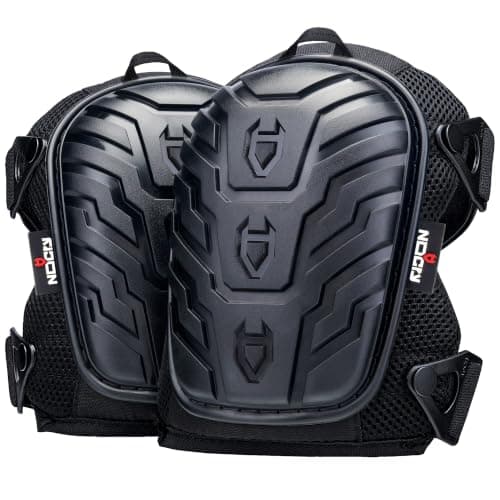
Top pick: NoCry Professional Gel Knee Pads
$29.97$35.98· Amazon4 shortlists · live Amazon prices
The surface you kneel on decides the pad. Gravel and polished tile need opposite things.
Best for construction
NoCry Professional Gel Knee Pads
#ad Price as of October 6, 2026. How we are funded
Best for construction
Hard-capped gel pads for rough ground and debris - plus why most pads get abandoned.
Top pick: NoCry Professional Gel Knee Pads
$29.97$35.98· Amazon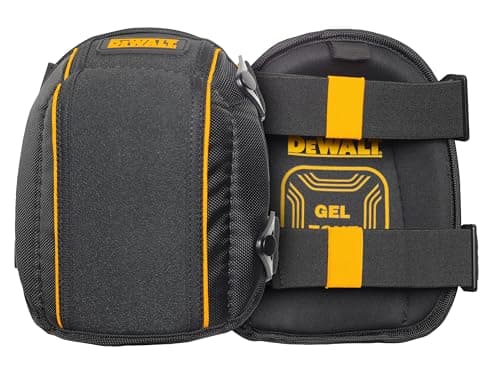
Best for flooring
Flat-capped, non-marking pads that stay put on tile and sheet goods, where domed caps slide.
Top pick: DEWALT Flooring Knee Pads with Gel
$31.48· Amazon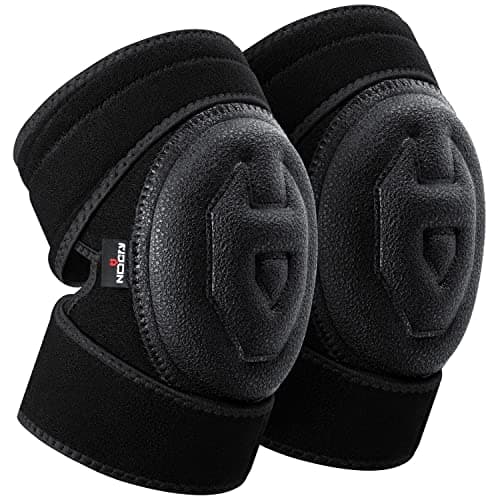
Best for roofing
High-grip pads for sloped, gritty roof surfaces - where a sliding pad is a safety problem.
Top pick: NoCry Gel Knee Pads with Soft Foam Cushion
$27.99· AmazonBest women's knee pads
Pads that adjust small enough to stay put, plus the workarounds when they do not.
Top pick: NoCry Gel Knee Pads with Soft Foam Cushion
$27.99· Amazon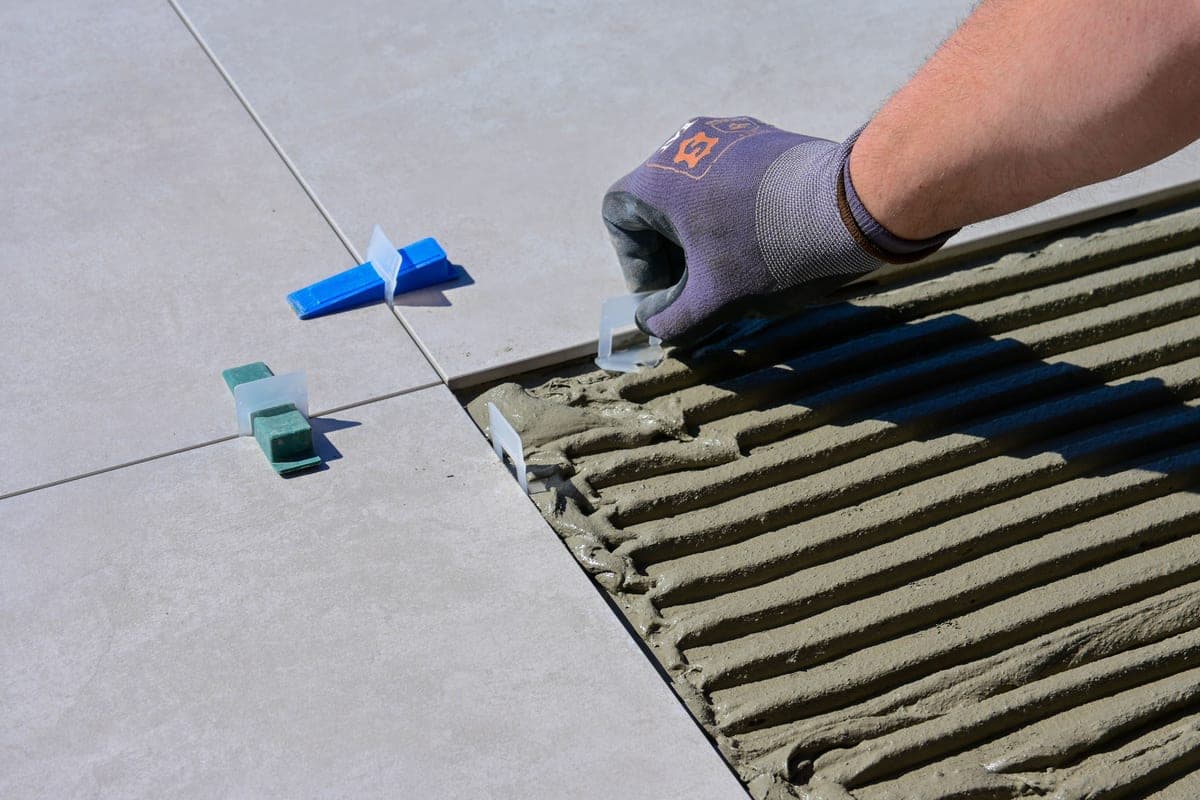
Knee pads are cheap, they are the difference between finishing a career on your own knees and not, and almost everyone who needs them owns a pair they never wear. The reason is nearly always the same: the pads they bought are wrong for the surface they work on, so the pads either slide, dig in behind the knee, or are too bulky to walk in - and a pad you take off is a pad that is not protecting you.
Kneeling load is not trivial. Kneeling puts most of your upper-body weight through a joint that is not built to carry it, concentrated on a patch the size of a coaster, and the research on occupational kneeling consistently associates sustained kneeling trades with higher rates of knee osteoarthritis and meniscal damage. Spreading that load is the entire job of the pad.
The outer shell is the part to shop first, and it is surface-specific. A hard domed cap rolls and pivots nicely on rough ground, protects against sharp debris, and skates alarmingly on smooth tile or sealed concrete. A flat, broad, grippy cap stays put on finished floors and lets you shuffle without standing up, and rocks awkwardly on rubble. This is why knee pads for flooring and knee pads for construction do not share a single pick.
If you work on a finished surface there is a second consideration: whether the cap marks. A non-marking cap on a client's new hardwood is not a comfort feature, it is the difference between a happy customer and a repair bill.
Foam is light, cheap, and bottoms out under concentrated load - which is exactly what kneeling is. Gel spreads pressure far better and weighs more. The best general-purpose pads use a gel core over a foam base, getting the pressure distribution of gel with some of the lightness of foam. Pure foam pads are fine for occasional kneeling and a poor choice if you kneel for hours.
There is a third approach worth knowing about: a thigh-support platform that transfers part of the load above the knee onto the thigh, taking it off the joint itself rather than just padding it. These are bulky and awkward to walk in, and for someone who kneels continuously - a floor layer, a tile setter - they are the most protective option here. Both of those construction choices are compared in detail on the construction and flooring pages.
Every pad is held on by straps behind the knee, and that is the failure point for comfort. Straps that sit in the crease behind the knee chafe and cut off circulation; a single strap lets the pad rotate as you move, so it ends up on the side of your leg instead of the front. What you want is two straps positioned above and below the joint crease, wide enough to spread pressure, with buckles that release one-handed because you will take them off twenty times a day.
The alternative that avoids straps entirely is a pant with a built-in knee-pad pocket, which holds a foam insert exactly where it belongs and cannot rotate or chafe. Those inserts are thinner than a strap-on pad, so they are a comfort solution rather than heavy protection - good for a day of intermittent kneeling, not enough for a floor install. If that interests you, the double-knee pants in our work pants hub are where to look.
Roofing is the hardest case on this hub, because you are kneeling on a slope with grit under you, often in heat, and a pad that slides is actively dangerous rather than merely annoying. Grip on the cap outranks cushioning there. Women's knee pads exists because almost all pads are built for an average male leg circumference and the straps on a standard pad frequently cannot cinch down enough to stay put - a fit problem, not a preference.
One last note on the whole-body picture: if your knees hurt at the end of a day you spent standing rather than kneeling, the problem is probably underfoot rather than at the knee. Read why work boots hurt and look at insoles for concrete before buying pads you do not need.
A pad with a broad, flat, non-marking and anti-slip cap. On smooth finished surfaces a hard domed cap slides, which is both unsafe and exhausting because you fight it all day. Flat-capped flooring pads let you pivot and shuffle without standing up, which is the movement that actually matters in that trade.
Gel, if you kneel for sustained periods, because foam bottoms out under concentrated load and stops protecting. Foam is lighter and cheaper and is fine for occasional kneeling. The best general-purpose pads layer a gel core over foam to get both.
Usually a single-strap design, straps sitting in the crease behind the knee, or a pad sized for a larger leg than yours. Look for two straps positioned above and below the joint, and check the adjustment range against your actual leg circumference before buying.
They solve different problems. Pants with knee-pad pockets are more comfortable, cannot rotate and are better for a day of intermittent kneeling. Strap-on pads are thicker and far more protective for sustained kneeling. People who kneel for a living often use both.