Best for electricians
Best Work Boots for Electricians
EH rated and non-metallic are the two specs that matter. Here is what each one actually buys you.
Electricians have the clearest footwear spec of any trade and the most misunderstood one. Nearly every boot marketed to electricians carries an EH rating, almost nobody selling them explains what the rating is, and the gap between what buyers assume and what the standard actually certifies is wide enough to matter. So before the picks, the thing worth knowing: EH is a backup. This page starts from the work boots hub shortlists and narrows to the two specs that decide this trade.
What an EH rating actually certifies
Under ASTM F2413, an electrical-hazard-rated boot has had its sole and heel tested to withstand a specified voltage under dry conditions without current passing through. That is it. It is explicitly described as secondary protection against accidental contact with live circuits - a last line of defense if something goes wrong, not a means of working on energized equipment.
- It is not insulation. Live work requires rubber insulating gloves and sleeves tested to ASTM D120/D1051, arc-rated clothing, and the lockout and approach-boundary procedures in NFPA 70E.
- It is tested dry. A wet sole conducts, and so does a sole soaked in conductive dust or slurry.
- It degrades. A worn-through outsole, or one with a nail or metal swarf embedded in it, has lost the rating even though the label still says EH.
- A metal shank or exposed metal eyelets create conductive paths the test does not cover - which is the argument for non-metallic construction.
Quick picks
Ranked by our published scoring rubric. Tap any row for the full write-up.
| # | Product | Best for | Score | Price |
|---|---|---|---|---|
| 1 | 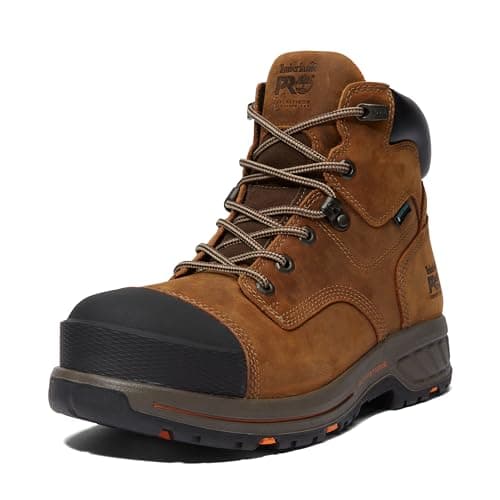 Timberland PRO Helix HD 6" Composite Toe WaterproofEH rated, fully non-metallic, waterproof, and comfortable enough for a full week. | Daily commercial electrical work | 8.8 | |
| 2 | 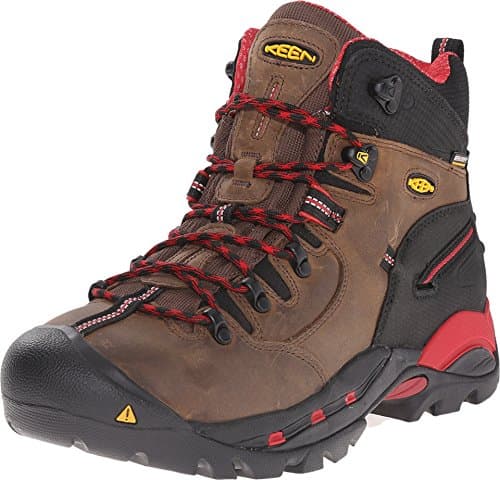 KEEN Utility Pittsburgh 6" Steel Toe WaterproofThe widest genuine toe box in safety footwear, on a resoleable welt. | Wide feet, and conduit work on your knees | 8.2 | |
| 3 | 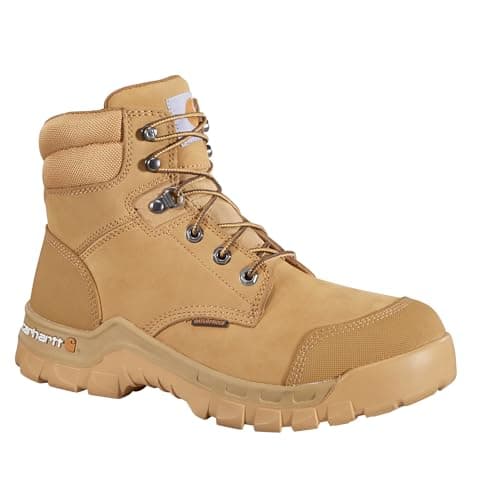 Carhartt Rugged Flex 6" Composite Toe WaterproofLight, flexible, non-metallic, and it does not mark a customer's floor. | Residential and service calls | 8.5 | |
| 4 | 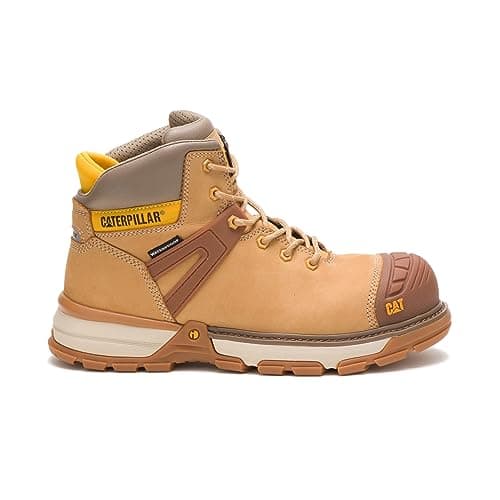 Caterpillar Excavator Superlite Waterproof Composite ToeThe lightest fully non-metallic pick here, at the lowest price. | Keeping the weight down | 8.4 |
#ad Prices pulled from Amazon and stamped as of October 6, 2026; they change, and we show no number we cannot verify. How we are funded.
Top pick · Daily commercial electrical work
Timberland PRO Helix HD 6" Composite Toe Waterproof
EH rated, fully non-metallic, waterproof, and comfortable enough for a full week.
For an electrician the spec sheet question is simple: EH rated, composite toe, no metal anywhere in the boot. The Helix HD meets all three and then adds a waterproof membrane and a wide, stable platform, which is what you want when you spend the day on a ladder or a scissor lift rather than walking.
It sits in the middle of the Timberland PRO range, which is usually a criticism and here is the point - commercial electrical work does not need demolition-grade stiffness or athletic-shoe lightness. It needs a stable, compliant boot you forget about. Pair it with non-metallic gloves for the mechanical side of the job.
Specs that matter
- Toe:
- Composite toe, ASTM F2413
- Height:
- 6 inch
- Waterproof:
- Yes
- Electrical hazard:
- EH rated
Our scoring
- EH compliance
- 9.5
- Non-metallic build
- 9.5
- Ladder stability
- 8.8
- All-day comfort
- 8.2
- Value
- 7.8
What works
- Balances cushioning and support better than either Boondock or Hypercharge
- Wide platform feels stable on ladders and scaffold planks
- EH rated and non-metallic
What to know
- Middle-of-the-range in every dimension, best at nothing
- Membrane means warm feet in summer
- Cement construction, not resoleable
No. 2 · Wide feet, and conduit work on your knees
KEEN Utility Pittsburgh 6" Steel Toe Waterproof
The widest genuine toe box in safety footwear, on a resoleable welt.
Electrical rough-in involves a lot of kneeling, crouching in ceilings and standing on rungs, and a toe box that squeezes your forefoot becomes unbearable in those positions. KEEN's asymmetrical caps are shaped left and right rather than symmetrically, which is why this is the standard recommendation for anyone whose feet are wide.
One caveat specific to this trade: this model has a steel toe. It is EH rated and perfectly legal for general electrical work, but if your site specifies non-metallic footwear you need the composite version or one of the other picks here. Check before you buy.
Specs that matter
- Toe:
- Asymmetrical steel toe, ASTM F2413
- Height:
- 6 inch
- Waterproof:
- Yes, KEEN.DRY membrane
- Build:
- Goodyear welt
Our scoring
- EH compliance
- 8.8
- Non-metallic build
- 5.0
- Ladder stability
- 8.6
- All-day comfort
- 9.2
- Value
- 7.6
What works
- Left and right specific toe caps, so the toe box is shaped like a foot
- Welted, so it can be resoled
- The go-to recommendation for wide feet in a safety toe
What to know
- Runs large — most buyers size down a half
- Steel toe in a waterproof boot is heavy
- Toe box looks bulky if that bothers you
No. 3 · Residential and service calls
Carhartt Rugged Flex 6" Composite Toe Waterproof
Light, flexible, non-metallic, and it does not mark a customer's floor.
Service and residential work is a different job from commercial rough-in: you are in and out of a van, walking through finished houses, up into attics and down into crawlspaces. What matters is a light boot that flexes immediately, does not need breaking in, and does not leave black marks on a homeowner's hallway.
The Rugged Flex is non-metallic, waterproof and about as close to a shoe as a safety boot gets while still being EH rated. The cushioned EVA midsole will compress over a year of daily wear, which is the price of the comfort.
Specs that matter
- Toe:
- Composite toe, ASTM F2413
- Height:
- 6 inch
- Waterproof:
- Yes
- Midsole:
- Cushioned EVA
Our scoring
- EH compliance
- 8.8
- Non-metallic build
- 9.5
- Ladder stability
- 7.6
- All-day comfort
- 9.0
- Value
- 8.6
What works
- Flexes immediately — close to no break-in
- Lighter than the Force HD with the same toe protection
- Cushioned midsole helps on hard floors
What to know
- EVA midsole compresses over a year of daily wear
- Softer upper than the Force HD
- Membrane runs hot in summer
Best value · Keeping the weight down
Caterpillar Excavator Superlite Waterproof Composite Toe
The lightest fully non-metallic pick here, at the lowest price.
Carbon composite toe, waterproof, EH rated, and noticeably lighter than everything above it. For an apprentice buying a first compliant boot, or anyone whose complaint is that safety boots are heavy, this is the sensible entry point.
The light build is also the limitation: less underfoot protection than a heavier boot and an outsole that will wear sooner. For clean commercial work that is a reasonable trade; for industrial sites with debris underfoot it is not.
Specs that matter
- Toe:
- Carbon composite toe, ASTM F2413
- Height:
- 6 inch
- Waterproof:
- Yes
- Weight:
- Lightweight construction
Our scoring
- EH compliance
- 8.6
- Non-metallic build
- 9.5
- Ladder stability
- 7.4
- All-day comfort
- 8.4
- Value
- 9.2
What works
- Genuinely light for a waterproof safety boot
- Non-metallic throughout — no metal detector problems
- Cheaper than most composite-toe waterproof boots
What to know
- Light build means the outsole wears sooner
- Less underfoot protection than a heavier boot
- Not resoleable
Why non-metallic is the other half of the spec
Many sites now specify non-metallic footwear for electrical crews, and even where it is not required it is the better default. A composite toe meets the same ASTM impact rating as steel, contains no conductive material, conducts far less cold in winter, and clears metal detectors in secure facilities. The only real costs are a slightly bulkier toe box and a modest price premium. Composite toe vs steel toe covers the full trade, and composite toe work boots is the broader shortlist.
Comfort factors specific to this trade
Electrical work is unusual in how much time it spends on rungs. Standing on a narrow ladder rung concentrates load across the arch, which is why electricians report arch and midfoot fatigue more than heel pain - and why a boot with a supportive shank matters more here than cushioning does. If your arches ache at the end of a day on a ladder, a support insole will help more than a softer boot, and why work boots hurt explains how to read the symptom.
The other trade-specific detail is kneeling. Rough-in means hours on your knees in unfinished spaces, which makes knee pads a bigger comfort upgrade than most electricians expect, and makes double-knee work pants for electricians worth the money.
What we would skip
Skip any boot with exposed metal eyelets or speed hooks if you can - they are a conductive path on the outside of the boot for no benefit. Skip steel-shank boots for this trade specifically. And treat "EH rated" on a cheap boot with worn-through soles as what it is: an expired claim. Replace the boot when the outsole is finished, not when the leather fails.
Frequently asked
What does EH rated mean on work boots?
Electrical hazard rated under ASTM F2413: the sole and heel passed a dielectric test and provide secondary protection against accidental contact with live circuits in dry conditions. It is a backup if something goes wrong - not insulation, and not authorization to work energized circuits. It is void once the sole is wet, worn through, or has metal embedded in it.
Do electricians need composite toe instead of steel toe?
Many sites require non-metallic footwear, and even where they do not, composite is generally the better choice: same ASTM impact rating, no conductive material, lighter, warmer in winter, and it clears metal detectors. Check your site's specification, because some require non-metallic explicitly.
Are EH boots enough protection for live electrical work?
No. Live work requires rubber insulating gloves and sleeves tested to ASTM D120, arc-rated clothing, and the approach boundaries and procedures in NFPA 70E. EH footwear is explicitly secondary protection against accidental contact, and the standard says so.
Why do my feet hurt from standing on ladders?
A ladder rung concentrates your whole body weight across a narrow band under your arch, which is a support problem rather than a cushioning one. A semi-rigid support insole and a boot with a stiffer shank help more than a softer boot does.
Sources
Back to Work Boots, or see how we pick. Spotted something wrong? We publish corrections — see our editorial policy.