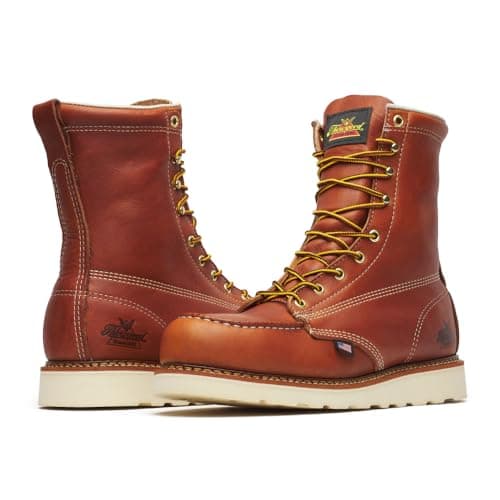
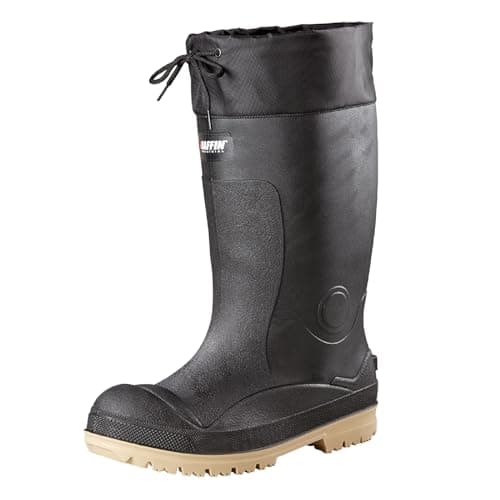
Composite vs steel toe
Composite Toe vs Steel Toe
Same protection at the same rating. This is a weight, temperature and metal-detector decision.
This is the most consequential spec decision in work footwear and the one most often framed wrongly. It gets discussed as a safety question - which is safer? - when the honest answer is that at the same rating neither is safer, because ASTM F2413 certifies measured performance rather than material. What differs is everything else, and those differences matter a great deal in daily use.
The rating is the rating
A safety-toe boot's marking reads something like `ASTM F2413-24 M I/75 C/75 EH`. The I/75 means impact resistance tested at 75 foot-pounds; C/75 means compression resistance at 2,500 pounds. A steel cap rated I/75 C/75 and a composite cap rated I/75 C/75 have both passed the same test.
So anyone telling you steel is safer is wrong at the same rating, and anyone telling you composite is safer is equally wrong. ASTM F2413 safety ratings explained decodes the whole marking.
The comparison that actually matters
| Factor | Steel | Composite | Who cares |
|---|---|---|---|
| Protection at same rating | Identical | Identical | Nobody - this is settled |
| Weight | Heavier | Lighter | Anyone on their feet all day |
| Cold conduction | Conducts cold badly | Much warmer | Outdoor winter trades |
| Toe box bulk | Thinner cap, slimmer | Thicker cap, bulkier | Anyone with a narrow foot or aesthetic preference |
| Metal detectors | Sets them off | Clears them | Airports, secure facilities, some food plants |
| Electrical work | Conductive mass in the boot | Non-metallic | Electricians, linemen, HVAC |
| Price | Cheaper | Usually a premium | Tight budgets |
Head to head
Ranked by our published scoring rubric. Tap any row for the full write-up.
| # | Product | Best for | Score | Price |
|---|---|---|---|---|
| 1 | 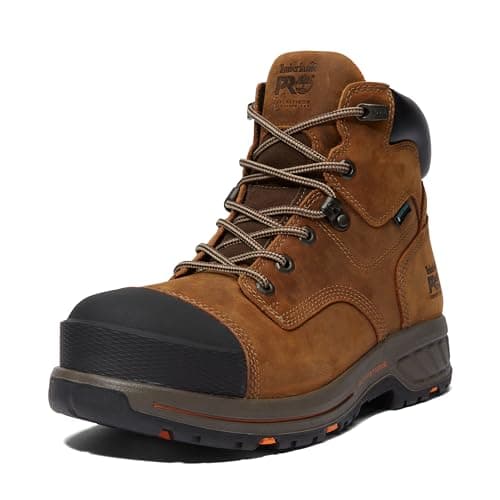 Timberland PRO Helix HD 6" Composite Toe WaterproofWinner for most people: same protection, lighter, warmer, non-metallic. | Composite: cold, electrical and metal detectors | 8.6 | |
| 2 | 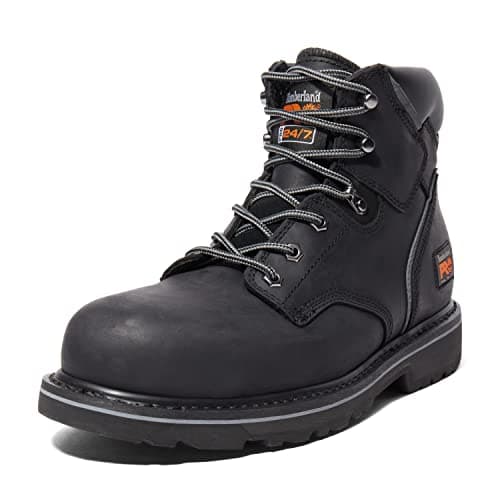 Timberland PRO Pit Boss 6" Steel ToeWinner on price and profile - steel's two genuine advantages. | Steel: the slimmest toe box and the lowest price | 8.0 | |
| 3 | 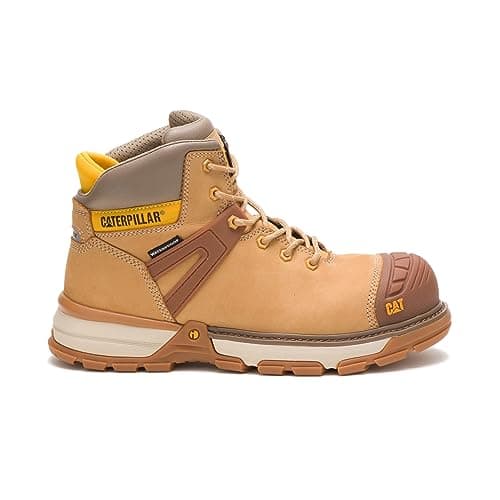 Caterpillar Excavator Superlite Waterproof Composite ToeThe clearest demonstration of composite's weight advantage, at a low price. | The lightest composite option | 8.5 |
#ad Prices pulled from Amazon and stamped as of October 6, 2026; they change, and we show no number we cannot verify. How we are funded.
Winner for most people · Composite: cold, electrical and metal detectors
Timberland PRO Helix HD 6" Composite Toe Waterproof
Winner for most people: same protection, lighter, warmer, non-metallic.
At the same ASTM rating a composite cap protects identically to steel, so the decision rests on the secondary properties - and composite wins most of them. It is lighter, it conducts far less cold, it clears metal detectors, and it removes conductive material from the boot for electrical work.
This one is fully non-metallic, waterproof and EH rated on a stable platform. The costs are a bulkier toe box, because composite needs more thickness for the same rating, and a price premium.
Specs that matter
- Toe:
- Composite toe, ASTM F2413
- Height:
- 6 inch
- Waterproof:
- Yes
- Electrical hazard:
- EH rated
Our scoring
- Protection at rating
- 9.0
- Low weight
- 8.2
- Cold weather
- 8.6
- Slim toe profile
- 6.4
- Value
- 7.8
What works
- Balances cushioning and support better than either Boondock or Hypercharge
- Wide platform feels stable on ladders and scaffold planks
- EH rated and non-metallic
What to know
- Middle-of-the-range in every dimension, best at nothing
- Membrane means warm feet in summer
- Cement construction, not resoleable
Winner on value · Steel: the slimmest toe box and the lowest price
Timberland PRO Pit Boss 6" Steel Toe
Winner on price and profile - steel's two genuine advantages.
Steel's real selling points are that the cap is thinner, so the toe box is less bulky, and the boots are cheaper. For warm indoor work with no metal detection and no electrical exposure, those are the only differences that apply - and then steel is simply the better value.
This is the archetype: EH rated, roomy, inexpensive, widely stocked. Not waterproof, thin stock insole, and a steel cap that will be noticeably cold in winter.
Specs that matter
- Toe:
- Steel toe, ASTM F2413
- Height:
- 6 inch
- Electrical hazard:
- EH rated
- Waterproof:
- No
Our scoring
- Protection at rating
- 8.6
- Low weight
- 6.8
- Cold weather
- 5.0
- Slim toe profile
- 8.6
- Value
- 9.4
What works
- Among the cheapest genuinely EH-rated steel-toe boots sold
- Wide, square toe box suits thick socks and swollen feet
- Oiled nubuck shrugs off the abuse that kills cheaper uppers
What to know
- Not waterproof — wet trades will soak through
- Stock insole is thin and wants replacing on day one
- Cement construction, so it cannot be resoled
No. 3 · The lightest composite option
Caterpillar Excavator Superlite Waterproof Composite Toe
The clearest demonstration of composite's weight advantage, at a low price.
Carbon composite in a deliberately light waterproof boot, priced below many steel-toe waterproof boots - which undercuts the usual assumption that composite always costs more.
Light construction means a thinner outsole that wears sooner and less protection underfoot. For clean work where weight is your complaint, it makes the case for composite plainly.
Specs that matter
- Toe:
- Carbon composite toe, ASTM F2413
- Height:
- 6 inch
- Waterproof:
- Yes
- Weight:
- Lightweight construction
Our scoring
- Protection at rating
- 7.8
- Low weight
- 9.4
- Cold weather
- 8.4
- Slim toe profile
- 6.4
- Value
- 9.2
What works
- Genuinely light for a waterproof safety boot
- Non-metallic throughout — no metal detector problems
- Cheaper than most composite-toe waterproof boots
What to know
- Light build means the outsole wears sooner
- Less underfoot protection than a heavier boot
- Not resoleable
The trap: composite toe is not non-metallic
This catches people out when a site specifies non-metallic footwear. A boot can have a composite cap and still contain a steel shank in the midsole, steel eyelets or hooks, and sometimes a steel puncture plate. If the requirement is genuinely non-metallic - for metal detection or electrical reasons - you need to confirm the whole boot.
Manufacturers usually state it clearly when a boot is fully non-metallic, because it is a selling point. If the spec sheet is silent, assume there is steel in the shank. Composite toe work boots and electrical hazard boots cover the implications.
The cold argument, which is the strongest one
Of all the differences, cold conduction is the one people report most viscerally. Steel conducts heat away from your toes far faster than a composite material does, and in sustained cold that is not subtle - it is one of the most common winter complaints about safety footwear, and it is a material property rather than an insulation problem you can solve with socks. For anyone working outdoors through winter, it is on its own a sufficient reason to choose composite: winter work boots.
The verdict, plainly
Composite for cold-weather work, electrical trades, metal-detector environments, and anyone whose complaint is weight - which is most people. Steel if you want the slimmest toe box, or if price is the binding constraint and you work warm, indoors and away from electricity. Neither is safer. If the toe box pinches either way, that is a geometry problem rather than a material one: boots for wide feet.
Frequently asked
Is a composite toe as safe as a steel toe?
Yes, at the same ASTM F2413 rating - the standard certifies measured impact and compression performance rather than material, so an I/75 C/75 composite cap and an I/75 C/75 steel cap protect identically. Neither is safer than the other.
Which is better, composite or steel toe?
Composite for most people: lighter, far warmer in cold, non-metallic for electrical work and metal detectors. Steel for a slimmer toe box and a lower price. Since protection is equal at the same rating, it is a weight, temperature and environment decision.
Are composite toe boots non-metallic?
The cap is, but the boot may not be - many still have a steel shank, steel eyelets or a steel puncture plate. If a site requires non-metallic footwear, look for a boot explicitly described as fully non-metallic rather than assuming.
Why are steel toe boots cold in winter?
Because steel conducts heat away from your toes far faster than composite materials do, and the cap sits directly against the front of your foot. It is a material property, not an insulation shortfall, which is why thicker socks do not fix it and composite does.
Why is a composite toe box bulkier?
Composite materials need more thickness than steel to achieve the same impact rating, so the cap is physically thicker. That is the main genuine cost of choosing composite, along with a usual price premium.
Sources
Back to Comparisons, or see how we pick. Spotted something wrong? We publish corrections — see our editorial policy.