Best hi-vis gear
Best Hi-Vis Work Jackets & Vests
A class is an area of material, not a brightness. Here is what Class 2 and Class 3 really require, and the five garments worth owning.
The short answer: buy the JKSafety Class 2 vest if you want a pocketed general site vest, the Ergodyne GloWear 8248Z if you want a Class 2 that survives the season, the Ergodyne Class 3 surveyor vest for roadway and night work in mild weather, the Ergodyne Class 3 insulated bomber for cold-weather roadway work, and the Carhartt HV Class 3 sweatshirt if you want the layer you will actually keep on.
High-visibility apparel is the PPE category people treat most casually and understand least, which is an odd combination given what it is protecting against. The job of a hi-vis garment is to buy a driver enough time to recognize that the shape ahead is a person and to react. Everything in ANSI/ISEA 107 - the material areas, the sleeve requirements, the placement of the retroreflective bands - exists to serve that single outcome, and once you see the standard that way the shopping decisions become obvious.
Classes and types, in plain terms
| What it is | Typically used for | |
|---|---|---|
| Class 2 | The common site vest. Background and retroreflective material above the Class 1 minimum, no sleeve requirement. | General construction inside a fence line, warehouse yards, plant work, parking areas |
| Class 3 | Substantially more material, plus sleeve coverage so arm movement reads as human motion. | Roadway work, night work, higher-speed traffic exposure, emergency response |
| Type R | Roadway - for workers exposed to traffic on public access highways. | Road crews, utility work on verges, survey |
| Type O | Off-road - for workers exposed to hazards from moving vehicles away from public roads. | Fenced sites, yards, warehouses, mines |
| Type P | Public safety - accommodates the equipment fire, police and EMS carry. | Emergency response |
The most useful thing to internalize is that the class is an area measurement. It is not a judgment about how bright the fabric looks, and it is not something a manufacturer can improve by choosing a more intense shade. That is why the jump from Class 2 to Class 3 is sleeves: adding sleeve material is how you get enough square inches onto a human body to make the next threshold, and it happens to be the material that moves most visibly as a person walks.
Quick picks
Ranked by our published scoring rubric. Tap any row for the full write-up.
| # | Product | Best for | Score | Price |
|---|---|---|---|---|
| 1 | 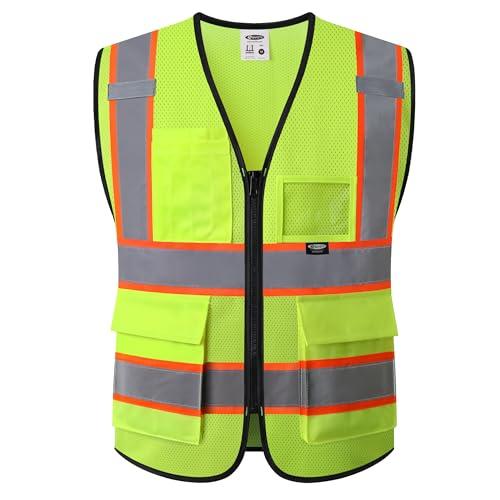 JKSafety Class 2 Hi-Vis Vest, Pockets and ZipperClass 2 coverage, a zip front and real pockets - the vest that works as a garment rather than a tabard. | A general site vest you can carry things in | 9.5 | |
| 2 | 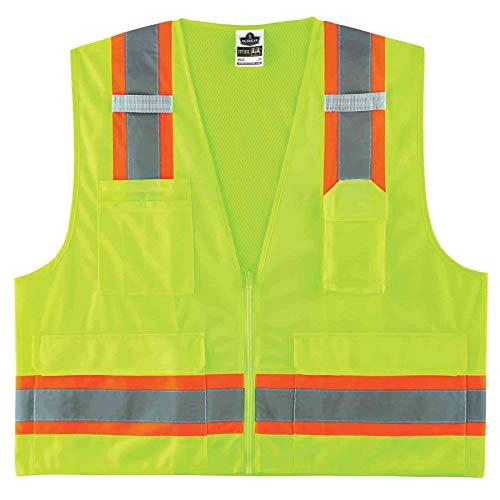 Ergodyne GloWear 8248Z Class 2 Surveyors VestTwo-tone panels and better tape from a brand that builds hi-vis as its main business. | A Class 2 vest that survives the season | 9.5 | |
| 3 | 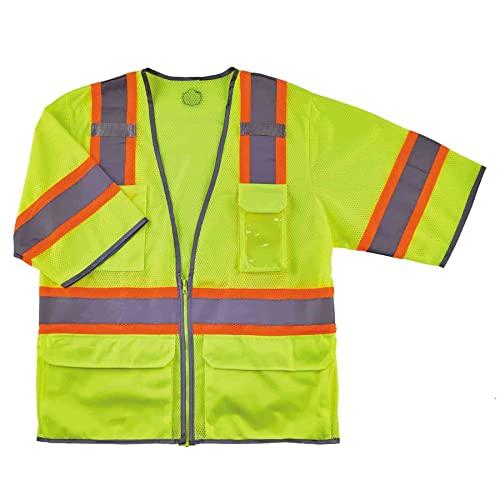 Ergodyne Class 3 Two-Tone Surveyor VestA Class 3 vest with sleeves - the specification roadway work actually calls for, without a jacket's heat. | Roadway and night work in mild weather | 9.5 | |
| 4 | 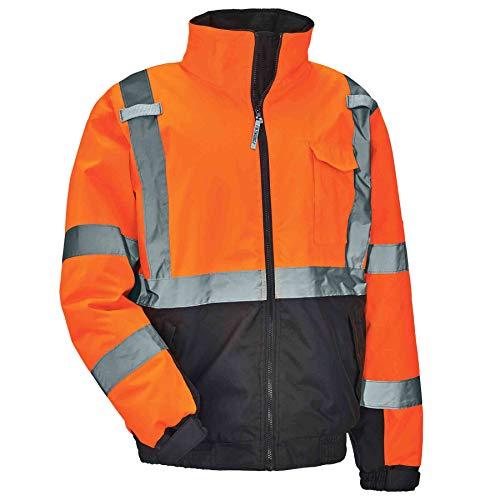 Ergodyne GloWear Class 3 Insulated BomberQuilted insulation inside a Class 3 shell - one compliant garment instead of a coat with a vest stretched over it. | Cold-weather roadway and night work | 9.6 | |
| 5 | 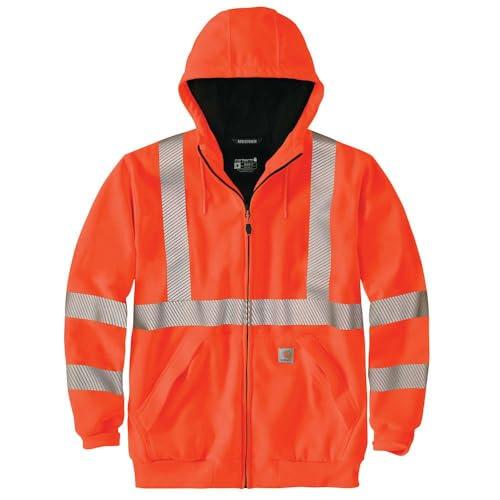 Carhartt HV Thermal-Lined Full Zip Class 3 SweatshirtCarhartt build quality in a Class 3 garment - the one that survives industrial laundering and tall sizing. | The hi-vis layer you wear all day | 9.6 |
#ad Prices pulled from Amazon and stamped as of November 14, 2026; they change, and we show no number we cannot verify. How we are funded.
Top pick · A general site vest you can carry things in
JKSafety Class 2 Hi-Vis Vest, Pockets and Zipper
Class 2 coverage, a zip front and real pockets - the vest that works as a garment rather than a tabard.
#ad Price as of November 14, 2026. How we are funded
- Our score
- 9.5/10
Category-defining
Most site vests are a visibility layer and nothing else, which is why they end up hanging on a fence. This one works as clothing: a zip front that stays closed once hook-and-loop tape has given up, and enough pockets - including radio and pen slots - that you are not carrying a phone in your teeth while you climb. For general construction, warehouse yards, plant work and anywhere inside a fence line, Class 2 is the usual requirement and this covers it at a price where owning three and keeping a clean one in the truck is reasonable.
The honest shape of the deal at this price is the tape. Reflective material on budget vests dulls with washing faster than on the specialist brands, and once it has, the vest no longer performs at night however fluorescent it still looks by day. Sizing also runs large, which matters more than usual for a garment whose class depends on presenting a certain area of material - order to your actual chest measurement, not your habit. And Class 2 is not enough for higher-speed roadway exposure, which is what the Class 3 picks below are for.
Specs that matter
- Class:
- ANSI/ISEA 107 Class 2 per the listing
- Closure:
- Zipper front
- Pockets:
- Multiple, including radio and pen
- Fabric:
- Mesh/solid panel mix
Rubric profile
Raw per-criterion marks out of 10, before weighting — this is the shape of the pick, not its published score. A low mark is a scope limit, not a fault: how we score.
- Visibility
- 8.2
- Durability
- 7.4
- Features
- 9.0
- Comfort
- 8.4
- Value
- 9.2
Why we picked it
- Pockets make it a tool-carrying garment rather than just a visibility layer
- Zip front stays put better than hook-and-loop once the tape ages
- Cheap enough to own several and keep a clean one in the truck
Good to know: Hi-vis is a consumable: once the reflective tape is cracked, faded or oil-stained it no longer performs, however good the vest still looks in daylight.
Most durable Class 2 · A Class 2 vest that survives the season
Ergodyne GloWear 8248Z Class 2 Surveyors Vest
Two-tone panels and better tape from a brand that builds hi-vis as its main business.
#ad Price as of November 14, 2026. How we are funded
- Our score
- 9.5/10
Category-defining
Ergodyne makes high-visibility apparel as a core line rather than as an accessory, and it shows in the two things that actually wear out: the retroreflective tape and the stitching where it meets the fabric. The GloWear 8248Z is a Class 2 surveyors-cut vest with a zip front and front pockets, at a price barely above the generic multipacks. The two-tone panelling is the quiet upgrade - on a muddy site an all-lime vest stops reading as high-visibility long before the tape has actually failed, and darker lower panels push that day a long way out.
The surveyor cut sits closer to the body than a boxy tabard, which snags less on scaffold and ladders. Two things to know: it is sold in broad size bands rather than per-size, so the fit is approximate at the edges, and it is still Class 2 - more durable does not mean a higher class, and no amount of quality turns a Class 2 vest into a Class 3 one. For roadway or night exposure you need the sleeves, which is the next pick.
Specs that matter
- Class:
- ANSI/ISEA 107 Class 2
- Cut:
- Surveyors, two-tone
- Closure:
- Zipper front
- Pockets:
- Multiple front pockets
Rubric profile
Raw per-criterion marks out of 10, before weighting — this is the shape of the pick, not its published score. A low mark is a scope limit, not a fault: how we score.
- Visibility
- 8.6
- Durability
- 8.6
- Features
- 8.0
- Comfort
- 8.4
- Value
- 8.6
Why we picked it
- Two-tone panels hide dirt far better than an all-lime vest
- Ergodyne's tape and stitching outlast the generic multipacks
- Surveyor cut sits closer to the body and snags less
Good to know: Two-tone is the quiet upgrade here: on a muddy site a plain lime vest stops reading as hi-vis long before the tape actually fails.
Best Class 3 vest · Roadway and night work in mild weather
Ergodyne Class 3 Two-Tone Surveyor Vest
A Class 3 vest with sleeves - the specification roadway work actually calls for, without a jacket's heat.
#ad Price as of November 14, 2026. How we are funded
- Our score
- 9.5/10
Category-defining
This is the pick that fixes the most common compliance mistake on this page. Class 3 is not a brighter Class 2; it requires substantially more background and retroreflective material and, critically, sleeve coverage - which is why every genuine Class 3 garment has sleeves or sleeve bands and no sleeveless vest is Class 3, whatever its color. The reason is motion: a driver recognizes a human shape from arm movement far sooner than from a floating rectangle of fluorescent fabric, and the standard encodes that. For roadway work, night work and anywhere traffic moves faster than a parking lot, this is the class to be in.
What it costs you is airflow. Sleeves are warmer and catch on more than a sleeveless vest, and there is more material to keep clean - which matters because dirt, not wear, is what kills hi-vis performance. It is also genuine overkill on a fenced site with no vehicle traffic, where a Class 2 vest is the correct tool and more comfortable. Buy this for the exposure you actually have rather than as a general upgrade.
Specs that matter
- Class:
- ANSI/ISEA 107 Class 3
- Sleeves:
- Yes — Class 3 requires sleeve coverage
- Cut:
- Surveyors, two-tone
- Closure:
- Zipper front
Rubric profile
Raw per-criterion marks out of 10, before weighting — this is the shape of the pick, not its published score. A low mark is a scope limit, not a fault: how we score.
- Visibility
- 9.4
- Durability
- 8.4
- Features
- 7.8
- Comfort
- 7.6
- Value
- 8.6
Why we picked it
- Class 3 is the specification most roadway and night work actually requires
- Sleeve bands make arm movement visible, which is the point of the class
- Still light enough to wear over a t-shirt in mild weather
Good to know: The jump from Class 2 to Class 3 is sleeves and total material area, not brightness — a Class 2 vest does not become Class 3 by being newer.
Best for winter · Cold-weather roadway and night work
Ergodyne GloWear Class 3 Insulated Bomber
Quilted insulation inside a Class 3 shell - one compliant garment instead of a coat with a vest stretched over it.
#ad Price as of November 14, 2026. How we are funded
- Our score
- 9.6/10
Category-defining
This solves a problem most sites handle badly. When it gets cold, people put a winter coat on and pull their hi-vis vest over the top - and a vest stretched over a bulky coat can fail the class it was certified at, because the coat changes how much of the hi-vis material is actually presented and how it sits. The clean answer is a garment that is both, and the GloWear bomber is exactly that: quilted insulation inside a Class 3 shell, so you are warm and compliant in one layer with no geometry question to argue about.
Two limits worth knowing. Quilted lining is warm rather than genuinely cold-rated - for standing still outdoors in a hard winter you will want a base layer under it, or heated gear. And it is not a waterproof shell, so rain is a separate problem to solve; treat it as an insulated layer, not a storm coat. The bomber cut is short enough not to catch when you climb, which is a real advantage over a long coat on ladders and plant.
Specs that matter
- Class:
- ANSI/ISEA 107 Class 3
- Insulation:
- Quilted lining
- Style:
- Bomber
- Use:
- Cold-weather outer layer
Rubric profile
Raw per-criterion marks out of 10, before weighting — this is the shape of the pick, not its published score. A low mark is a scope limit, not a fault: how we score.
- Visibility
- 9.2
- Durability
- 8.2
- Features
- 8.0
- Comfort
- 8.6
- Value
- 8.4
Why we picked it
- Keeps you compliant and warm in one layer rather than two
- Bomber cut is short enough not to catch when you climb
- Insulated hi-vis is the single most-requested winter item on a site
Good to know: A vest pulled over a winter coat often fails its class, because the coat's bulk changes how much hi-vis material is actually visible. One integrated garment avoids the question.
Best quality · The hi-vis layer you wear all day
Carhartt HV Thermal-Lined Full Zip Class 3 Sweatshirt
Carhartt build quality in a Class 3 garment - the one that survives industrial laundering and tall sizing.
#ad Price as of November 14, 2026. How we are funded
- Our score
- 9.6/10
Category-defining
Vest-grade material and Carhartt fabric are not in the same category, and over a year of daily wear and weekly washing that gap is the whole story. The HV thermal-lined full zip is a Class 3 sweatshirt rather than a shell: heavier fabric, better stitching, a full zip, and - unusually for high-visibility apparel - tall sizing. That last point is a compliance feature, not a comfort one: a garment that rides short on a tall person presents less material than it was certified with, and tall sizes are how you avoid that.
It is by far the most expensive thing on this page, and the thermal lining makes it too warm above roughly 50F, so it is a genuine cold-weather garment rather than a year-round one. Hi-vis colors also fade under industrial laundering regardless of brand, so even this will need replacing on a cycle. What you are buying is the number of washes it survives before that point, and the fact that it is comfortable enough to be the layer you actually wear rather than the one you pull on at the gate.
Specs that matter
- Class:
- ANSI/ISEA 107 Class 3 per the listing
- Lining:
- Thermal lined
- Closure:
- Full zip
- Sizing:
- Regular and tall
Rubric profile
Raw per-criterion marks out of 10, before weighting — this is the shape of the pick, not its published score. A low mark is a scope limit, not a fault: how we score.
- Visibility
- 9.0
- Durability
- 9.2
- Features
- 8.2
- Comfort
- 9.0
- Value
- 7.6
Why we picked it
- Carhartt fabric weight and stitching hold up to far more washing than vest-grade material
- Tall sizes, which is rare in hi-vis and matters for class coverage
- Comfortable enough to be the layer you wear all day rather than pull on at the gate
Good to know: Buy by actual chest measurement rather than habit: a hi-vis garment worn too small loses the material area its class depends on.
The five at a glance
| If your day is | Buy | Because |
|---|---|---|
| General site work inside a fence | JKSafety Class 2 Vest | Class 2 coverage plus pockets that make it worth wearing |
| A full season in one Class 2 vest | Ergodyne GloWear 8248Z | Better tape and stitching, and two-tone panels that hide dirt |
| Roadway or night work, mild weather | Ergodyne Class 3 Surveyor Vest | Class 3 sleeve coverage without a jacket's heat |
| Roadway or night work in the cold | Ergodyne Class 3 Insulated Bomber | Warm and compliant in one layer, with no geometry argument |
| Wearing hi-vis every day, all winter | Carhartt HV Class 3 Sweatshirt | Survives far more washing, and tall sizes keep the class coverage |
The winter layering mistake
This is the single most common way sites end up non-compliant without anyone noticing. In November people start wearing a winter coat, and the hi-vis vest goes on over it. The vest was certified on a human torso, not over four inches of insulated jacket - stretched over bulk it sits differently, the bands distort, and the presented material area can drop below what the class requires. Nobody inspects this, so it persists all winter, and the garment that everyone believes is doing a job is doing less of one exactly when daylight is shortest.
There are two clean fixes. Buy an integrated insulated Class 3 garment, like the bomber on this page, so there is only one layer and one certification. Or buy a Class 3 outer garment sized to go over your normal layers and wear the warm layer underneath it. What does not work is assuming a vest that fits in July still performs the same way over a parka in January. If cold is the actual problem, heated jackets and vests can go under a hi-vis outer layer and keep the bulk down.
Tape is the part that dies
The fluorescent fabric handles daytime conspicuity and is reasonably robust. The retroreflective tape handles night - the part that actually matters when a driver's headlights find you - and it is fragile. It cracks with flexing, delaminates in industrial laundering, dulls with abrasion, and once oil or concrete slurry has soaked into it, it stops returning light. None of that is visible in daylight: a vest with dead tape still looks like a hi-vis vest, which is precisely what makes it dangerous.
Check the tape rather than the fabric when deciding whether to replace. Flex a band and look for cracking; look at it in a dark space with a phone light held at eye level to see whether it still returns a bright, even stripe. If it is patchy, cracked or grey rather than silver, the garment is finished regardless of how much fluorescent fabric is left. Wash hi-vis separately from abrasive workwear, follow the garment's care label on wash count, and accept that these are consumables with a season or two in them.
What we would skip
Skip any garment without a visible ANSI/ISEA 107 label stating the class and type - the label is the product, and plenty of fluorescent clothing sold as "safety" apparel is not certified to anything. Skip assuming a Class 2 vest covers roadway work because it is new. Skip layering a vest over a parka and calling it compliant. And skip washing hi-vis with abrasive workwear, which destroys tape faster than the job does.
For the rest of the kit, hard hats decodes ANSI Z89.1 types and classes, safety glasses covers the Z87+ marking, and the PPE hub sets out all three standards in one place.
Frequently asked
What is the difference between Class 2 and Class 3 hi-vis?
The amount of background and retroreflective material, and where it sits. Class 3 requires substantially more material plus sleeve coverage, which is why Class 3 garments have sleeves or sleeve bands and no sleeveless vest is Class 3. Class 3 is typically required for roadway work, night work and higher-speed traffic exposure.
Does a brighter vest mean a higher class?
No. The class under ANSI/ISEA 107 is a measured area of background and retroreflective material, not a brightness or a shade. A Class 2 vest does not become Class 3 by being newer, cleaner or a more intense color.
Can I wear a hi-vis vest over a winter coat?
You can, but it may defeat the class the vest was certified at - stretched over a bulky coat the bands distort and the presented material area can drop below the requirement. The clean answers are an integrated insulated Class 3 garment, or a Class 3 outer sized to go over your normal layers with the warmth underneath.
What are Type R, Type O and Type P?
They describe exposure. Type R is roadway, for workers exposed to traffic on public access highways. Type O is off-road, for hazards from moving vehicles away from public roads - fenced sites, yards, warehouses. Type P is public safety, cut to accommodate the equipment fire, police and EMS personnel carry.
How often should hi-vis clothing be replaced?
Judge it by the retroreflective tape, not the fabric. Flex a band and look for cracking, and check it in a dark space with a light held at eye level - if the stripe is patchy, cracked or grey rather than silver, it has stopped performing at night and the garment is finished however bright the fluorescent fabric still looks.
Does fluorescent fabric work at night?
Barely. Fluorescent material converts ultraviolet light into visible light, which makes it extremely conspicuous at dusk and in overcast daylight, but in full darkness there is no UV to convert. After dark the retroreflective tape does all the work, which is why its condition matters so much.
How should hi-vis be washed?
Separately from abrasive workwear, and according to the garment's care label, which usually states a maximum number of wash cycles. Abrasion and industrial laundering are what destroy retroreflective tape, and oil or concrete slurry soaked into the tape stops it returning light permanently.
Our recommendation
If you read nothing else on this page, these are the two to look at — the one we would buy, and the one to take instead if its trade-off suits you better.
Top pick · A general site vest you can carry things in
JKSafety Class 2 Hi-Vis Vest, Pockets and Zipper
Class 2 coverage, a zip front and real pockets - the vest that works as a garment rather than a tabard.
#ad Price as of November 14, 2026. How we are funded
Runner-up · A Class 2 vest that survives the season
Ergodyne GloWear 8248Z Class 2 Surveyors Vest
Two-tone panels and better tape from a brand that builds hi-vis as its main business.
#ad Price as of November 14, 2026. How we are funded
Prices are read live from Amazon and stamped with the date. How we pick.
Sources
Back to Head, Eye & Hi-Vis PPE, or see how we pick. Spotted something wrong? We publish corrections — see our editorial policy.