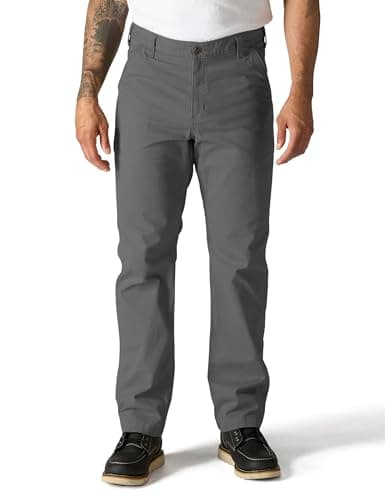
Best work pants for men
Best Work Pants for Men
The main work pant shortlist - duck, ripstop and stretch canvas compared on the three deciding properties.
Top pick: Carhartt Rugged Flex Rigby Dungaree
$41.19$54.99· Amazon6 shortlists · live Amazon prices
Fabric weight, knee reinforcement, stretch. Every work pant decision is a trade between those three.
Best work pants for men
Carhartt Rugged Flex Rigby Dungaree
#ad Price as of October 6, 2026. How we are funded
Best work pants for men
The main work pant shortlist - duck, ripstop and stretch canvas compared on the three deciding properties.
Top pick: Carhartt Rugged Flex Rigby Dungaree
$41.19$54.99· Amazon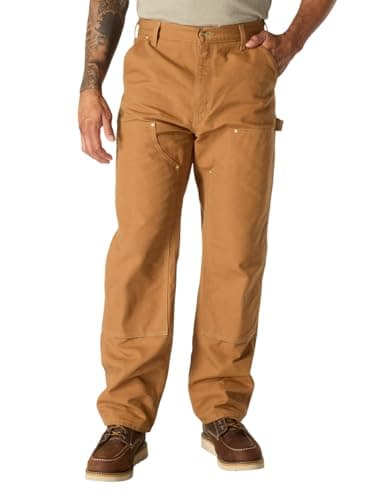
Best for construction
Double-knee, heavy-fabric pants built for sites that eat ordinary workwear.
Top pick: Carhartt Iconic B01 Firm Duck Double-Front Dungaree
$59.99$64.99· Amazon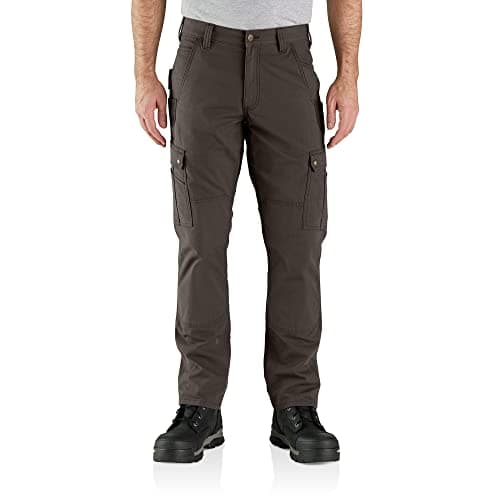
Best for electricians
Double-knee stretch pants for rough-in work - plus an honest note on where FR requirements take over.
Top pick: Carhartt Rugged Flex Ripstop Double-Front Cargo
$64.99· AmazonBest for mechanics
Shop pants that handle oil and crouching - and the polyester rule that matters around hot work.
Top pick: Carhartt Rugged Flex Rigby Dungaree
$41.19$54.99· AmazonBest for hot weather
Lightweight cotton ripstop and canvas for summer work - with the shorts question answered honestly.
Top pick: Carhartt Rugged Flex Ripstop Double-Front Cargo
$64.99· Amazon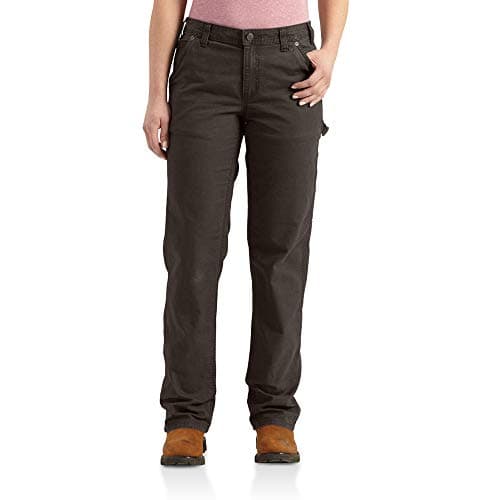
Best women's work pants
Work pants cut on women's blocks, including the petite and plus sizing that is usually missing.
Top pick: Carhartt Women's Rugged Flex Loose Fit Canvas Pant
$39.99$49.99· Amazon
Work pants look like the simplest purchase on a jobsite and generate more quiet frustration than almost anything else, because the three properties that matter pull against each other. Heavy fabric lasts longest and restricts you most. Stretch lets you climb and squat and wears out soonest. A double knee saves kneeling trades and adds weight and heat. There is no pant that wins all three, so the honest answer is to work out which one you cannot compromise on.
Cotton duck is the heavyweight: a tight plain weave, usually 10 to 12 ounces, that resists abrasion better than anything else here and takes months to soften. It is why the firm-duck double front is still the benchmark for rough trades. Ripstop is a lighter weave with a reinforcing grid that stops a small tear from running - cooler, more mobile, less abrasion resistant. Polyester-cotton twill, which is what a classic uniform pant is, is the cheapest and most presentable and the least durable of the three.
If you kneel for a living - flooring, tiling, electrical rough-in, plumbing under sinks - knees are where your pants die, usually long before anything else shows wear. A double front or double knee is a second layer of fabric sewn over the knee panel, and in the better versions there is an internal pocket for a foam knee-pad insert. That is a different and more comfortable thing than strapping knee pads over the outside, though for sustained kneeling you want both.
If you do not kneel much, a double knee is just weight and heat you are carrying for nothing, and a single-front stretch pant will be more comfortable all day. Be honest about which you are.
Adding a few percent elastane to a canvas was the biggest practical improvement in workwear in twenty years. Climbing a ladder, squatting at an outlet, getting into a crawlspace - all of those stop fighting you. The catch is that elastane degrades, especially with hot washing and hot drying, so a stretch pant has a shorter useful life than the same pant without it. Wash cold and hang dry and you will roughly double it. For the trades that climb and crouch constantly, that trade is still worth making: see work pants for electricians.
Pockets are the most over-specified feature in workwear. A hammer loop, a rule pocket and two usable back pockets cover most trades. Big cargo pockets are genuinely useful if you carry fasteners and small meters, and genuinely a liability if you work around rotating machinery or climb a lot, because a loaded cargo pocket swings and catches. If you work in a shop with machinery, a slimmer pant is the safer pant.
Work pants are cut for a work posture, which means a fuller seat and thigh than a casual pant in the same waist size. Buy your real waist measurement rather than your jeans size, and expect cotton duck to shrink roughly an inch in length on the first hot wash - which is why buying one inseam longer in unwashed duck is standard practice.
Women's work pants are a separate list because most of the market is still a men's pattern in smaller sizes, which fits almost nobody properly through the hip and thigh. The pants in women's work pants are the ones actually built on a women's block, including the petite and plus inseams that are usually missing. For hot-climate work in any fit, hot weather work pants is where the lighter weaves live.
In practice the terms are used interchangeably by most brands - both mean a second layer of fabric over the knee area. Carhartt's "double front" traditionally covers more of the thigh and knee and usually includes an internal knee-pad pocket; a "double knee" may be a smaller reinforcement panel. Check whether the pad pocket is there if you want to use inserts.
Buy your measured waist, not your jeans size, and add an inch of inseam if the fabric is unwashed cotton duck because it will shrink. Do not size up the waist to get room in the thigh - look for a relaxed or loose fit in your true waist instead.
For full-time trade use, a stretch canvas pant typically goes six to twelve months before the knees or crotch give out, and a firm-duck double front often runs twice that. Washing cold and hanging dry makes a measurable difference to both, mostly by preserving the elastane and the fabric finish.
Not unless the label says so explicitly. Flame-resistant garments are certified to standards like NFPA 2112 and are a different product at a different price. A cotton duck pant is far safer around hot work than a polyester blend, but "safer" is not "flame resistant" - if your job requires FR, buy certified FR.