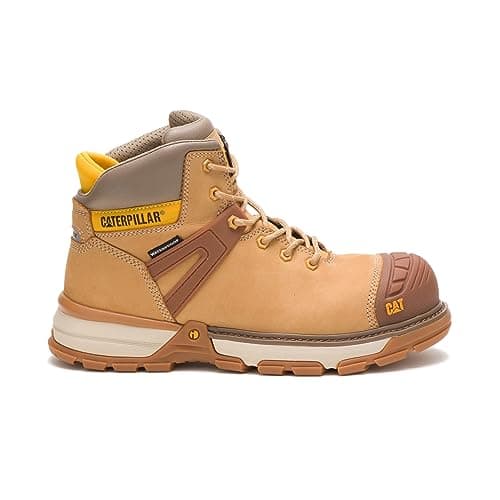
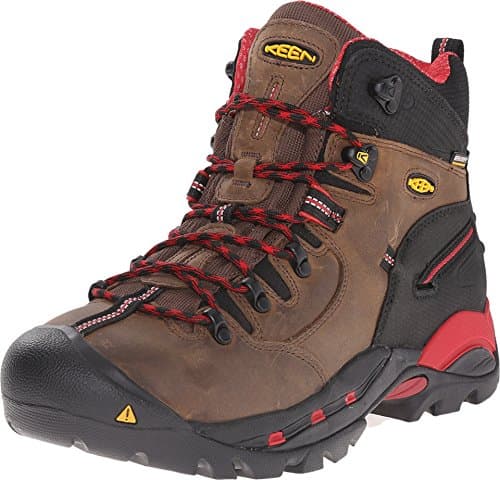
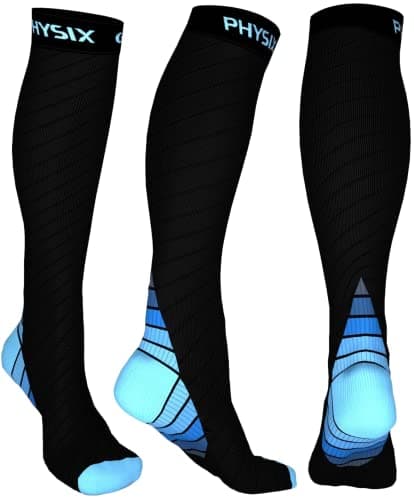
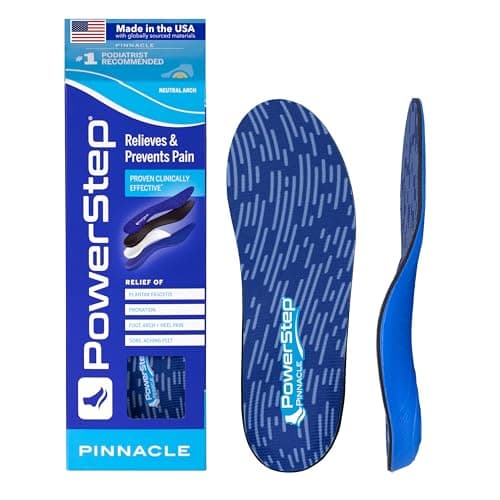
Best for all-day standing
Best Work Boots for Being On Your Feet All Day
The boot that fits at eight in the morning is not the boot you are wearing at six at night.
There is a difference between standing still on a slab and being on your feet all day, and it is worth separating because the fixes diverge. Boots for concrete is about static load on an unforgiving surface. This page is about duration and mileage - the twelve-hour shift, the ten miles of hard floor, the double you did not plan on. Weight, swell room and recovery become the dominant factors.
Why your boots feel different at 6pm
Feet swell during the day. Gravity and sustained standing cause fluid to accumulate in the lower leg and foot, and that increase is measurable - which is why shoe fitters have always advised buying late in the day. On a long shift in a warm environment, the effect is larger still.
The practical consequence: a boot fitted snugly at the start of a shift will be compressing your forefoot by the end of it, and a compressed forefoot is numbness, hot spots and bruised nails. With a safety toe this gets worse, because the rigid cap cannot flex to accommodate anything. So fit for the evening foot, not the morning one, and read work boot fit and sizing before you buy.
Quick picks
Ranked by our published scoring rubric. Tap any row for the full write-up.
| # | Product | Best for | Score | Price |
|---|---|---|---|---|
| 1 | 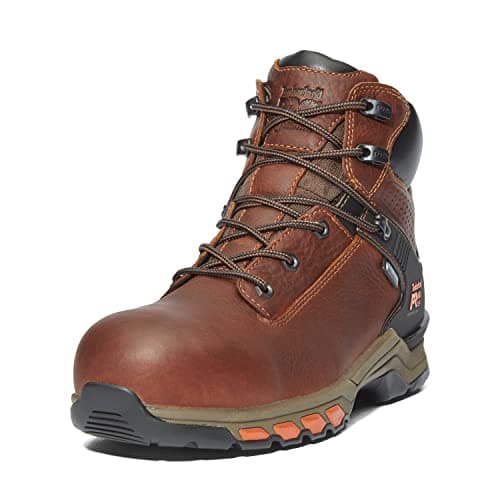 Timberland PRO Hypercharge 6" Composite Toe WaterproofThe best cushioning-to-weight ratio here, which is the ratio that matters. | Long mixed standing and walking shifts | 8.7 | |
| 2 | 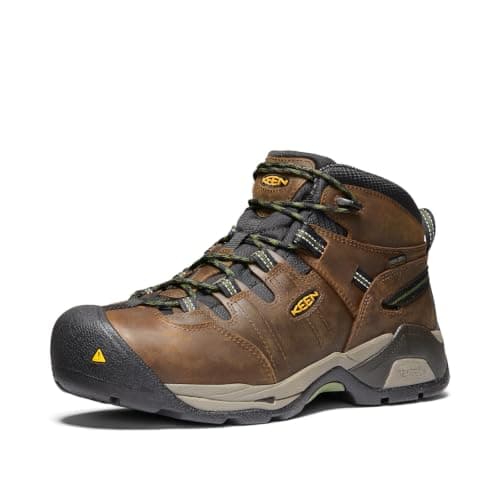 KEEN Utility Detroit XT Mid Steel Toe WaterproofA true EE width and immediate flex - the pick when boots get tight by evening. | Feet that swell, and wide feet | 8.5 | |
| 3 | 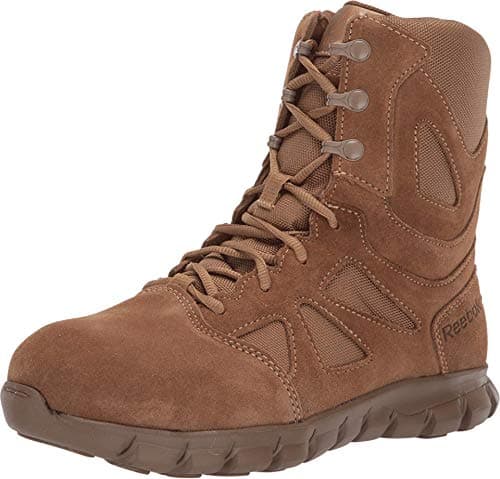 Reebok Work Sublite Cushion 8" Safety Toe Side-ZipLightest 8-inch safety boot here, with a side zip for getting out fast. | High mileage on hard floors | 8.4 | |
| 4 | 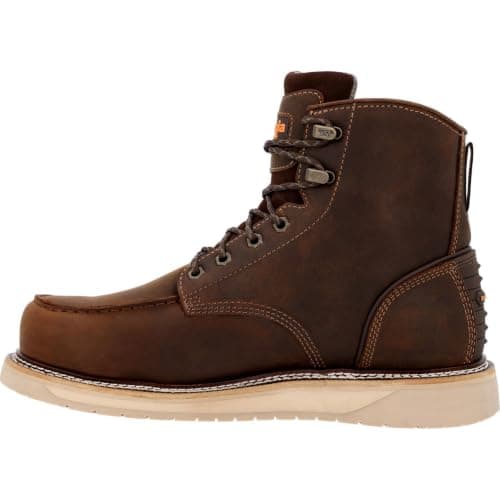 Georgia Boot AMP LT Wedge Waterproof Composite ToeThe flat wedge spreads static load better than anything else here. | Mostly standing, little walking | 8.4 |
#ad Prices pulled from Amazon and stamped as of October 6, 2026; they change, and we show no number we cannot verify. How we are funded.
Top pick · Long mixed standing and walking shifts
Timberland PRO Hypercharge 6" Composite Toe Waterproof
The best cushioning-to-weight ratio here, which is the ratio that matters.
A twelve-hour shift on your feet is an endurance problem, and the two variables are how much cushioning you have under you and how much weight you are lifting with every step. Most boots give you one at the expense of the other. The Hypercharge is unusually good at both: a genuine Anti-Fatigue midsole in an athletic-weight waterproof boot.
The upper will not last like full-grain leather, and the membrane runs warm indoors. For a job where the complaint is fatigue rather than abrasion, that is the right trade to make.
Specs that matter
- Toe:
- Composite toe, ASTM F2413
- Height:
- 6 inch
- Waterproof:
- Yes
- Midsole:
- Anti-Fatigue Technology cushioning
Our scoring
- Cushioning
- 9.0
- Low weight
- 8.8
- Swell room
- 8.0
- Support
- 8.2
- Value
- 7.8
What works
- Much lighter on the foot than the Boondock at the same protection level
- Anti-Fatigue midsole is a real difference on long standing shifts
- Waterproof without feeling like a rubber boot
What to know
- Athletic-style uppers wear out faster than thick full-grain
- Not resoleable
- Breathes poorly in genuine heat
No. 2 · Feet that swell, and wide feet
KEEN Utility Detroit XT Mid Steel Toe Waterproof
A true EE width and immediate flex - the pick when boots get tight by evening.
The thing nobody warns you about long shifts is that your feet get measurably bigger. Boots that fit in the morning compress your forefoot by late afternoon, and that is the cause of a great deal of end-of-shift misery that gets blamed on cushioning.
The Detroit XT is stocked in a genuine EE wide rather than a roomy D, and it flexes from the first wear instead of demanding a break-in. For anyone whose feet are wide to begin with, or who finds boots tighten through the day, this is the better starting point than a softer boot.
Specs that matter
- Toe:
- Steel toe, ASTM F2413
- Height:
- Mid / 6 inch
- Waterproof:
- Yes
- Widths:
- D and EE
Our scoring
- Cushioning
- 8.0
- Low weight
- 8.4
- Swell room
- 9.4
- Support
- 8.0
- Value
- 8.2
What works
- Actually stocked in EE wide, not just a roomy D
- Flexes out of the box rather than demanding a break-in
- Lighter than the Pittsburgh at the same protection
What to know
- Cement construction — no resoling
- Softer upper creases and scuffs quickly
- Less ankle support than a true 8-inch boot
No. 3 · High mileage on hard floors
Reebok Work Sublite Cushion 8" Safety Toe Side-Zip
Lightest 8-inch safety boot here, with a side zip for getting out fast.
If your day is more walking than standing - a large facility, a hospital, a distribution floor - weight dominates everything else, because you are lifting the boot thousands of times. Athletic-construction safety footwear is substantially lighter than traditional industrial boots at the same ASTM rating.
The 8-inch shaft gives ankle support that most athletic safety shoes do not, and the side zip means you keep the lace tension while still getting in and out quickly. Textile panels are the weak point on rough or chemically dirty work.
Specs that matter
- Toe:
- Safety toe, ASTM F2413
- Height:
- 8 inch
- Closure:
- Laces plus side zipper
- Weight:
- Athletic-shoe construction
Our scoring
- Cushioning
- 8.6
- Low weight
- 9.4
- Swell room
- 7.8
- Support
- 7.6
- Value
- 8.0
What works
- Among the lightest 8-inch safety boots sold
- Side zip means you keep the lace tension and still get out quickly
- Cushioning suited to miles of walking on hard floors
What to know
- Zipper is the obvious failure point
- Textile panels tear on rough material handling
- Little underfoot puncture protection
No. 4 · Mostly standing, little walking
Georgia Boot AMP LT Wedge Waterproof Composite Toe
The flat wedge spreads static load better than anything else here.
If you are genuinely stationary - a bench, a machine, a counter - the mechanics change and the flat wedge becomes the best geometry available, because it lowers peak pressure under your heel and forefoot rather than optimizing for the walking gait cycle.
Light, waterproof, composite toe, with a better stock footbed than most. The wedge is poor on ladders and loose ground, so this is a boot for a fixed indoor position rather than a varied site. The full reasoning is on boots for concrete.
Specs that matter
- Toe:
- Composite toe, ASTM F2413
- Sole:
- Flat wedge
- Waterproof:
- Yes
- Height:
- 6 inch
Our scoring
- Cushioning
- 8.8
- Low weight
- 8.6
- Swell room
- 8.0
- Support
- 7.8
- Value
- 8.2
What works
- Waterproof, safety-rated wedge is a genuinely uncommon spec
- Light enough to wear on a long standing shift
- Better stock insole than most boots at the price
What to know
- Wedge sole is wrong for ladders and loose ground
- Less durable upper than the heritage brands
- Not resoleable
The weight arithmetic
At roughly two thousand steps per mile, someone walking eight miles a shift takes about sixteen thousand steps. An extra half pound per boot across that distance is a meaningful amount of additional work, performed by the same muscles, every day. This is why people who move from heavy industrial boots to athletic-construction safety footwear report a difference out of proportion to the spec change - and why lightweight work boots is one of the more useful shortlists on this site.
The caveat is honest: light boots give up abrasion resistance at the upper and some protection underfoot. If your job has those hazards, you need the weight. If it does not - most indoor and facility work - you are paying a daily energy cost for protection against something that is not there.
Rotation: the free upgrade
Two pairs worn on alternate days outlast two pairs worn consecutively by a wide margin, and they are more comfortable the entire time. The reason is moisture: a boot absorbs a surprising amount of sweat during a shift, and a single overnight rest is not enough to dry the midsole and lining fully. A damp boot cushions worse, breaks down faster and is a better environment for the fungal problems that plague people on long shifts.
- Pull the insoles out every night - a closed boot with the insole in dries at a fraction of the rate.
- Never dry boots with direct heat; it cracks leather and can delaminate soles. See boot care and conditioning.
- Rotate socks midday if your feet sweat heavily: socks for sweaty feet.
- Replace cushioning insoles every three to six months - they stop working long before they look worn: insoles for concrete.
When the problem is your legs, not your feet
Worth distinguishing, because the fix is different. Aching, heavy, swollen calves and ankles at the end of a shift is venous pooling, and graduated compression socks at 20-30 mmHg address it directly - see compression socks for work. Sore arches and heels are a footwear and insole problem. Pain in the morning before you have taken a step points toward plantar fasciitis: boots for plantar fasciitis. Why work boots hurt works through the whole symptom map.
What we would skip
Skip 8-inch leather industrial boots unless the job needs them; the shaft weight and ankle restriction cost you across a long day. Skip insulation for indoor work. Skip buying boots in the morning. And skip the idea that you should push through a boot that hurts in week two - a boot that is not comfortable after a proper break-in is not going to become comfortable, and break-in guide explains how to tell the difference.
Frequently asked
What are the best work boots for being on your feet 12 hours a day?
Light, well-cushioned boots with room for your feet to swell - athletic-construction safety footwear rather than heavy industrial boots, unless your hazards demand the weight. Then rotate two pairs on alternate days and replace cushioning insoles every three to six months.
Why do my work boots hurt at the end of the day but not the start?
Your feet swell measurably over a long shift, so a boot that fits snugly in the morning compresses your forefoot by evening. A rigid safety toe cannot flex to accommodate that. Fit boots late in the day, in your work socks, and favor room over a snug fit.
Does rotating two pairs of work boots really help?
Yes, substantially. Boots absorb a lot of sweat during a shift and one night is not enough to dry the midsole and lining. A damp boot cushions worse, breaks down faster and is a better environment for fungal infections. Alternating two pairs makes both last longer and feel better.
Are lighter work boots less safe?
Not in terms of the toe cap - a composite toe meets the same ASTM impact rating as a steel one at lower weight. Lighter boots do generally give up abrasion resistance at the upper and some underfoot puncture protection, so it depends on whether your job actually presents those hazards.
Sources
Back to Work Boots, or see how we pick. Spotted something wrong? We publish corrections — see our editorial policy.