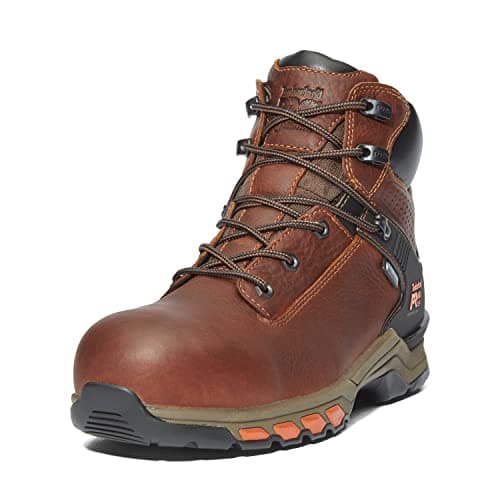
Best insoles for concrete
Best Insoles for Work Boots on Concrete
Twenty-five dollars that does more than a hundred dollars of extra boot. Genuinely.
If there is one thing on this site that pays for itself immediately, it is this. The insole that came in your work boots is a piece of thin die-cut foam whose purpose is to make the boot shippable. Boot makers know most buyers will never look at it, so there is no commercial reason to spend money there - and that means the single cheapest improvement available to anyone standing on concrete all day is twenty-five dollars, not three hundred.
Why concrete needs a specific kind of insole
A concrete slab absorbs essentially none of your weight - it is rigid, so all the load goes into your foot. And standing still is a static problem rather than an impact one: the same small areas under your heel and the ball of your foot carry the load for hours, blood pools in the lower leg, and nothing cycles.
That is why insoles designed for running are a poor fit here: they optimize for a repeated impact event. What you want for standing is sustained pressure distribution, which is why the better standing insoles use geometry that spreads load rather than simply being soft. The full argument for the boots themselves is on boots for standing on concrete.
Cushioning or support: the decision that matters
| Your symptom | What you need | What will not help |
|---|---|---|
| General aching and fatigue in the whole foot | Cushioning - foam or cone geometry | A rigid shell will feel harsh |
| Arch pain, or arches that feel collapsed | Rigid or semi-rigid support shell | Soft gel does nothing structural |
| Sharp heel pain, worst in the morning | Semi-rigid shell with a deep heel cup | Gel pads - see plantar fasciitis |
| Heavy, swollen, aching legs and calves | Compression socks, not an insole | No insole addresses venous pooling |
| Bruised or sore toenails | A sizing fix and a padded-toe sock | An insole makes a crowded boot worse |
Quick picks
Ranked by our published scoring rubric. Tap any row for the full write-up.
| # | Product | Best for | Score | Price |
|---|---|---|---|---|
| 1 | 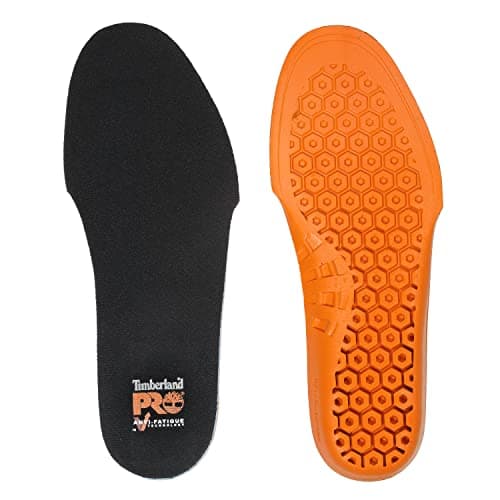 Timberland PRO Anti-Fatigue Technology Replacement InsoleDesigned for static standing rather than walking impact, which is the actual concrete problem. | Standing still on a slab | 8.6 | |
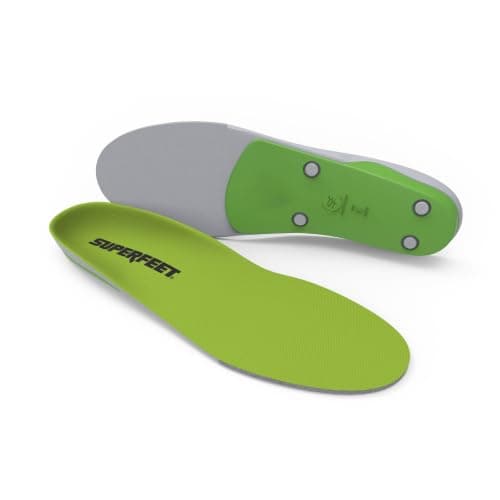
| 2 | 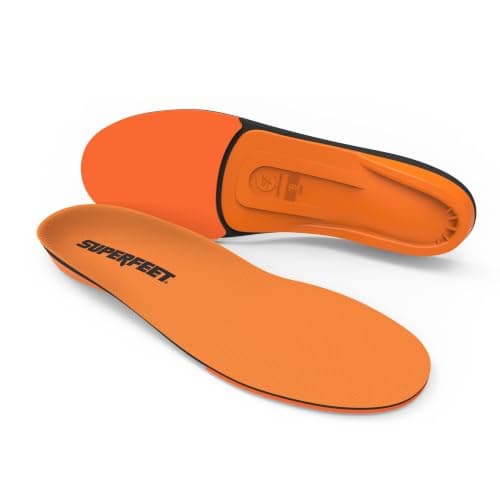 Superfeet All-Purpose High Impact Support InsolesA rigid shell with forefoot foam - the one to buy if your arches ache as well. | Cushioning plus real support | 8.4 | |
| 3 | 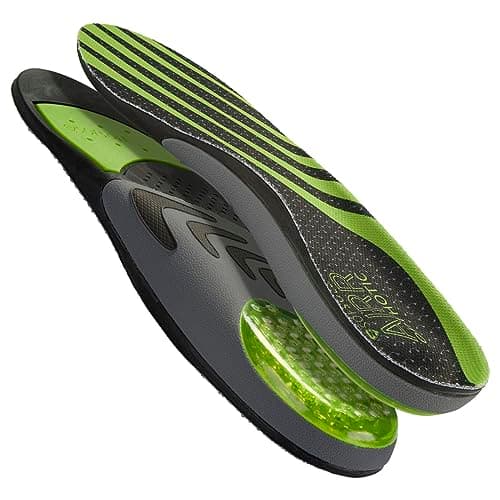 Sof Sole AIRR Orthotic Support Full-Length InsoleMore structure than a gel pad, less volume than a rigid shell. | A middle ground, cheaply | 7.9 | |
| 4 | 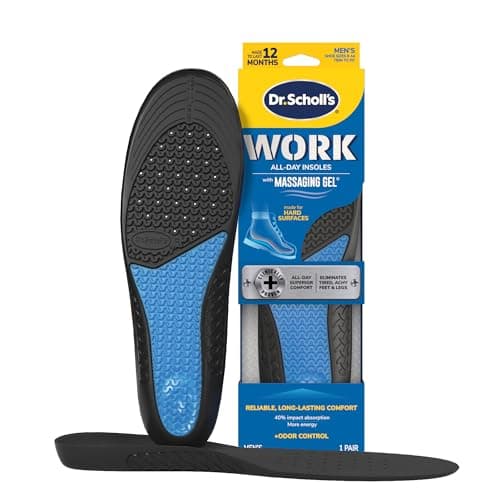 Dr. Scholl's Work All-Day Superior Comfort InsolesPure cushioning, no structure, and far better than the factory footbed. | An immediate cheap upgrade | 7.4 |
#ad Prices pulled from Amazon and stamped as of October 6, 2026; they change, and we show no number we cannot verify. How we are funded.
Top pick · Standing still on a slab
Timberland PRO Anti-Fatigue Technology Replacement Insole
Designed for static standing rather than walking impact, which is the actual concrete problem.
Most cushioning is engineered for the impact of a walking or running gait. Standing on concrete is a different problem - sustained load on the same two areas for hours - and this insole's cone geometry is aimed specifically at that, compressing and rebounding under the heel and forefoot pressure points.
Cheap enough to replace every few months, which you should: foam compresses and stops working long before it looks worn. Low volume, so it fits most boots without crowding the toe box. Little structural arch support, so it will not address heel pain.
Specs that matter
- Type:
- Cushioning insole with cone geometry
- Arch:
- Moderate contour
- Volume:
- Low to moderate
- Target:
- Standing fatigue
Our scoring
- Standing cushioning
- 9.2
- Fits most boots
- 9.0
- Longevity
- 6.4
- Arch support
- 5.5
- Value
- 9.2
What works
- Designed for static standing, which is the actual concrete problem
- Cheap enough to replace every few months
- Fits most boots without crowding the toe box
What to know
- Foam compresses within months of daily wear
- Little structural arch support
- Not an orthotic — will not fix plantar fasciitis alone
No. 2 · Cushioning plus real support
Superfeet All-Purpose High Impact Support Insoles
A rigid shell with forefoot foam - the one to buy if your arches ache as well.
If your concrete problem is accompanied by arch fatigue, pure cushioning will not fix it and pure support will feel harsh. This is the combination: Superfeet's rigid stabilizer cap for structure, with high-density foam at the forefoot for the impact.
It keeps its shape for a year or more, where foam insoles are done in months. The costs are real: it is the highest-volume insole here, so a snug boot will become too tight, and it needs a one-to-two week adaptation period.
Specs that matter
- Type:
- Rigid cap plus high-density foam
- Arch:
- High arch profile
- Volume:
- High
- Cushioning:
- Moderate, forefoot focused
Our scoring
- Standing cushioning
- 7.8
- Fits most boots
- 6.0
- Longevity
- 9.4
- Arch support
- 9.2
- Value
- 7.4
What works
- Support plus cushioning rather than one or the other
- Extra forefoot foam helps on concrete and from ladder impact
- Same durable shell as the high-arch model
What to know
- Highest-volume insole here — many boots cannot take it
- Expensive
- Still firmer than most people expect
No. 3 · A middle ground, cheaply
Sof Sole AIRR Orthotic Support Full-Length Insole
More structure than a gel pad, less volume than a rigid shell.
An encapsulated-air and gel insole with a molded arch: noticeably more supportive than a plain gel pad, considerably less bulky than a rigid shell, and cheaper than either of the premium options.
The heel air chamber genuinely helps with impact from ladders and steps. Air chambers can fail, after which the insole goes flat, and it is not enough support for significant overpronation.
Specs that matter
- Type:
- Encapsulated air plus gel pads
- Arch:
- Molded neutral arch
- Volume:
- Moderate
- Top cover:
- Moisture-wicking
Our scoring
- Standing cushioning
- 8.4
- Fits most boots
- 7.6
- Longevity
- 7.0
- Arch support
- 7.0
- Value
- 8.4
What works
- Noticeably more supportive than a plain gel insole
- Heel air chamber helps with impact from ladders and steps
- Wicking cover reduces sock sweat
What to know
- Air chambers can fail and the insole then goes flat
- Not enough support for severe overpronation
- Bulkier than it looks on the packaging
Best value · An immediate cheap upgrade
Dr. Scholl's Work All-Day Superior Comfort Insoles
Pure cushioning, no structure, and far better than the factory footbed.
The honest case for the drugstore insole: almost any insole beats the thin die-cut foam your boots came with, this one costs very little, and it is thin enough to go into a boot that is already snug.
Gel bottoms out quickly under a working adult's weight, so expect a short life, and there is no arch support at all - so it does nothing for plantar fasciitis. As a stopgap or for a boot with no room, it earns its place.
Specs that matter
- Type:
- Massaging gel cushioning
- Arch:
- Minimal
- Volume:
- Low
- Fit:
- Trim to fit
Our scoring
- Standing cushioning
- 7.4
- Fits most boots
- 9.2
- Longevity
- 5.0
- Arch support
- 3.5
- Value
- 9.0
What works
- Immediate comfort improvement over a bare stock footbed
- Lowest price of any insole here
- Thin enough for a snug boot
What to know
- Gel bottoms out quickly under a working adult's weight
- No arch support, so it does nothing for plantar fasciitis
- Shortest lifespan here
The volume problem, which wastes a lot of money
An insole takes up space. This is the mistake that sends insoles back to the shop: a high-volume rigid insole in a boot that already fit snugly makes the boot too tight, and a too-tight boot is worse than a mediocre insole. With a safety toe it is worse still, because the rigid cap cannot flex and your toes have nowhere to go.
- Always remove the factory insole first. Stacking a new one on top is the single most common error - it raises your foot, tightens the instep and reduces toe clearance.
- If the boot then feels tight across the instep, you need a lower-volume insole, not a bigger boot.
- Trim to fit using the old insole as a template, cutting conservatively from the front.
- If your boots are already at their limit, see work boot fit and sizing before buying.
Replacement interval, which almost nobody follows
Foam cushioning insoles compress permanently and stop working while still looking fine. For daily wear on hard floors, three to six months is a realistic replacement interval - and people who do this report that the gradual return of foot soreness they had attributed to age or the weather was actually a dead insole. Rigid support shells last far longer, often a year or more, with the top cover wearing out before the shell fails.
The other half of the comfort system inside the boot is the sock, and on concrete a cushioned one genuinely functions as a second thin insole: see best work socks. If your complaint is legs rather than feet, go to compression socks for work instead - that is a different mechanism entirely.
What we would skip
Skip soft gel insoles if your problem is arch or heel pain - they are the wrong tool and the most commonly mis-bought product in this category. Skip stacking insoles. Skip high-volume rigid insoles in boots that are already snug. And skip trying to make an insole fix a boot that is the wrong size; insole types explained sets out what each type can and cannot do.
Frequently asked
What are the best insoles for standing on concrete all day?
Cushioning insoles designed for static standing rather than for running impact - cone-geometry or dense foam constructions that spread sustained load. If your arches also ache, choose a semi-rigid shell with forefoot cushioning instead, because pure foam will not address a structural problem.
Do insoles really help with concrete floors?
Substantially, and more than spending the same money on better boots. The factory insole in most work boots is thin shipping foam, so almost any proper insole is an upgrade - the key is matching cushioning to fatigue and a support shell to arch or heel pain.
Should I remove the original insole before adding a new one?
Yes, almost always. Stacking a new insole on the factory one raises your foot, tightens the boot across the instep and reduces toe clearance under a safety cap, which is how people end up with bruised toenails. Pull the old one out and use it as a trimming template.
How often should I replace work boot insoles?
Foam cushioning insoles every three to six months of daily wear - they compress permanently and stop working long before they look worn out. Rigid support shells last a year or more, and usually the top cover wears through before the shell itself fails.
Are expensive insoles worth it?
For a structural problem like arch collapse or heel pain, yes - a rigid shell holds its shape for a year or more and a cheap gel pad will not help at all. For pure standing fatigue, a mid-priced cushioning insole replaced regularly is better value than a premium one stretched over two years.
Sources
Back to Insoles & Work Socks, or see how we pick. Spotted something wrong? We publish corrections — see our editorial policy.