Best for plantar fasciitis
Best Work Boots for Plantar Fasciitis
The soft boot that feels best in the shop is usually the wrong one. Support beats cushioning here.
Plantar fasciitis is the single most common foot complaint among people who work on hard floors, and the footwear advice around it is mostly backwards. The instinctive move is to buy the softest, most cushioned boot available, because the pain feels like it needs padding. In practice the soft boot often makes it worse, and understanding why makes the whole category easier to shop.
Why soft is the wrong instinct
The plantar fascia is a thick band of tissue running from your heel to the ball of your foot, and it acts as a tie-rod holding up your arch. Plantar fasciitis is a strain of that band, usually at the heel attachment. The thing that aggravates it is the arch flattening repeatedly under load, which stretches the band each time.
A soft, flexible boot lets the arch flatten more, so each step pulls on the injured tissue. A firm, supportive platform limits that movement. This is why the classic recommendation for heel pain is a stiff sole and real arch support, and why a gel pad - which cushions impact without controlling movement - does very little. The distinction is laid out fully in insole types explained.
The three features that matter
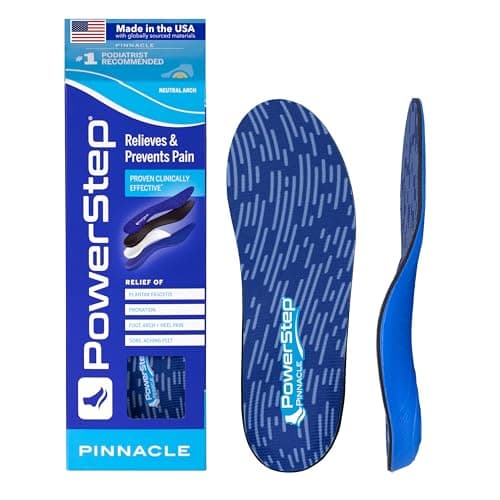
- Arch support. Structural, not soft. Either built into the boot or added with a semi-rigid insole - and the insole route is usually better, because it is tunable.
- A deep heel cup. Controlling heel movement reduces the pull on the fascia's attachment point. This is a specific insole feature worth looking for.
- A stiff midsole. Less flex means less repeated stretching. Test it in the shop by trying to bend the boot in half - a boot for heel pain should resist.
Quick picks
Ranked by our published scoring rubric. Tap any row for the full write-up.
| # | Product | Best for | Score | Price |
|---|---|---|---|---|
| 1 | 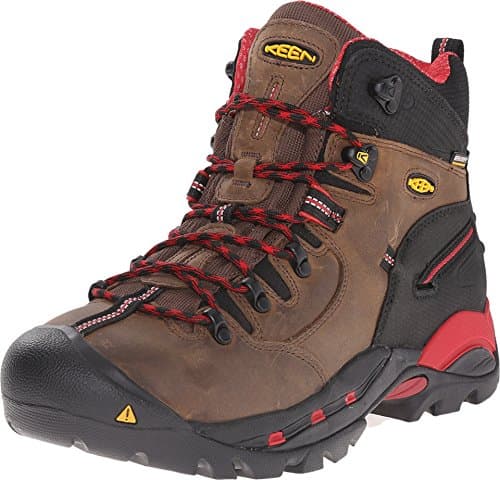 KEEN Utility Pittsburgh 6" Steel Toe WaterproofA stiff welted platform with enough volume to take a real support insole. | Support plus room for an orthotic | 8.7 | |
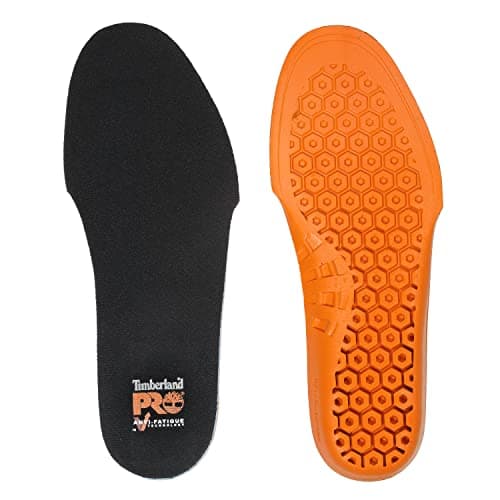
| 2 | 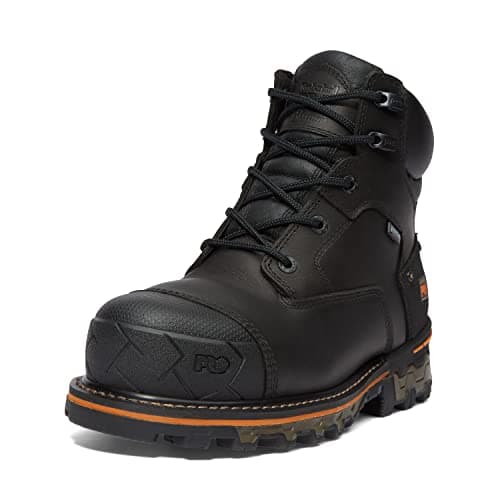 Timberland PRO Boondock 6" Composite Toe WaterproofThe stiffest boot here, which is exactly what a strained fascia wants underfoot. | Maximum midsole stiffness | 8.4 | |
| 3 | 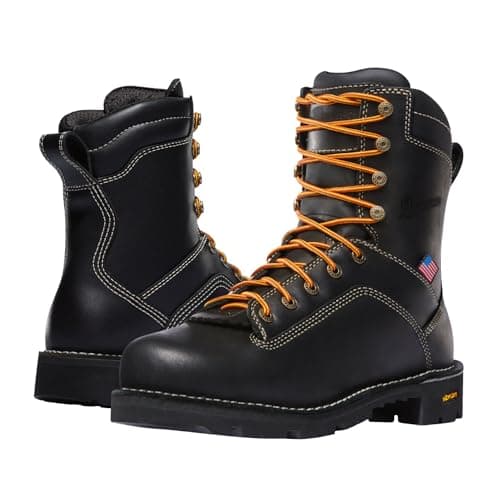 Danner Quarry 8" Waterproof Alloy ToeA stiff shank and recraftable build - support that does not pack out in six months. | Long-term support that stays supportive | 8.6 | |
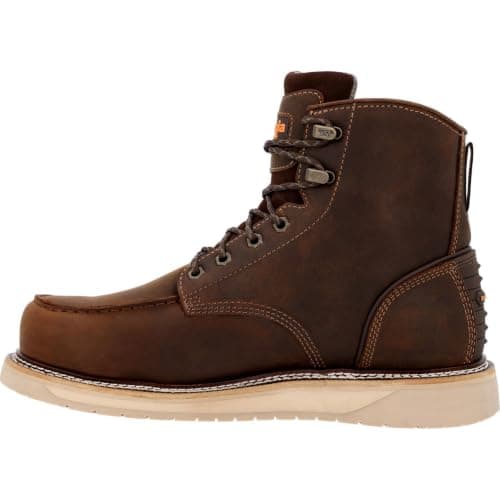
| 4 | 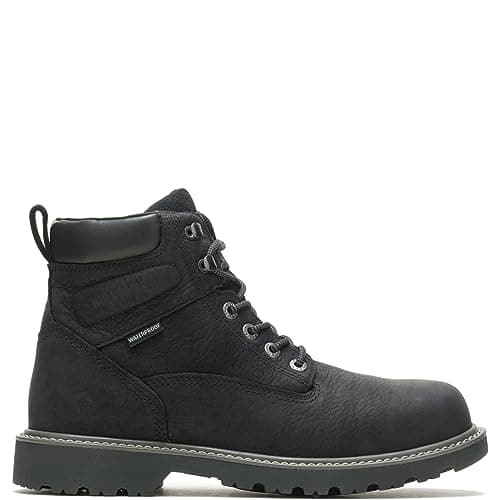 Wolverine Floorhand 6" Steel Toe WaterproofNot a supportive boot by itself - but a sensible shell when the budget goes on the insole. | A cheap base for a good insole | 7.6 |
#ad Prices pulled from Amazon and stamped as of October 6, 2026; they change, and we show no number we cannot verify. How we are funded.
Top pick · Support plus room for an orthotic
KEEN Utility Pittsburgh 6" Steel Toe Waterproof
A stiff welted platform with enough volume to take a real support insole.
The boot's job with plantar fasciitis is to be a stable, supportive platform - and crucially, to have enough internal volume that you can fit a proper support insole, which is where most of the actual help comes from. Many boots are too shallow for a rigid shell insole, which quietly rules them out.
The Pittsburgh is roomy, welted and stiff enough underfoot to resist flexing at the arch, and its wide toe box means adding volume does not crush your forefoot. Pull the stock footbed and fit a semi-rigid insole from day one.
Specs that matter
- Toe:
- Asymmetrical steel toe, ASTM F2413
- Height:
- 6 inch
- Waterproof:
- Yes, KEEN.DRY membrane
- Build:
- Goodyear welt
Our scoring
- Arch support
- 8.6
- Heel control
- 8.8
- Insole room
- 9.4
- Midsole stiffness
- 8.6
- Value
- 7.6
What works
- Left and right specific toe caps, so the toe box is shaped like a foot
- Welted, so it can be resoled
- The go-to recommendation for wide feet in a safety toe
What to know
- Runs large — most buyers size down a half
- Steel toe in a waterproof boot is heavy
- Toe box looks bulky if that bothers you
No. 2 · Maximum midsole stiffness
Timberland PRO Boondock 6" Composite Toe Waterproof
The stiffest boot here, which is exactly what a strained fascia wants underfoot.
Plantar fasciitis is a strain injury of the band running along the sole of your foot, and it is aggravated by that band repeatedly stretching under load. A stiff midsole limits how much the foot flexes and therefore how much the fascia is stretched with each step - which is why podiatry advice consistently favors a firm, supportive sole over a flexible one.
The Boondock is the stiffest, most supportive boot on this page. It is heavy and a hard ride for standing work, so it is the right pick if your pain is movement-related rather than standing-related.
Specs that matter
- Toe:
- Composite toe, ASTM F2413
- Height:
- 6 inch
- Waterproof:
- Yes, membrane lined
- Sole:
- Aggressive lug, slip and oil resisting
Our scoring
- Arch support
- 8.0
- Heel control
- 8.6
- Insole room
- 7.6
- Midsole stiffness
- 9.6
- Value
- 7.6
What works
- Composite toe is non-metallic, so it clears metal detectors and conducts less cold
- Waterproof membrane plus a gusseted tongue genuinely keeps water out
- Outsole bites on broken ground where a wedge slides
What to know
- Heavy and stiff — a hard boot to stand on concrete in all day
- Long break-in; the outsole stays rigid for weeks
- Lug pattern tracks mud indoors
No. 3 · Long-term support that stays supportive
Danner Quarry 8" Waterproof Alloy Toe
A stiff shank and recraftable build - support that does not pack out in six months.
The hidden problem with cushioned boots for heel pain is that the cushioning collapses. A foam midsole that felt supportive in month one is a soft, unsupportive platform by month eight, and the pain comes back without an obvious cause.
A stitchdown boot with a genuine shank keeps its structure for years and can be rebuilt. Expensive up front; for a chronic condition it is the cheaper path. Gore-Tex and an alloy toe are bonuses.
Specs that matter
- Toe:
- Alloy toe, ASTM F2413
- Height:
- 8 inch
- Waterproof:
- Gore-Tex lined
- Build:
- Stitchdown, recraftable
Our scoring
- Arch support
- 8.8
- Heel control
- 9.0
- Insole room
- 8.0
- Midsole stiffness
- 9.2
- Value
- 7.2
What works
- Danner will recraft it, so the price is spread over many years
- Gore-Tex is the most reliable waterproof lining in footwear
- Alloy toe is lighter than steel at the same rating
What to know
- Expensive up front
- Stiff and heavy for flat-concrete work
- Long break-in
Best value · A cheap base for a good insole
Wolverine Floorhand 6" Steel Toe Waterproof
Not a supportive boot by itself - but a sensible shell when the budget goes on the insole.
#ad No buyable offer at the last price check. How we are funded
- Our score
- 7.6/10
Here is an honest piece of advice that works against our own commission: if you have a hundred and fifty dollars total, spending fifty on a decent insole and a hundred on a boot will help your heel more than spending all of it on a boot.
This waterproof steel-toe boot is the pragmatic shell for that plan - full-grain leather, safety-rated, with a removable footbed and enough depth to take a support insole. It has little inherent arch support, which is fine when the insole is doing that job.
Specs that matter
- Toe:
- Steel toe, ASTM F2413
- Height:
- 6 inch
- Waterproof:
- Yes
- Upper:
- Full-grain leather
Our scoring
- Arch support
- 6.2
- Heel control
- 7.0
- Insole room
- 8.4
- Midsole stiffness
- 7.4
- Value
- 9.2
What works
- Waterproof and safety-rated at an entry price
- Full-grain leather rather than split or synthetic
- Cushioned footbed is better than most boots at the price
What to know
- Membrane life is the weak point — expect it to wet out before the upper fails
- Steel toe is cold in winter
- Thin outsole for heavy industrial ground
The insole is doing most of the work
If you take one thing from this page: for plantar fasciitis, a semi-rigid support insole in an adequate boot will usually outperform a premium boot with its factory footbed. The insole is where arch support and the heel cup live, and it costs a fraction of the boot. See insoles for heel pain for the picks, and note the two mistakes people make: buying a soft gel insole because it feels nicer, and stacking a new insole on top of the factory one instead of removing it.
Volume matters too. A rigid shell insole takes up real space, so a boot that already fits snugly will become too tight - which with a safety toe means bruised toenails. Check the boot has depth before committing, and read work boot fit and sizing.
The rest of the picture
Heel pain rarely travels alone. If you stand on concrete, the static load is a direct aggravator and the measures on boots for concrete apply. If your arches are flat or collapsing, that is a related mechanical problem - see boots for flat feet. If the pain extends into your lower back, there is a plausible chain through the kinetic chain, which is what boots for back pain covers. And if you are not sure what your symptom is telling you, why work boots hurt maps the common ones.
What we would skip
Skip soft gel insoles and marshmallow-soft boots: they feel good for ten minutes in a shop and do not control the movement that is causing the problem. Skip minimalist and very flexible footwear while you are symptomatic. Skip walking barefoot on hard floors at home, which is a commonly reported aggravator. And skip the assumption that spending more on boots is the answer - the insole, the stiffness and seeing a clinician all rank higher.
Frequently asked
What work boots are best for plantar fasciitis?
Boots with a stiff midsole, a supportive shank and enough internal depth to fit a semi-rigid support insole. Avoid soft, flexible, heavily cushioned boots - they let the arch flatten more, which stretches the injured tissue with every step.
Do insoles help plantar fasciitis?
Semi-rigid support insoles with a deep heel cup are one of the most useful self-managed measures, and they often help more than the boot itself. Soft gel insoles generally do not help, because they cushion impact without controlling the arch movement that aggravates the condition.
Why does my heel hurt most in the morning?
It is the classic presentation of plantar fasciitis: the fascia shortens overnight and the first steps re-stretch it. Morning heel pain that eases after a few minutes of walking is the hallmark symptom, and it is a strong reason to get it assessed rather than just buying different boots.
Should work boots for plantar fasciitis be soft or firm?
Firm. A soft, flexible sole lets the arch flatten under load, which pulls on the injured tissue each step. A stiff sole with real arch support limits that movement, which is why orthopedic guidance favors supportive footwear over cushioned footwear for heel pain.
Sources
Back to Work Boots, or see how we pick. Spotted something wrong? We publish corrections — see our editorial policy.