Best heated vests
Best Heated Work Vests
Cheaper than a jacket, layers under your coat, and heating your core is what warms your hands.
Almost everybody buys a heated jacket first, and for most people a vest is the better purchase. Three reasons, and the third one is the interesting one: it is cheaper, it layers under the work coat you already own instead of replacing it, and heating your core is the most effective way to get warmth back into your hands.
Why core heating warms your extremities
When your body is losing heat, it reduces blood flow to the extremities to protect core temperature - that is why your fingers and toes go first, and it is a deliberate physiological response rather than a failure. Insulating your hands slows heat loss from your hands, but if your core is cold your body will keep restricting the blood supply that was going to warm them.
Adding heat at the core changes that calculation: with core temperature secure, the body is more willing to send blood back out. Which is why people report that a heated vest improves cold hands - not because it heats their hands, but because it removes the reason their body was withholding warmth from them. It is also why a vest plus ordinary gloves often beats no vest plus expensive gloves, though in sustained cold heated gloves still have a place.
Quick picks
Ranked by our published scoring rubric. Tap any row for the full write-up.
| # | Product | Best for | Score | Price |
|---|---|---|---|---|
| 1 | 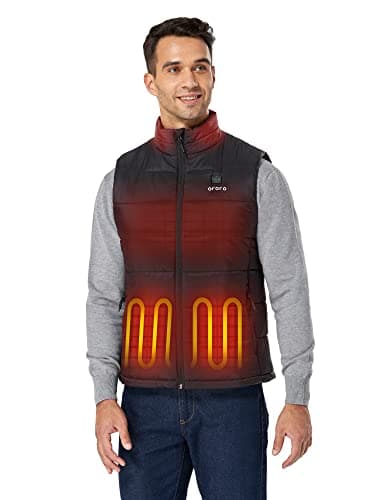 ORORO Men's Lightweight 4-Zone Heated VestUSB-C charging, four zones, layers under anything - the sensible default. | Most people, as a first heated garment | 8.7 | |
| 2 | 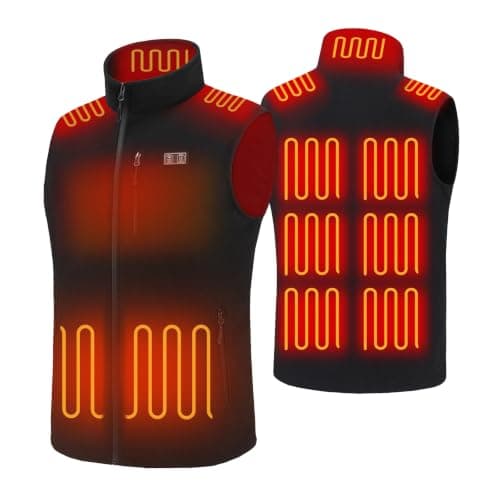 VENTROLLO Heated Fleece Vest, 15 ZonesA big included battery at half the price - and ignore the zone count. | Long run time cheaply | 8.4 | |
| 3 | 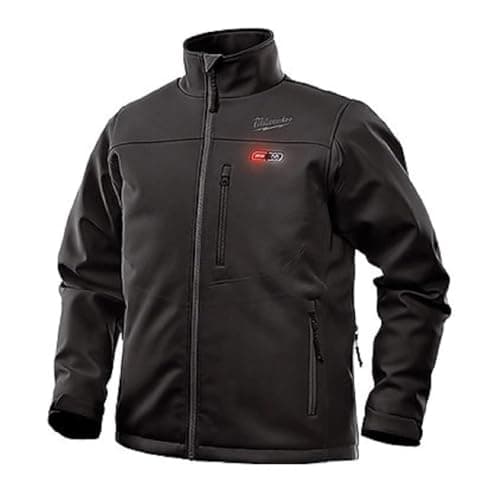 Milwaukee M12 Heated TOUGHSHELL Jacket KitNot a vest - the tool-platform jacket, for when you need the shell too. | M12 owners who want a work shell | 7.6 |
#ad Prices pulled from Amazon and stamped as of October 6, 2026; they change, and we show no number we cannot verify. How we are funded.
Top pick · Most people, as a first heated garment
ORORO Men's Lightweight 4-Zone Heated Vest
USB-C charging, four zones, layers under anything - the sensible default.
The USB-C charging is a bigger deal than it sounds: a standard cable and any power bank will charge it, which means no proprietary charger to lose and the option of topping up from a vehicle or a bank in your bag. Proprietary packs cannot do that.
Four zones including the collar, lightweight enough to layer under a work coat, and it leaves your arms completely free. The puffer shell punctures on rough material and gives no wind protection, so it needs an outer layer.
Specs that matter
- Heating zones:
- 4
- Battery:
- USB-C rechargeable, included
- Fit:
- Layerable under a shell
- Weight:
- Lightweight puffer
Our scoring
- Layerability
- 9.2
- Battery convenience
- 9.0
- Heat coverage
- 8.4
- Durability
- 6.4
- Value
- 8.6
What works
- USB-C charging means a standard cable and power bank work
- Layers under your existing work coat instead of replacing it
- Leaves the arms unrestricted for tool work
What to know
- No arm or hand warmth at all
- Puffer shell punctures on rough material
- Thin enough that it needs an outer layer in wind
Best value · Long run time cheaply
VENTROLLO Heated Fleece Vest, 15 Zones
A big included battery at half the price - and ignore the zone count.
The genuine advantage here is battery capacity: a 10,000 mAh pack is substantially larger than most included batteries, which translates directly into run time - the spec that actually limits a heated garment in use.
To be direct about the headline feature: fifteen zones is marketing. Coverage matters, not count, and fifteen elements across a vest means each covers a small area. Build quality is below ORORO's and the fleece shell offers no wind protection.
Specs that matter
- Heating zones:
- 15
- Battery:
- 3.7 V 10,000 mAh included
- Fit:
- Unisex, layerable
- Shell:
- Fleece
Our scoring
- Layerability
- 8.6
- Battery convenience
- 8.8
- Heat coverage
- 7.6
- Durability
- 5.8
- Value
- 9.4
What works
- Many more zones than premium vests at half the price
- Large included battery gives genuinely long run time
- Unisex sizing covers a wide range
What to know
- Zone count is marketing — coverage matters more than quantity
- Build quality is below ORORO's
- Fleece shell offers no wind protection
No. 3 · M12 owners who want a work shell
Milwaukee M12 Heated TOUGHSHELL Jacket Kit
Not a vest - the tool-platform jacket, for when you need the shell too.
Included for comparison, because the honest alternative to a vest is sometimes a jacket. If you already run M12 and your problem is that your outer layer fails in wind and wet as well as being cold, the integrated work shell plus tool-battery logistics is the better answer.
It costs considerably more, it is heavier, and it restricts your arms the way any jacket does. If your coat is fine and you are just cold, take a vest - see heated jackets for that whole comparison.
Specs that matter
- Battery:
- M12 REDLITHIUM (kit includes one)
- Shell:
- TOUGHSHELL ripstop, wind and water resistant
- Heating zones:
- 3 — chest and back
- Platform:
- Shares batteries with M12 tools
Our scoring
- Layerability
- 5.0
- Battery convenience
- 9.6
- Heat coverage
- 8.0
- Durability
- 9.2
- Value
- 7.4
What works
- Shares batteries and chargers with your M12 tools — the real advantage
- Shell is a work shell, not a fashion fleece
- Holds up to site abrasion in a way consumer jackets do not
What to know
- Most expensive option here
- Pointless unless you already run M12
- Heavier than a consumer heated jacket
Arms free is a practical advantage, not a minor one
Heated jackets have insulation, wiring and a battery in the body, and the result is more bulk around the shoulders and upper arms than a work shell alone. On a ladder, reaching into a panel, or working overhead, that restriction is noticeable - and it is the usual reason a heated jacket gets unzipped and then taken off.
A vest under your normal coat leaves your existing sleeves and shoulders exactly as they were. You get the heat where it does the most good and no change to your range of motion.
Layering it properly
- Base layer against the skin - merino or synthetic, never cotton, because a damp base layer defeats everything over it.
- The heated vest over the base layer, in direct enough contact that the elements warm you rather than the air.
- Your normal work coat over the top, which holds the heat in and provides the wind and water protection the vest does not.
- Batteries in an inside pocket in severe cold - lithium cells lose capacity at low temperatures, so keeping the pack warm extends run time.
That last point is worth acting on: a battery carried on the outside of your clothing in genuine cold will deliver noticeably less than the same battery kept warm.
Who it does not suit
Two cases. If you are working hard, your body is producing plenty of heat and your problem is probably layering or sweat management rather than heat input - a heated vest will make you sweat, and damp layers are colder than dry ones. Heated gear earns its place in static cold work.
And if you work anywhere FR clothing is required, heated gear is simply out: wiring and a lithium battery in a garment are not compatible with an arc-flash or flash-fire environment. Wool layering and properly insulated winter boots are the route there.
What we would skip
Skip judging vests by zone count. Skip wearing a heated vest as an outer layer in wind - the shells are not weather shells. Skip cotton base layers underneath. Skip carrying the battery on the outside in severe cold. And skip heated gear in FR environments entirely.
Frequently asked
Is a heated vest better than a heated jacket?
For most people as a first purchase, yes. It costs less, layers under the work coat you already own, leaves your arms unrestricted for tool work, and heats your core - which is what drives blood flow back to your hands and feet. A jacket is right when you need the heating element and a weather shell together.
Do heated vests help cold hands?
Often, yes - indirectly. When your core is cold your body restricts blood flow to the extremities to protect core temperature. Adding heat at the core removes that reason, so your body is more willing to send warm blood back to your hands.
How should you layer a heated vest?
A merino or synthetic base layer against the skin, the heated vest over it in close contact, and your normal work coat on top to hold the heat in and block wind. Keep the battery in an inside pocket in severe cold, because lithium cells lose capacity when they get cold.
Do more heating zones mean a warmer vest?
No. Coverage matters, not count - a vest advertising fifteen zones is usually subdividing the same area a four-zone vest covers. Look at where the elements actually run, with chest and mid-back coverage doing most of the work and a collar element being the most noticeable addition.
Sources
Back to Heated Work Gear, or see how we pick. Spotted something wrong? We publish corrections — see our editorial policy.