Heated gear decoded
How Heated Jackets and Vests Actually Work
A heated jacket is a battery, a controller and a few feet of resistive wire. Understanding that tells you what to buy and what the runtime claims mean.
A heated jacket works by passing current from a lithium-ion battery through thin carbon-fiber heating elements sewn into panels across the chest, back and collar. A controller in the jacket limits that current to give two or three heat settings, and the battery's voltage and capacity together set the runtime: a 7.4-volt, 5,200 mAh pack typically gives roughly two to three hours on high and six to ten on low, while a 12 or 20-volt tool battery produces more heat and runs longer. The heat is real but it is a supplement to insulation, not a replacement for it - a heated jacket over a damp cotton shirt will still leave you cold.
There is less inside a heated jacket than the marketing implies, which is good news - it means the specifications that matter are few and legible. The heating elements are strands of carbon fiber, usually bonded into a thin flexible panel, that get warm because they resist the current passing through them. They are deliberately low-resistance and run at low voltage, so they produce gentle heat across a wide area rather than concentrated heat in one spot. There is no fluid, no chemistry and nothing to wear out mechanically.
The four parts
- Heating elements. Carbon-fiber panels, typically three to five of them. They are flexible, they survive flexing and washing, and they fail rarely - when a heated jacket dies it is almost always the battery, the controller or the connector, not the element.
- Battery. Lithium-ion, either a proprietary 7.4-volt pack or a power-tool battery at 12, 18 or 20 volts. This is the part that determines heat output, runtime, weight and price.
- Controller. A button or small module that switches between heat levels by limiting current. Most also cycle the elements on and off rather than running them continuously, which is why a jacket feels like it pulses slightly on low.
- Wiring and connector. The weak point in practice. The cable from the battery pocket to the elements flexes constantly and the connector takes the strain every time you plug in - treat both gently.
Reading the runtime claims honestly
Manufacturers quote runtime on the lowest setting, which is the number that makes the jacket look best and is not how most people use it. The arithmetic is straightforward enough to do yourself. Multiply voltage by amp-hours to get watt-hours of stored energy - a 7.4-volt, 5.2 Ah pack holds about 38 watt-hours. A four-zone jacket on high typically draws somewhere between 12 and 18 watts, so high gives you roughly two to three hours; low might draw 4 to 6 watts, which gets you into the six-to-ten-hour range quoted on the box.
Two practical consequences follow. First, if you need a full shift of heat, you need either a tool battery of real capacity or a second pack in a pocket - plan for it rather than discovering it at two in the afternoon. Second, cold reduces lithium-ion capacity measurably, so the runtime you get in January is shorter than the runtime you measured in your kitchen. Keeping the battery in an inside pocket rather than an outer one helps more than people expect.
Quick picks
Ranked by our published scoring rubric. Tap any row for the full write-up.
| # | Product | Best for | Score | Price |
|---|---|---|---|---|
| 1 | 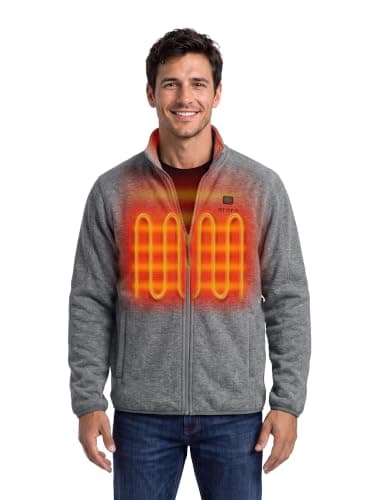 ORORO Men's Heated Fleece Jacket, 4 ZonesFour heating zones on a 7.4-volt system with a soft fleece shell - the easiest way in, and the easiest to live with. | Most people buying their first heated jacket | 9.5 | |
| 2 | 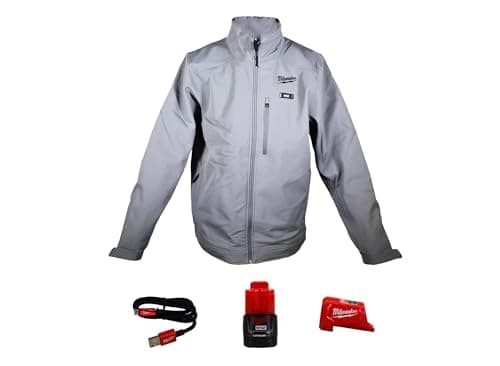 Milwaukee M12 Heated TOUGHSHELL Jacket KitA 12-volt tool-battery jacket in a tough shell - more heat, more runtime, and no extra charger to own. | Anyone already on a tool battery platform | 9.5 | |
| 3 | 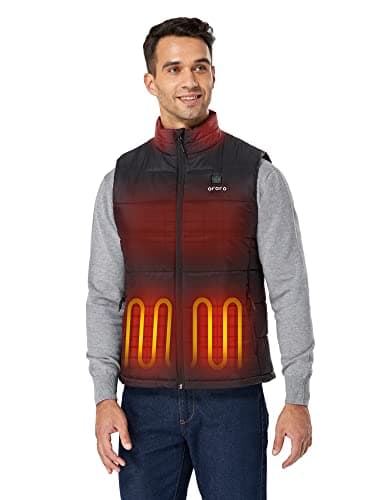 ORORO Men's Lightweight 4-Zone Heated VestA lightweight four-zone vest - the layer that makes a heated system work without restricting your arms. | Wearing heat under a work jacket | 9.4 |
#ad Prices pulled from Amazon and stamped as of November 14, 2026; they change, and we show no number we cannot verify. How we are funded.
Top pick · Most people buying their first heated jacket
ORORO Men's Heated Fleece Jacket, 4 Zones
Four heating zones on a 7.4-volt system with a soft fleece shell - the easiest way in, and the easiest to live with.
#ad Price as of November 14, 2026. How we are funded
- Our score
- 9.5/10
Category-defining
This is the archetype of the consumer heated jacket and it is a sensible default. Four carbon-fiber heating zones - chest left and right, mid-back and collar - on a 7.4-volt lithium-ion pack, with three heat levels and a shell soft enough to wear as a normal jacket. The collar element is the detail people underestimate: the back of the neck is one of the places where warming the skin produces the biggest perceived whole-body effect, and plenty of cheaper jackets leave it out.
The 7.4-volt platform is also the right choice for anyone not already invested in a tool battery system. Packs are small, light, pocketable and cheap enough to own a spare, and the jacket itself is a jacket rather than a piece of tool-brand kit.
Honest limits: a 7.4-volt system puts out less heat than a 12 or 20-volt tool-battery jacket, so in genuinely severe cold it is a supplement rather than a solution. The fleece shell is not waterproof and barely wind-resistant, which matters because wind strips heat faster than the elements can add it. And like all heated gear, it is only as good as your base layer - it cannot warm a damp cotton shirt.
Specs that matter
- Heating zones:
- 4 — chest, back, collar
- Battery:
- Included, proprietary pack
- Shell:
- Fleece, water resistant
- Washable:
- Yes, battery removed
Rubric profile
Raw per-criterion marks out of 10, before weighting — this is the shape of the pick, not its published score. A low mark is a scope limit, not a fault: how we score.
- Warmth
- 8.2
- Runtime
- 8.0
- Zone coverage
- 8.8
- Durability
- 8.0
- Value
- 8.8
Why we picked it
- Battery is included, unlike every tool-brand jacket
- Collar heat is the zone people notice most
- Machine washable once the battery is out
Good to know: A proprietary battery, so it will not share with your tool platform; the fleece shell is for warmth rather than abrasion.
Best heat output · Anyone already on a tool battery platform
Milwaukee M12 Heated TOUGHSHELL Jacket Kit
A 12-volt tool-battery jacket in a tough shell - more heat, more runtime, and no extra charger to own.
#ad Price as of November 14, 2026. How we are funded
- Our score
- 9.5/10
Category-defining
If you already carry M12 batteries, this is the rational choice and it is a genuinely different class of product. Twelve volts moves more current through the elements than a 7.4-volt consumer pack, so it produces noticeably more heat and holds it against wind better - and because tool packs are available in larger capacities, you can trade weight for runtime depending on the day. The shell is also built like workwear rather than like a fleece, which is what you want on a site.
The practical advantage is logistics. A jacket that runs on the batteries already in your van and charges on the charger already on your bench removes the single most common reason heated gear ends up unused: a dead proprietary pack and a charger you left at home.
A tool battery is heavier and bulkier than a slim 7.4-volt pack, and it hangs in a pocket rather than disappearing. The jacket costs more, especially if you need the kit with a battery. And it is tied to one platform - excellent if that is your platform, irrelevant if it is not.
Specs that matter
- Battery:
- M12 REDLITHIUM (kit includes one)
- Shell:
- TOUGHSHELL stretch polyester, wind and water resistant
- Heating zones:
- 3 — chest, back and front pockets
- Platform:
- Shares batteries with M12 tools
Rubric profile
Raw per-criterion marks out of 10, before weighting — this is the shape of the pick, not its published score. A low mark is a scope limit, not a fault: how we score.
- Warmth
- 9.4
- Runtime
- 9.0
- Zone coverage
- 8.4
- Durability
- 9.2
- Value
- 8.0
Why we picked it
- Shares batteries and chargers with your M12 tools — the real advantage
- Shell is a work shell, not a fashion fleece
- Holds up to site abrasion in a way consumer jackets do not
Good to know: Only makes sense if you already run M12 batteries; the most expensive option here and the toughest shell.
Most versatile · Wearing heat under a work jacket
ORORO Men's Lightweight 4-Zone Heated Vest
A lightweight four-zone vest - the layer that makes a heated system work without restricting your arms.
#ad Price as of November 14, 2026. How we are funded
- Our score
- 9.4/10
Outstanding
A vest is the better buy more often than people expect, and the reason is physiological rather than technical. Heating your core is what triggers your body to stop restricting blood flow to your hands and feet, so warming the torso often does more for cold fingers than warming the arms would. A vest does that while leaving your shoulders and arms completely free - which matters for anyone working overhead, climbing, or wearing a harness.
It is also the most versatile piece of heated gear to own, because it layers. You wear it under whatever outer shell the weather requires, which means one heated garment covers a much wider temperature range than a heated jacket does.
There is no arm or sleeve heating, obviously, and a vest alone is not enough in wind - it needs an outer layer over it. The same 7.4-volt heat ceiling applies. And like any heated garment it is a battery product, so it fails on a dead pack in a way a down vest does not.
Specs that matter
- Heating zones:
- 4
- Battery:
- USB-C rechargeable, included
- Fit:
- Layerable under a shell
- Weight:
- Lightweight puffer
Rubric profile
Raw per-criterion marks out of 10, before weighting — this is the shape of the pick, not its published score. A low mark is a scope limit, not a fault: how we score.
- Warmth
- 7.8
- Runtime
- 8.4
- Zone coverage
- 8.0
- Durability
- 8.0
- Value
- 9.0
Why we picked it
- USB-C charging means a standard cable and power bank work
- Layers under your existing work coat instead of replacing it
- Leaves the arms unrestricted for tool work
Good to know: No arm or hand warmth by design — a core-warming layer that needs a shell over it in wind.
Jacket or vest
| Situation | Choose | Why |
|---|---|---|
| First heated garment, general cold | 7.4V four-zone jacket | Simple, light, affordable packs, easy to own a spare |
| Already on a tool battery platform | 12V or 20V tool-battery jacket | More heat, longer runtime, no extra charger |
| Working overhead, climbing, in a harness | Heated vest under a shell | Core heat with arms and shoulders completely free |
| Severe cold, long static work | Tool-battery jacket plus a spare pack | Heat output and capacity both matter; one pack will not last |
| Cold hands or feet specifically | Heated vest first | Warming the core is what restores circulation to extremities |
Why warming your core fixes cold hands
This is the single most useful thing to understand about heated gear, and it is why vests sell as well as jackets. When your core temperature starts to drop, your body protects it by constricting the blood vessels in your hands, feet and skin - a reflex that preserves vital organs at the cost of your extremities. That is why gloves alone often fail to fix cold hands: the problem is not insufficient insulation at the fingers, it is that not enough warm blood is being sent there in the first place.
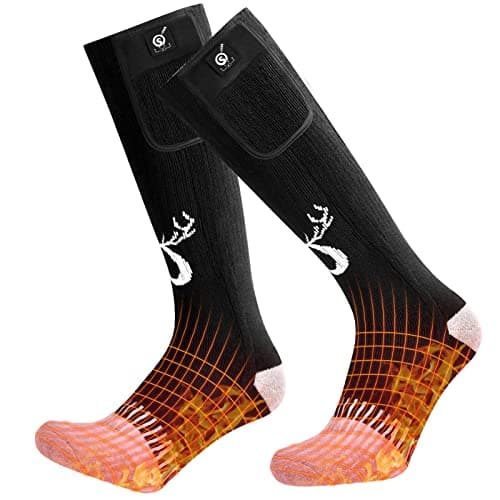
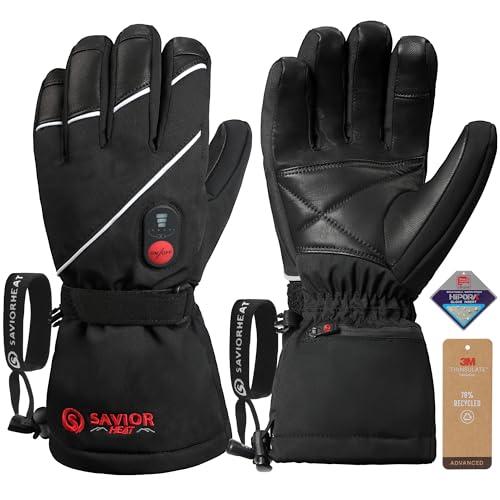
Warming the torso reverses the reflex. Once your core is comfortable, circulation to the hands and feet opens up again, and a moderate glove suddenly works. That is the reason a heated vest is often the better purchase than heated gloves, and the reason heated socks work best in combination with a warm core rather than on their own - best heated socks and best heated gloves cover those cases, and cold weather work gloves covers the unheated options.
Layering a heated garment properly
- A dry, non-cotton base layer against your skin. Merino or a synthetic wicking layer. Cotton holds sweat against your skin and conducts heat away from you faster than it insulates, which defeats the whole system.
- The heated layer next, in contact or near contact. Heat transfers best across a small gap. A heated jacket worn over a thick fleece is warming the fleece, not you.
- Insulation over or built in. The element adds heat; insulation is what keeps it from leaving. A heated shell with no insulation is a very inefficient use of a battery.
- A windproof outer layer whenever there is wind. This matters more than any other step. Wind-driven convection removes heat faster than a 15-watt element can add it, and no amount of heat setting compensates.
- Run it on low, continuously, rather than high in bursts. You are trying to prevent your core from cooling, not to recover it once it has. Pre-heating the jacket before you go out is also more effective than trying to catch up later.
Battery safety and care
Heated gear is a lithium-ion product worn against your body, so the ordinary battery rules matter more than usual. Charge with the supplied charger only, on a hard non-flammable surface, and not overnight unattended. Stop using a pack that has been crushed, punctured, dropped hard, or that has swollen, discolored or become warm when idle - a damaged lithium cell can fail abruptly. Do not charge a pack that is still frozen; let it come up to room temperature first.
For storage over summer, leave the pack at roughly half charge rather than full or empty, somewhere cool and dry, and top it up every few months. Before washing a heated garment, always remove the battery, close the connector flap, and follow the manufacturer's instructions precisely - most are machine washable on a cold gentle cycle and none should be tumble dried or dry cleaned. Finally, if you have reduced sensation in your skin from any cause, be careful with direct-contact heat: you may not feel a hot spot developing. The same caution applies to anyone who would not feel a pressure point, which is covered in best work boots for diabetics.
What to skip
Skip single-zone jackets that heat only the chest; they feel far worse than the specification suggests because the back and neck are where cold is actually perceived. Skip buying on wattage alone without checking battery capacity, since a hot jacket with a small pack is a jacket that is cold by lunchtime. Skip heated gear as the answer to genuinely severe cold - at that point you need proper insulation and a windproof shell, with heat as the supplement. And skip heated insoles as a first purchase: a heated vest plus good socks and properly insulated boots solves cold feet more reliably and more cheaply, and boot insulation grams explained sets out what insulation weight your temperature actually needs.
Frequently asked
How do heated jackets work?
A lithium-ion battery passes current through thin carbon-fiber heating elements sewn into panels across the chest, back and collar. A controller limits the current to give two or three heat levels. The elements resist the current and warm up, spreading gentle heat over a wide area rather than concentrating it in one spot.
How long do heated jackets last on a battery?
Roughly two to three hours on the highest setting and six to ten hours on the lowest for a typical 7.4-volt, 5,200 mAh pack. Tool-battery jackets at 12 or 20 volts produce more heat and can run longer with a larger pack. Cold weather reduces capacity, so the real-world runtime in winter is shorter than the quoted figure.
Is a heated vest or a heated jacket better?
A vest is more versatile and often more effective per dollar, because warming your core is what reverses the reflex that restricts blood flow to your hands and feet. It also leaves your arms free and layers under any outer shell. A jacket is the better choice for severe cold or if you want one garment rather than a system.
Are heated jackets safe?
Yes, when used as directed - they run at low voltage and the elements produce gentle, distributed heat. The ordinary lithium-ion rules apply: charge with the supplied charger on a non-flammable surface, stop using a pack that is swollen, damaged or warm when idle, and remove the battery before washing. Be more cautious if you have reduced skin sensation, since you may not feel a hot spot forming.
Can you wash a heated jacket?
Most are machine washable, but only with the battery removed and the connector flap closed, on a cold gentle cycle. Never tumble dry and never dry clean a heated garment - the heat and the solvents damage the elements and the wiring. Check the manufacturer's instructions, because the details vary by model.
Do heated jackets work in very cold weather?
They help, but they are a supplement rather than a solution below about 20F. The elements add a modest amount of heat, and in severe cold or wind what keeps you warm is insulation and a windproof shell retaining the heat your body already makes. The most effective setup is a heated layer inside a properly insulated, wind-resistant outer layer.
Our recommendation
If you read nothing else on this page, these are the two to look at — the one we would buy, and the one to take instead if its trade-off suits you better.
Top pick · Most people buying their first heated jacket
ORORO Men's Heated Fleece Jacket, 4 Zones
Four heating zones on a 7.4-volt system with a soft fleece shell - the easiest way in, and the easiest to live with.
#ad Price as of November 14, 2026. How we are funded
Runner-up · Anyone already on a tool battery platform
Milwaukee M12 Heated TOUGHSHELL Jacket Kit
A 12-volt tool-battery jacket in a tough shell - more heat, more runtime, and no extra charger to own.
#ad Price as of November 14, 2026. How we are funded
Prices are read live from Amazon and stamped with the date. How we pick.
Sources
Back to Guides, or see how we pick. Spotted something wrong? We publish corrections — see our editorial policy.