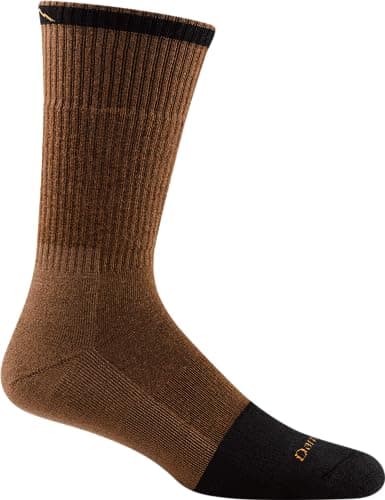
Best for warehouse work
Best Work Boots for Warehouse Workers
You are walking eight to twelve miles a shift on sealed concrete. Weight on your feet is the enemy.
Warehouse and distribution work has quietly become one of the largest footwear categories in the country, and most of the boots marketed into it are the wrong tool. Heavy industrial boots solve hazards that a warehouse does not have - broken ground, falling steel, standing water - and impose a cost that it does have, which is weight carried across a very large number of steps.
Mileage is the hazard nobody specs for
Order pickers routinely cover eight to twelve miles a shift. At roughly two thousand steps a mile, an extra half pound per boot is tens of thousands of extra foot-pounds lifted over a day. That is why warehouse workers who switch from traditional industrial boots to athletic-construction safety footwear describe the difference in terms that sound exaggerated and are not.
It is also why the single most useful upgrade is often not the boot. A flat sealed-concrete floor returns no energy, and the fatigue that comes with that has a direct fix inside the boot: see insoles for concrete and the reasoning on boots for standing all day.
Quick picks
Ranked by our published scoring rubric. Tap any row for the full write-up.
| # | Product | Best for | Score | Price |
|---|---|---|---|---|
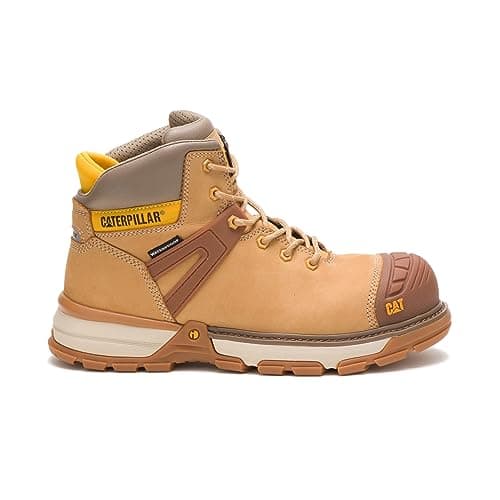
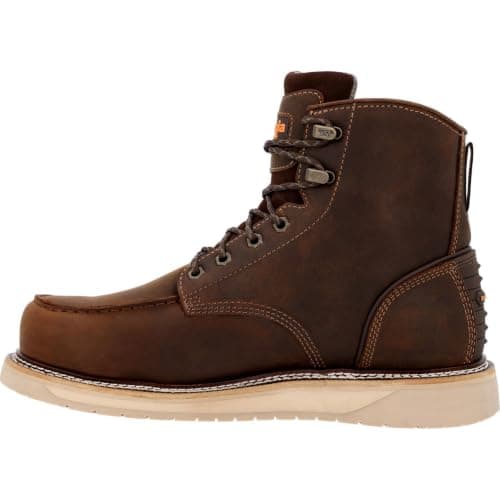
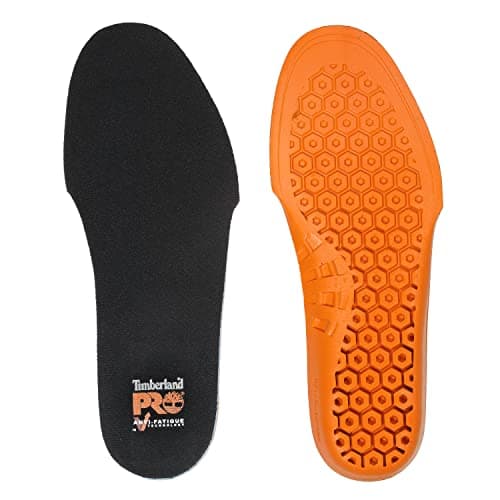
| 1 | 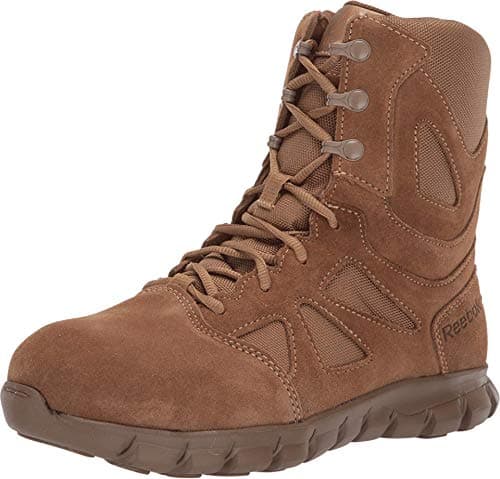 Reebok Work Sublite Cushion 8" Safety Toe Side-ZipAthletic weight with a safety toe - which is exactly the right compromise here. | High-mileage picking and packing | 8.5 | |
| 2 | 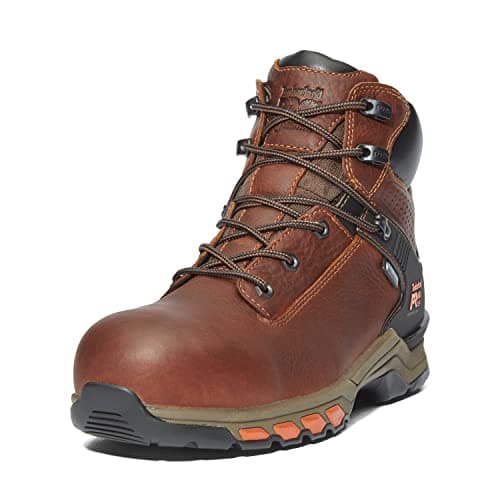 Timberland PRO Hypercharge 6" Composite Toe WaterproofLight for a waterproof composite boot, with the midsole that matters on concrete. | Mixed indoor and yard work | 8.4 | |
| 3 | 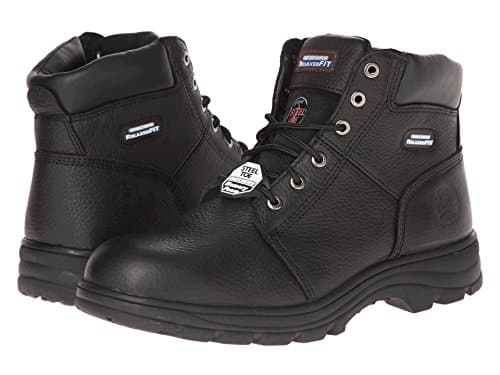 Skechers Work Workshire Relaxed Fit Steel ToeNo break-in, EH rated, and the cheapest thing here that meets the spec. | A first compliant boot, cheaply | 8.0 | |
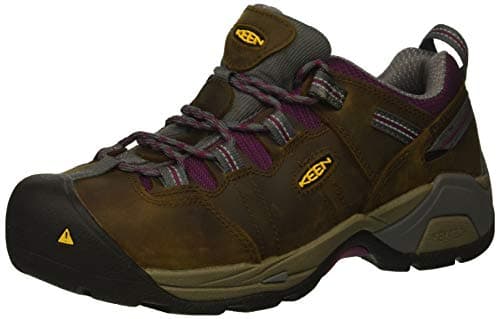
| 4 | 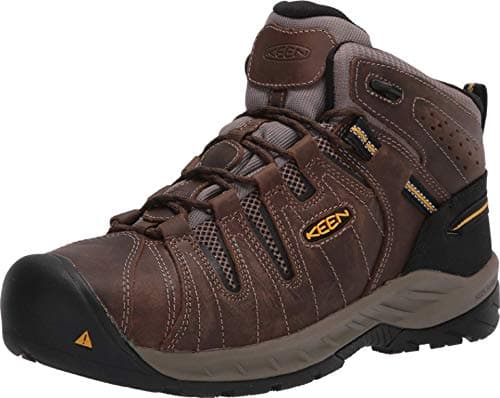 KEEN Utility Flint II Mid Steel ToeUnlined and breathable, with the roomiest toe box of the four. | Hot warehouses and wide feet | 8.1 |
#ad Prices pulled from Amazon and stamped as of October 6, 2026; they change, and we show no number we cannot verify. How we are funded.
Top pick · High-mileage picking and packing
Reebok Work Sublite Cushion 8" Safety Toe Side-Zip
Athletic weight with a safety toe - which is exactly the right compromise here.
Warehouse work is the trade most poorly served by traditional work-boot thinking. You are not on broken ground, you are not around falling steel, and you are not standing in water. You are walking a great many miles on flat sealed concrete, and every ounce on your foot gets multiplied by thousands of steps.
An athletic-construction safety boot is the honest answer: it meets the ASTM requirement your employer specifies while weighing a fraction of an industrial boot. The side zip is a genuine convenience, and the 8-inch shaft gives ankle support for anyone on uneven pallet stacks.
Specs that matter
- Toe:
- Safety toe, ASTM F2413
- Height:
- 8 inch
- Closure:
- Laces plus side zipper
- Weight:
- Athletic-shoe construction
Our scoring
- Low weight
- 9.2
- Cushioning
- 8.8
- Slip resistance
- 8.4
- Durability
- 7.0
- Value
- 8.2
What works
- Among the lightest 8-inch safety boots sold
- Side zip means you keep the lace tension and still get out quickly
- Cushioning suited to miles of walking on hard floors
What to know
- Zipper is the obvious failure point
- Textile panels tear on rough material handling
- Little underfoot puncture protection
No. 2 · Mixed indoor and yard work
Timberland PRO Hypercharge 6" Composite Toe Waterproof
Light for a waterproof composite boot, with the midsole that matters on concrete.
If your shifts include the loading dock and the yard as well as the floor, you need something that handles weather without becoming a brick. The Hypercharge is the lightest genuinely waterproof composite-toe option we would recommend, and its Anti-Fatigue midsole is designed for exactly the standing-and-walking-on-hard-floors case.
The athletic upper will wear faster than thick full-grain leather, and the membrane runs warm indoors. Those are the costs of carrying less weight.
Specs that matter
- Toe:
- Composite toe, ASTM F2413
- Height:
- 6 inch
- Waterproof:
- Yes
- Midsole:
- Anti-Fatigue Technology cushioning
Our scoring
- Low weight
- 8.4
- Cushioning
- 9.0
- Slip resistance
- 8.6
- Durability
- 7.6
- Value
- 7.8
What works
- Much lighter on the foot than the Boondock at the same protection level
- Anti-Fatigue midsole is a real difference on long standing shifts
- Waterproof without feeling like a rubber boot
What to know
- Athletic-style uppers wear out faster than thick full-grain
- Not resoleable
- Breathes poorly in genuine heat
Best value · A first compliant boot, cheaply
Skechers Work Workshire Relaxed Fit Steel Toe
No break-in, EH rated, and the cheapest thing here that meets the spec.
Warehouse jobs often require safety footwear on day one, bought out of your own pocket, before you know whether you are staying. This is the pragmatic answer: steel toe, EH rated, relaxed fit, essentially no break-in, at a price that does not hurt.
The soft cushioning packs out within months of full-time wear, so treat it as a six-month boot rather than a two-year one. At this price that is a reasonable deal, and swapping in a better insole extends it meaningfully.
Specs that matter
- Toe:
- Steel toe, ASTM F2413
- Height:
- 6 inch
- Fit:
- Relaxed fit, roomy
- Electrical hazard:
- EH rated
Our scoring
- Low weight
- 8.0
- Cushioning
- 8.2
- Slip resistance
- 7.8
- Durability
- 6.4
- Value
- 9.5
What works
- No break-in worth mentioning
- Cheapest EH-rated steel toe we would actually recommend
- Relaxed fit suits wide and swollen feet
What to know
- Soft cushioning packs out within months of daily wear
- Not waterproof
- Upper is the first thing to fail on rough sites
No. 4 · Hot warehouses and wide feet
KEEN Utility Flint II Mid Steel Toe
Unlined and breathable, with the roomiest toe box of the four.
An unconditioned warehouse in summer is a genuinely hot workplace, and a waterproof membrane makes it worse by trapping sweat. The Flint II has no membrane at all, so it breathes, and it carries KEEN's wide toe box - which matters when your feet swell over a twelve-hour shift, as they will.
No water resistance to speak of is the trade, which is fine for indoor work and not for a wet dock.
Specs that matter
- Toe:
- Steel toe, ASTM F2413
- Height:
- Mid
- Waterproof:
- No — unlined for airflow
- Electrical hazard:
- EH rated
Our scoring
- Low weight
- 8.6
- Cushioning
- 7.6
- Slip resistance
- 8.0
- Durability
- 7.4
- Value
- 8.4
What works
- No membrane, so it genuinely breathes in summer
- One of the lighter steel-toe boots on the market
- KEEN's wide toe box without the waterproof weight penalty
What to know
- Zero water resistance beyond the leather itself
- Low shaft offers little ankle protection
- Thin stock footbed
Slip resistance is your real safety spec
Slips, trips and falls are among the most common injury categories in warehousing, far ahead of crush injuries to the toes. Sealed concrete is smooth by design, and a thin film of dust, condensation or spilled product makes it genuinely treacherous. Fine siping on the outsole - small channels that break surface tension and move fluid away - does more for you than deep lugs. Work boot sole types explains what the ratings mean.
Fit for a twelve-hour shift
Feet swell measurably over a long shift, more so in heat and more so when you are on them continuously. If you fit boots at nine in the morning they will be tight by eight at night. Buy with that in mind: try boots on late in the day, in your work socks, and favor a roomier toe box over a snug one. If your feet are wide to begin with, start at boots for wide feet.
Socks matter more in this category than most, because high mileage plus heat is the classic blister recipe. A merino or synthetic blend with real cushioning at the ball and heel is the fix - best work socks has the picks, and anyone whose feet sweat heavily should read socks for sweaty feet.
What we would skip
Skip waterproof membranes unless you work a wet dock - indoors they just trap heat and sweat. Skip insulation entirely. Skip 8-inch leather industrial boots and the deep lug soles that come with them: the lugs do nothing on sealed concrete and the weight costs you real energy. And skip metatarsal guards unless you handle heavy freight by hand, in which case see metatarsal guard boots.
Frequently asked
Do warehouse workers need steel toe boots?
Most warehouse and distribution employers require ASTM F2413 safety-toe footwear, but it rarely has to be steel specifically - composite meets the same impact rating at lower weight, which matters a great deal when you walk ten miles a shift. Check your employer's exact specification, as some also require slip-resistance ratings.
What are the best boots for walking on concrete all day in a warehouse?
Light, well-cushioned safety footwear with a flat, finely siped outsole - athletic-construction safety boots rather than heavy industrial ones. Then replace the factory insole, because a cushioning insole on a hard floor makes more difference than a hundred dollars of extra boot.
Are work shoes or boots better for warehouse work?
Shoes are lighter and cooler and are fine on flat floors; boots give ankle support that matters if you work uneven pallet stacks, use ladders, or carry awkward loads. If your floor is flat and your loads are light, a safety shoe is often the better choice.
How often should warehouse workers replace work boots?
At this mileage, commonly every six to twelve months - and the trigger is the outsole and the cushioning, not the upper. Once the tread is worn smooth you have lost the slip resistance that is your main safety feature in a warehouse, even though the boot looks fine.
Sources
Back to Work Boots, or see how we pick. Spotted something wrong? We publish corrections — see our editorial policy.