Best warehouse gloves
Best Work Gloves for Warehouse Work
Warehouse hands take three kinds of damage: abrasion from cardboard, cuts from blades, and pinches from pallets and cages. One glove rarely covers all three.
For warehouse case handling the best glove is the Ironclad Box Handler: a tacky TPR palm that grips smooth cardboard without you squeezing, reinforced exactly where case work destroys gloves. For an all-day glove with real fingertip feel, the MaxiFlex Ultimate; for anyone using a box cutter, the ANSI A2 MaxiFlex Cut; and to keep a whole crew supplied, the DEX FIT FN330 at multi-pack prices.
Warehouse hand injuries cluster into three mechanisms, and they ask for different gloves. The first is abrasion and laceration from cardboard - the slow destruction of the skin on the web of your thumb and the knuckles, from thousands of cases a shift. The second is cuts from box cutters, which is the mechanism behind most of the serious injuries, usually when a blade skips off a strap or a case seam. The third is impact and pinch: fingers between a pallet and a rack upright, a cage door, a case falling off a stack.
No single glove answers all three well, and pretending otherwise is how you end up with a crew wearing heavy A5 gloves to pick small items, taking them off because they cannot work in them, and getting cut bare-handed. The useful approach is a default glove most people wear most of the time, plus rated gloves for the specific tasks that need them.
What matters in a warehouse glove
- Grip on smooth cardboard. A micro-foam nitrile or TPR palm holds a slick new case; a smooth nitrile dip slides on it. This is the single most useful property in a picking glove.
- Fingertip feel. You scan, you label, you handle small items and you use a phone. A 15-gauge liner keeps that; an 8-gauge heavy glove does not, and a glove you have to remove twenty times a shift gets left off.
- Breathability. A fully coated glove traps sweat, and damp hands inside a glove macerate and blister. An uncoated back is the single feature that makes an eight-hour glove possible.
- A cut rating where blades are in use. ANSI/ISEA A2 to A3 covers box-cutter work. Higher levels are for glass, metal banding and sheet stock, and they cost you dexterity.
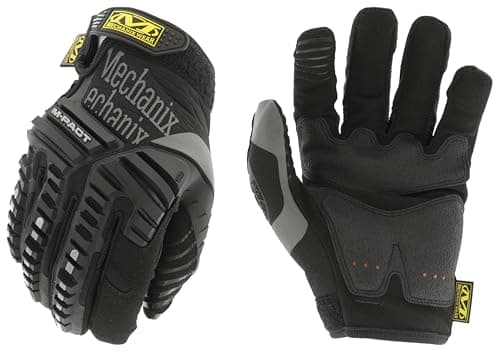
- Impact protection only where there is impact. TPR knuckle armor is genuinely useful on a dock or in a rack aisle and is dead weight for a picker. Impact resistant work gloves covers that case.
Picking a cut level without over-buying
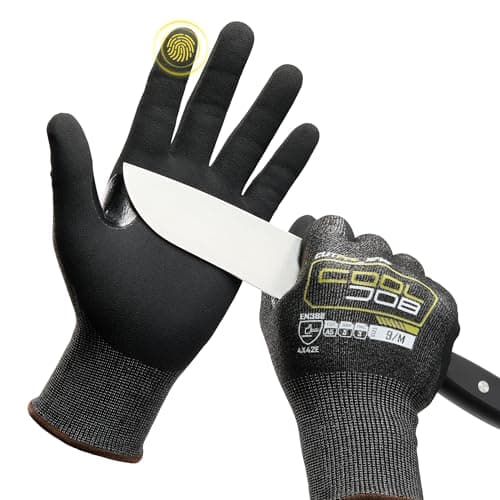
The ANSI/ISEA 105 scale runs A1 through A9, measuring the weight in grams required to cut through the material over a fixed distance. The temptation is to buy high and feel responsible, and it backfires: A5 and above are noticeably stiff, warm and clumsy, and in a picking role they get taken off. A2 or A3 in a thin 15-gauge knit is the level people actually wear all shift, and wearing it is what prevents injuries.
Buy above A3 when the hazard is genuinely sharper than a utility blade: glass handling, steel banding and strapping, sheet metal, or recycling and waste sorting where unknown sharps are in the stream. Everything else in a typical distribution center is covered lower down the scale. The full breakdown of what each level means is in ANSI cut levels explained.
Quick picks
Ranked by our published scoring rubric. Tap any row for the full write-up.
| # | Product | Best for | Score | Price |
|---|---|---|---|---|
| 1 | 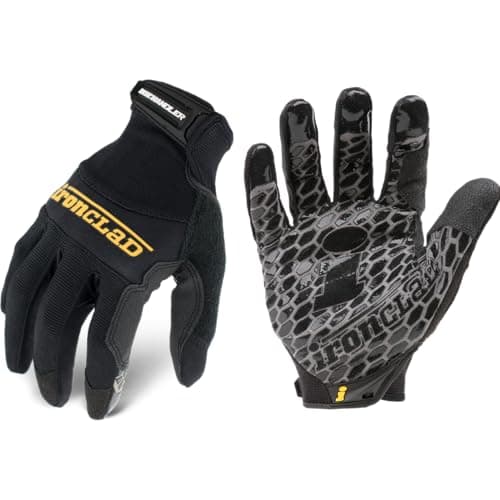 Ironclad Box Handler GlovesBuilt for exactly this job: a tacky palm that grips smooth cardboard and a reinforced thumb crotch that survives it. | Picking, packing and moving cases all day | 9.6 | |
| 2 | 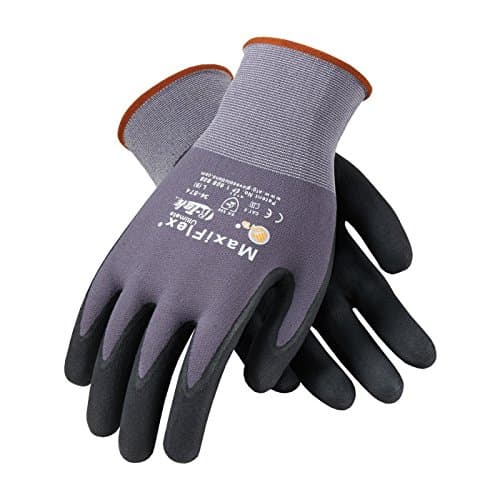 MaxiFlex Ultimate 34-874 Nitrile-Coated GlovesThe default warehouse knit: micro-foam nitrile on a 15-gauge liner, breathable enough to wear for eight hours. | All-day wear and fine handling | 9.5 | |
| 3 | 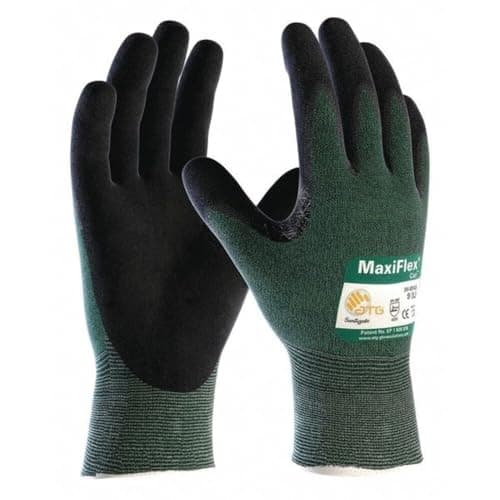 MaxiFlex Cut Level A2 Nitrile-Coated Gloves (34-8743)The same micro-foam nitrile feel with an ANSI A2 cut liner - the version to issue to anyone opening cases. | Anywhere a box cutter is in use | 9.4 | |
| 4 | 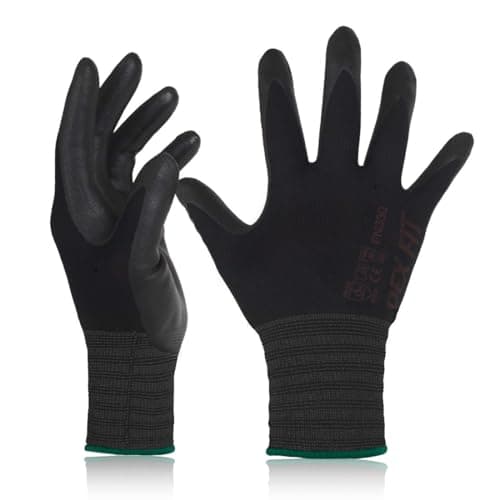 DEX FIT FN330 Nitrile Work GlovesA thin nitrile-coated knit at a multi-pack price - the glove to buy when the real problem is that nobody is wearing any. | Stocking a whole crew cheaply | 9.2 |
#ad Prices pulled from Amazon and stamped as of November 14, 2026; they change, and we show no number we cannot verify. How we are funded.
Top pick · Picking, packing and moving cases all day
Ironclad Box Handler Gloves
Built for exactly this job: a tacky palm that grips smooth cardboard and a reinforced thumb crotch that survives it.
#ad Price as of November 14, 2026. How we are funded
- Our score
- 9.6/10
Category-defining
Cardboard is a quietly brutal material to handle. It is slick when it is new, abrasive when it is not, and the edges work like a dull blade across the web of your thumb. This glove is designed around that specific problem rather than adapted to it: a thermoplastic rubber palm with a surface tacky enough to hold a smooth case without squeezing, and reinforcement exactly where case handling wears gloves out first - the thumb crotch and the index finger side.
The grip is the real benefit and it compounds over a shift. When a glove holds a box without you gripping hard, your forearms and hands stay out of the fatigue that causes dropped cases and, over years, the repetitive strain that ends warehouse careers. That is a bigger safety win than any cut rating for most pickers.
The trade-offs are real. There is no cut rating, so this is the wrong glove the moment a box cutter comes out. The TPR palm is warm and does not breathe well, so hands get damp over a long shift. And it is bulkier than a knit glove, which costs you a little dexterity on small items and scanner buttons.
Specs that matter
- Palm:
- High-grip textured synthetic
- Build:
- Lightweight, padded palm
- Cut rating:
- None
- Care:
- Machine washable
Rubric profile
Raw per-criterion marks out of 10, before weighting — this is the shape of the pick, not its published score. A low mark is a scope limit, not a fault: how we score.
- Grip
- 9.6
- Dexterity
- 7.8
- Cut protection
- 3.0
- Durability
- 9.0
- Value
- 8.6
Why we picked it
- Grip on cardboard and totes is genuinely better than a generic glove
- Light enough for a full shift of handling
- Padded palm reduces repetitive strain
Good to know: Built purely for grip on cartons and bags; the palm texture picks up dust and offers no cut or impact protection.
Best all-day glove · All-day wear and fine handling
MaxiFlex Ultimate 34-874 Nitrile-Coated Gloves
The default warehouse knit: micro-foam nitrile on a 15-gauge liner, breathable enough to wear for eight hours.
#ad Price as of November 14, 2026. How we are funded
- Our score
- 9.5/10
Category-defining
This is the glove most warehouses already buy by the case, and for good reason. A 15-gauge nylon liner is thin enough that you keep genuine fingertip feel - scanner buttons, small parts, labels, phone screens - and the micro-foam nitrile coating grips dry and lightly oily surfaces far better than a smooth coating. Crucially, the back of the hand is left uncoated, so the glove actually vents and your hands are not swimming by lunch.
That breathability is why it wins as the all-day glove rather than the specialist one. The most common failure mode in warehouse PPE is not a glove being outclassed by a hazard; it is the glove coming off because it is uncomfortable, and an uncomfortable glove protects nobody.
What it does not do: it has no cut resistance worth the name, no impact protection, and the coating wears through at the fingertips in weeks rather than months under heavy case handling. Treat these as a consumable bought in multi-packs - which is how the price makes sense.
Specs that matter
- Coating:
- Micro-foam nitrile, palm and fingers
- Liner:
- 15-gauge seamless knit
- Pack:
- Sold as 12 pairs
- Cut rating:
- ANSI A1 — minimal
Rubric profile
Raw per-criterion marks out of 10, before weighting — this is the shape of the pick, not its published score. A low mark is a scope limit, not a fault: how we score.
- Grip
- 8.8
- Dexterity
- 9.6
- Cut protection
- 2.0
- Durability
- 6.6
- Value
- 9.4
Why we picked it
- Dexterity close to bare hands — you can pick up a washer
- Breathable back, so hands do not swim in sweat
- Buying by the dozen drops the per-pair cost dramatically
Good to know: The best bare-hand feel of any glove here, with essentially no cut protection — buy them by the box and treat them as consumable.
Best for blade work · Anywhere a box cutter is in use
MaxiFlex Cut Level A2 Nitrile-Coated Gloves (34-8743)
The same micro-foam nitrile feel with an ANSI A2 cut liner - the version to issue to anyone opening cases.
#ad Price as of November 14, 2026. How we are funded
- Our score
- 9.4/10
Outstanding
Box cutters are the most common source of serious hand injury in a warehouse, and they cut uncoated knit gloves without noticing. This is the sensible answer: the same 15-gauge micro-foam nitrile construction that makes the Ultimate wearable all day, built on a liner that meets ANSI/ISEA cut level A2. It feels close enough to the standard glove that people actually keep it on, which is the entire point.
A2 is the right level for this hazard specifically. Cut ratings run A1 to A9, and the higher levels get stiff and clumsy fast; A2 covers the glancing blade contact that happens when a knife slips off a strap or a case, which is the realistic warehouse injury. If your operation handles glass, metal banding or sheet stock, you need more - A4 cut resistant gloves covers the higher levels and what they cost you in feel.
Honest limits: it is thicker and warmer than the uncoated version, it costs noticeably more, and no cut rating is a puncture or slash-proof rating. A blade driven at a glove will still go through. The rating describes resistance under a standard test, not immunity - the detail is in ANSI cut levels explained.
Specs that matter
- Cut rating:
- ANSI/ISEA 105 level A2
- Coating:
- Microporous nitrile palm
- Liner:
- Seamless knit, 15 gauge
- Pack:
- Sold as 12 pairs
Rubric profile
Raw per-criterion marks out of 10, before weighting — this is the shape of the pick, not its published score. A low mark is a scope limit, not a fault: how we score.
- Grip
- 8.6
- Dexterity
- 8.8
- Cut protection
- 7.4
- Durability
- 7.6
- Value
- 8.4
Why we picked it
- A stated cut rating in a glove thin enough for fine work
- Same micro-foam grip and breathable knit back as the uncoated MaxiFlex
- Dozen packs make per-pair cost low enough to replace them properly
Good to know: A2 is light cut protection — enough for burrs and edges, not for glass or blade handling.
Best value · Stocking a whole crew cheaply
DEX FIT FN330 Nitrile Work Gloves
A thin nitrile-coated knit at a multi-pack price - the glove to buy when the real problem is that nobody is wearing any.
#ad Price as of November 14, 2026. How we are funded
- Our score
- 9.2/10
Outstanding
The most common PPE failure in a warehouse is not the wrong glove, it is an empty glove box and a shift that starts anyway. These solve that: a thin, close-fitting nitrile-coated knit that fits like a second skin, works a touchscreen, and costs little enough that you can keep a genuine supply on the shelf and let people take a fresh pair when the last one is stiff with grime.
The fit is better than the price suggests. A snug knit with no bagging at the fingertips is what makes a cheap glove usable for picking rather than just for carrying, and these are among the better-fitting budget knits available.
They are consumables in the most literal sense - expect weeks, not months, from heavy case handling. There is no cut rating and no impact protection. The coating is thin enough that a sharp staple in a pallet will go through it. Buy them as the default glove and keep rated gloves alongside for the specific hazards.
Specs that matter
- Coating:
- Nitrile palm dip
- Liner:
- Knit, 3D fit
- Cut rating:
- None published
- Touchscreen:
- Yes
Rubric profile
Raw per-criterion marks out of 10, before weighting — this is the shape of the pick, not its published score. A low mark is a scope limit, not a fault: how we score.
- Grip
- 8.0
- Dexterity
- 9.2
- Cut protection
- 2.0
- Durability
- 6.0
- Value
- 9.6
Why we picked it
- Lowest cost per pair of any coated glove here
- Fit is better than most budget gloves
- Machine washable
Good to know: Sizing runs small, so order a size up; the coating separates sooner than the premium brands, which the price reflects.
The four picks side by side
| If the job is | Buy | Because |
|---|---|---|
| Case picking and packing all shift | Ironclad Box Handler | Tacky TPR palm for smooth cardboard, reinforced thumb crotch |
| General handling with small items and scanners | MaxiFlex Ultimate 34-874 | 15-gauge liner, micro-foam nitrile grip, uncoated breathable back |
| Opening cases with a box cutter | MaxiFlex Cut A2 34-8743 | ANSI A2 liner with the same feel, so it stays on |
| Keeping a whole crew in gloves | DEX FIT FN330 | Snug thin knit at multi-pack prices, touchscreen capable |
The things that actually injure warehouse hands
- Box cutter slips. Nearly always a blade extended too far, or cutting towards the hand holding the case. A cut glove helps; changing the cut direction and using a safety knife helps more.
- Pinch points at racking and pallets. Fingers between a pallet and an upright, or under a case being set down. No glove prevents a crush injury of that scale - this is a handling-technique problem.
- Cage and dock door impacts. Knuckle armor genuinely helps here, which is why dock crews and glove requirements often differ from pickers'.
- Staples and banding in pallets. A thin knit coating will not stop a staple. Leather palms will, which is where a heavier glove makes sense for dedicated pallet work - work gloves for construction covers the leather options.
- Cumulative abrasion. The slowest and most common. It is not dramatic, but a shift's worth of cardboard across bare knuckles is why people's hands crack in winter.
What we would skip
Skip heavy leather rigger gloves for picking work - they have no fingertip feel, they are hot, and they will be off within an hour. Skip A5 and above unless the hazard genuinely warrants it; over-rated gloves are the most reliable way to get a crew working bare-handed. Skip fully coated gloves for eight-hour wear, because the sweat they trap causes its own skin problems. And skip any glove with a loose cuff near moving conveyors or rotating equipment - a glove that can be caught is a hazard in its own right, which is also why gloves and powered rollers need thinking about together.
If your warehouse role involves driving a reach truck or a pallet jack most of the day, grip and vibration matter more than cut protection, and the mechanics' picks in work gloves for mechanics are closer to what you want. If you are on the dock rather than in the aisles, start with impact resistant work gloves.
Frequently asked
What are the best work gloves for warehouse work?
The Ironclad Box Handler for case picking - its tacky TPR palm holds smooth cardboard without a hard squeeze and it is reinforced where case work wears gloves out. For a general all-day glove the MaxiFlex Ultimate, and for anyone using a box cutter the ANSI A2 MaxiFlex Cut version.
What cut level do I need for warehouse work?
ANSI/ISEA A2 or A3 for most distribution work, which covers the glancing box-cutter contact that causes the majority of warehouse hand lacerations. Go above A3 only for glass, steel banding, sheet metal or waste sorting - higher levels are stiffer and warmer, and a glove that gets taken off protects nobody.
Why do my hands sweat so much in work gloves?
Usually because the glove is fully coated. A nitrile or TPR coating is a vapor barrier, so a glove dipped all the way over the back of the hand has no way to vent. Choosing a glove with an uncoated knit back, and having enough pairs to swap to a dry one mid-shift, fixes most of it.
How often should warehouse gloves be replaced?
Thin coated knits last weeks rather than months under heavy case handling - the usual signal is the coating wearing through at the fingertips. Replace any cut-rated glove as soon as the liner is visible through the coating, because the rating applies to intact material, not to a worn glove.
Are touchscreen-compatible work gloves worth it?
In a warehouse, yes - if a glove cannot work a scanner or a phone, it comes off every few minutes and often stays off. Thin 15-gauge nitrile-coated knits generally work on touchscreens; heavier coated and leather gloves do not.
Our recommendation
If you read nothing else on this page, these are the two to look at — the one we would buy, and the one to take instead if its trade-off suits you better.
Top pick · Picking, packing and moving cases all day
Ironclad Box Handler Gloves
Built for exactly this job: a tacky palm that grips smooth cardboard and a reinforced thumb crotch that survives it.
#ad Price as of November 14, 2026. How we are funded
Runner-up · All-day wear and fine handling
MaxiFlex Ultimate 34-874 Nitrile-Coated Gloves
The default warehouse knit: micro-foam nitrile on a 15-gauge liner, breathable enough to wear for eight hours.
#ad Price as of November 14, 2026. How we are funded
Prices are read live from Amazon and stamped with the date. How we pick.
Sources
Back to Work Gloves, or see how we pick. Spotted something wrong? We publish corrections — see our editorial policy.