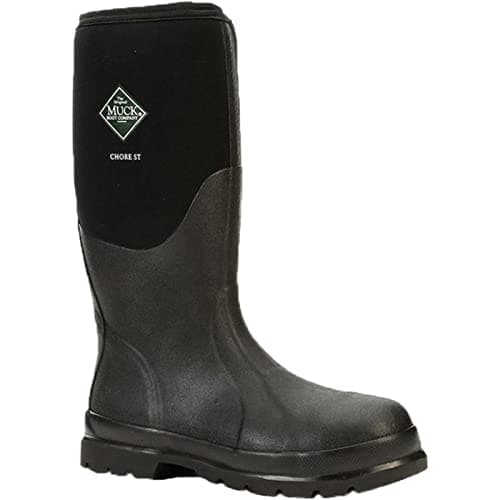
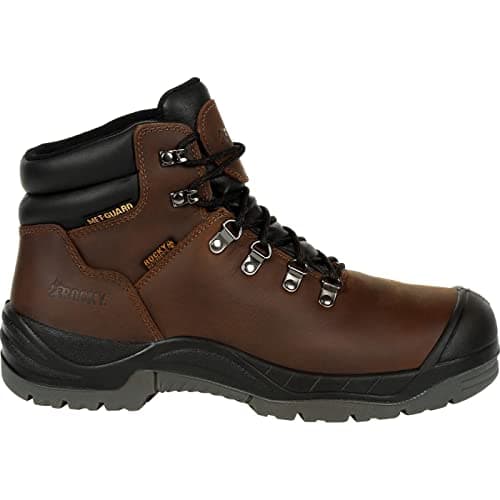
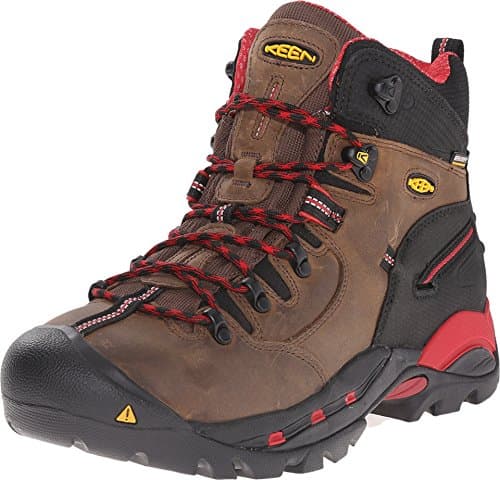
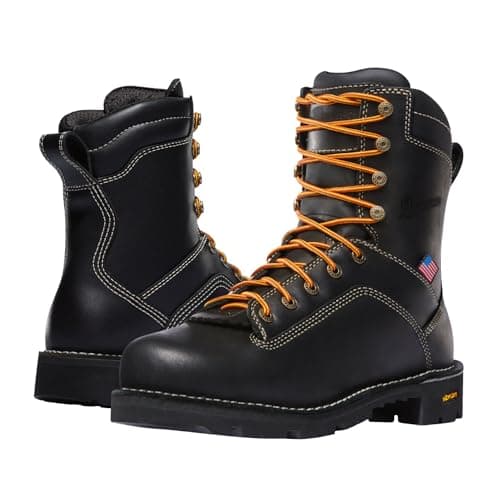
Best pull-on boots
Best Pull-On Work Boots
Nothing to lace, nothing to catch, nothing to burn through. And no way to adjust the fit.
Pull-on work boots - wellingtons, ropers, Chelseas - are a minority of the market and dominant in specific trades, and the reasons are entirely practical. Where laces create a hazard or a daily irritation, removing them is a real improvement. Where you need to tune the fit of the boot around your foot, removing them is a real loss. Which of those matters more is the whole decision.
Why laces are the problem in some trades
- Welding. Molten spatter lodges in laces and burns through them. A smooth leather shaft gives it nothing to catch - see boots for welding.
- Farming. Laces pick up seed, chaff and manure, and around augers, PTO shafts and belt drives a dangling lace is an entanglement hazard: boots for farming.
- Oilfield. Mud, pipe dope and the frequency of getting in and out of vehicles: boots for oilfield.
- Any job where boots come off repeatedly - into a customer's house, into a vehicle, at a door. Unlacing eight times a day does not happen, so laced boots get worn where they should not be or kicked off still tied, which destroys them.
Quick picks
Ranked by our published scoring rubric. Tap any row for the full write-up.
| # | Product | Best for | Score | Price |
|---|---|---|---|---|
| 1 | 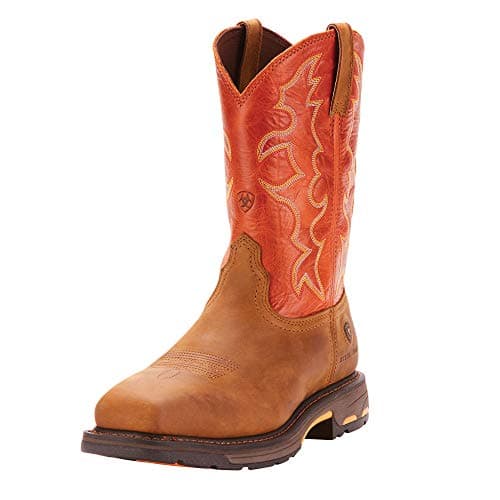 Ariat WorkHog Wide Square Toe Steel ToeThe pull-on with real shank support, and a square toe that gives your toes room. | Ranch, oilfield and all-day uneven ground | 8.5 | |
| 2 | 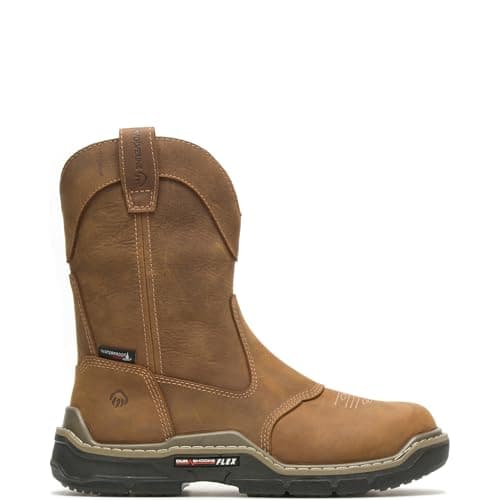 Wolverine Raider DuraShocks CarbonMax WellingtonCarbonMax composite toe in a 10-inch wellington - rare and useful. | A non-metallic pull-on | 8.3 | |
| 3 | 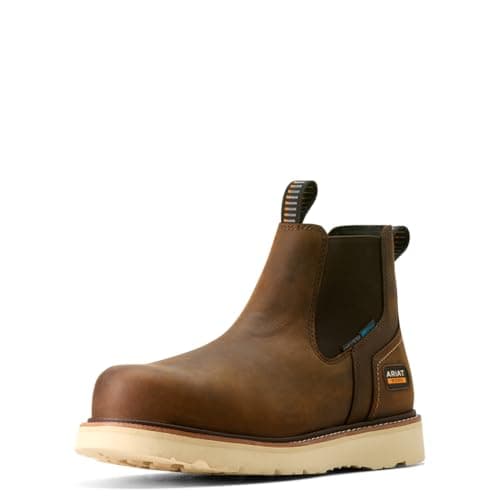 Ariat Rebar Wedge Chelsea Waterproof Composite ToeA waterproof composite-toe Chelsea on a wedge - the easiest boot here to get on. | Pull-on convenience on a flat sole | 8.1 | |
| 4 | 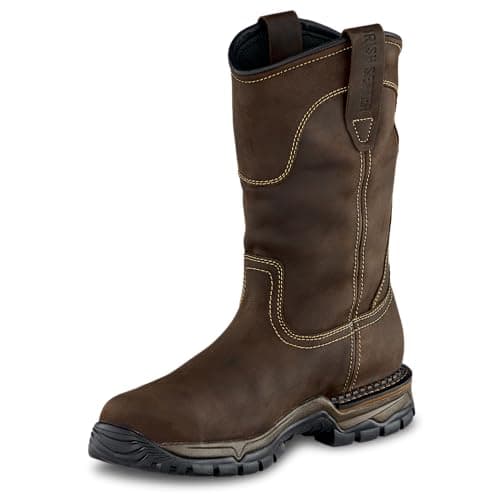 Irish Setter Two Harbors 11" Steel ToeEleven inches of full-grain leather - the welder's and grain-handler's pull-on. | Height and spatter protection | 8.2 |
#ad Prices pulled from Amazon and stamped as of October 6, 2026; they change, and we show no number we cannot verify. How we are funded.
Top pick · Ranch, oilfield and all-day uneven ground
Ariat WorkHog Wide Square Toe Steel Toe
The pull-on with real shank support, and a square toe that gives your toes room.
Most pull-ons are either rubber chore boots or soft western boots; this is the one with genuine structural support. The 4LR shank and footbed hold your foot on rutted ground and in a stirrup, which is why it is the default in agriculture and oilfield work.
The wide square toe is a real improvement over a traditional cowboy boot's point. The heeled western sole is poor on flat concrete - that trade is correct for pasture and lease roads, wrong for a shop floor.
Specs that matter
- Toe:
- Steel toe, ASTM F2413
- Style:
- Pull-on, wide square toe
- Footbed:
- 4LR shank and footbed
- Electrical hazard:
- EH rated
Our scoring
- Easy on/off
- 8.8
- Fit security
- 7.6
- Support
- 9.0
- Durability
- 9.0
- Value
- 7.2
What works
- Supportive shank genuinely helps on uneven ground and in stirrups
- Wide square toe gives the toes room a cowboy boot usually does not
- Durable enough for livestock and oilfield work
What to know
- Heeled western sole is poor on flat concrete
- Expensive
- Pull-on fit is unforgiving if your calf or instep is unusual
No. 2 · A non-metallic pull-on
Wolverine Raider DuraShocks CarbonMax Wellington
CarbonMax composite toe in a 10-inch wellington - rare and useful.
#ad No buyable offer at the last price check. How we are funded
- Our score
- 8.3/10
Non-metallic pull-ons barely exist, which is a problem for fabrication shops and utilities that specify them. This is a CarbonMax composite-toe wellington with DuraShocks cushioning aimed at standing on shop floors.
The most comfortable pull-on here for a static day. Standard pull-on caveats apply: heel slip until the shaft softens, and no way to tighten the fit.
Specs that matter
- Toe:
- CarbonMax composite toe, ASTM F2413
- Style:
- Pull-on wellington
- Cushioning:
- DuraShocks
- Height:
- 10 inch shaft
Our scoring
- Easy on/off
- 9.0
- Fit security
- 7.4
- Support
- 8.0
- Durability
- 8.0
- Value
- 8.0
What works
- Nothing to lace, so it is on and off in seconds
- Non-metallic toe in a pull-on is hard to find
- Tall shaft keeps grain, mud and spatter out
What to know
- Pull-ons cannot be tightened, so fit must be right at purchase
- Less ankle support than a laced 8-inch boot
- Heel slip is common until the shaft softens
No. 3 · Pull-on convenience on a flat sole
Ariat Rebar Wedge Chelsea Waterproof Composite Toe
A waterproof composite-toe Chelsea on a wedge - the easiest boot here to get on.
A genuinely unusual combination: elastic-gore Chelsea construction, a flat wedge sole that is kind on concrete and finished floors, waterproofing, and a non-metallic toe. For indoor and flat-site work where you want pull-on speed, there is little else like it.
Low shaft means debris can get in over the top, and the elastic gores are the first component to fail. Not a boot for mud or deep debris.
Specs that matter
- Toe:
- Composite toe, ASTM F2413
- Style:
- Chelsea pull-on
- Waterproof:
- Yes
- Sole:
- Flat wedge
Our scoring
- Easy on/off
- 9.5
- Fit security
- 7.0
- Support
- 7.4
- Durability
- 7.4
- Value
- 8.2
What works
- Wedge plus pull-on is a genuinely rare and useful combination
- Elastic gores make it the fastest boot here to get on
- Non-metallic toe and waterproof
What to know
- Low shaft means debris can get in over the top
- Elastic gores are the first thing to fail
- Wedge sole slips on wet rungs
No. 4 · Height and spatter protection
Irish Setter Two Harbors 11" Steel Toe
Eleven inches of full-grain leather - the welder's and grain-handler's pull-on.
When the reason for a pull-on is keeping things out rather than speed - welding spatter, grain and chaff, brush - height is the specification and this has it. Eleven inches of leather with no laces to burn, clog or pick debris out of.
Hot, heavy and demanding about calf fit. For welding and farm work, the trade is usually worth it.
Specs that matter
- Toe:
- Steel toe, ASTM F2413
- Height:
- 11 inch pull-on
- Electrical hazard:
- EH rated
- Upper:
- Full-grain leather
Our scoring
- Easy on/off
- 8.6
- Fit security
- 7.2
- Support
- 8.2
- Durability
- 8.8
- Value
- 7.8
What works
- 11 inches of leather is real protection against spatter and debris
- No laces to burn through when welding
- Red Wing-family leather quality
What to know
- Hot — that much leather does not breathe
- Heavy
- Hard to size when your calf is large or small
Getting pull-on fit right, since you only get one chance
A laced boot lets you compensate for an imperfect fit by tightening across the instep. A pull-on has no such adjustment, so the boot either fits or it does not. Three things to check:
- Instep. This is what holds the boot on, and it is where pull-on sizing actually lives. The boot should be snug over the top of your foot - firm resistance as it goes on, then your foot settles in. If it slides on effortlessly, it is too big and your heel will lift forever.
- Heel. Some slip when new is normal: a quarter to half an inch, reducing as the shaft softens and the footbed takes your shape. More than that will not fix itself.
- Calf circumference and shaft opening. The commonest reason tall pull-ons get returned. A boot that will not go over your calf is unusable, and one that swims around a slim calf lets debris in and feels unstable. Some rubber boots offer an adjustable gusset specifically for this.
Buy with your actual work socks on, and if you run a thick sock or an aftermarket insole, fit with those in place - both change the volume significantly. Work boot fit and sizing covers measuring, and breaking in work boots covers what will and will not change with wear.
The support question
Pull-ons give up some ankle support compared with a laced 8-inch boot, because lacing is what locks the ankle in place. For most trades that is a non-issue. If you work on genuinely uneven ground all day, favor a pull-on with a real shank - support from the sole structure rather than from the lacing - which is what separates the Ariat here from a simple rubber chore boot.
What we would skip
Skip pull-ons if you need to climb poles with gaffs - lacing control matters there, as boots for linemen explains. Skip low-shaft Chelseas for muddy or debris-heavy work, since the thing that gets in comes over the top. Skip buying a pull-on that goes on too easily, which is the most common sizing error. And skip expecting a thick sock to fix a loose pull-on; it makes it worse by raising your foot out of the instep.
Frequently asked
Are pull-on work boots good for work?
In trades where laces are a hazard or a daily nuisance - welding, farming, oilfield, anywhere you remove boots repeatedly - they are clearly better. The trade-off is that you cannot adjust the fit, so getting the size right at purchase matters far more than with a laced boot.
How should pull-on boots fit?
Snug over the instep, which is what actually holds the boot on, with firm resistance as your foot goes in. A quarter to half an inch of heel slip when new is normal and reduces as the shaft softens. If the boot slides on effortlessly it is too big, and the heel lift will never resolve.
Do pull-on boots give enough ankle support?
Less than a laced 8-inch boot, because lacing is what locks the ankle. For most work that is fine. If you spend all day on uneven ground, choose a pull-on with a genuine shank so the support comes from the sole structure instead.
Why do welders wear pull-on boots?
Because molten spatter lodges in laces and burns through them, and a lace that fails mid-shift is both an annoyance and a trip hazard. A smooth leather pull-on shaft gives spatter nothing to catch in, and a tall shaft covers the gap between boot and pant cuff.
Sources
Back to Work Boots, or see how we pick. Spotted something wrong? We publish corrections — see our editorial policy.