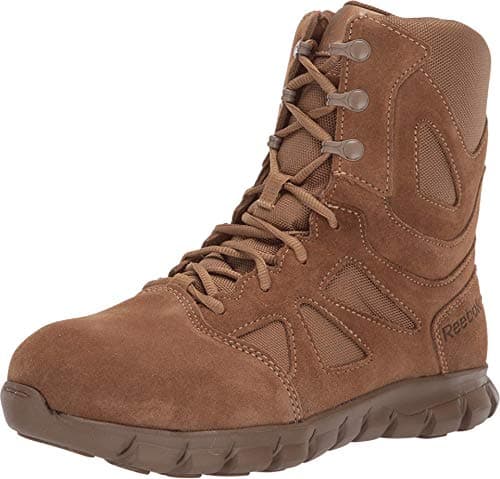
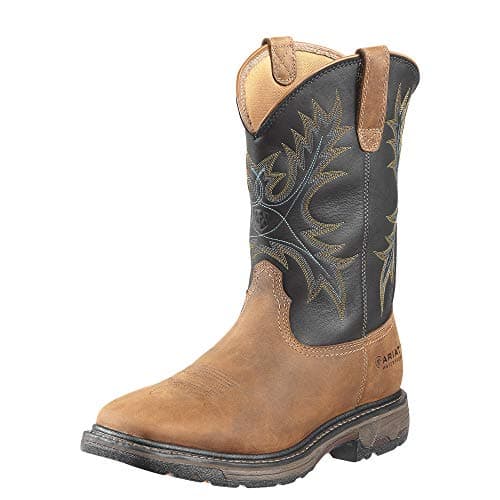
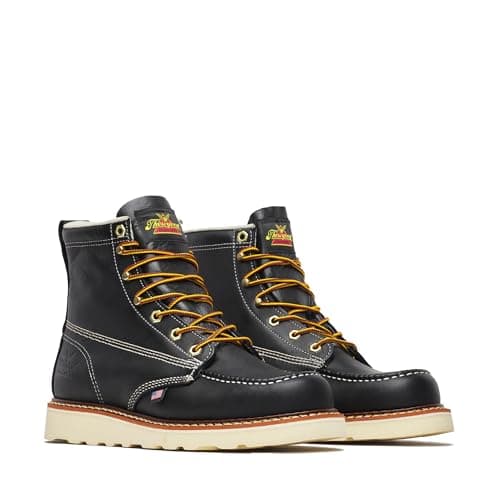
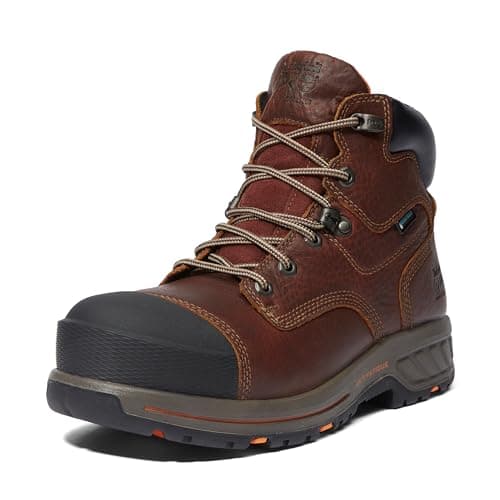
Work vs motorcycle boots
Work Boots vs Motorcycle Boots
They look similar and they are engineered for opposite accidents. Riding to work in work boots is a compromise - here is exactly what you are giving up.
A work boot and a motorcycle boot are designed for completely different accidents, and neither does the other's job well. A work boot protects against a vertical crush - something heavy landing on your foot - and is certified to ASTM F2413 for impact and compression. A motorcycle boot protects against a slide and a twist - abrasion at speed and the rotational force that fractures ankles - and in Europe is certified to EN 13634. If you ride to a job site, the least bad compromise is a stiff, tall, laced work boot such as the Danner Quarry 8-inch, and you should know exactly what you are giving up.
The reason this question comes up so often is practical: a tradesperson who rides to work does not want to carry a second pair of boots, and work boots and motorcycle boots look alike. Both are tall, leather, lace-up and heavy. But the resemblance is cosmetic. The engineering inside them is aimed at different forces, and the one each is bad at is the one the other is built for.
What a work boot is actually built for
An ASTM F2413 Class 75 work boot is tested to resist a 75 foot-pound impact and 2,500 pounds of compression at the toe. Those numbers describe a specific accident: something heavy falling on your foot, or a wheel rolling over it. Everything else about a work boot follows from the working day rather than from a crash - slip resistance on a greasy floor, electrical hazard resistance, puncture-resistant plates against nails, a shaft that keeps debris out, and comfort across ten hours of standing.
None of that addresses abrasion at 50mph, and nothing in the standard tests how the boot behaves when your foot is twisted sideways under the weight of a falling motorcycle. A work boot's shaft is designed to be comfortable, which means flexible - and flexibility is exactly what a riding boot deliberately removes. ASTM F2413 safety ratings explained covers what each code in the marking means.
What a motorcycle boot adds
- Torsional stiffness. An internal frame or a stiffened sole and shaft that limits how far the ankle can rotate. Ankle fracture from rotation is one of the most common serious motorcycle injuries, and this is the feature that addresses it.
- Certified abrasion resistance. EN 13634 tests the upper against abrasion, cut and impact. Leather thickness helps, but a certified boot is tested as a system including the stitching, which is usually what fails first in a slide.
- Impact protection over the ankle bones. Hard or energy-absorbing armor over the malleoli - the knobs on each side of your ankle - which no work boot has.
- A shift pad and a reinforced toe box. The left toe takes constant abrasion from the gear lever, and a plain leather toe wears through.
- A closure that stays closed. Buckles, zips with retention straps, or lace covers, designed so the boot does not come off in a slide.
- A heel that locates on a peg. A defined heel breast stops your foot sliding forward off the footpeg under braking.
If you are going to ride in work boots anyway
- Choose the tallest, stiffest boot you own. Eight inches over six, welted or stitchdown over cemented. Shaft height and sole stiffness are the only riding protection a work boot offers, so maximize them.
- Lace them fully and tuck the laces. A lace in a chain or sprocket is a genuine, documented hazard. Tuck them inside the shaft or use a lace keeper every single time.
- Pick a boot with a defined heel, not a wedge. A wedge sole has nothing to locate against the footpeg, and your foot slides forward under braking.
- Accept the cosmetic damage. The left toe will scuff through from the gear lever and the sole edge will wear unevenly. Buy a resoleable boot if that bothers you.
- Do not rely on a steel toe as crash protection. It helps against a crush, which is a real motorcycle injury, but it does nothing for the slide or the twist.
- Keep real boots for anything beyond a short commute. This compromise is defensible at 30mph across town and indefensible on a highway.
Head to head
Ranked by our published scoring rubric. Tap any row for the full write-up.
| # | Product | Best for | Score | Price |
|---|---|---|---|---|
| 1 | 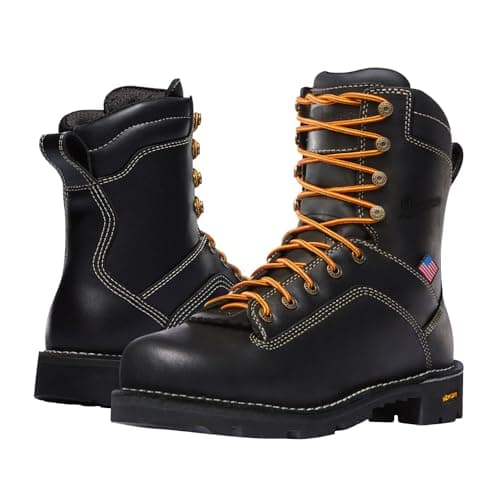 Danner Quarry 8" Waterproof Alloy ToeAn 8-inch waterproof boot with a stiff stitchdown chassis and a serious outsole - the closest a work boot gets to a touring boot. | The best compromise for riding to work | 9.4 | |
| 2 | 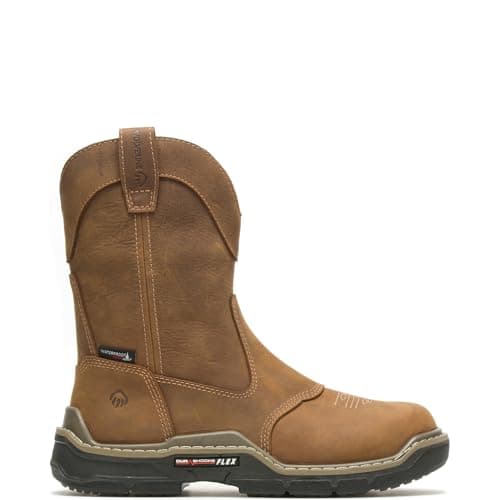 Wolverine Raider DuraShocks CarbonMax WellingtonA pull-on wellington with a CarbonMax toe - nothing to dangle into a sprocket, and on and off in seconds. | No laces anywhere near the drivetrain | 9.2 | |
| 3 | 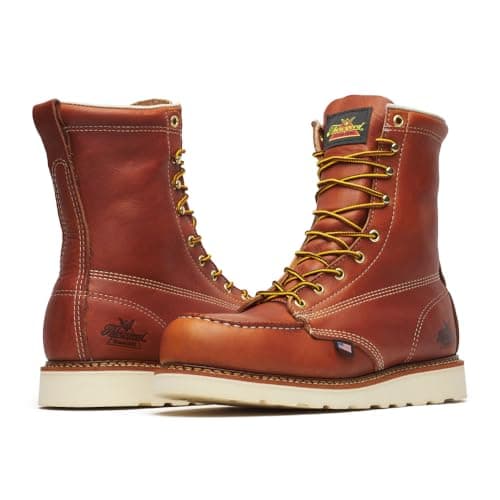 Thorogood American Heritage 8" Steel ToeWelted 8-inch full-grain with a steel toe - the most abrasion-resistant upper here, and the one you can resole. | Thick leather and a repairable build | 9.2 |
#ad Prices pulled from Amazon and stamped as of November 14, 2026; they change, and we show no number we cannot verify. How we are funded.
Best compromise · The best compromise for riding to work
Danner Quarry 8" Waterproof Alloy Toe
An 8-inch waterproof boot with a stiff stitchdown chassis and a serious outsole - the closest a work boot gets to a touring boot.
#ad Price as of November 14, 2026. How we are funded
- Our score
- 9.4/10
Outstanding
If you are going to ride in work boots, these are the attributes that matter and this is the boot that has most of them. An 8-inch shaft covers the ankle properly, which is the single most commonly injured area in a motorcycle crash. Stitchdown construction over a stiff midsole resists the twisting that causes ankle fractures far better than a soft cemented boot. GORE-TEX handles the fact that a commute happens in whatever weather there is. And a Vibram outsole grips a wet footpeg and a wet road surface at a stop.
The alloy toe is a genuine bonus for riding, not just for work: toe and foot crush injuries are common when a bike goes down on top of a foot, and a rated cap resists exactly that. It also means the boot clears a site PPE rule at the other end of the ride.
Be clear that this is still not a motorcycle boot. There is no CE certification to EN 13634, no torsion-limiting frame, no shift pad, no reinforced shin plate and no impact protection over the ankle bones. Laces are also a genuine hazard near a chain and sprocket - tuck them, every time.
Specs that matter
- Toe:
- Alloy toe, ASTM F2413
- Height:
- 8 inch
- Waterproof:
- Gore-Tex lined
- Build:
- Stitchdown, recraftable
Rubric profile
Raw per-criterion marks out of 10, before weighting — this is the shape of the pick, not its published score. A low mark is a scope limit, not a fault: how we score.
- Ankle coverage
- 9.0
- Torsional stiffness
- 9.0
- Abrasion resistance
- 8.4
- Work credentials
- 9.0
- Riding suitability
- 7.4
Why we picked it
- Danner will recraft it, so the price is spread over many years
- Gore-Tex is the most reliable waterproof lining in footwear
- Alloy toe is lighter than steel at the same rating
Good to know: A premium up-front price that pays back through recrafting; stiff and heavy at first, and best on rough ground rather than slab.
Best lace-free option · No laces anywhere near the drivetrain
Wolverine Raider DuraShocks CarbonMax Wellington
A pull-on wellington with a CarbonMax toe - nothing to dangle into a sprocket, and on and off in seconds.
#ad Price as of November 14, 2026. How we are funded
- Our score
- 9.2/10
Outstanding
The most common objection riders raise about work boots is the laces, and it is a legitimate one: a loose lace near a chain and sprocket, or hooked on a peg as you put a foot down, is a real hazard. A pull-on wellington removes it entirely. There is nothing to come undone, nothing to tuck, and the smooth shaft does not snag on the frame when you swing a leg over.
It also carries a non-metallic CarbonMax safety toe, so it satisfies a site rule at work, and DuraShocks cushioning makes it tolerable to stand in for a shift - which is the other half of the problem for someone riding to a job rather than touring.
The riding compromises are significant. A pull-on cannot be tightened, so it is looser around the ankle than a laced boot and will come off more easily in a slide - and a boot that comes off is the worst outcome in a crash. There is no ankle impact protection, no shin coverage and a relatively flexible shaft. Treat this as a short-commute boot, not a highway boot.
Specs that matter
- Toe:
- CarbonMax composite toe, ASTM F2413
- Style:
- Pull-on wellington
- Cushioning:
- DuraShocks
- Height:
- 10 inch shaft
Rubric profile
Raw per-criterion marks out of 10, before weighting — this is the shape of the pick, not its published score. A low mark is a scope limit, not a fault: how we score.
- Ankle coverage
- 7.6
- Torsional stiffness
- 7.4
- Abrasion resistance
- 8.0
- Work credentials
- 8.6
- Riding suitability
- 7.0
Why we picked it
- Nothing to lace, so it is on and off in seconds
- Non-metallic toe in a pull-on is hard to find
- Tall shaft keeps grain, mud and spatter out
Good to know: A pull-on cannot be tightened, so get the fit right at purchase; some heel lift is normal until the shaft softens.
Most abrasion resistant · Thick leather and a repairable build
Thorogood American Heritage 8" Steel Toe
Welted 8-inch full-grain with a steel toe - the most abrasion-resistant upper here, and the one you can resole.
#ad Price as of November 14, 2026. How we are funded
- Our score
- 9.2/10
Outstanding
Abrasion resistance is where a heritage work boot does genuinely well. Thick full-grain leather is the traditional motorcycle material for a reason, and this boot has more of it than anything else on the page - a heavy 8-inch shaft that will survive a low-speed slide much better than a synthetic athletic upper. The Goodyear welt also means the boot can be resoled rather than replaced, which matters because riding wears the left toe and the sole edge unevenly.
A steel toe handles the crush case, and the welted construction is stiff enough underfoot to spread the load of standing on a peg, which a soft boot does not.
Its problems as a riding boot are the wedge sole and the lack of any certified protection. A flat MAXwear wedge has no defined heel to locate on a peg, which riders genuinely notice, and it is slick on wet painted road markings. There is no ankle armor, no torsion control and no shift pad - the left toe will scuff through the finish quickly. And the leather takes weeks to break in.
Specs that matter
- Toe:
- Steel toe, ASTM F2413 rated
- Height:
- 8 inch
- Sole:
- MAXwear wedge
- Build:
- Goodyear storm welt
Rubric profile
Raw per-criterion marks out of 10, before weighting — this is the shape of the pick, not its published score. A low mark is a scope limit, not a fault: how we score.
- Ankle coverage
- 8.6
- Torsional stiffness
- 8.0
- Abrasion resistance
- 9.2
- Work credentials
- 9.2
- Riding suitability
- 6.6
Why we picked it
- Safety toe plus resoleable welt construction in one boot
- Taller shaft keeps debris out on demolition and dirt work
- Full-grain leather that takes conditioner and keeps going
Good to know: Order your measured length, not a size up — and expect the 8-inch shaft to need about two weeks before it stops feeling stiff across the ankle.
Head to head
| Work boot | Motorcycle boot | |
|---|---|---|
| Certified to | ASTM F2413 (US) | EN 13634 (EU), often with CE levels |
| Primary hazard addressed | Dropped or rolling load on the foot | Abrasion, impact and ankle rotation in a crash |
| Toe protection | Rated cap against 75 ft-lb impact | Reinforced box, usually not impact-rated |
| Ankle rotation control | Incidental, from shaft height and stiffness | Designed in, via a frame or stiffened structure |
| Ankle bone armor | None | Standard on most |
| Slip resistance on floors | Tested to ASTM F2913 | Not a design priority |
| All-day standing comfort | The main design goal | Poor by comparison |
| Shift pad | No | Yes |
What we would skip
Skip riding in any 6-inch boot if you have a choice - the ankle is the thing you are trying to protect and a 6-inch collar barely covers it. Skip pull-on wellingtons for anything but a short, slow commute, because a boot that can be pulled off your foot in a slide will be. Skip wedge soles for riding: no heel breast means no positive location on a footpeg. Skip assuming a safety toe makes a work boot a riding boot - different accident, different test. And skip the heritage-styled 'engineer boots' sold as motorcycle boots with no certification at all; they have the look and none of the protection, which is the worst of both. If what you actually want is a tall boot for work, work boots vs combat boots and 6 inch vs 8 inch work boots are the more useful comparisons.
Frequently asked
Can you wear work boots for riding a motorcycle?
You can, and plenty of people commuting to a job site do, but it is a compromise. Work boots are certified against a dropped or rolling load, not against abrasion and ankle rotation in a crash. If you do it, choose the tallest and stiffest boot you own, lace it fully, tuck the laces away from the chain, and keep it to short, low-speed commutes.
Are motorcycle boots good for work?
Generally no. Most lack an ASTM F2413 safety toe, so they fail a site PPE rule, and their stiff torsion-limiting construction makes them uncomfortable to stand and walk in for a full shift. They are also not tested for slip resistance on the kind of floors a work boot deals with.
What is the difference between a steel toe and a motorcycle boot's reinforced toe?
A steel or composite safety toe is tested to resist a 75 foot-pound impact and 2,500 pounds of compression under ASTM F2413. A motorcycle boot's reinforced toe box is built for abrasion and for the gear-lever wear on the left foot, and is usually not impact-rated at all. They solve different problems.
Do work boots protect your ankles in a motorcycle crash?
Only partially, and only through shaft height and sole stiffness. The injury a motorcycle boot is specifically designed to prevent is rotational ankle fracture, which it addresses with an internal frame or a deliberately stiffened structure. A work boot's shaft is designed to be comfortable, which means flexible - the opposite requirement.
Are laces dangerous when riding a motorcycle?
Yes, and it is one of the strongest arguments against riding in work boots. A loose lace can reach a chain and sprocket or hook on a footpeg as you put a foot down. If you ride in laced boots, tuck the laces inside the shaft or use lace keepers every time - not just on long rides.
Our recommendation
If you read nothing else on this page, these are the two to look at — the one we would buy, and the one to take instead if its trade-off suits you better.
Best compromise · The best compromise for riding to work
Danner Quarry 8" Waterproof Alloy Toe
An 8-inch waterproof boot with a stiff stitchdown chassis and a serious outsole - the closest a work boot gets to a touring boot.
#ad Price as of November 14, 2026. How we are funded
Runner-up · No laces anywhere near the drivetrain
Wolverine Raider DuraShocks CarbonMax Wellington
A pull-on wellington with a CarbonMax toe - nothing to dangle into a sprocket, and on and off in seconds.
#ad Price as of November 14, 2026. How we are funded
Prices are read live from Amazon and stamped with the date. How we pick.
Sources
Back to Comparisons, or see how we pick. Spotted something wrong? We publish corrections — see our editorial policy.