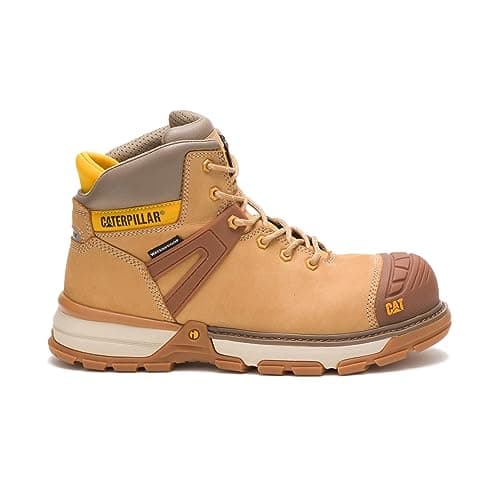
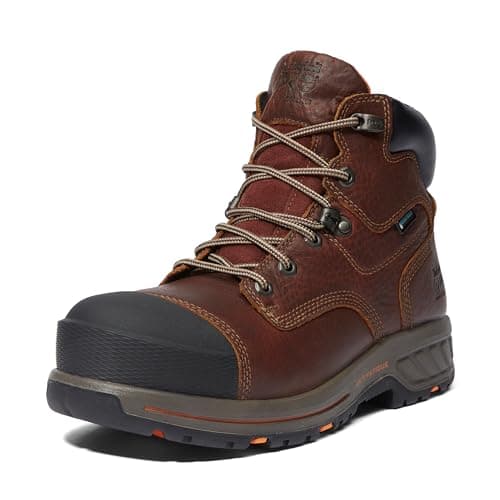
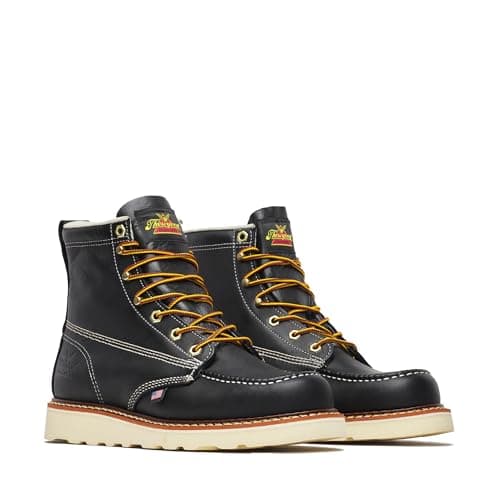
Work vs combat boots
Work Boots vs Combat Boots
Combat boots are built for marching. Work boots are built for hazards. The gap between them is a safety toe.
Combat and tactical boots are lighter, quicker to break in and better to walk long distances in. They give up one thing that matters on a jobsite: a safety toe rated to ASTM F2413, and usually any electrical hazard rating or puncture protection with it. If your site requires protective footwear, that settles it - and the boot most people in this comparison should buy is a tactical-pattern safety boot like the Reebok Sublite, which keeps the height, the weight and the side zip while adding the rating.
People arrive at this comparison from two directions: veterans who liked their issue boots and want to keep wearing that shape at work, and tradespeople who have noticed that tactical boots are lighter and cheaper than industrial ones. Both deserve a straight answer rather than a dismissal, because combat boots genuinely are better at some of this.
What combat boots give up
- A safety toe. Issue and tactical boots are soft-toed. If your employer's hazard assessment requires ASTM F2413 footwear, this ends the discussion - ASTM F2413 safety ratings explained decodes what that marking means.
- Electrical hazard protection. An EH rating means the sole and heel are tested to resist current in dry conditions. Tactical boots are not built or tested for it, which matters more than people think around panels and tools - see electrical hazard work boots.
- Puncture resistance. Combat soles are built for traction and flexibility over ground, not for stopping a nail. On a floor with fasteners on it, that is the gap that actually injures people.
- Oil and chemical resistance. Issue outsoles are specified for terrain, not for hydraulic fluid or diesel, and compounds that are fine on soil can swell or harden in a shop.
What combat boots are genuinely better at
Covering distance. A tactical boot is lighter, more flexible and better ventilated than an industrial work boot, with a shaft designed to be laced tight and marched in - which is why they are comfortable over miles in a way a welted steel-toe boot is not. They are also quick to break in, usually cheaper, and widely available in a true range of widths.
For work with no footwear requirement and no real hazards - surveying, inspection, security, groundskeeping, light field work - that is a legitimate advantage and a tactical boot may be the better tool. The same logic applies as in work boots vs hiking boots: the question is what your site requires, not which boot looks more serious.
Head to head
Ranked by our published scoring rubric. Tap any row for the full write-up.
| # | Product | Best for | Score | Price |
|---|---|---|---|---|
| 1 | 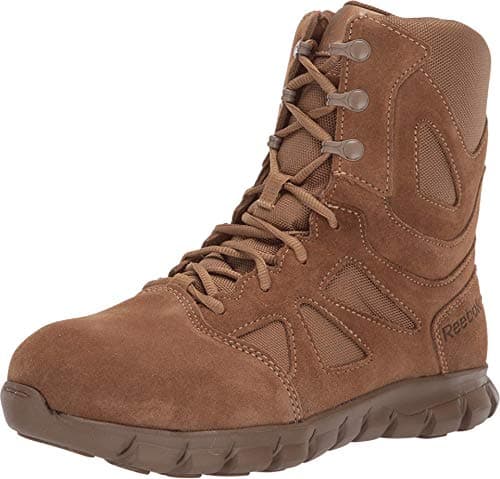 Reebok Work Sublite Cushion 8" Safety Toe Side-ZipThe answer to this question: an 8-inch tactical-pattern boot with a genuine ASTM safety toe and a side zip. | Wanting a tactical boot that passes a site check | 9.5 | |
| 2 | 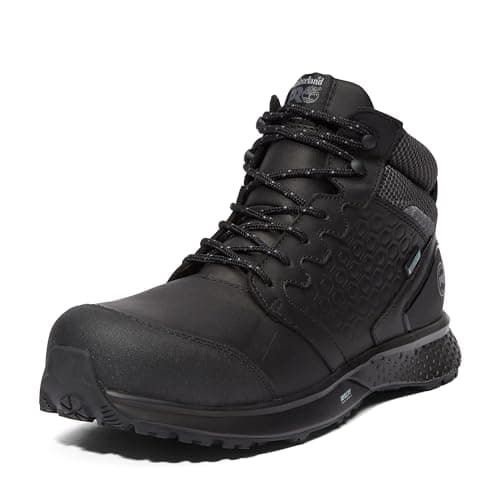 Timberland PRO Reaxion Mid Composite Toe WaterproofAn athletic work hiker with a metal-free composite toe - closer to a boot you forget you are wearing. | The lightest compliant option | 9.3 | |
| 3 | 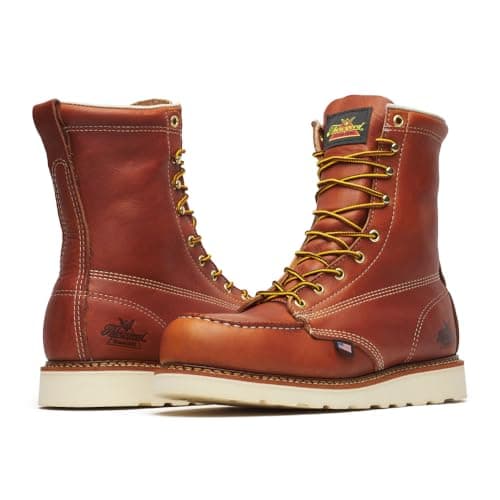 Thorogood American Heritage 8" Steel ToeThe other end of the comparison - everything a combat boot deliberately is not. | Why industrial work boots exist | 9.4 |
#ad Prices pulled from Amazon and stamped as of November 14, 2026; they change, and we show no number we cannot verify. How we are funded.
The practical answer · Wanting a tactical boot that passes a site check
Reebok Work Sublite Cushion 8" Safety Toe Side-Zip
The answer to this question: an 8-inch tactical-pattern boot with a genuine ASTM safety toe and a side zip.
#ad Price as of November 14, 2026. How we are funded
- Our score
- 9.5/10
Category-defining
Almost everyone comparing these two categories actually wants the feel of a combat boot - tall, light, quick on and off, built for walking - without losing the safety rating their site requires. This is that boot. Athletic-shoe construction keeps the weight down, the 8-inch shaft gives the coverage and lacing height a tactical boot gives you, and the side zip means you set lace tension once and then get in and out in seconds.
It is not a demolition boot. The zipper is the obvious failure point, textile panels tear against rough material, and there is little puncture protection underfoot. Treat it as a clean-environment boot for walking jobs, and read lightweight work boots for the rest of this category.
Specs that matter
- Toe:
- Safety toe, ASTM F2413
- Height:
- 8 inch
- Closure:
- Laces plus side zipper
- Weight:
- Athletic-shoe construction
Rubric profile
Raw per-criterion marks out of 10, before weighting — this is the shape of the pick, not its published score. A low mark is a scope limit, not a fault: how we score.
- Walking comfort
- 9.2
- Safety rating
- 8.6
- Ankle support
- 8.0
- Durability
- 6.8
- Value
- 8.0
Why we picked it
- Among the lightest 8-inch safety boots sold
- Side zip means you keep the lace tension and still get out quickly
- Cushioning suited to miles of walking on hard floors
Good to know: The side zip is the convenience and the wear point; textile panels keep it light but will not take rough material handling.
No. 2 · The lightest compliant option
Timberland PRO Reaxion Mid Composite Toe Waterproof
An athletic work hiker with a metal-free composite toe - closer to a boot you forget you are wearing.
#ad Price as of November 14, 2026. How we are funded
- Our score
- 9.3/10
Outstanding
If what you liked about a combat boot was the absence of break-in and the low weight rather than the height, this is the better pick. It needs essentially no breaking in, which almost nothing with a safety toe can claim, and being metal-free it clears detectors and does not pull heat out of your feet in winter. For service, warehouse and light-commercial work it is often all the boot anyone needs.
You give up the shaft - this is a mid cut, so it is coverage rather than genuine above-ankle support - and hiker uppers wear through at the flex crease faster than full-grain leather. A membrane in a light boot also runs hot in summer.
Specs that matter
- Toe:
- Composite toe, ASTM F2413 I/75 C/75, EH rated
- Height:
- Mid, above-ankle hiker cut
- Waterproof:
- Membrane-lined
- Midsole:
- TPU-wrapped Aerocore
Rubric profile
Raw per-criterion marks out of 10, before weighting — this is the shape of the pick, not its published score. A low mark is a scope limit, not a fault: how we score.
- Walking comfort
- 9.0
- Safety rating
- 8.2
- Ankle support
- 6.6
- Durability
- 6.8
- Value
- 8.8
Why we picked it
- Needs essentially no break-in, which almost nothing else with a safety toe can claim
- Metal-free, so it clears metal detectors and does not pull heat out of your feet
- Usually the cheapest safety boot in the Timberland PRO range
Good to know: A light hiker build, so the flex crease wears faster than full-grain leather and the membrane runs warm in summer.
No. 3 · Why industrial work boots exist
Thorogood American Heritage 8" Steel Toe
The other end of the comparison - everything a combat boot deliberately is not.
#ad Price as of November 14, 2026. How we are funded
- Our score
- 9.4/10
Outstanding
Included to make the trade concrete. Eight inches of full-grain leather, a steel toe rated to ASTM F2413, a welt that can be resoled and a sole built for standing rather than marching. A combat boot has none of the first three by design, because its design problem is carrying weight over distance, not surviving a dropped block.
It is heavier, stiffer and a harder boot to walk twelve miles in, and it takes a week or two to settle across the ankle. That is the deal: tactical footwear optimizes for mobility, work boots for hazards, and neither is better in the abstract.
Specs that matter
- Toe:
- Steel toe, ASTM F2413 rated
- Height:
- 8 inch
- Sole:
- MAXwear wedge
- Build:
- Goodyear storm welt
Rubric profile
Raw per-criterion marks out of 10, before weighting — this is the shape of the pick, not its published score. A low mark is a scope limit, not a fault: how we score.
- Walking comfort
- 7.4
- Safety rating
- 8.8
- Ankle support
- 8.8
- Durability
- 9.2
- Value
- 8.4
Why we picked it
- Safety toe plus resoleable welt construction in one boot
- Taller shaft keeps debris out on demolition and dirt work
- Full-grain leather that takes conditioner and keeps going
Good to know: Order your measured length, not a size up — and expect the 8-inch shaft to need about two weeks before it stops feeling stiff across the ankle.
Side by side
| Property | Combat / tactical boot | Industrial work boot |
|---|---|---|
| Safety toe | None (unless sold as a safety model) | ASTM F2413 steel, composite or alloy |
| Electrical hazard rating | No | Commonly EH rated |
| Puncture resistance | No plate | Available as a PR-rated plate |
| Weight | Light | Heavier |
| Walking distance | Designed for it | Designed for standing and hazards |
| Break-in | Short | One to three weeks on welted boots |
| Site eligibility | Not eligible where ASTM footwear is required | Eligible |
If you want the tactical shape at work
Buy a tactical-pattern safety boot rather than a tactical boot. The category is well established now: 8-inch athletic-construction uppers, side zips, cushioned midsoles and a genuine ASTM-rated safety toe. You keep the height, the low weight and the quick entry, and you give up abrasion resistance and heavy underfoot protection rather than the rating. The two picks above cover the tall and the mid versions of that idea.
What you should not do is wear issue boots on a site that requires protective footwear and hope the question does not come up. It is the employer's obligation under OSHA's PPE rules, not a preference, and it is the kind of thing that gets noticed after an injury rather than before one.
The verdict, plainly
No footwear requirement, no real hazards, lots of walking: combat or tactical boots are fine, and will be more comfortable. Any safety-footwear requirement, debris underfoot, or energized equipment: an industrial work boot, no exceptions. Want the tactical feel and the compliance: a tactical-pattern safety boot, which is what most people in this comparison are really looking for. And if the reason you are comparing tall boots is that you ride to the job, the trade-offs are different again: work boots vs motorcycle boots.
Frequently asked
Can I wear combat boots for work?
For work with no protective-footwear requirement and no realistic puncture, crush, chemical or electrical hazard, yes - and they will usually be lighter and more comfortable to walk in. On any site requiring ASTM F2413 footwear they are not eligible, because issue and tactical boots are soft-toed.
Are military boots ASTM rated?
Standard issue and tactical boots are not. They are specified for marching, terrain and durability rather than for impact and compression at the toe, so they carry no ASTM F2413 marking. Some brands sell tactical-styled models with genuine safety toes - those do carry it, and the marking is inside the tongue.
Are tactical boots more comfortable than work boots?
For walking distance, usually yes: they are lighter, more flexible and better ventilated, and they break in faster. For standing in one place on a hard floor, a cushioned work boot with a structured midsole is generally better, because the problem being solved is different.
What is the difference between tactical and work boots?
Design intent. Tactical boots optimize for mobility, traction over terrain and carrying a load over distance. Work boots optimize for hazards - a rated toe cap, electrical hazard protection, puncture resistance, oil-resisting outsoles - and accept more weight to get them.
Do tactical boots have steel toes?
Most do not. The standard tactical boot is soft-toed, which is part of why it is light. Several brands offer safety-toe versions of tactical patterns, including composite toes that keep the weight down and clear metal detectors - that is the category worth looking at if you need both.
Our recommendation
If you read nothing else on this page, these are the two to look at — the one we would buy, and the one to take instead if its trade-off suits you better.
The practical answer · Wanting a tactical boot that passes a site check
Reebok Work Sublite Cushion 8" Safety Toe Side-Zip
The answer to this question: an 8-inch tactical-pattern boot with a genuine ASTM safety toe and a side zip.
#ad Price as of November 14, 2026. How we are funded
Runner-up · The lightest compliant option
Timberland PRO Reaxion Mid Composite Toe Waterproof
An athletic work hiker with a metal-free composite toe - closer to a boot you forget you are wearing.
#ad Price as of November 14, 2026. How we are funded
Prices are read live from Amazon and stamped with the date. How we pick.
Sources
Back to Comparisons, or see how we pick. Spotted something wrong? We publish corrections — see our editorial policy.