Best heated socks
Best Heated Socks for Work
Two conditions: the element must reach the toes, and the boot must have room. Miss either and they fail.
Feet are usually the first thing to go in cold work, and heated socks are the only intervention that genuinely adds heat rather than slowing its loss. That makes them the right answer for a specific situation - static work in real cold - and an expensive disappointment in several others. The difference is mostly about where the element sits and whether your boots have room.
Why toe coverage is the specification that matters
When your body is conserving heat it reduces blood flow to the extremities, and within the foot the toes are furthest from the supply and have the worst surface-area-to-volume ratio. They are what goes numb, and numb toes are both a comfort problem and a dexterity and balance problem on a ladder.
So an element that runs across the toes and forefoot is doing useful work, and one that heats the arch or runs up the calf is heating a part of you that was not the problem. Check the element placement in the product photos rather than trusting a general "heated sock" description - it is the single most important thing to verify.
Quick picks
Ranked by our published scoring rubric. Tap any row for the full write-up.
| # | Product | Best for | Score | Price |
|---|---|---|---|---|
| 1 | 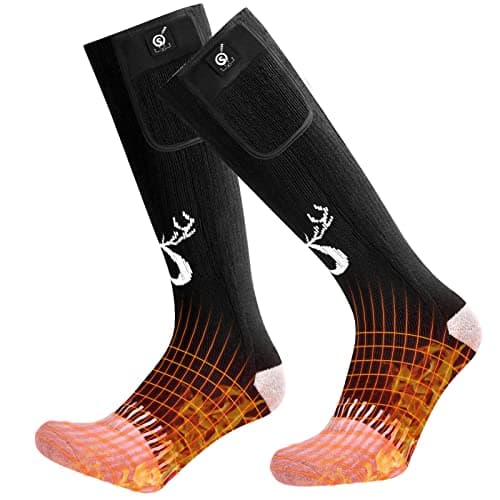 SNOW DEER Rechargeable Electric Heated Socks7.4 V with heat across the toes - which is where feet actually go numb. | Genuine cold, with the element in the right place | 8.7 | |
| 2 | 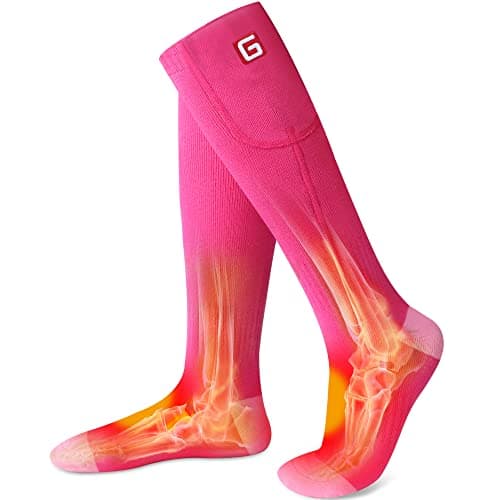 Rabbitroom Thermal Insulated Heated SocksLower voltage and less heat - but a cheap way to find out if they suit you. | Trying heated socks cheaply | 7.8 | |
| 3 | 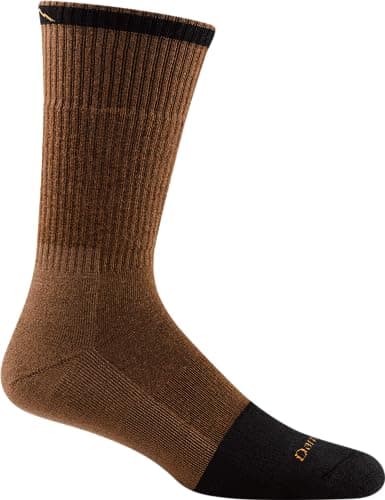 Darn Tough Steely Boot Midweight Cushion SockNot heated - and often the better fix, especially if your boots are already snug. | When heated socks are the wrong answer | 7.4 |
#ad Prices pulled from Amazon and stamped as of October 6, 2026; they change, and we show no number we cannot verify. How we are funded.
Top pick · Genuine cold, with the element in the right place
SNOW DEER Rechargeable Electric Heated Socks
7.4 V with heat across the toes - which is where feet actually go numb.
Two things make these work. The element covers the toes and forefoot rather than stopping at the arch or running up the calf - and the toes are what go numb. And 7.4 V delivers noticeably more heat than the lower-voltage budget systems.
The battery pack sits at the cuff, outside the boot, which is the only workable arrangement. They are thick, so the boot needs room, the packs are awkward under tight pant legs, and they are hand wash only.
Specs that matter
- Battery:
- 7.4 V 2200 mAh per sock
- Heating area:
- Toes and forefoot
- Settings:
- Three heat levels
- Fiber:
- Cotton blend
Our scoring
- Toe coverage
- 9.4
- Heat output
- 9.0
- Run time
- 8.0
- Boot fit
- 6.4
- Value
- 8.0
What works
- Heats the toes rather than the calf, which is the right place
- Battery pack sits at the cuff, out of the boot
- Three settings stretch run time across a shift
What to know
- Thick — you may need a roomier boot
- Battery packs are awkward under tight pant legs
- Hand washing only
Best value · Trying heated socks cheaply
Rabbitroom Thermal Insulated Heated Socks
Lower voltage and less heat - but a cheap way to find out if they suit you.
Heated socks are a product people are unsure about until they try them, and spending a fraction of the price to find out is reasonable. These have a toe-box element and a thick thermal knit that is warm even with the heat off.
Be clear on what you are giving up: lower voltage means noticeably less heat than a 7.4 V system and a shorter run time on high. The thin elements are the failure point. Thinner overall, though, so they fit a normal boot more easily.
Specs that matter
- Battery:
- Rechargeable, included
- Heating area:
- Toe box
- Insulation:
- Thick thermal knit
- Settings:
- Multiple heat levels
Our scoring
- Toe coverage
- 8.0
- Heat output
- 6.4
- Run time
- 6.0
- Boot fit
- 8.4
- Value
- 9.2
What works
- Lowest-cost way to try heated socks before committing
- Thick knit is warm even with the heat off
- Light enough to fit a normal boot
What to know
- Lower voltage means noticeably less heat than 7.4 V socks
- Short run time on the high setting
- Thin elements are the failure point
No. 3 · When heated socks are the wrong answer
Darn Tough Steely Boot Midweight Cushion Sock
Not heated - and often the better fix, especially if your boots are already snug.
Included deliberately, because a significant share of people buying heated socks have a boot problem rather than a heat-generation problem. If your boots are snug, if your socks are cotton, or if your boot liner is damp from yesterday, you will get more warmth from fixing those than from adding an element.
Merino insulates even when damp, which no synthetic does as well, and the reinforced toe box suits safety caps. If you are static in genuine cold and your boots already fit well, take a heated pair instead.
Specs that matter
- Fiber:
- Merino wool blend
- Cushion:
- Midweight, full cushion
- Toe:
- Reinforced for safety-toe boots
- Guarantee:
- Unconditional lifetime
Our scoring
- Toe coverage
- 7.0
- Heat output
- 4.0
- Run time
- 10.0
- Boot fit
- 9.0
- Value
- 8.0
What works
- Full-cushion toe box is the fix for a safety toe rubbing your toenails
- Merino regulates temperature and resists odor
- Lifetime guarantee makes the price rational over years
What to know
- Most expensive sock here per pair
- Midweight is too warm for genuine summer heat
- Merino needs gentler washing than synthetics
Fix the cheap things first
Before spending on heated socks, three free or cheap changes often solve the problem entirely:
- Stop wearing cotton socks. Once damp, cotton holds water against your skin and loses its loft, and water conducts heat away far faster than air. Merino is the right default: best work socks.
- Dry your boots properly. A damp liner has lost much of its insulating value, which is why day three in the same boots is always worse than day one. If your boots have a removable liner, pull it out every night - this is the biggest single factor and the reason winter boots are judged on it.
- Loosen the boot. If your toes go numb in thick socks, that is often compression rather than cold. Try thinner socks in the same boot before concluding you need more insulation.
People who do all three frequently find they do not need heated socks at all. People who do all three and are still cold are exactly who heated socks are for.
Living with the batteries
The battery packs sit at the cuff of the sock, outside the boot, which is the only practical arrangement - and they are bulky enough to be awkward under a tight pant leg. In severe cold, lithium cells lose capacity, so a pack sitting in the wind delivers less than one tucked under a pant leg.
Most are hand wash only with the batteries removed, and the thin heating elements are the component that eventually fails. Treat them as a multi-season consumable rather than a permanent purchase. And as with all heated gear: not for FR environments, where the wiring and battery are disqualifying - see boots for oilfield.
What we would skip
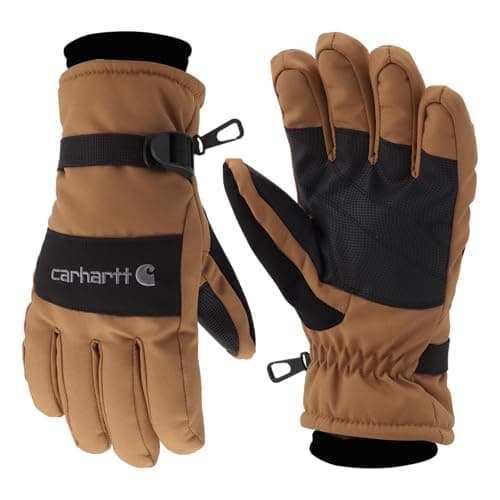
Skip heated socks if your boots are already snug - fix the boot first. Skip socks whose element does not reach the toes. Skip wearing them over cotton. Skip machine washing or tumble drying them. And skip them entirely in FR environments. If your hands are the problem rather than your feet, heated gloves is the equivalent page, and a heated vest helps both indirectly.
Frequently asked
Do heated socks work in work boots?
They do, provided two conditions hold: the element covers the toes rather than the arch or calf, and the boot has enough room that the thicker sock does not compress your foot. A tight boot with thick socks is colder than a roomy boot with the same socks, because insulation needs air space.
How long do heated socks last on a charge?
Depends on voltage and setting. A 7.4 V system typically gives a few hours on high and considerably longer on low; lower-voltage budget socks give noticeably less. Keeping the battery pack under a pant leg rather than exposed in the cold extends run time, because lithium cells lose capacity when cold.
Are heated socks worth it for work?
For static work in genuine cold - equipment operating, flagging, inspection - yes, because they add heat rather than merely slowing its loss. If you are working hard, or if you are still wearing cotton socks and damp boots, fix those first; they often solve the problem for nothing.
Can you wash heated socks?
Most are hand wash only with the batteries removed, then air dried. Never machine wash or tumble dry - the heat and agitation damage the thin heating elements, which are the component that fails first in any case.
Sources
Back to Heated Work Gear, or see how we pick. Spotted something wrong? We publish corrections — see our editorial policy.