Red Wing vs Thorogood
Red Wing vs Thorogood
The heritage question answered: Red Wing for leather and resale, Thorogood for an actual safety-rated work boot.
Top pick: Thorogood American Heritage 8" Steel Toe
$284.95· Amazon15 shortlists · live Amazon prices
Two boots, one question, a stated answer. Including the cases where the cheaper one wins.
Red Wing vs Thorogood
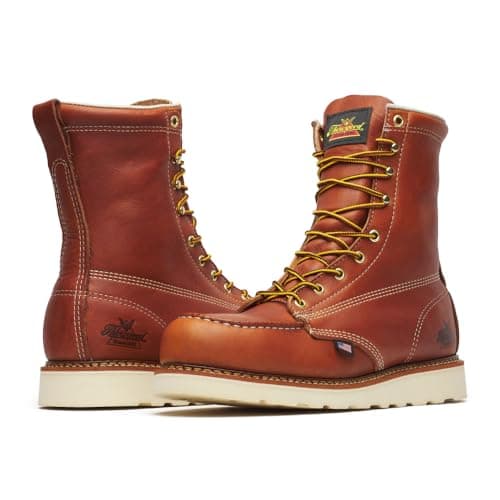
Thorogood American Heritage 8" Steel Toe
#ad Price as of October 6, 2026. How we are funded
Red Wing vs Thorogood
The heritage question answered: Red Wing for leather and resale, Thorogood for an actual safety-rated work boot.
Top pick: Thorogood American Heritage 8" Steel Toe
$284.95· Amazon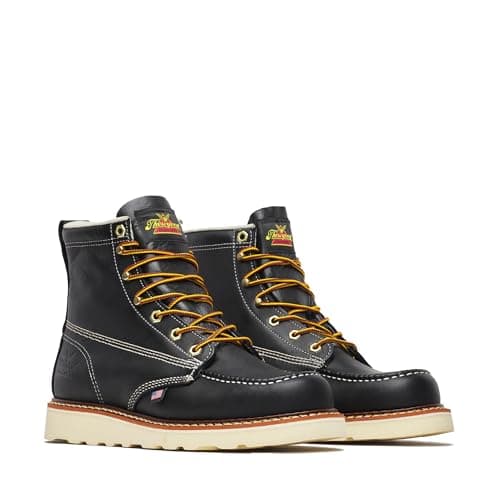
Thorogood vs BRUNT
Incumbent versus challenger - the answer turns entirely on whether resoleability matters to you.
Top pick: Thorogood American Heritage 6" Moc Toe
$264.95· Amazon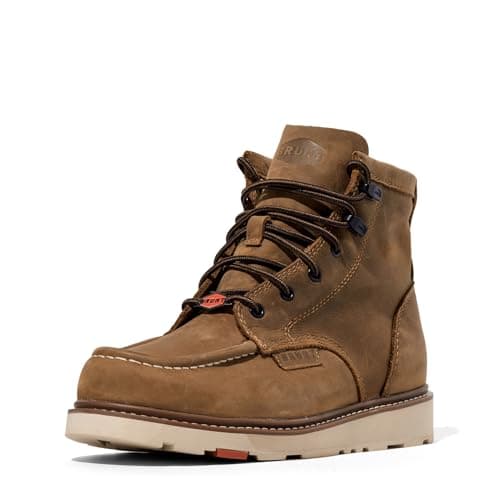
BRUNT vs Red Wing
The widest gap in this library - a compliant work boot against a heritage boot at triple the price.
Top pick: BRUNT Marin Composite Toe Wedge
$149.99· AmazonThorogood vs Ariat
Wedge-sole laced boots against supportive western pull-ons - decided by the ground you work on.
Top pick: Thorogood American Heritage 8" Steel Toe
$284.95· AmazonThorogood vs Irish Setter
A close comparison between two solid brands - decided by resoleability against height and price.
Top pick: Thorogood American Heritage 8" Steel Toe
$284.95· Amazon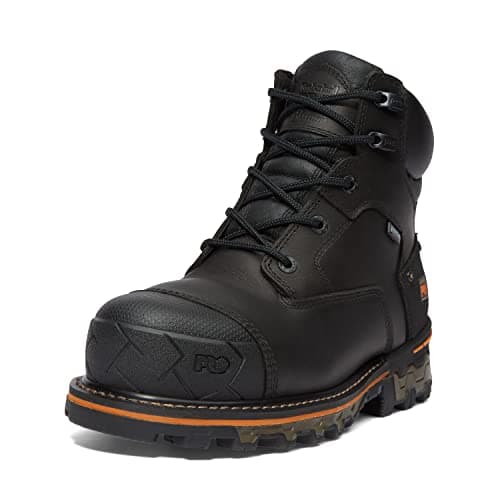
Timberland PRO vs Wolverine
The mainstream industrial matchup - protection and stiffness against flexibility and mobility.
Top pick: Timberland PRO Boondock 6" Composite Toe Waterproof
$169.95$230.00· Amazon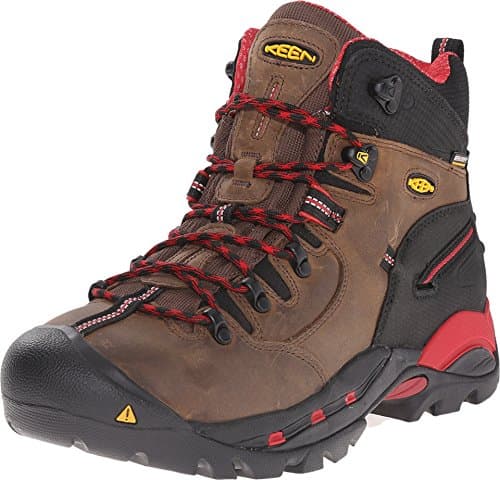
Timberland PRO vs KEEN
KEEN's toe-box geometry against Timberland's range and pricing - decided mostly by foot shape.
Top pick: KEEN Utility Pittsburgh 6" Steel Toe Waterproof
$199.95$209.95· Amazon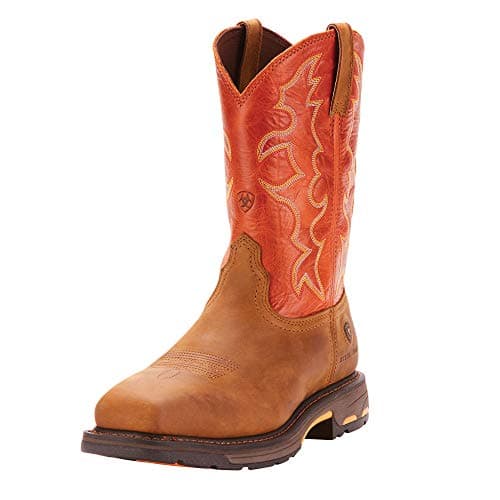
Ariat vs Wolverine
Western-build pull-ons against flexible industrial laced boots - terrain decides it.
Top pick: Ariat WorkHog Wide Square Toe Steel Toe
$229.95· AmazonBRUNT vs KEEN
Price against toe-box geometry - and why a safety cap's shape is permanent.
Top pick: KEEN Utility Pittsburgh 6" Steel Toe Waterproof
$199.95$209.95· Amazon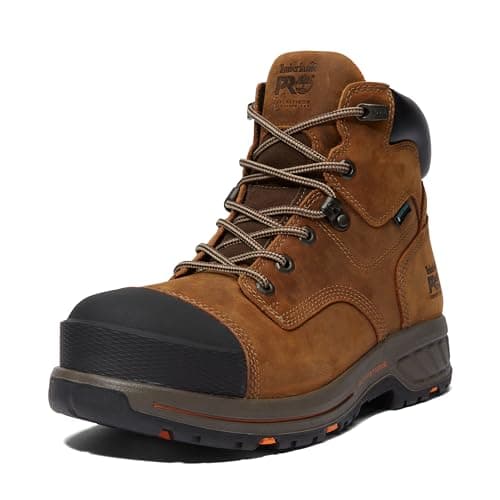
Composite vs steel toe
The most consequential spec decision in work footwear - and it is not about safety.
Top pick: Timberland PRO Helix HD 6" Composite Toe Waterproof
$157.84· AmazonWedge vs heel
The sole-geometry decision that most affects day-to-day comfort - with the physics of why.
Top pick: Thorogood American Heritage 6" Moc Toe
$264.95· Amazon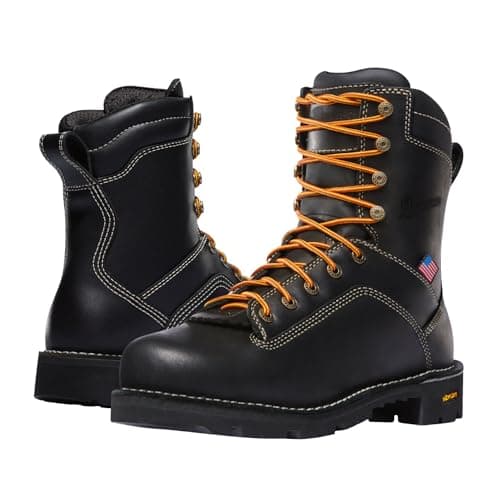
Waterproof vs resistant
The terminology decoded - plus the detail that keeps more water out than the membrane does.
Top pick: Danner Quarry 8" Waterproof Alloy Toe
$329.95· Amazon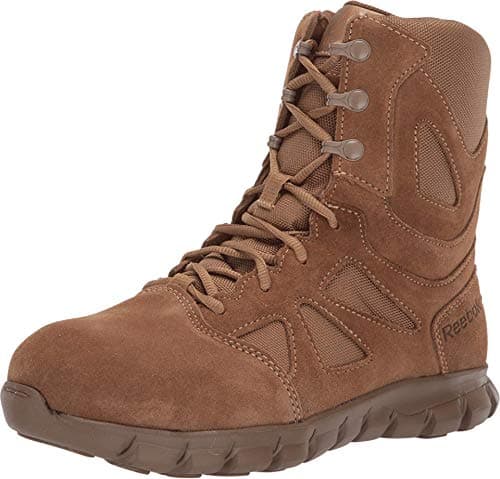
Work vs hiking boots
An honest answer: hiking boots are better at walking, work boots are better at hazards.
Top pick: Reebok Work Sublite Cushion 8" Safety Toe Side-Zip
$154.95· AmazonWork vs cowboy boots
A real question in agriculture and oilfield - with a western work boot as the honest answer.
Top pick: Ariat WorkHog Wide Square Toe Steel Toe
$229.95· Amazon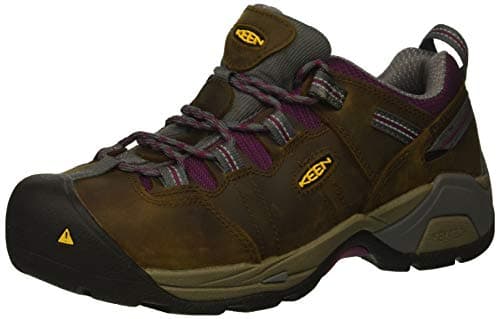
Boots vs shoes
When the shaft earns its weight and when it does not - decided by ground, not job title.
Top pick: KEEN Utility Women's Detroit XT Low Steel Toe Waterproof
$140.00· Amazon
By the time someone searches for one boot against another, they have stopped browsing. They have two options open in two tabs, they are close to buying, and what they need is not another list of ten boots - it is somebody willing to say which of these two is better for their situation and why. That is what this library is for, and it is deliberately the content a manufacturer structurally cannot write about a competitor.
Every comparison here commits to an answer. Not "it depends on your needs" as a way of avoiding the question, but a stated winner for each specific use case, with the cases where the other boot wins named just as clearly. Sometimes the answer is that the cheaper boot is the better buy, and when that is true we say so even though it earns us less.
The heritage question people ask most is Red Wing vs Thorogood - two American welted boot makers at different prices with genuinely different priorities. Then there is the challenger question: Thorogood vs BRUNT and BRUNT vs Red Wing put a direct-to-consumer newcomer against the incumbents, and the honest answer depends almost entirely on whether you want a boot you can resole.
The western and farm-leaning comparisons are Thorogood vs Ariat and Ariat vs Wolverine. The mainstream industrial matchups - the boots most people are actually choosing between in a store - are Timberland PRO vs Wolverine, Timberland PRO vs KEEN, BRUNT vs KEEN and Thorogood vs Irish Setter.
Some comparisons are not about brands at all but about a decision you have to make regardless of which brand you buy. Composite toe vs steel toe is the most consequential: both can meet the same ASTM impact rating, so it is a weight, temperature and metal-detector question rather than a safety one, and a lot of people buy steel when composite was the right answer for their site.
Wedge sole vs heel is the one that most affects day-to-day comfort - a flat wedge spreads load across the whole foot and is kinder on floors, a heeled lug grips loose ground and ladder rungs. And waterproof vs water resistant exists because the two terms are used almost interchangeably in marketing and mean very different things in practice.
The last group answers whether you need a work boot at all. Work boots vs hiking boots is a real question with a real answer, and the answer is not always the work boot. Work boots vs cowboy boots matters in agriculture and oilfield where both are genuinely worn. Work boots vs work shoes is mostly about whether you need ankle support, which depends more on the ground than on the job title.
Each comparison scores both products on the same four to six criteria, drawn from the published specs and the standards they are tested against, with the scoring rubric on our methodology page. We weight the criteria by what the comparison is actually for - a comparison aimed at concrete work weights cushioning heavily and lug aggression barely at all, and the same two boots would score differently in a comparison aimed at broken ground.
What we never do is claim we wore both boots for six months. We did not, and any site that tells you it tested forty boots that way is making it up. What we do instead is published, repeatable and checkable: specs against standards, owner feedback at volume, and reasoning you can argue with. If you want the broader shortlists rather than a head-to-head, start at the work boots hub, and if you want the underlying concepts, the guides library explains the specs these comparisons turn on.
For pure leather quality and resale, Red Wing. For a safety-rated work boot at a working price, Thorogood - its Heritage line offers steel-toe and waterproof versions on a resoleable welt at substantially less money. Most Red Wing Heritage boots have no safety toe at all, which rules them out on many sites.
Yes, when both carry the same ASTM F2413 impact and compression rating - the standard tests performance, not material. Composite is lighter, non-metallic and conducts far less cold; steel is thinner, so the toe box is less bulky, and cheaper. Neither is safer than the other at the same rating.
On flat surfaces, yes - a wedge spreads load and does not pack mud. On loose ground, ladders and scaffolding, a lugged heel is noticeably better because the heel breast catches a rung and the lugs bite into dirt. Flat-site concrete work favors the wedge; mixed or rough ground favors the heel.
For light work with no safety-toe requirement, often yes, and they will be lighter and more comfortable. They give up puncture resistance underfoot, abrasion resistance at the upper, and any safety rating - so on a site that requires protective footwear they are not an option regardless of how good they feel.