Work vs hiking boots
Work Boots vs Hiking Boots
Hiking boots are more comfortable. They also give up three specific protections - and sometimes that is fine.
This question gets asked a lot and usually gets a dismissive answer, which is unfair - hiking boots are more comfortable than work boots for walking, and for some jobs they are a perfectly reasonable choice. The honest answer is that they are optimized for a different problem, and it is worth knowing exactly what you give up before deciding.
What hiking boots give up
- A safety toe. Hiking boots have none. If your site requires ASTM F2413 footwear, this ends the discussion: see ASTM F2413 safety ratings explained.
- Puncture resistance underfoot. Hiking midsoles are built to flex for a natural gait, which is exactly the opposite of what stops a nail. On any site with fasteners on the floor, this is the hazard people underestimate - boots for carpenters covers it.
- Abrasion-resistant uppers. Hiking boots use lightweight textiles and thin leathers that wear through quickly against rough material, concrete and steel.
They also generally lack electrical hazard ratings, oil-resistant outsoles and the chemical tolerance that trades like mechanics need.
What hiking boots are genuinely better at
Walking distance, and it is not a small difference. A hiking boot is dramatically lighter, more flexible, better ventilated and better cushioned for a walking gait than an industrial work boot. Over ten miles of ground that is a real advantage, and it is why boots for warehouse work recommends the lightest compliant footwear rather than the most protective.
Head to head
Ranked by our published scoring rubric. Tap any row for the full write-up.
| # | Product | Best for | Score | Price |
|---|---|---|---|---|
| 1 | 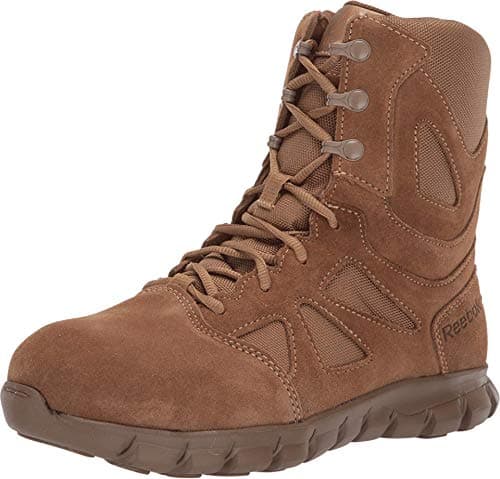 Reebok Work Sublite Cushion 8" Safety Toe Side-ZipWinner for most people asking this question - athletic comfort that is still compliant. | Wanting hiking-boot comfort with a safety toe | 8.6 | |
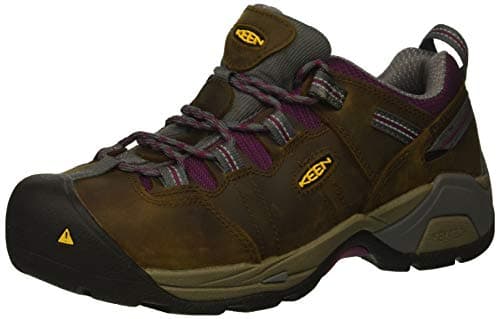
| 2 | 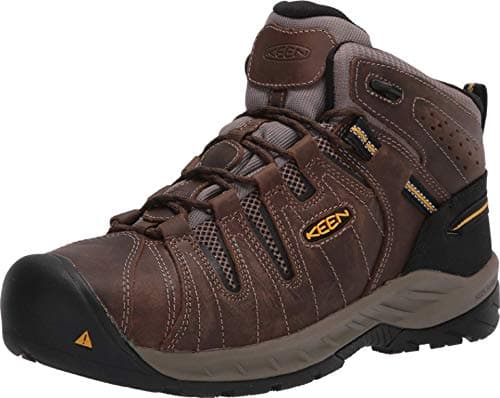 KEEN Utility Flint II Mid Steel ToeKEEN's outdoor DNA with a steel toe - light, breathable, roomy. | A hiking-boot feel from a hiking brand | 8.4 | |
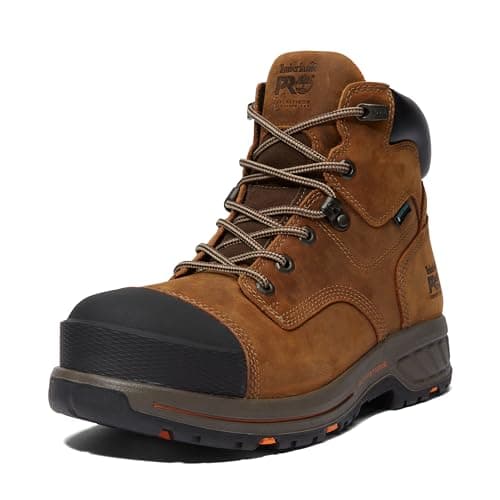
| 3 | 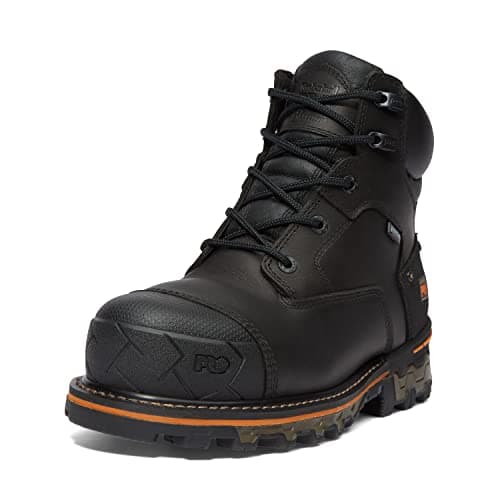 Timberland PRO Boondock 6" Composite Toe WaterproofThe comparison's other end - everything a hiking boot deliberately does not do. | Why work boots exist | 7.8 |
#ad Prices pulled from Amazon and stamped as of October 6, 2026; they change, and we show no number we cannot verify. How we are funded.
The practical answer · Wanting hiking-boot comfort with a safety toe
Reebok Work Sublite Cushion 8" Safety Toe Side-Zip
Winner for most people asking this question - athletic comfort that is still compliant.
Most people comparing work boots with hiking boots actually want the comfort of a hiking boot without losing compliance, and that is what athletic-construction safety footwear provides: a genuine ASTM-rated safety toe in a boot built like a trail shoe.
Light, cushioned, and an 8-inch shaft with a side zip. Textile panels will not survive chemical or abrasive work, and there is little puncture protection underfoot - so it is a clean-environment boot.
Specs that matter
- Toe:
- Safety toe, ASTM F2413
- Height:
- 8 inch
- Closure:
- Laces plus side zipper
- Weight:
- Athletic-shoe construction
Our scoring
- Comfort
- 9.2
- Low weight
- 9.4
- Safety rating
- 8.6
- Abrasion resistance
- 6.6
- Value
- 8.0
What works
- Among the lightest 8-inch safety boots sold
- Side zip means you keep the lace tension and still get out quickly
- Cushioning suited to miles of walking on hard floors
What to know
- Zipper is the obvious failure point
- Textile panels tear on rough material handling
- Little underfoot puncture protection
No. 2 · A hiking-boot feel from a hiking brand
KEEN Utility Flint II Mid Steel Toe
KEEN's outdoor DNA with a steel toe - light, breathable, roomy.
KEEN came from outdoor footwear before it made work boots, and its utility line retains that feel: light, flexible, breathable and roomy in the toe, with an EH rating and a steel toe added.
Unlined, so it breathes properly and has no water resistance. Low shaft with limited ankle support and a thin stock footbed. If your work has no serious hazards, this is close to wearing a hiking boot legally.
Specs that matter
- Toe:
- Steel toe, ASTM F2413
- Height:
- Mid
- Waterproof:
- No — unlined for airflow
- Electrical hazard:
- EH rated
Our scoring
- Comfort
- 8.8
- Low weight
- 8.6
- Safety rating
- 8.4
- Abrasion resistance
- 7.6
- Value
- 8.4
What works
- No membrane, so it genuinely breathes in summer
- One of the lighter steel-toe boots on the market
- KEEN's wide toe box without the waterproof weight penalty
What to know
- Zero water resistance beyond the leather itself
- Low shaft offers little ankle protection
- Thin stock footbed
No. 3 · Why work boots exist
Timberland PRO Boondock 6" Composite Toe Waterproof
The comparison's other end - everything a hiking boot deliberately does not do.
Included to make the trade concrete. The Boondock has a stiff midsole that stops nails and rebar reaching your foot, thick abrasion-resistant leather, a safety toe, and a sole built for rubble. A hiking boot has none of that, by design.
It is also heavy, stiff and a hard boot to walk far in. That is the deal: hiking boots optimize for distance and comfort, work boots for hazards. Neither is better in the abstract.
Specs that matter
- Toe:
- Composite toe, ASTM F2413
- Height:
- 6 inch
- Waterproof:
- Yes, membrane lined
- Sole:
- Aggressive lug, slip and oil resisting
Our scoring
- Comfort
- 6.0
- Low weight
- 5.5
- Safety rating
- 9.4
- Abrasion resistance
- 9.0
- Value
- 7.8
What works
- Composite toe is non-metallic, so it clears metal detectors and conducts less cold
- Waterproof membrane plus a gusseted tongue genuinely keeps water out
- Outsole bites on broken ground where a wedge slides
What to know
- Heavy and stiff — a hard boot to stand on concrete in all day
- Long break-in; the outsole stays rigid for weeks
- Lug pattern tracks mud indoors
When hiking boots are a reasonable work choice
Where there is no safety-footwear requirement and no realistic puncture, crush or chemical hazard. Land surveying, environmental and inspection work, forestry assessment, light landscaping, groundskeeping, and plenty of outdoor fieldwork fall into that category, and in those jobs a hiking boot may well be the better tool.
Where they are not: any construction site requiring protective footwear, anywhere with fasteners or debris on the floor, workshops with chemical exposure, and anywhere near energized equipment.
The middle ground that usually solves it
Athletic-construction safety footwear has largely answered this question. These are boots built like trail shoes - light, cushioned, flexible, breathable - with a genuine ASTM-rated safety toe. You keep most of the hiking-boot comfort and you are compliant, giving up abrasion resistance and heavy underfoot protection rather than the safety rating.
For most people asking this question, that is the actual answer: lightweight work boots. And if ankle support rather than comfort is your concern, work boots vs work shoes is the more relevant comparison.
The verdict, plainly
No safety requirement and no real hazards: hiking boots are fine, and more comfortable. Any safety-footwear requirement, debris on the floor, or chemical exposure: work boots, no exceptions. Want the comfort and the compliance: an athletic-construction safety boot, which is what most people in this comparison should buy.
Frequently asked
Can I wear hiking boots for work?
For light work with no safety-footwear requirement and no realistic puncture, crush or chemical hazard - survey, inspection, groundskeeping - yes, and they will be more comfortable. On any site requiring ASTM F2413 footwear they are not an option.
Are work boots or hiking boots more comfortable?
Hiking boots, clearly, for walking - they are lighter, more flexible, better ventilated and better cushioned for a walking gait. Work boots trade that comfort for a safety toe, puncture resistance and abrasion-resistant uppers.
Do hiking boots protect against nails?
No. Hiking midsoles are designed to flex for a natural gait, which is the opposite of what resists a puncture, and they have no puncture-resistant plate. On any floor with fasteners on it, that is a serious gap.
What is the best compromise between work and hiking boots?
Athletic-construction safety footwear - boots built like trail shoes with a genuine ASTM-rated safety toe. You keep most of the comfort and weight advantage and stay compliant, giving up abrasion resistance and heavy underfoot protection instead of the safety rating.
Sources
Back to Comparisons, or see how we pick. Spotted something wrong? We publish corrections — see our editorial policy.