Best impact gloves
Best Impact Work Gloves
Cut gloves do nothing for the most common hand injury there is. Knuckle armor does.
There is a mismatch between what hand PPE is marketed for and how hands actually get hurt. Cut resistance dominates the conversation because it has a clean standard and a satisfying number. But in construction and heavy industry, the most frequent hand injuries are struck-by and caught-between - a hand crushed between a load and a wall, a knuckle barked on a stud, a finger pinched under a panel. An A5 cut glove does nothing about any of those.
How impact gloves work
The mechanism is simple: a hard or semi-rigid thermoplastic rubber molding sits over the back of the hand and spreads a point impact across a wider area, while deforming to absorb some energy. It is the same principle as a motorcycle glove's knuckle guard. The palm side usually gets foam or gel padding, which does less for impact and more for vibration from tools.
What distinguishes a good one is coverage. Protection across the knuckles is the minimum; the better gloves extend TPR along the back of the fingers and over the thumb, because a hand is as likely to get pinched at the fingertips as struck on the knuckles.
The standard: ANSI/ISEA 138
Impact protection has its own standard, published in 2019 - ANSI/ISEA 138 - which tests back-of-hand and finger impact and rates gloves at Level 1, 2 or 3, with 3 being the highest. It is separate from the cut standard and from any other rating.
Worth knowing because a great many gloves sold as impact gloves carry no ANSI/ISEA 138 rating at all - they have TPR moldings and no test behind them. If your employer specifies impact protection, look for the rating; if you are buying for yourself, the rating is still a useful quality signal.
Quick picks
Ranked by our published scoring rubric. Tap any row for the full write-up.
| # | Product | Best for | Score | Price |
|---|---|---|---|---|
| 1 | 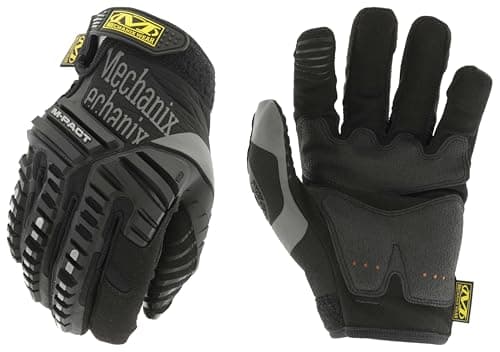 Mechanix Wear M-Pact Impact-Resistant GlovesThe reference impact glove: TPR across knuckles, fingers and thumb, with a padded palm. | General impact protection | 8.4 | |
| 2 | 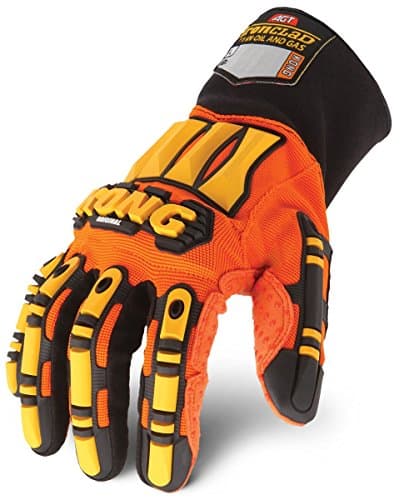 Ironclad KONG Original Impact GlovesThe most thoroughly armored glove here, built for hand-safety programs. | Heavy impact on pipe and oilfield work | 8.2 | |
| 3 | 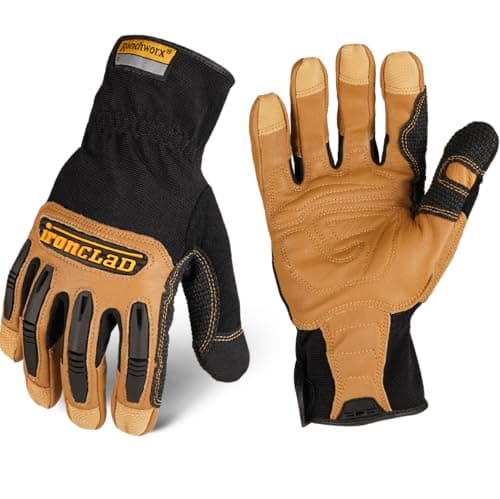 Ironclad Ranchworx Leather Work GlovesPadded knuckles on a glove tough enough for wire, banding and rebar. | Impact plus heavy material handling | 7.6 |
#ad Prices pulled from Amazon and stamped as of October 6, 2026; they change, and we show no number we cannot verify. How we are funded.
Top pick · General impact protection
Mechanix Wear M-Pact Impact-Resistant Gloves
The reference impact glove: TPR across knuckles, fingers and thumb, with a padded palm.
Impact gloves have converged on the same design because it works: thermoplastic rubber moldings over the back of the hand and fingers, where a crush or a pinch lands, plus padding in the palm for vibration. The M-Pact is the version most people have worn.
The protection extends to the fingers and thumb, not just the knuckles, which matters because pinch injuries happen at the fingertips as often as the knuckles. No published cut rating, and you lose dexterity on small fasteners.
Specs that matter
- Impact protection:
- TPR knuckle, finger and thumb guards
- Palm:
- Synthetic leather with padding
- Cut rating:
- None published for this model
- Touchscreen:
- Yes
Our scoring
- Impact protection
- 8.8
- Vibration damping
- 8.2
- Dexterity
- 6.8
- Durability
- 8.0
- Value
- 8.2
What works
- Knuckle armor stops the single most common hand injury on site
- Padded palm takes the sting out of vibration
- Fit is consistent and well documented across sizes
What to know
- No published cut rating — not a cut glove
- The armor costs you dexterity on small fasteners
- Synthetic palm wears through faster than leather
No. 2 · Heavy impact on pipe and oilfield work
Ironclad KONG Original Impact Gloves
The most thoroughly armored glove here, built for hand-safety programs.
Where impact protection is a formal requirement rather than a preference - most obviously oil and gas, where hand injuries from pipe and tongs drove the whole product category - this is the level of armor those programs specify. TPR runs across the knuckles, the back of every finger and the thumb.
The palm is reinforced to survive the material that destroys lighter impact gloves. Very bulky, so dexterity is poor and it is hot in summer, with no published cut rating.
Specs that matter
- Impact protection:
- TPR across knuckles, fingers and thumb
- Palm:
- Reinforced synthetic leather
- Cut rating:
- None published for this model
- Designed for:
- Oil and gas hand-safety programs
Our scoring
- Impact protection
- 9.4
- Vibration damping
- 8.0
- Dexterity
- 5.0
- Durability
- 8.8
- Value
- 8.4
What works
- Among the most thoroughly armored impact gloves sold
- Reinforced palm survives pipe, tongs and heavy material
- High-visibility color, which some sites require
What to know
- Very bulky - poor dexterity for anything fine
- No published cut rating
- Hot in summer
No. 3 · Impact plus heavy material handling
Ironclad Ranchworx Leather Work Gloves
Padded knuckles on a glove tough enough for wire, banding and rebar.
Impact gloves are usually synthetic and wear out quickly on abrasive material. This is the leather alternative: padded knuckle and impact zones on a reinforced leather glove that survives the material that destroys a synthetic one.
Less dedicated impact protection than molded TPR, more durability. Bulky, stiff until broken in, and no published cut rating.
Specs that matter
- Palm:
- Reinforced leather with double stitching
- Protection:
- Padded knuckle and impact zones
- Cut rating:
- None published
- Care:
- Machine washable
Our scoring
- Impact protection
- 7.0
- Vibration damping
- 7.4
- Dexterity
- 5.6
- Durability
- 9.2
- Value
- 8.2
What works
- Survives barbed wire and sharp sheet stock that destroy nitrile gloves
- Reinforced fingertips are where cheap gloves blow out first
- Washable, unusually for a leather glove
What to know
- Bulky — poor for fine work
- Stiff until broken in
- No published cut rating despite the heft
Vibration is the slow hazard
Padded palms are usually sold on comfort, and the real argument is longer-term. Sustained exposure to hand-arm vibration from tools - breakers, grinders, impact wrenches, hammer drills - is associated with hand-arm vibration syndrome, a progressive condition affecting circulation and nerve function in the hands that does not fully reverse.
Gloves are a modest control here, and the bigger levers are tool selection, maintenance and limiting continuous exposure time. But if you run percussive tools daily, a padded glove is a cheap addition and the condition is worth taking seriously. NIOSH's guidance is in the sources below.
Stacking hazards
Most trades face more than one hand hazard, and gloves that combine protections exist but always compromise. Impact plus high-level cut resistance produces a thick glove with poor dexterity. The realistic approach is to choose for your dominant hazard and carry a second pair - which is the same conclusion gloves for construction reaches, and why cut-resistant gloves is a separate list.
What we would skip
Skip impact gloves whose TPR covers only the knuckles if your work involves pinch hazards at the fingers. Skip synthetic impact gloves for abrasive material handling - they wear through fast. Skip assuming an impact glove offers cut protection, because most publish no cut rating. And skip relying on gloves as your vibration control if you run percussive tools all day; exposure time is the real lever.
Frequently asked
What are impact gloves for?
Crush, pinch and struck-by injuries - the most common hand injuries in construction and heavy industry. Thermoplastic rubber moldings over the back of the hand and fingers spread a point impact across a wider area. Cut-resistant gloves do nothing for this hazard.
Is there a standard for impact gloves?
Yes - ANSI/ISEA 138, which tests back-of-hand and finger impact and rates gloves Level 1 to 3. Many gloves sold with TPR moldings carry no rating at all, so look for it if impact protection is specified for your work.
Do impact gloves help with vibration?
Modestly. Padded palms reduce some transmitted vibration, which matters because sustained hand-arm vibration exposure is linked to a progressive and largely irreversible condition. Tool selection, maintenance and limiting continuous exposure time are more effective controls than gloves.
Can one glove give both impact and cut protection?
Combination gloves exist, but they compromise: adding high-level cut resistance to an impact glove produces a thick glove with poor dexterity, which people then take off. Most trades are better served choosing for the dominant hazard and carrying a second pair.
Sources
Back to Work Gloves, or see how we pick. Spotted something wrong? We publish corrections — see our editorial policy.