Best heated gloves
Best Heated Work Gloves
Most heated gloves heat the back of your hand. Your fingertips are what go numb.
Heated gloves are the most expensive and most compromised item in this category, and also the only thing that works when your hands have genuinely stopped producing enough heat of their own. Worth understanding both sides before buying, because the alternatives are cheaper and sometimes better.
Why insulation stops working
Insulation does not warm you. It slows the loss of heat your body is producing, and that is a crucial distinction in cold work. When your core temperature is threatened, your body constricts the blood vessels supplying your hands and feet to conserve heat centrally - so the amount of heat arriving at your fingers drops dramatically.
At that point, more insulation on your hands has very little to retain. This is the experience of anyone doing static work in real cold: the gloves that are fine while you are moving stop being adequate within twenty minutes of standing still. A heating element adds energy, which is a categorically different mechanism.
The fingertip problem
If you buy nothing else from this page, take this specification with you. Many heated gloves run their element across the back of the hand and the knuckles - which is easy to manufacture, since the wiring does not have to flex through the finger joints - and stop there.
But the back of your hand is not what goes numb. Your fingertips are the furthest point from your circulation and have the worst surface-area-to-volume ratio, and numb fingertips cost you dexterity and the ability to feel what you are handling. A glove that does not heat the fingers is solving a problem you did not have. Check the element diagram in the product images, not the description.
Quick picks
Ranked by our published scoring rubric. Tap any row for the full write-up.
| # | Product | Best for | Score | Price |
|---|---|---|---|---|
| 1 | 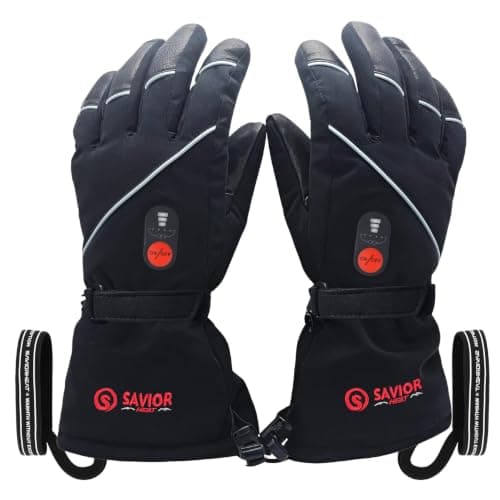 SAVIOR HEAT Rechargeable Heated Leather GlovesThe element runs to the fingertips, which is the one spec that matters here. | Heat where it is actually needed | 8.4 | |
| 2 | 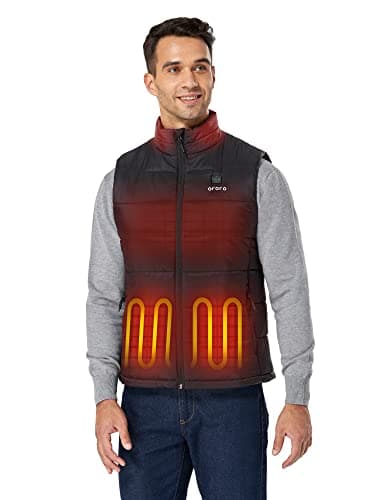 ORORO Men's Lightweight 4-Zone Heated VestNot gloves - and frequently the better purchase for cold hands. | A cheaper way to warm your hands | 8.0 | |
| 3 | 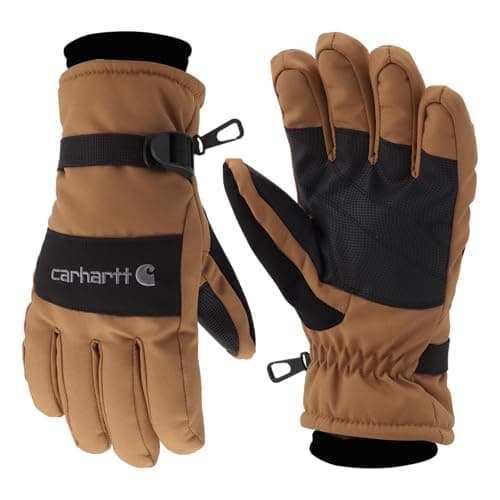 Carhartt Waterproof Insulated Knit-Cuff GloveNot heated - the right answer if you are working hard rather than standing still. | When insulation is enough | 7.2 |
#ad Prices pulled from Amazon and stamped as of October 6, 2026; they change, and we show no number we cannot verify. How we are funded.
Top pick · Heat where it is actually needed
SAVIOR HEAT Rechargeable Heated Leather Gloves
The element runs to the fingertips, which is the one spec that matters here.
The common failure in heated gloves is that the heating element covers the back of the hand and stops at the knuckles - which warms the part of your hand that was least cold. Your fingertips are furthest from your blood supply and are what actually go numb.
These run heat out to the fingertips, which is why they earn the top spot despite being bulky and expensive. A leather shell makes them durable enough for real work. Three settings let you trade heat for run time, and the cuff batteries catch on sleeves. Not a safety glove in any respect.
Specs that matter
- Heating:
- Back of hand through to fingertips
- Battery:
- Rechargeable, one per glove
- Material:
- Leather shell, insulated
- Settings:
- Three heat levels
Our scoring
- Fingertip heat
- 9.4
- Heat output
- 9.2
- Durability
- 7.0
- Dexterity
- 4.5
- Value
- 7.0
What works
- Fingertip heating is what actually matters — most heated gloves stop at the knuckles
- Leather shell is durable enough for real work
- Three settings let you trade heat for run time
What to know
- Bulky; dexterity is poor
- Batteries in the cuffs catch on sleeves
- Expensive and not a safety glove in any respect
No. 2 · A cheaper way to warm your hands
ORORO Men's Lightweight 4-Zone Heated Vest
Not gloves - and frequently the better purchase for cold hands.
This is the recommendation that saves people money. When your core is cold, your body deliberately restricts blood flow to your hands to protect core temperature. Heating your core removes that reason, so your body sends warm blood back to your fingers - and a vest costs less than heated gloves while also warming the rest of you.
Vest plus good insulated gloves often beats heated gloves alone, and it keeps full dexterity in your hands. If you are static in severe cold, heated gloves still have a place - see heated vests for the full argument.
Specs that matter
- Heating zones:
- 4
- Battery:
- USB-C rechargeable, included
- Fit:
- Layerable under a shell
- Weight:
- Lightweight puffer
Our scoring
- Fingertip heat
- 5.5
- Heat output
- 8.0
- Durability
- 6.0
- Dexterity
- 9.5
- Value
- 9.0
What works
- USB-C charging means a standard cable and power bank work
- Layers under your existing work coat instead of replacing it
- Leaves the arms unrestricted for tool work
What to know
- No arm or hand warmth at all
- Puffer shell punctures on rough material
- Thin enough that it needs an outer layer in wind
No. 3 · When insulation is enough
Carhartt Waterproof Insulated Knit-Cuff Glove
Not heated - the right answer if you are working hard rather than standing still.
Honest inclusion. If you are physically working, your body is generating heat and good insulation retains it, so a well-sealed insulated glove is lighter, cheaper, far more dextrous and does not need charging. Heated gloves are for static cold.
The knit cuff is the detail: it stops snow and water running down your wrist, which is the usual way winter gloves fail. Genuinely waterproof and warm, with no touchscreen compatibility and limited dexterity.
Specs that matter
- Waterproof:
- Waterproof insert
- Insulation:
- Insulated lining
- Cuff:
- Knit, seals at wrist
- Touchscreen:
- No
Our scoring
- Fingertip heat
- 5.0
- Heat output
- 6.4
- Durability
- 8.0
- Dexterity
- 6.0
- Value
- 8.4
What works
- Knit cuff keeps snow and water from running down your wrist
- Genuinely waterproof, not just resistant
- Warm without being a ski mitt
What to know
- Waterproof insert means no breathability
- Bulky, with limited dexterity
- No touchscreen compatibility
Try the cheaper options first
- A heated vest. Core warmth restores circulation to your hands, costs less than heated gloves, keeps full dexterity, and warms the rest of you too: heated vests.
- Better insulated gloves with a sealed cuff. If your current gloves are failing because snow and water run down your wrist and soak the lining, that is a cuff problem, not a heat problem: cold weather work gloves.
- Chemical hand warmers in the glove backs. Crude, cheap and genuinely effective for a shift, with nothing to charge.
- Then heated gloves, if you are static in severe cold and the above have not been enough.
What you give up
Be clear-eyed about the compromises, because they are substantial. Heated gloves are bulky, so dexterity is poor - and a glove too clumsy for the task gets removed, which in cold means a bare hand losing heat fast. The battery packs sit at the cuffs and catch on sleeves and jacket cuffs. Run time on the high setting is limited, and lithium cells lose capacity in cold, so expect less than the specification suggests.
And they are not safety gloves. No cut rating, no impact rating, and categorically no electrical protection - a heated glove has wiring and a battery in it and has no business anywhere near energized equipment or in an FR environment. If you need protection as well as warmth, that is two gloves or a different solution: gloves for electricians covers why insulating gloves are a separate class entirely.
What we would skip
Skip heated gloves whose element stops at the knuckles. Skip them if you are working hard rather than standing still. Skip them anywhere FR clothing is required or near energized equipment. And skip buying them before trying a heated vest, which is cheaper, more dextrous and solves a surprising proportion of cold-hand complaints. For feet, the equivalent page is heated socks.
Frequently asked
Do heated gloves actually work?
Yes, for static work in genuine cold, because they add heat rather than merely slowing its loss - which matters once your body has reduced blood flow to your hands. The critical spec is that the element reaches the fingertips; many gloves heat only the back of the hand, which is the wrong place.
Are heated gloves or a heated vest better for cold hands?
Try the vest first. When your core is cold your body restricts blood flow to your hands to protect core temperature, so warming the core removes the reason your fingers are cold - and a vest costs less, warms the rest of you and keeps full hand dexterity.
How long do heated gloves last on a charge?
Typically a few hours on the highest setting and longer on low, and less than the specification in genuine cold because lithium cells lose capacity when cold. Three-setting gloves let you trade heat for run time, which is how most people stretch them across a shift.
Can you wear heated gloves for electrical work?
No. Heated gloves contain wiring and a lithium battery and provide no electrical protection whatsoever, so they have no place near energized equipment. Electrical work requires rubber insulating gloves tested to ASTM D120 inside leather protectors, and heated gear is also unsuitable in any FR environment.
Sources
Back to Heated Work Gear, or see how we pick. Spotted something wrong? We publish corrections — see our editorial policy.