Best for electricians
Best Work Gloves for Electricians
Important first: none of these are electrical insulating gloves. Here is what they are for, and what is not.
With that stated, here is the useful observation: the overwhelming majority of an electrician's day is not live work. It is pulling wire, cutting and bending conduit, hanging strut, mounting boxes and panels, terminating devices and handling cable. Those are mechanical hazards, and the gloves for them are ordinary work gloves - which is what this page is about.
The actual hazards
- Cuts from knocked-out box edges and cut conduit. The sharpest things most electricians handle, and a frequent source of hand injuries.
- Abrasion from pulling wire. Repetitive, and what wears gloves out fastest in this trade.
- Pinches from strut, panel covers and ladders - impact and crush rather than cut.
- Fiberglass and insulation contact in attics and ceilings, which is a skin-irritation hazard more than an injury one.
Quick picks
Ranked by our published scoring rubric. Tap any row for the full write-up.
| # | Product | Best for | Score | Price |
|---|---|---|---|---|
| 1 | 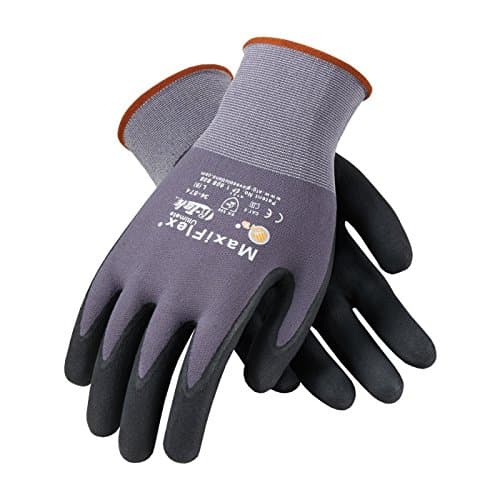 MaxiFlex Ultimate 34-874 Nitrile-Coated GlovesEnough feel to land a conductor - which is why electricians keep these on. | Terminations and fine work | 8.4 | |
| 2 | 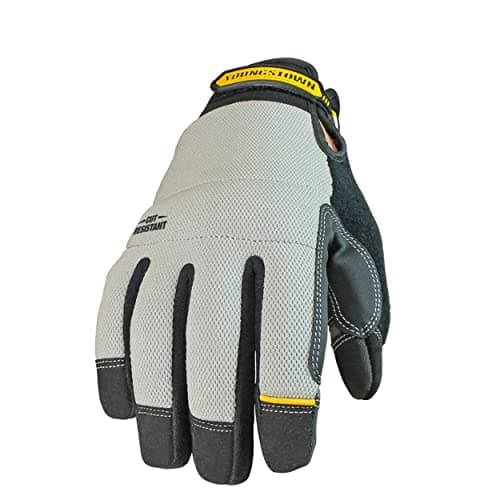 Youngstown Glove General Utility Lined with KevlarKevlar-lined and built for utility work - the brand lineworkers actually buy. | Cut resistance without losing feel | 8.0 | |
| 3 | 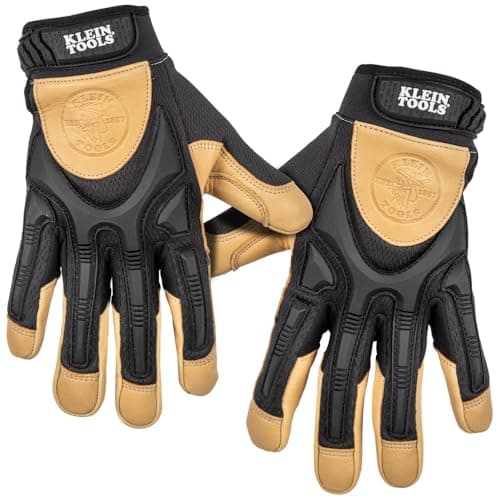 Klein Tools 60188 Leather Work GlovesA simple, comfortable leather glove from a trade brand - and the leather-protector role. | Leather protectors and general handling | 7.4 | |
| 4 | 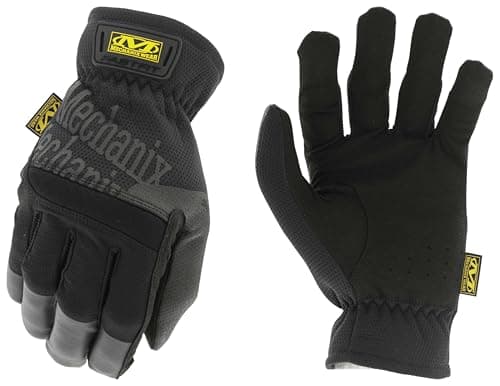 Mechanix Wear FastFit Work GlovesAn elastic cuff you can manage one-handed - which matters more than it sounds. | Gloves on and off thirty times a day | 7.4 |
#ad Prices pulled from Amazon and stamped as of October 6, 2026; they change, and we show no number we cannot verify. How we are funded.
Top pick · Terminations and fine work
MaxiFlex Ultimate 34-874 Nitrile-Coated Gloves
Enough feel to land a conductor - which is why electricians keep these on.
Electrical work has more fine motor tasks than almost any trade: stripping, landing conductors, torquing lugs, pulling wire, handling small devices. A glove that costs you that feel gets removed, and then you are bare-handed around sharp box edges and cut conduit.
Micro-foam nitrile on a thin liner preserves nearly all of it. ANSI A1 only, so minimal cut protection, and no impact protection. Buy by the dozen.
Specs that matter
- Coating:
- Micro-foam nitrile, palm and fingers
- Liner:
- 15-gauge seamless knit
- Pack:
- Sold as 12 pairs
- Cut rating:
- ANSI A1 — minimal
Our scoring
- Dexterity
- 9.5
- Grip
- 9.0
- Cut protection
- 4.0
- Durability
- 6.0
- Value
- 9.2
What works
- Dexterity close to bare hands — you can pick up a washer
- Breathable back, so hands do not swim in sweat
- Buying by the dozen drops the per-pair cost dramatically
What to know
- Almost no cut protection and no impact protection
- Nitrile coating fails within weeks on abrasive work
- Not waterproof and no warmth
No. 2 · Cut resistance without losing feel
Youngstown Glove General Utility Lined with Kevlar
Kevlar-lined and built for utility work - the brand lineworkers actually buy.
Pulling wire through a conduit run, handling cut strut, dealing with the sharp edges of a knocked-out box - electricians meet real cut hazards without being in a dedicated cut-glove trade. A Kevlar-lined utility glove splits that difference.
The caveat matters: no published ANSI cut level, so you cannot specify it against a standard requirement. If your employer requires a documented cut level, buy a rated glove instead.
Specs that matter
- Liner:
- Kevlar lined
- Palm:
- Synthetic leather, reinforced
- Cut resistance:
- Kevlar liner; ANSI level not published for this model
- Made in:
- Designed in USA
Our scoring
- Dexterity
- 7.4
- Grip
- 8.2
- Cut protection
- 7.6
- Durability
- 8.6
- Value
- 7.8
What works
- Kevlar lining adds real cut resistance to a normal-feeling glove
- Durable enough for utility and lineman work
- Good wrist coverage
What to know
- No published ANSI cut level, so you cannot spec it to a standard
- Warmer than an uncoated glove in summer
- Costs more than a plain utility glove
No. 3 · Leather protectors and general handling
Klein Tools 60188 Leather Work Gloves
A simple, comfortable leather glove from a trade brand - and the leather-protector role.
A plain leather glove still has a place in this trade: handling strut and unistrut, pulling cable, moving conduit, and - importantly - as the leather protector worn over rubber insulating gloves, which is a required part of that system rather than an optional extra.
Comfortable from new with decent feel for a leather glove. No cut, impact or arc rating of its own. Leather stiffens after getting wet.
Specs that matter
- Material:
- Leather palm and fingers
- Cut rating:
- None published
- Fit:
- Sized S-XL
- Use:
- General tool and material handling
Our scoring
- Dexterity
- 7.0
- Grip
- 7.8
- Cut protection
- 5.5
- Durability
- 8.4
- Value
- 8.4
What works
- Leather durability with enough feel for hand tools
- Simple construction with little to fail
- Comfortable from the first wear
What to know
- No cut, impact or arc rating — these are not electrical safety gloves
- No touchscreen compatibility
- Leather stiffens after getting wet
No. 4 · Gloves on and off thirty times a day
Mechanix Wear FastFit Work Gloves
An elastic cuff you can manage one-handed - which matters more than it sounds.
Electricians remove gloves constantly: to feel a screw, to use a phone, to meter something. A glove with no closure comes off and goes back on one-handed in seconds, and the ones that take two hands and a strap get left in a pocket.
No protection of any kind, a thin palm that wears out in weeks, and no wrist adjustment. Judged purely as a convenient handling glove, it earns its place.
Specs that matter
- Cuff:
- Elastic, no closure
- Palm:
- Synthetic leather
- Cut rating:
- None
- Touchscreen:
- Yes
Our scoring
- Dexterity
- 9.0
- Grip
- 7.6
- Cut protection
- 3.5
- Durability
- 5.4
- Value
- 8.8
What works
- Fastest glove here to put on and take off
- Low profile under a jacket cuff
- Cheapest Mechanix model
What to know
- No wrist adjustment, so fit is take-it-or-leave-it
- No protection of any kind
- Elastic cuff relaxes and loosens with washing
Why dexterity wins here more than in other trades
Terminating a device, torquing a lug to spec, starting a small machine screw in a box - these are tasks where a thick glove does not merely slow you down, it stops you doing the work. So the glove comes off. And the moment your glove is off is frequently the moment your hand is inside a box full of cut metal edges.
This is why thin nitrile-coated gloves dominate electrical work despite their near-zero protection ratings, and it is a defensible choice rather than a lazy one. If your hazard profile is genuinely cut-heavy, step up deliberately to a rated glove and accept the dexterity cost: ANSI cut levels explained will tell you which level you need.
Leather protectors are not optional
Worth a note because it causes real confusion. When rubber insulating gloves are used, they are worn inside leather protector gloves, which shield the rubber from mechanical damage - a puncture or cut in the rubber defeats its electrical protection entirely. Those protectors have their own standard, ASTM F696, and are inspected and replaced as part of the system.
A general-purpose leather glove is not a certified protector. If you need protectors, get the ones specified with your insulating gloves.
The rest of the kit
Footwear for this trade is covered in depth at boots for electricians and electrical hazard boots - and the EH rating has the same kind of misunderstood-limits problem as gloves do. For the kneeling that rough-in involves, see knee pads for construction, and work pants for electricians for the double-knee case.
What we would skip
Skip any glove sold as "electrician's gloves" that implies electrical protection without an ASTM D120 voltage class - that is a marketing claim, not a rating. Skip heavy impact gloves as your primary pair in this trade; they will not stay on. And skip gloves with exposed metal hardware, which has no place around energized equipment.
Frequently asked
Do electricians need special gloves?
Two separate things. For live work, rubber insulating gloves tested to ASTM D120 with a voltage class rating, worn inside leather protectors - supplied through your employer's electrical safety program. For everything else, ordinary mechanical work gloves with high dexterity, which is what most of the day calls for.
Are leather gloves safe for electrical work?
Not as electrical protection - leather provides no certified insulation. Leather protectors do have a role, worn over rubber insulating gloves to shield them from cuts and punctures, but those are specific certified products tested to ASTM F696, not general-purpose leather gloves.
What gloves do electricians wear for pulling wire?
Thin nitrile-coated gloves are the common choice: they grip cable well, survive the abrasion for a reasonable time at a low per-pair cost, and preserve enough feel for the terminations at either end. Kevlar-lined utility gloves are the step up when cut exposure is higher.
What ANSI cut level do electricians need?
Most electrical work sits in the A1 to A3 range, where the hazard is box edges and cut conduit rather than blades. Step up to A4 or above if you regularly handle sheet metal or cut banding. Remember that higher cut levels cost dexterity, which has its own safety consequence in this trade.
Sources
Back to Work Gloves, or see how we pick. Spotted something wrong? We publish corrections — see our editorial policy.