Best for flooring
Best Knee Pads for Flooring & Tile Work
On a smooth floor, a hard domed cap skates. You need a flat base that pivots without marking.
Flooring and tile setting is the trade knee pads were invented for and the one most poorly served by general-purpose pads, because the surface requirement is inverted. On rough ground you want a hard domed cap that rolls over debris. On a smooth finished floor that same cap has a small contact area on a low-friction surface, and it skates out from under you - which is both exhausting and a genuine fall risk when you are reaching.
The pivot problem
Here is what makes flooring different in a way that is hard to appreciate until you have done it. A floor layer does not kneel in one spot; they work backwards across a surface, shuffling and pivoting on their knees continuously for hours, because standing up to move eighteen inches is not viable at that frequency.
A pad that pivots smoothly on a broad flat base makes that movement easy. A domed cap rocks onto its edge as you turn, which means you are constantly correcting your balance with your hips and back - which is why floor layers who switch to flooring-specific pads report less back fatigue, not just less knee pain.
Non-marking is a commercial requirement
Worth stating as a business matter rather than a comfort one. A dark rubber cap can leave scuff marks on light vinyl, laminate and freshly finished hardwood - exactly the surfaces you have just installed. A non-marking compound costs nothing extra and removes a category of callback and repair that is far more expensive than the pads.
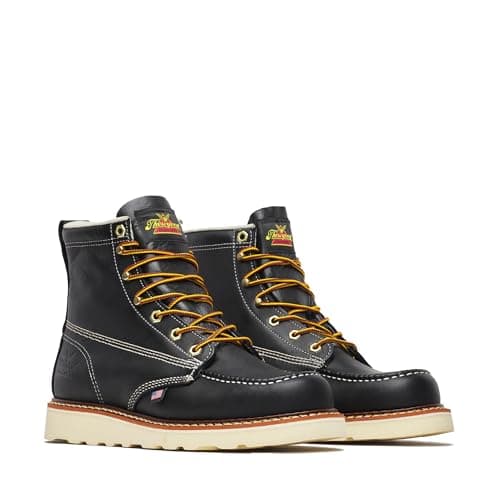
The same logic applies to your boots on a finished floor, which is why non-marking outsoles matter in boots for carpenters and boots for plumbers.
Quick picks
Ranked by our published scoring rubric. Tap any row for the full write-up.
| # | Product | Best for | Score | Price |
|---|---|---|---|---|
| 1 | 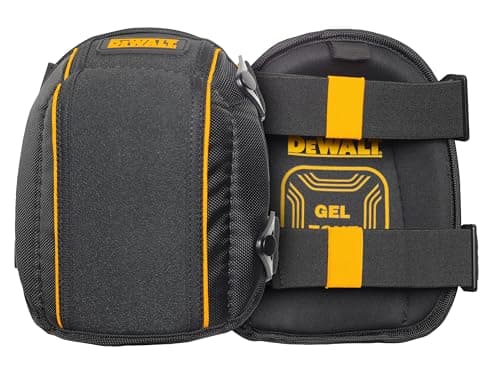 DEWALT Flooring Knee Pads with GelA broad flat non-marking base - built for exactly this surface and no other. | Tile, sheet goods and finished floors | 8.9 | |
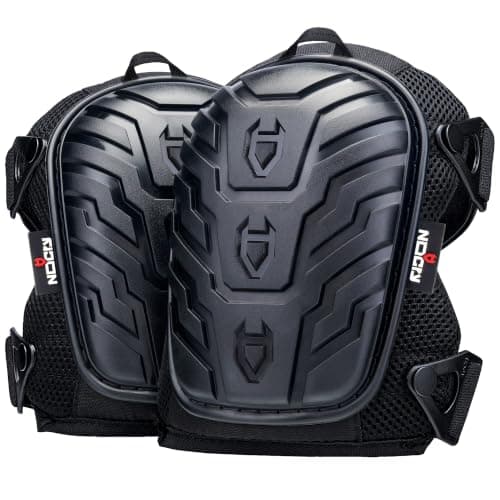
| 2 | 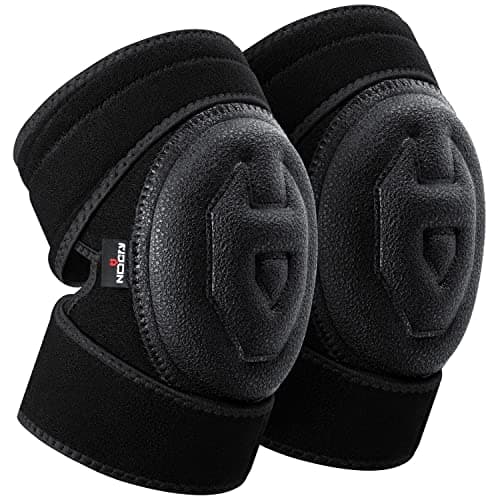 NoCry Gel Knee Pads with Soft Foam CushionA waterproof anti-slip cap that survives wet mortar and does not skate. | Wet work - thinset, mortar and grout | 8.5 | |
| 3 | 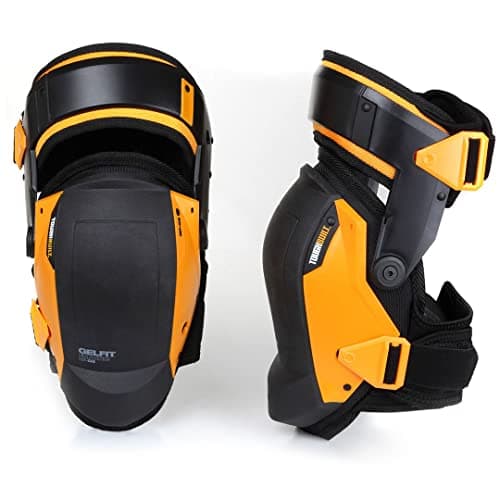 ToughBuilt GelFit Thigh Support Stabilization Knee PadsThigh support, which is what you want when kneeling is the entire job. | A full day on your knees | 7.8 |
#ad Prices pulled from Amazon and stamped as of October 6, 2026; they change, and we show no number we cannot verify. How we are funded.
Top pick · Tile, sheet goods and finished floors
DEWALT Flooring Knee Pads with Gel
A broad flat non-marking base - built for exactly this surface and no other.
Flooring is the one trade with a genuinely different pad requirement, and this is the purpose-built answer: a broad, flat, non-marking base rather than a domed cap. On tile and sheet goods a dome rocks and slides; a flat base sits still and pivots smoothly, which is the movement that actually matters when you are working backwards across a floor.
Non-marking is not a nice-to-have on a client's finished surface. The flat base is poor on uneven ground and rubble, and the gel layer is thinner than a heavy construction pad's.
Specs that matter
- Cushion:
- Gel
- Base:
- Broad flat, non-marking
- Straps:
- Adjustable
- Use:
- Flooring and tile
Our scoring
- Surface grip
- 9.2
- Non-marking
- 9.4
- Pivot ease
- 9.0
- Cushioning
- 7.4
- Value
- 8.6
What works
- Flat broad base is right for flooring, where a domed cap rocks
- Non-marking on finished surfaces
- Pivots smoothly, so you shuffle rather than stand up
What to know
- Flat base is poor on uneven ground and rubble
- Less edge protection than a capped pad
- Gel is thinner than the NoCry Professional's
No. 2 · Wet work - thinset, mortar and grout
NoCry Gel Knee Pads with Soft Foam Cushion
A waterproof anti-slip cap that survives wet mortar and does not skate.
Flooring is frequently wet work: thinset, mortar, grout, leveling compound. A waterproof shell that rinses clean rather than absorbing it is a genuine practical advantage, and these pads are built for that.
The anti-slip cap stays put on tile where hard caps skate, and the softer foam is comfortable on a hard flat floor. That same softness bottoms out on gravel, so these are not a rubble pad.
Specs that matter
- Cushion:
- Soft foam with gel insert
- Cap:
- Waterproof, anti-slip
- Straps:
- Easy-release buckles
- Use:
- Flooring, tiling, finish work
Our scoring
- Surface grip
- 9.0
- Non-marking
- 8.4
- Pivot ease
- 8.0
- Cushioning
- 7.6
- Value
- 8.6
What works
- Anti-slip cap stays put on tile and sheet goods, where hard caps skate
- Softer and lighter than the Professional model
- Waterproof shell survives wet mortar and thinset
What to know
- Softer foam bottoms out on gravel and rubble
- Less protection from sharp debris
- Buckles are a wear point
No. 3 · A full day on your knees
ToughBuilt GelFit Thigh Support Stabilization Knee Pads
Thigh support, which is what you want when kneeling is the entire job.
#ad No buyable offer at the last price check. How we are funded
- Our score
- 7.8/10
Floor laying is the trade where you are on your knees for hours continuously rather than intermittently, and that is exactly the case the thigh-support design addresses: part of your weight is carried on the thigh rather than through the knee joint.
For a full floor install, it is the most protective option here. It is heavy and awkward to walk in, and the cap is less floor-specific than the DEWALT's - so you trade some surface manners for load relief.
Specs that matter
- Cushion:
- Gel insert, molded
- Support:
- Thigh stabilization platform
- Straps:
- Heavy-duty adjustable
- Use:
- Long kneeling sessions
Our scoring
- Surface grip
- 7.0
- Non-marking
- 7.4
- Pivot ease
- 6.6
- Cushioning
- 9.0
- Value
- 7.4
What works
- Thigh platform genuinely redistributes load off the kneecap
- The best pad here for hours of continuous kneeling
- Heavy-duty build that survives site abuse
What to know
- The heaviest and bulkiest pad here by a clear margin
- Awkward to walk in — not a wear-all-day pad
- Overkill for occasional kneeling
Wet work and the waterproof question
Tile setting involves thinset, mortar, grout and self-leveling compound, all of which are abrasive, alkaline and set hard. A fabric-shelled pad absorbs them and becomes a rigid, scratchy lump within a few jobs - and a pad with dried mortar on the cap can mark the very floors it is meant to protect.
A waterproof shell that hoses clean is therefore more than a convenience in this trade. Cement-based products are also alkaline enough to irritate skin over time, which is a separate reason to keep them off your clothing and skin - see the hand side at gloves for construction.
The rest of the kneeling kit
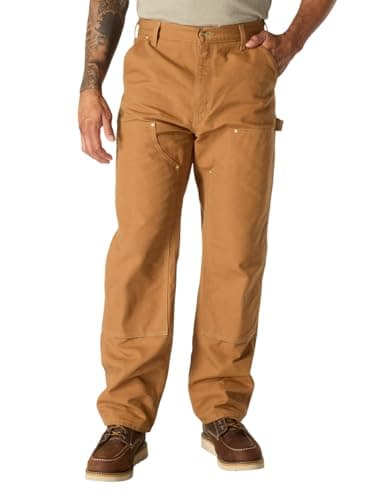
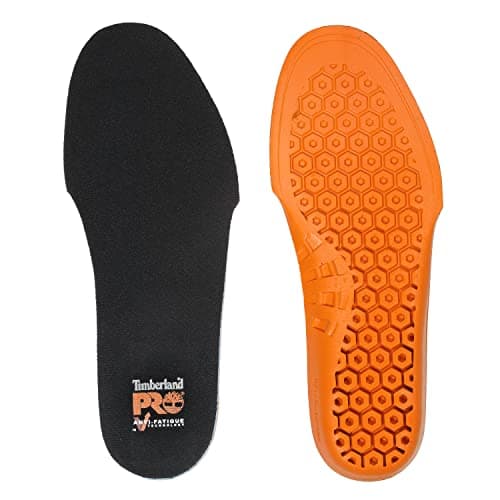
For intermittent kneeling, double-front pants with knee-pad pockets are more comfortable than strap-on pads because the insert cannot rotate or chafe: see work pants for construction. For a full floor install they are not enough on their own - the inserts are thin - so most floor layers use both. And since this is standing-and-kneeling work on hard surfaces, the foot side matters too: insoles for concrete.
What we would skip
Skip hard domed caps entirely for floor work. Skip dark non-specified rubber caps on finished surfaces. Skip fabric-shelled pads for wet trades, where they absorb mortar and go hard. And skip single-strap pads, which rotate round your leg exactly when you are pivoting on them.
Frequently asked
What are the best knee pads for flooring and tile work?
Pads with a broad, flat, non-marking and non-slip cap. On smooth finished surfaces a hard domed cap has a small contact patch on a low-friction floor and slides out from under you; a flat base sits still and pivots smoothly, which is the movement that matters in this trade.
Why do my knee pads slide on tile?
Because a domed hard cap concentrates your weight on a small contact area against a low-friction surface. Flooring-specific pads use a broad flat base with a grippy, often waterproof cap to spread that contact and increase friction.
Will knee pads mark a finished floor?
A dark unspecified rubber cap can scuff vinyl, laminate and fresh hardwood, and a cap with dried mortar on it certainly will. Look for a stated non-marking compound and rinse the pads between jobs - a callback costs far more than the pads.
Are thigh-support knee pads worth it for flooring?
For a full install, yes. They transfer part of your weight onto the thigh rather than through the knee joint, which matters when you kneel continuously for hours rather than intermittently. They are heavy and awkward to walk in, so they are a task-specific pad rather than an all-day one.
Sources
Back to Knee Pads, or see how we pick. Spotted something wrong? We publish corrections — see our editorial policy.