Best hard hat
Best Hard Hats
Two questions decide this purchase and neither is the brand: which impact type you need, and whether you need electrical protection. Everything else is comfort.
The short answer: buy the MSA V-Gard full brim if you want one hat for general site work, the 3M SecureFit vented cap if your problem is heat and there is no electrical hazard, the 3M SecureFit non-vented full brim if you need a solid shell with full coverage, the MSA V-Gard H2 if your work has a lateral impact hazard, and the Pyramex Ridgeline if you are kitting out a crew.
Hard hats are the PPE category where the most money gets wasted on the wrong thing, because the differences that matter are invisible in a photograph and the differences that are visible mostly do not matter. Color is a site convention, not a rating. A brand name tells you about the suspension quality, not the protection level. What actually decides whether a hat is right for your job is two letters and a number stamped on the inside of the shell, and almost nobody reads them.
Type I vs Type II: which direction is the hazard coming from?
Type I is rated for impact to the top of the head. That is the classic hard hat hazard - a dropped tool, a falling fastener, a load swinging overhead - and it covers the large majority of hats sold in the United States. If you work under other trades on a flat site, Type I is the correct tool and has been for sixty years.
Type II adds lateral impact: a strike from the side, the front or the back. The reason this matters is less about things hitting you and more about you hitting things - a fall, a trip into steel, a swing of a load into the side of your head. Type II helmets almost always include a chin strap, and that retention is half the point: a hard hat held on by a suspension alone comes off at the start of a fall rather than during it. Large contractors have been moving to Type II for work at height, and if your site has specified one, the MSA V-Gard H2 on this page is the straightforward route.
Classes E, G and C: the electrical question
| Class | Tested to | What it means in practice |
|---|---|---|
| Class G (General) | 2,200 volts | The common general-industry rating. Incidental contact protection, not a licence to work energized. |
| Class E (Electrical) | 20,000 volts | Specified for utility and electrical work. A solid shell is a prerequisite. |
| Class C (Conductive) | No electrical protection | Impact protection only. Every vented hard hat falls here, by design. |
The trap is Class C, and it is a comfort trap. Vented hats are dramatically more pleasant in heat, people buy them for that reason, and the vents are precisely why the hat cannot carry an electrical rating. If any part of your work puts you near energized conductors, you need a solid shell - and you need to confirm it from the stamp inside, because vented and non-vented versions of the same model are often sold under near-identical titles and photographs. For the footwear half of the same question, electrical hazard work boots covers what an EH sole does and does not do.
Quick picks
Ranked by our published scoring rubric. Tap any row for the full write-up.
| # | Product | Best for | Score | Price |
|---|---|---|---|---|
| 1 | 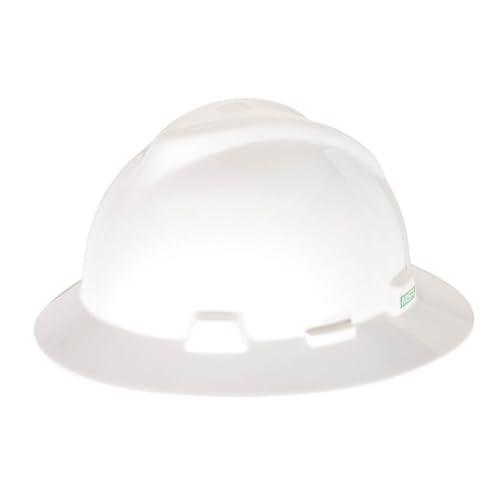 MSA V-Gard Full-Brim, Fas-Trac IIIThe American default, and the ratchet suspension is why: one-handed adjustment that holds where you set it. | One hat for general site work | 9.6 | |
| 2 | 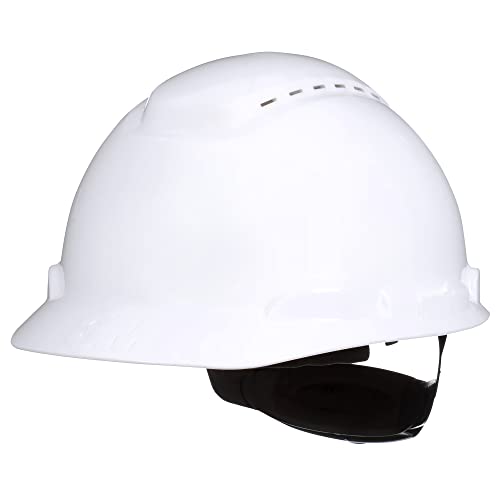 3M SecureFit H-700 Vented Cap StyleThe coolest hat here, with a UV sensor on the brim that tells you when the shell is done. | Hot outdoor work with no electrical hazard | 9.5 | |
| 3 | 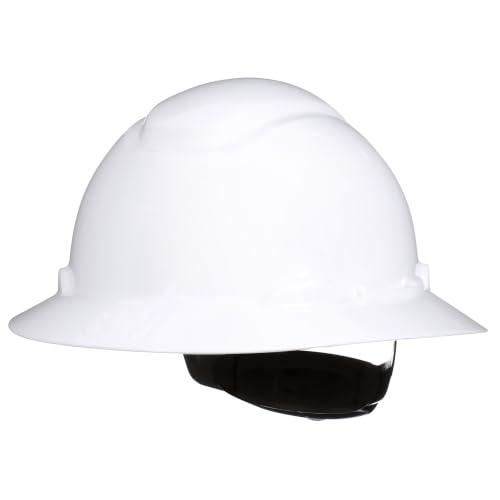 3M SecureFit H-700 Non-Vented Full BrimThe same suspension and UV sensor in a solid full-brim shell - the version to buy if electrical class matters. | Full-brim coverage with a solid shell | 9.5 | |
| 4 | 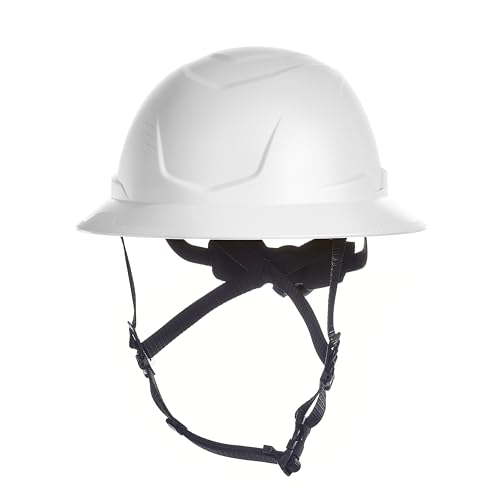 MSA V-Gard H2 Full Brim Type II HelmetA Type II helmet rather than a hard hat: rated for lateral impact, with retention that keeps it on your head. | Work at height and around moving plant | 9.4 | |
| 5 | 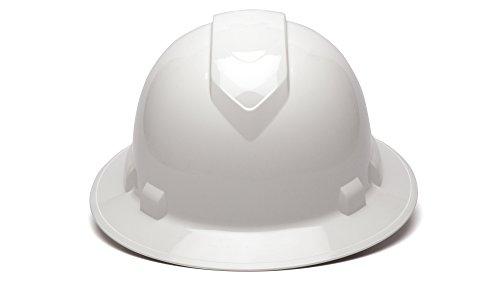 Pyramex Ridgeline Full Brim, 4-Point RatchetA real 4-point ratchet full brim for roughly half the price of the name brands. | Kitting out a crew on a budget | 9.4 |
#ad Prices pulled from Amazon and stamped as of November 14, 2026; they change, and we show no number we cannot verify. How we are funded.
Top pick · One hat for general site work
MSA V-Gard Full-Brim, Fas-Trac III
The American default, and the ratchet suspension is why: one-handed adjustment that holds where you set it.
#ad Price as of November 14, 2026. How we are funded
- Our score
- 9.6/10
Category-defining
If you buy one hard hat without a special requirement, buy this one. The V-Gard has been on American sites for decades and the reason is the Fas-Trac III suspension rather than the shell: a 4-point ratchet you can adjust one-handed with gloves on, that does not creep loose over a shift the way pin-lock webbing does. The full brim is the other half of the argument - it sheds rain and sun off the back of your neck and ears, not just your face, which on an exposed slab in July is the difference between wearing it and carrying it.
Two things to plan for. It is Type I, so it is rated for a blow from directly above and not from the side; if you work at height or around moving plant, the Type II helmet further down this page is the honest upgrade. And a full brim catches on scaffold tube and in tight overhead spaces, which is exactly when people take a hat off. The suspension is a replaceable part and a cheap one - swap it yearly rather than stretching it, and the shell outlives the webbing several times over.
Specs that matter
- Type:
- Type I (top impact)
- Shell:
- Polyethylene, full brim
- Suspension:
- Fas-Trac III 4-point ratchet
- Standard:
- ANSI Z89.1 — read the class from the shell stamp
Rubric profile
Raw per-criterion marks out of 10, before weighting — this is the shape of the pick, not its published score. A low mark is a scope limit, not a fault: how we score.
- Comfort
- 8.4
- Adjustment
- 9.2
- Coverage
- 8.8
- Durability
- 8.6
- Value
- 8.8
Why we picked it
- Full brim sheds rain and sun off the back of the neck, not just the face
- Fas-Trac III ratchet is the benchmark for one-handed adjustment
- Replacement suspensions are cheap and available, so the shell outlives the webbing
Good to know: Replace the suspension yearly and the shell on the maker's schedule or after any impact — the hat is a consumable even when it looks fine.
Coolest to wear · Hot outdoor work with no electrical hazard
3M SecureFit H-700 Vented Cap Style
The coolest hat here, with a UV sensor on the brim that tells you when the shell is done.
#ad Price as of November 14, 2026. How we are funded
- Our score
- 9.5/10
Category-defining
Heat is the single most common reason a hard hat ends up on a tailgate instead of a head, and vents genuinely fix it. The SecureFit H-700 vented cap moves air across the top of your head in a way a solid shell cannot, and 3M pairs it with a pressure-diffusion ratchet that spreads load over a wider area of the skull than plain webbing. The quiet standout feature is the Uvicator sensor on the brim: a small disc that changes color as the shell accumulates UV exposure, replacing the usual guesswork about when polyethylene has degraded enough to retire.
The thing to be unambiguous about: vented means Class C, which means no electrical protection at all. The vents are holes in the shell, and a shell with holes cannot be tested to 2,200 or 20,000 volts. That is not a defect, it is the trade - but it makes this the wrong hat for anyone working near energized conductors, and the non-vented full brim below is the version to buy instead. A cap brim also gives you nothing behind the ears, so in sustained sun a full brim wins on comfort even though it is warmer.
Specs that matter
- Style:
- Cap style, vented
- Suspension:
- 4-point pressure-diffusion ratchet
- Feature:
- Uvicator sensor shows accumulated UV exposure
- Electrical:
- Vented shells carry no electrical class
Rubric profile
Raw per-criterion marks out of 10, before weighting — this is the shape of the pick, not its published score. A low mark is a scope limit, not a fault: how we score.
- Comfort
- 9.2
- Adjustment
- 8.8
- Coverage
- 7.0
- Durability
- 8.4
- Value
- 8.6
Why we picked it
- Vents make a real difference on a hot roof or yard
- The Uvicator sensor replaces guesswork about when to retire the shell
- Cap style clears scaffold and overhead obstructions a full brim catches on
Good to know: Vented means no electrical protection, by design. If you work anywhere near energized conductors, buy the non-vented version instead.
Best solid shell · Full-brim coverage with a solid shell
3M SecureFit H-700 Non-Vented Full Brim
The same suspension and UV sensor in a solid full-brim shell - the version to buy if electrical class matters.
#ad Price as of November 14, 2026. How we are funded
- Our score
- 9.5/10
Category-defining
This is the SecureFit for people who cannot use vents. A solid shell is the starting point for any electrical class rating, and combining it with a full brim and the pressure-diffusion ratchet gives you the most complete package 3M makes in this line: sun and rain coverage all the way round, load spread across the head rather than concentrated on four webbing points, and the Uvicator sensor still telling you how much life the shell has left. For utility, electrical and industrial work where a Class E or G hat is specified, this is a strong default.
It is warmer than the vented version and there is no way around that - you are trading airflow for a continuous shell, which is the whole point. The full brim catches in tight overhead work the same way the MSA does. And it costs more than a plain budget full brim for the same impact type, so the money is buying the suspension and the sensor rather than more protection. Confirm the class stamped inside the shell against what your site specifies before you rely on it; the stamp is authoritative and a listing title is not.
Specs that matter
- Style:
- Full brim, non-vented
- Suspension:
- 4-point pressure-diffusion ratchet
- Feature:
- Uvicator UV exposure sensor
- Standard:
- ANSI Z89.1 — read the class from the shell stamp
Rubric profile
Raw per-criterion marks out of 10, before weighting — this is the shape of the pick, not its published score. A low mark is a scope limit, not a fault: how we score.
- Comfort
- 8.2
- Adjustment
- 8.8
- Coverage
- 8.8
- Durability
- 8.6
- Value
- 8.2
Why we picked it
- A solid shell is the starting point for any electrical class rating
- Pressure-diffusion suspension spreads load better than plain webbing
- Full brim plus a UV sensor is an unusual and genuinely useful combination
Good to know: Confirm the class stamped inside the shell against what your site specifies — Class E, G and C are different protections and only the stamp is authoritative.
Most protection · Work at height and around moving plant
MSA V-Gard H2 Full Brim Type II Helmet
A Type II helmet rather than a hard hat: rated for lateral impact, with retention that keeps it on your head.
#ad Price as of November 14, 2026. How we are funded
- Our score
- 9.4/10
Outstanding
A conventional hard hat is rated for something falling on you. It is not rated for you falling, or for a swing, a strike from a load, or a trip into steel - all of which arrive from the side. That gap is what Type II closes, and the V-Gard H2 is MSA's answer: a helmet-style shell tested for lateral as well as top impact, with a retention system so it is still on your head when the impact happens. A suspension alone will not do that, which is why a hard hat on a site with a fall hazard is frequently found on the floor next to the person who needed it.
This is the most expensive hat on the page by a wide margin - roughly three times a Type I - and it is heavier, with a chin strap that takes a week to stop noticing. It is also non-vented and fully enclosed, so it runs warm. Buy it because your work has a lateral hazard, not because it is the newest thing: on a flat indoor site with overhead work above you, a Type I hat is still the correct and compliant tool. Where it earns its money is height, steel, and anywhere plant moves near people.
Specs that matter
- Type:
- Type II (top and lateral impact)
- Style:
- Full brim, non-vented
- Build:
- Helmet-style with retention
- Standard:
- ANSI Z89.1 Type II per the listing
Rubric profile
Raw per-criterion marks out of 10, before weighting — this is the shape of the pick, not its published score. A low mark is a scope limit, not a fault: how we score.
- Comfort
- 7.6
- Adjustment
- 8.6
- Coverage
- 9.4
- Durability
- 8.8
- Value
- 7.6
Why we picked it
- Lateral protection is the gap a conventional hard hat leaves open
- Retention keeps it on your head in a fall or a trip, which a suspension alone does not
- The direction the whole industry is moving, especially on larger sites
Good to know: Type II is about sideways impact, not better impact: if you work at height or around moving plant it is worth the money, and on a flat indoor site a Type I is still compliant.
Best value · Kitting out a crew on a budget
Pyramex Ridgeline Full Brim, 4-Point Ratchet
A real 4-point ratchet full brim for roughly half the price of the name brands.
#ad Price as of November 14, 2026. How we are funded
- Our score
- 9.4/10
Outstanding
At the bottom of this market the usual compromise is a 2-point pin-lock suspension, which is the part that makes a cheap hard hat miserable: you set it once, it slips, and you cannot fix it one-handed. The Ridgeline keeps a 4-point ratchet at a price well under the MSA, in an HDPE full-brim shell. For a crew kit, a jobsite spare box, or anyone who loses hats faster than they wear them out, that is the right set of priorities - and because it is cheap, you actually replace it on schedule instead of stretching a shell past its date.
The webbing is thinner than the Fas-Trac and there are fewer replacement parts and accessories in the ecosystem, so treat the whole hat as the consumable rather than the suspension. The one thing to watch when ordering: Ridgeline ships in both vented and solid shells that photograph almost identically, and the vented ones are Class C with no electrical protection. If you need a class, confirm which variant you are buying and check the stamp when it arrives.
Specs that matter
- Shell:
- HDPE, full brim
- Suspension:
- 4-point ratchet
- Standard:
- ANSI Z89.1 — read the type and class from the shell stamp
- Price band:
- Lowest here
Rubric profile
Raw per-criterion marks out of 10, before weighting — this is the shape of the pick, not its published score. A low mark is a scope limit, not a fault: how we score.
- Comfort
- 7.8
- Adjustment
- 8.4
- Coverage
- 8.6
- Durability
- 7.6
- Value
- 9.2
Why we picked it
- A 4-point ratchet at a price where 2-point pin-lock is still common
- Full brim coverage for about half what the name brands charge
- Cheap enough to replace on schedule rather than stretching the life
Good to know: Ridgeline comes in both vented and solid shells that photograph identically — confirm which one you are ordering if you need an electrical class.
The five at a glance
| If your day is | Buy | Because |
|---|---|---|
| General site work, one hat | MSA V-Gard Full-Brim | Best-in-class ratchet plus full sun and rain coverage |
| Hot outdoor work, no electrical hazard | 3M SecureFit H-700 Vented Cap | Real airflow, plus a UV sensor that tells you when to retire it |
| Needing coverage and a solid shell | 3M SecureFit H-700 Non-Vented Full Brim | Solid shell is the prerequisite for any electrical class |
| Work at height or near moving plant | MSA V-Gard H2 Type II | Lateral impact rating and retention that keeps it on |
| Kitting out a crew | Pyramex Ridgeline Full Brim | A 4-point ratchet at a price where 2-point is the norm |
Suspensions: the part that decides whether you wear it
Protection is set by the shell and the standard. Whether the hat is still on your head at 2pm is set by the suspension, and this is where the price difference between a good hat and a cheap one actually lives. A 4-point ratchet spreads load across four contact points and adjusts one-handed with a dial at the back, which you can do with gloves on and without taking the hat off. A 2-point pin-lock uses two points and a series of holes, which means adjusting it is a two-handed, hat-off operation and it drifts loose as the webbing relaxes.
Suspensions are also replaceable parts with their own replacement interval, usually around twelve months of regular use, and they are cheap. Replacing webbing yearly on a shell that is still within date is both the manufacturer's guidance and the single cheapest comfort upgrade available in this category. Check that replacement suspensions for your model are actually stocked before you commit a whole crew to it - this is one place the budget brands are genuinely thinner.
Accessories, and what they do to your rating
Hard hats are a platform now - ear muffs, face shields, headlamps and visors all clip to the brim or the accessory slots. Two cautions. First, use attachments designed for your specific hat: slot geometry varies and a forced fit can stress the shell. Second, adhesive stickers and paint are not neutral. Solvents in some paints and adhesives attack polyethylene and can compromise the shell without any visible sign. Most manufacturers permit limited sticker use away from the crown and prohibit paint outright; the maker's guidance for your model is the one to follow.
What we would skip
Skip a vented hat if there is any electrical exposure in your week, however hot it gets - that is the one trade on this page with a genuinely serious failure mode. Skip a Type II helmet if your hazard is purely overhead and your budget is finite; the money is better spent on a good Type I plus a spare. Skip any hat sold without a legible ANSI Z89.1 marking, whatever the listing claims. And skip stretching a shell past its replacement date to save twenty dollars, which is the most common and least defensible economy in this entire category.
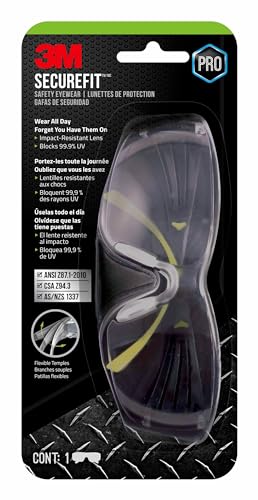
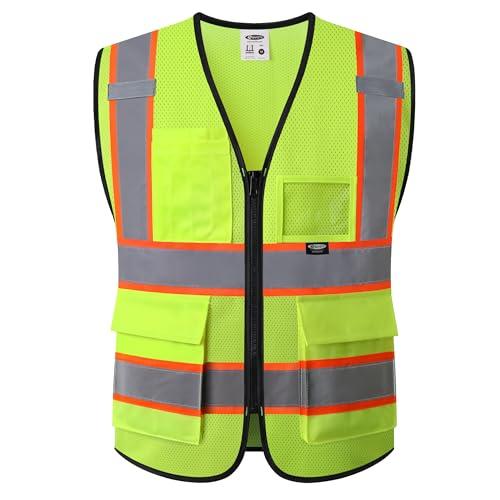
If you are building the rest of the kit, safety glasses and hi-vis jackets and vests cover the other two standards worth knowing, and the PPE hub decodes all three in one place.
Frequently asked
What is the best hard hat?
The MSA V-Gard full brim for most buyers - a Fas-Trac III 4-point ratchet that adjusts one-handed and holds, under a full brim that sheds sun and rain off your neck as well as your face. If heat is your main problem and you have no electrical exposure, the vented 3M SecureFit is more comfortable.
What is the difference between Type I and Type II hard hats?
Type I is rated under ANSI Z89.1 for impact to the top of the head. Type II adds lateral impact from the side, front or back, and usually includes a chin strap so the helmet stays on during a fall or trip. Type II is increasingly specified for work at height and around moving plant.
Are vented hard hats Class C?
Yes. Vents are openings in the shell, and a shell with openings cannot pass the dielectric test, so every vented hard hat is Class C with no electrical protection. They are still rated for impact. If you work near energized conductors you need a solid, non-vented shell.
How often should a hard hat be replaced?
Follow the manufacturer's published intervals for the shell and the suspension separately - suspensions are commonly replaced around annually and shells on a longer cycle. Replace any hat immediately after a real impact, whatever it looks like. UV degradation is the invisible one: some 3M models carry a sensor on the brim specifically to show accumulated exposure.
Can you put stickers on a hard hat?
Most manufacturers allow limited stickers away from the crown and prohibit paint, because solvents in some paints and adhesives attack the polyethylene shell and can weaken it with no visible sign. Follow the guidance for your specific model rather than a general rule.
Does OSHA require a specific hard hat class?
OSHA requires head protection meeting a recognized standard where a hazard exists - 1910.135 for general industry and 1926.100 for construction - and requires protection against electrical shock where that hazard is present. The class required comes from your site's hazard assessment, not from OSHA naming a product.
Is a more expensive hard hat safer?
Not for impact. Two hats with the same Z89.1 type and class offer the same rated protection whatever they cost. What money buys is the suspension - a 4-point ratchet instead of 2-point pin-lock - plus comfort, accessory support and replacement-part availability. Those decide whether you keep it on, which is its own kind of safety.
Our recommendation
If you read nothing else on this page, these are the two to look at — the one we would buy, and the one to take instead if its trade-off suits you better.
Top pick · One hat for general site work
MSA V-Gard Full-Brim, Fas-Trac III
The American default, and the ratchet suspension is why: one-handed adjustment that holds where you set it.
#ad Price as of November 14, 2026. How we are funded
Runner-up · Hot outdoor work with no electrical hazard
3M SecureFit H-700 Vented Cap Style
The coolest hat here, with a UV sensor on the brim that tells you when the shell is done.
#ad Price as of November 14, 2026. How we are funded
Prices are read live from Amazon and stamped with the date. How we pick.
Sources
Back to Head, Eye & Hi-Vis PPE, or see how we pick. Spotted something wrong? We publish corrections — see our editorial policy.