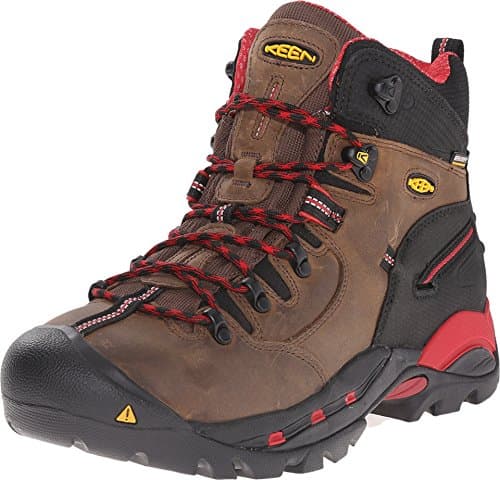
Best insoles for flat feet
Best Insoles for Work Boots with Flat Feet
Rigid feels wrong for about ten days, then it feels right. Soft feels right immediately and never works.
Flat feet - a low or collapsed arch, usually with overpronation - is the condition where insole shopping goes most reliably wrong, because the product that feels best in the shop is the product that will not help. A soft insole molds to your collapsed arch and feels supportive; it offers no resistance to the collapse. A rigid insole feels hard and slightly intrusive; it is the one that changes how your foot loads.
What a support insole is actually doing
Pronation is the normal inward roll of the foot through a step - it is how your foot absorbs shock. Overpronation is that roll going further and lasting longer than it should, because the arch is low and the supporting structures do not resist it. The effects travel up the chain: the lower leg rotates inward, which changes loading at the knee and hip.
A rigid or semi-rigid insole works mechanically: the shell under the arch physically does not compress, so the arch cannot flatten as far, and the deep heel cup limits the heel rolling inward. It is not cushioning your foot; it is holding it in a different position. That is why it feels unfamiliar and why it works. The same reasoning drives the boot choice at boots for flat feet.
Quick picks
Ranked by our published scoring rubric. Tap any row for the full write-up.
| # | Product | Best for | Score | Price |
|---|---|---|---|---|
| 1 | 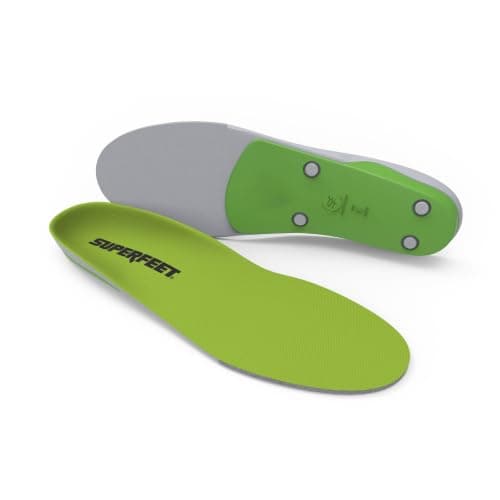 Superfeet All-Purpose High Arch Support InsolesA rigid stabilizer cap - structure rather than cushion, which is what a flat foot needs. | Genuine arch collapse | 8.8 | |
| 2 | 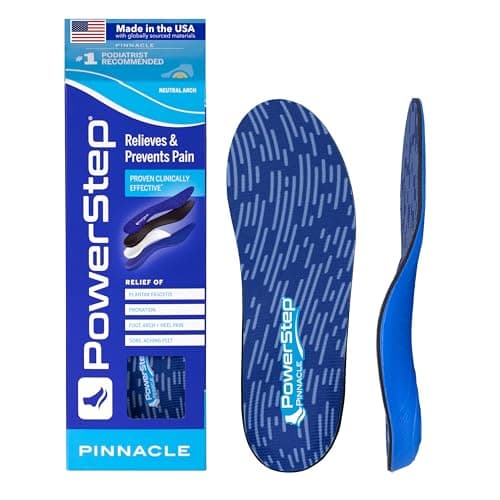 PowerStep Pinnacle Orthotic InsolesSemi-rigid with a cushioned top layer - support you can adapt to in days rather than weeks. | Most people, as a starting point | 8.6 | |
| 3 | 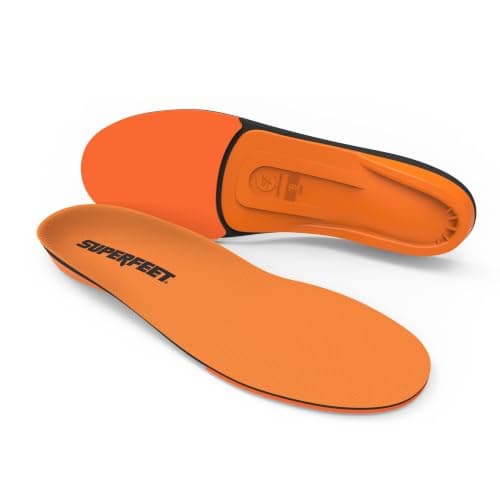 Superfeet All-Purpose High Impact Support InsolesThe rigid shell with more forefoot foam - support plus the cushioning concrete demands. | Flat feet plus hard-floor fatigue | 8.6 |
#ad Prices pulled from Amazon and stamped as of October 6, 2026; they change, and we show no number we cannot verify. How we are funded.
Top pick · Genuine arch collapse
Superfeet All-Purpose High Arch Support Insoles
A rigid stabilizer cap - structure rather than cushion, which is what a flat foot needs.
This is a structural device, not a comfort product, and it is important to understand that before buying. The rigid cap under the arch and the deep heel cup physically resist the inward roll and arch flattening that define overpronation. It will feel hard and slightly strange for the first week or two.
It holds its shape for a year or more of daily wear, which no foam insole does. High volume, so it needs a roomy boot - and if your boots are snug, read the fit warning below before ordering.
Specs that matter
- Type:
- Rigid stabilizer cap
- Arch:
- High arch profile
- Volume:
- High — needs a roomy boot
- Cushioning:
- Minimal by design
Our scoring
- Motion control
- 9.4
- Heel control
- 9.2
- Longevity
- 9.4
- Comfort now
- 6.0
- Value
- 7.6
What works
- Structural support is what actually helps a collapsing arch
- Shell keeps its shape for a year or more of daily wear
- Heel cup genuinely controls heel movement
What to know
- Not a cushion — people expecting softness are disappointed
- Takes up real volume; a snug boot will become too tight
- Needs a one-to-two week adaptation period
No. 2 · Most people, as a starting point
PowerStep Pinnacle Orthotic Insoles
Semi-rigid with a cushioned top layer - support you can adapt to in days rather than weeks.
The sensible first purchase for most people with flat feet. A semi-rigid shell provides real motion control while a dual-layer cushion on top takes the edge off, which means the adaptation period is days rather than a fortnight and people actually keep wearing it.
It fits a wider range of boots than full Superfeet because the volume is lower. Less support than a fully rigid shell for severe collapse, and the top cover wears through before the shell does.
Specs that matter
- Type:
- Semi-rigid shell plus dual-layer cushion
- Arch:
- Neutral to moderate
- Volume:
- Moderate
- Made in:
- USA
Our scoring
- Motion control
- 8.2
- Heel control
- 8.4
- Longevity
- 8.0
- Comfort now
- 8.4
- Value
- 8.6
What works
- Support and cushioning balanced, so adaptation is easy
- Fits a wider range of boots than Superfeet
- Most commonly recommended for heel pain by podiatry sources
What to know
- Less support than a full rigid shell for severe arch collapse
- Top cover wears through before the shell does
- Needs trimming to fit
No. 3 · Flat feet plus hard-floor fatigue
Superfeet All-Purpose High Impact Support Insoles
The rigid shell with more forefoot foam - support plus the cushioning concrete demands.
If you have flat feet and stand on concrete, you have two problems at once, and this addresses both: the same rigid stabilizer cap plus high-density foam through the forefoot.
It is the highest-volume insole on this page, which is the main constraint - many boots simply cannot take it once the factory footbed is out. Expensive, and still firmer than most people expect.
Specs that matter
- Type:
- Rigid cap plus high-density foam
- Arch:
- High arch profile
- Volume:
- High
- Cushioning:
- Moderate, forefoot focused
Our scoring
- Motion control
- 9.0
- Heel control
- 9.0
- Longevity
- 9.2
- Comfort now
- 7.0
- Value
- 7.4
What works
- Support plus cushioning rather than one or the other
- Extra forefoot foam helps on concrete and from ladder impact
- Same durable shell as the high-arch model
What to know
- Highest-volume insole here — many boots cannot take it
- Expensive
- Still firmer than most people expect
The adaptation period, which nobody mentions at the till
This is the most useful practical point here. A rigid insole changes the position your foot has held for years, and the surrounding tissues need time to adjust. For the first week it commonly feels hard, oddly high under the arch, and sometimes produces mild aching in new places. People conclude the insole is wrong, take it out, and go back to soft foam.
- Days 1-3: wear them two to three hours a day, not a full shift.
- Days 4-7: build up to half a day.
- Week 2: full shifts, by which point the strangeness has usually gone.
- If sharp pain appears at any point, stop - that is different from unfamiliarity, and it is worth getting your feet assessed.
Do not do what most people do and go straight into a twelve-hour shift on day one. That is the single most common reason a perfectly appropriate insole gets abandoned.
Volume: the constraint that decides what you can buy
Rigid insoles are thick, especially through the arch and heel. Pull the factory footbed out first - always - and if the boot is then tight across the instep, you need a lower-volume insole rather than a bigger boot. Going up a boot size to fit an insole creates a length problem that a safety toe will punish with bruised toenails.
Flat feet also frequently come with a wider forefoot, since a collapsed arch spreads the foot. If that is you, the boot needs to solve width and volume together, which narrows the field considerably: boots for wide feet covers the brands that manage it.
What we would skip
Skip gel and soft foam insoles - they are the wrong mechanism for this problem entirely. Skip stacking an insole on the factory footbed. Skip going straight to full shifts in a new rigid insole. And skip the "arch support" label on a soft product: what matters is whether the arch area actually resists compression when you press it with your thumb. Insole types explained covers how to tell.
Frequently asked
What insoles are best for flat feet in work boots?
Rigid or semi-rigid support insoles with a deep heel cup - the term to look for is motion control. A rigid stabilizer shell for genuine arch collapse, or a semi-rigid shell with a cushioned top layer as an easier starting point. Soft gel insoles do not help this problem.
Why do my new arch support insoles feel uncomfortable?
Because they are holding your foot in a position it has not held for years, and the surrounding tissues need to adapt. Expect one to two weeks: two to three hours a day at first, building to full shifts. Sharp pain is different from unfamiliarity and is worth getting assessed.
Should insoles for flat feet be hard or soft?
Hard, or at least firm. A soft insole molds to your collapsed arch and offers no resistance to it collapsing further; a rigid shell physically does not compress, which is what limits the arch flattening. Comfort in the shop is a poor predictor of what helps.
Will arch support insoles fit in my work boots?
Only if there is room. Rigid insoles are high volume, so remove the factory footbed first - and if the boot is then tight across the instep, choose a lower-volume insole rather than sizing the boot up, which creates a length problem a safety toe will punish.
Sources
Back to Insoles & Work Socks, or see how we pick. Spotted something wrong? We publish corrections — see our editorial policy.