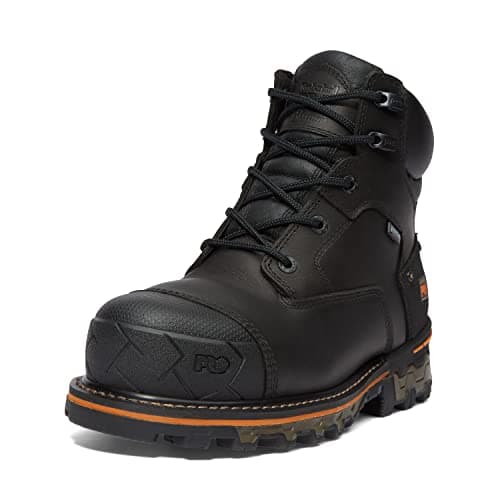
Best for construction
Best Work Boots for Construction
Safety-toe boots that handle mixed ground, rubble and long days without picking one job to be good at.
Top pick: Timberland PRO Boondock 6" Composite Toe Waterproof
$169.95$230.00· Amazon32 shortlists · live Amazon prices
Thirty-two shortlists, sorted by the job you actually do rather than by brand. Start with your trade or your complaint.
Best for concrete
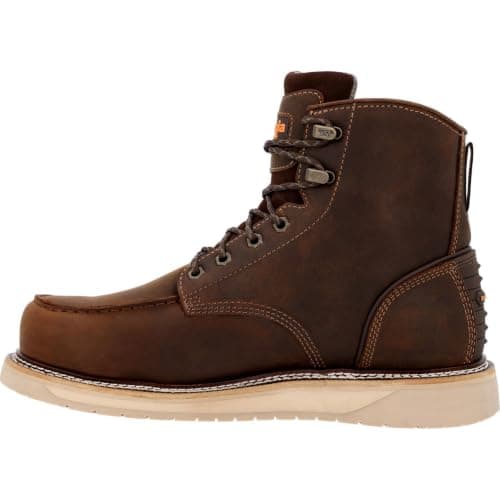
Georgia Boot AMP LT Wedge Waterproof Composite Toe
#ad Price as of October 6, 2026. How we are funded
Best for construction
Safety-toe boots that handle mixed ground, rubble and long days without picking one job to be good at.
Top pick: Timberland PRO Boondock 6" Composite Toe Waterproof
$169.95$230.00· Amazon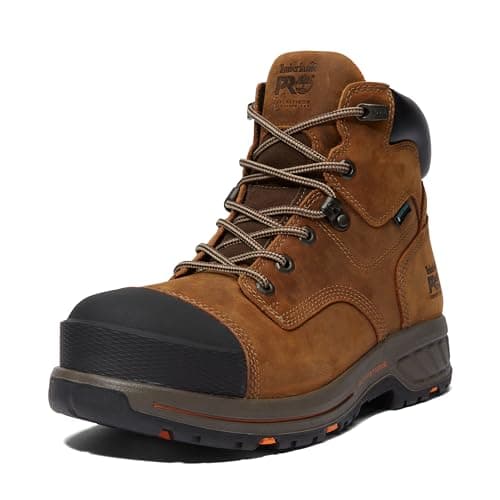
Best for electricians
EH-rated, non-metallic boots for electrical work - plus an honest explanation of what an EH rating does and does not do.
Top pick: Timberland PRO Helix HD 6" Composite Toe Waterproof
$157.84· Amazon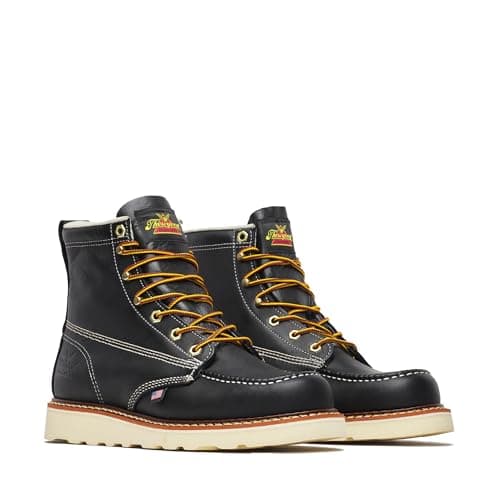
Best for roofing
Boots judged on grip on a sloped, hot, gritty surface - where a flat contact patch beats an aggressive lug.
Top pick: Thorogood American Heritage 6" Moc Toe
$264.95· Amazon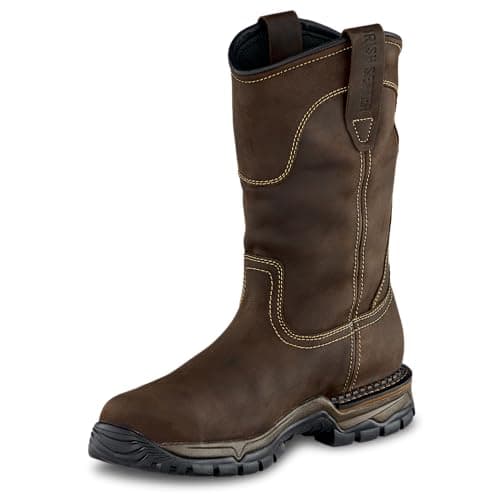
Best for welding
Pull-on and high-shaft boots that keep molten spatter out - where laces and gussets are the failure points.
Top pick: Irish Setter Two Harbors 11" Steel Toe
$229.95· Amazon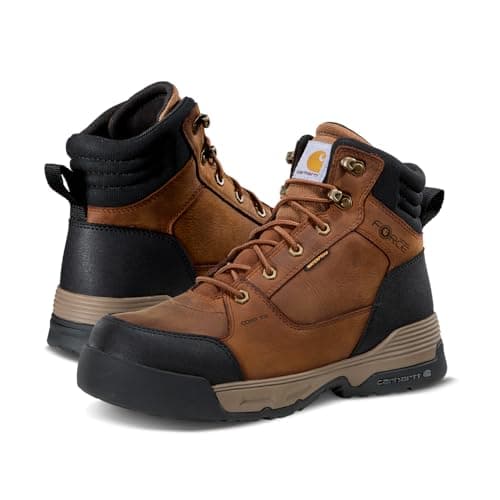
Best for mechanics
Oil-resistant, slip-resistant boots for shop floors - where solvents and hydraulic fluid kill ordinary soles.
Top pick: Carhartt Force HD 6" Composite Toe Waterproof
$159.99· Amazon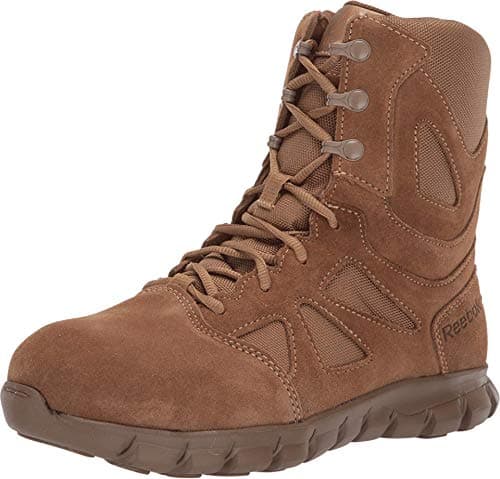
Best for warehouse work
Light, cushioned, slip-resistant boots for high-mileage days on sealed concrete floors.
Top pick: Reebok Work Sublite Cushion 8" Safety Toe Side-Zip
$154.95· AmazonBest for plumbers
Genuinely waterproof, non-marking boots with grip on wet tile - for service work in customers' homes.
Top pick: Timberland PRO Helix HD 6" Composite Toe Waterproof
$157.84· AmazonBest for carpenters
Boots with underfoot nail protection and non-marking soles - for framing through to finish carpentry.
Top pick: Thorogood American Heritage 6" Moc Toe
$264.95· Amazon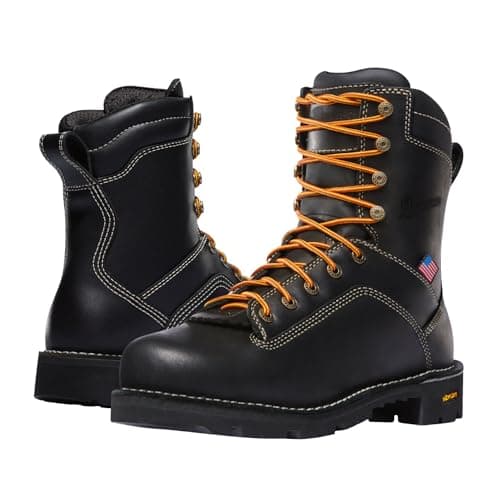
Best for linemen
High-shaft, defined-heel boots that work with pole climbers - plus EH-rated options for bucket and ground work.
Top pick: Danner Quarry 8" Waterproof Alloy Toe
$329.95· Amazon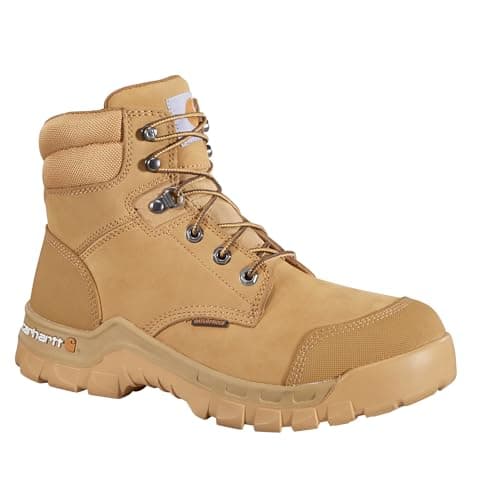
Best for HVAC techs
Versatile boots for techs who go from a 140-degree attic to a rooftop unit to a finished hallway in one call.
Top pick: Carhartt Rugged Flex 6" Composite Toe Waterproof
$134.99$179.99· AmazonBest for landscaping
Boots for wet grass, mud and mower work - where getting water out matters as much as keeping it out.
Top pick: Timberland PRO Boondock 6" Composite Toe Waterproof
$169.95$230.00· Amazon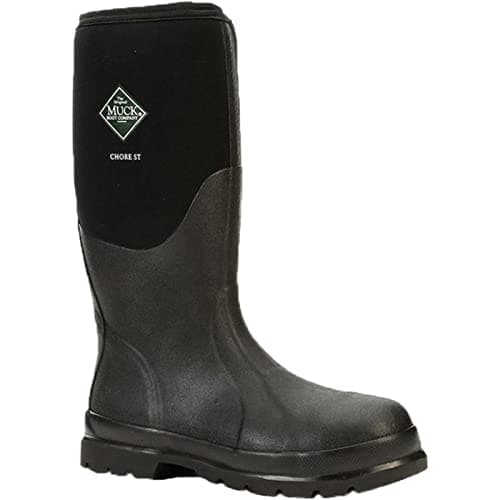
Best for farming
Pull-on and rubber boots for farm and ranch work - chemical resistance, calf fit and getting them off at the door.
Top pick: Muck Boot Chore Classic Tall Steel Toe
$108.75$155.00· Amazon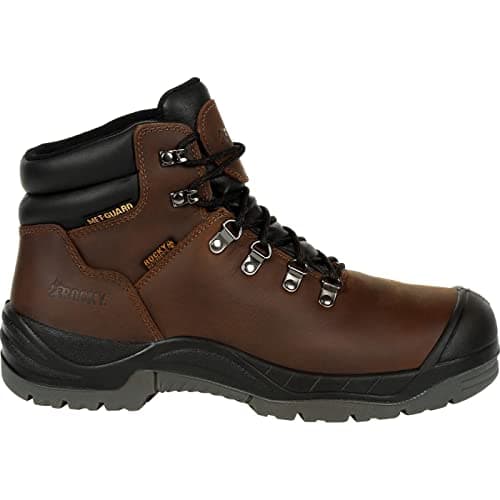
Best for oilfield
Metatarsal-rated, oil-resistant boots for rig and pipeline work - where site rules often set the spec for you.
Top pick: Rocky Worksmart Composite Toe Internal Met Guard
$89.00· AmazonBest for concrete
Cushioned, load-spreading boots for people who stand nearly still on a slab for nine hours.
Top pick: Georgia Boot AMP LT Wedge Waterproof Composite Toe
$195.00· Amazon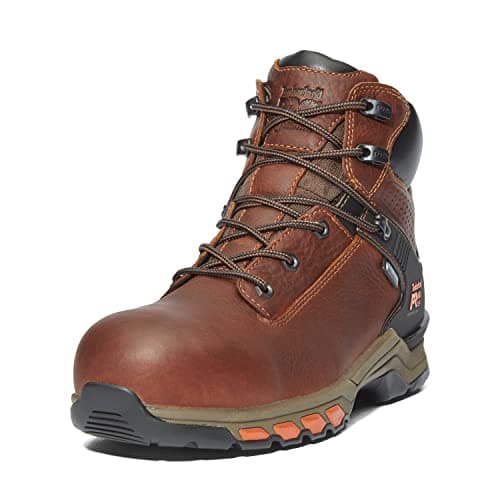
Best for all-day standing
Light, cushioned boots with room for feet that swell - for twelve-hour days of standing and walking.
Top pick: Timberland PRO Hypercharge 6" Composite Toe Waterproof
$169.95· Amazon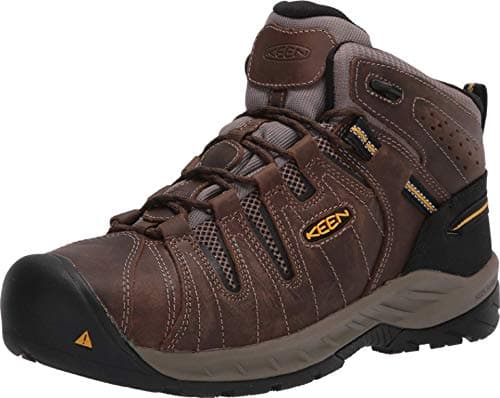
Best for hot weather
Unlined, breathable boots for genuine heat - where a membrane traps sweat and creates its own problems.
Top pick: KEEN Utility Flint II Mid Steel Toe
$155.00· Amazon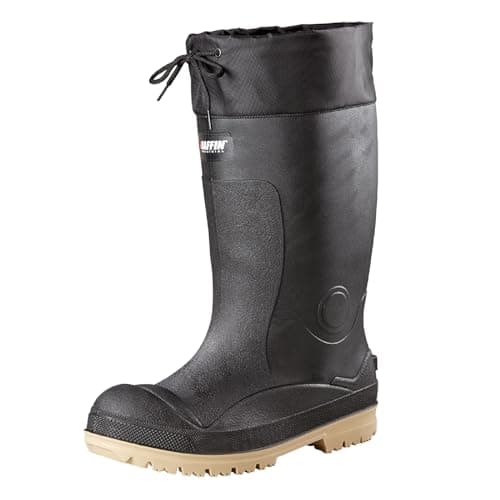
Best for winter
Insulated boots judged on what actually keeps you warm across a week - liner removability and fit room.
Top pick: Baffin Titan Waterproof Steel Toe & Plate Slip-On
$196.82· AmazonBest waterproof boots
Membrane-lined and rubber waterproof boots, with a clear line between what each one actually handles.
Top pick: Danner Quarry 8" Waterproof Alloy Toe
$329.95· Amazon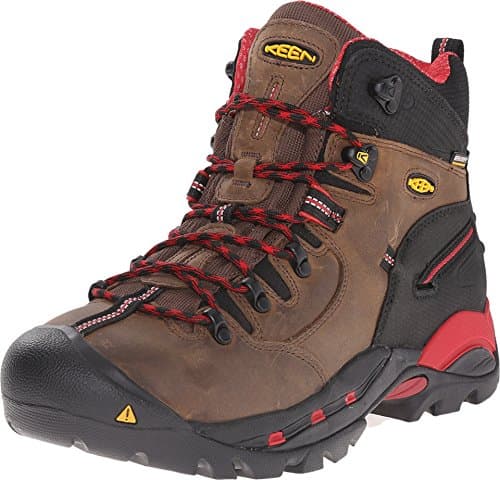
Best for plantar fasciitis
Supportive, structured boots for heel pain - where arch control matters far more than soft foam.
Top pick: KEEN Utility Pittsburgh 6" Steel Toe Waterproof
$199.95$209.95· AmazonBest for flat feet
Motion-control boots for flat feet and overpronation - stable platforms with room for a rigid insole.
Top pick: KEEN Utility Pittsburgh 6" Steel Toe Waterproof
$199.95$209.95· AmazonBest for wide feet
Boots built on genuinely wide lasts - not just roomy D widths - for forefeet that other boots punish.
Top pick: KEEN Utility Pittsburgh 6" Steel Toe Waterproof
$199.95$209.95· AmazonBest for sweaty feet
Unlined, breathable boots plus the sock-and-rotation routine that actually controls foot sweat.
Top pick: KEEN Utility Flint II Mid Steel Toe
$155.00· AmazonBest for back pain
Supportive, cushioned, level boots for people whose back hurts after a day of standing.
Top pick: Georgia Boot AMP LT Wedge Waterproof Composite Toe
$195.00· Amazon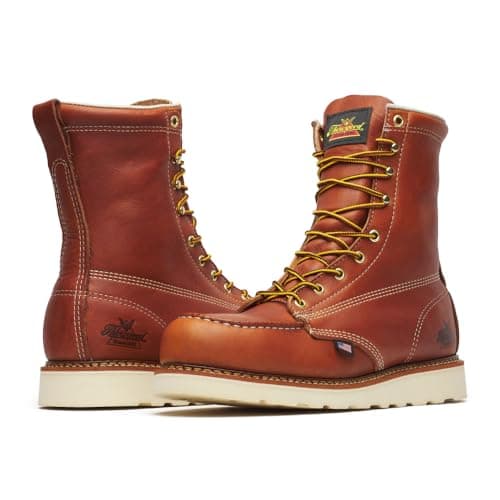
Best steel toe boots
Steel-toe boots across price points, with an honest account of where composite beats steel.
Top pick: Thorogood American Heritage 8" Steel Toe
$284.95· AmazonBest composite toe boots
Non-metallic safety boots - lighter and warmer than steel at the identical ASTM rating.
Top pick: Timberland PRO Helix HD 6" Composite Toe Waterproof
$157.84· AmazonBest met guard boots
ASTM Mt-rated boots that protect the metatarsals - with internal guards you will actually keep wearing.
Top pick: Rocky Worksmart Composite Toe Internal Met Guard
$89.00· AmazonBest EH-rated boots
EH-rated, non-metallic boots - with a clear statement of what the rating protects against and what it does not.
Top pick: Timberland PRO Helix HD 6" Composite Toe Waterproof
$157.84· Amazon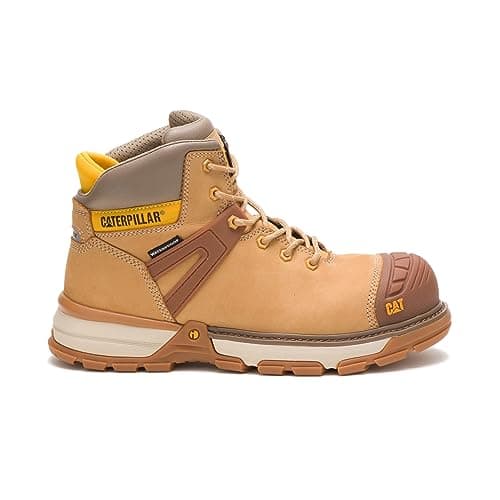
Best lightweight boots
Light safety boots that keep the ASTM rating - and an honest account of what gets left out.
Top pick: Caterpillar Excavator Superlite Waterproof Composite Toe
$119.00· Amazon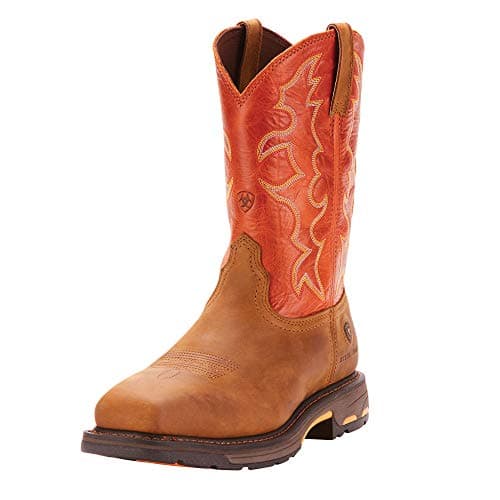
Best pull-on boots
Wellington and Chelsea pull-ons for welding, farming and oilfield - plus how to get the fit right first time.
Top pick: Ariat WorkHog Wide Square Toe Steel Toe
$229.95· Amazon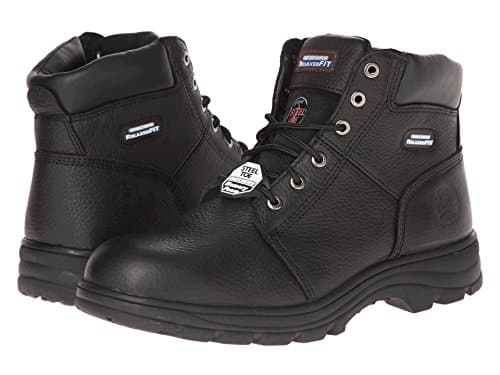
Best under $100
Honest budget picks under $100, with the specific compromise each one makes stated plainly.
Top pick: Skechers Work Workshire Relaxed Fit Steel Toe
$73.66· AmazonBest under $150
The best-value band in work footwear, where waterproofing and composite toes stop being premium features.
Top pick: Timberland PRO Boondock 6" Composite Toe Waterproof
$169.95$230.00· Amazon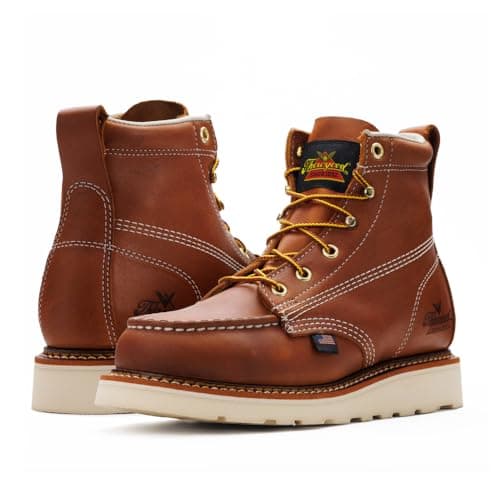
Best women's work boots
Work boots built on genuine women's lasts - not resized men's patterns - across safety specs.
Top pick: Thorogood American Heritage 6" Women's Moc Toe
$264.95· Amazon
Almost every bad work boot purchase comes from shopping the wrong axis. People search for the best work boot, get a list of ten boots that are each the best at something different, and buy the one with the nicest photograph. Three weeks later their heel hurts, or the sole is slick on a wet rung, or the steel toe has rubbed a toenail black. None of that is a quality problem. It is a matching problem.
So this hub is organized the way the decision actually works. First the trade, because the trade sets the hazards and therefore the minimum safety spec. Then the ground and the weather, because standing still on a concrete slab destroys a different boot than walking broken ground does. Then your feet, because a wide forefoot or a collapsing arch overrules almost every other preference. Then the spec itself, for when a site rule or a budget decides for you.
A safety spec is not a nice-to-have you can shop around. If you work near energized circuits you need an electrical hazard rating and ideally no metal in the boot at all, which is why boots for electricians and electrical hazard boots are separate shortlists from everything else. If you weld, the hazard is falling spatter and the answer is height, a pull-on shaft and no exposed laces, which is what boots for welding is about. Roofers need grip on a slope and usually a wedge or a specific tread rather than a deep lug, so boots for roofing reads nothing like the construction list.
Where a trade has no special hazard beyond the obvious, the list collapses to durability and comfort, and that is genuinely easier. Construction, carpenters, warehouse work and HVAC all sit in that band. Read choosing boots by trade if you want the whole mapping in one table.
This is the axis people skip and it is the one that causes the most pain. Standing nearly still on a concrete slab for nine hours is a fatigue problem, not an impact problem: the ground never gives, so your foot absorbs everything, and the fix is cushioning plus a flat load-spreading sole. That is the entire argument of boots for standing on concrete and boots for standing all day, and it is why a stiff, aggressive mountain-style boot is the wrong tool there even though it is a better boot in the abstract.
Weather splits the same way. A waterproof membrane keeps water out and heat in, which is a straight trade: see waterproof work boots against hot weather boots. In genuine cold the thing that matters most is not the insulation rating but whether the liner comes out to dry overnight, which is the point we make at length in winter work boots.
If you have a wide forefoot, a high arch, flat feet or plantar fasciitis, that fact beats every other consideration on this page, because a boot that does not fit cannot be fixed by features. Wide feet is about finding brands that build genuinely wide lasts rather than roomy D-widths. Plantar fasciitis and flat feet are about structure under the arch, and both of those decisions continue inside the boot: see insoles for work boots and insoles for flat feet, because the right insole in an adequate boot beats the wrong insole in a great one.
One more under-discussed one: a safety toe cap is a hard ceiling over your toes, so if your boots are even slightly short the cap is what your toenails hit. That is the single most common cause of the black-toenail complaint, and it is a sizing problem rather than a boot problem. Work boot fit and sizing explains how to check it in the shop.
Safety-toe boots sold in the US are tested against ASTM F2413, and the marking inside the tongue tells you exactly what the boot is rated for - impact, compression, metatarsal, electrical hazard, puncture resistance. Nobody reads it, and it answers most of the questions people ask in forums. We decode it line by line in ASTM F2413 safety ratings explained.
The toe-material question is the one people argue about most. Steel is cheapest and thinnest, composite is non-metallic and warmer in winter, alloy splits the difference at a price. All three can meet the same impact rating, so this is a weight, temperature and metal-detector decision rather than a safety one: composite toe vs steel toe lays it out. Shortlists by spec: steel toe, composite toe, metatarsal guard, lightweight and pull-on.
We do not run a wear-test lab and we never claim to. What we do is read the published manufacturer specs, check them against the actual standards (ASTM F2413 for footwear, ANSI/ISEA 105 for gloves), aggregate verified owner feedback at volume, and then score each boot against the specific job the page is about using the rubric on our methodology page. Every price on the site comes from a live Amazon lookup and is stamped with its date; if we cannot verify a current price we say so rather than printing an old one.
Judge it by the midsole and outsole, not the upper. Once the outsole tread is worn smooth at the heel strike or the boot no longer feels supportive underfoot, the protection is gone even though the leather looks fine. For a full-time trade that is commonly somewhere between six and eighteen months depending on surface and mileage. Our guide on how long work boots last breaks it down by usage band.
The cap itself is not the problem; a cap in a boot that is too short is. Because the toe box is rigid, your toes cannot push past it the way they can in a soft shoe, so any shortness in length shows up as bruised nails. Size for length first, then check that your toes have room with the laces snug.
Only if you are actually in water. A waterproof membrane also traps heat and sweat, so in dry or hot conditions it makes the boot worse, not better. Treated leather handles rain and puddles; membranes are for standing in wet, and rubber boots are for standing in it all day.
Electrical hazard rated under ASTM F2413. It means the sole and heel passed a dielectric test and provide secondary protection against accidental contact with live circuits in dry conditions. It is a backup, not insulation - it does not make a boot safe to work energized circuits in, and it stops working once the sole is wet or worn through.
Snug at the heel and instep, roomy at the toes. Your heel should barely lift when you walk, which is what stops blisters, while your toes need space because they swell over a shift. If you have to lace painfully tight to stop heel slip, the boot is too wide or too long for you.