Best rubber boots
Best Rubber Work Boots
A membrane boot keeps water out until it fails. A rubber boot has nothing to fail - which is the whole argument, and also the whole problem.
For most wet work the best rubber boot is the Muck Boot Chore Classic: a steel-toe neoprene-and-rubber pull-on that is waterproof without a membrane to fail and comfortable enough to wear for a full shift. If the water is deeper than mid-calf, take the 18-inch LaCrosse Alphaburly Pro for its height and its adjustable calf gusset. For wet work in genuine cold, the Baffin Titan is the only pick here that combines a removable insulated liner with a steel toe and a puncture plate.
A leather work boot manages water: a membrane blocks liquid while letting some vapor out, treated leather sheds a splash, and a gusseted tongue slows a soaking. Every part of that system has a failure mode - membranes delaminate, stitching wicks, leather wets out. A rubber boot does not manage water at all. It is a sealed vessel with no seams to wick and no membrane to fail, and that is why it remains the right answer in agriculture, concrete, wash-down, utilities and anywhere you are standing in liquid rather than walking through it.
The cost of that is total and non-negotiable: nothing gets out either. The sweat your foot produces - and a foot produces a surprising amount - stays inside. Anyone who tells you a rubber boot breathes is selling you something. The trade-off is set out at length in leather vs rubber work boots; this page is about choosing the rubber boot once you have decided rubber is what the job needs.
Choosing the height
- Ankle to mid-calf (10 to 12 inches). Splash, mud, hosing down, walking wet ground. The most versatile height and the one you can wear comfortably all day. Most steel-toe rubber boots live here.
- 14 to 16 inches. Standing in shallow water, slurry and concrete; working a trench that holds a few inches. The point at which calf fit starts to matter because a loose shaft pistons as you walk.
- 18 inches and up. Standing in water above mid-calf, manure handling, wetland and irrigation work. Heavy, hot and worth it only when the depth demands it.
- Hip waders and above. Not work boots. If you are in water that deep you need purpose-built waders, not a taller boot.
Construction: hand-laid vs molded
Cheap rubber boots are injection-molded in one piece from PVC or a soft rubber compound. They are waterproof on day one and they fail in a predictable place: a crack across the flex crease behind the ball of the foot, usually within a season of daily wear. Better boots are hand-laid - rubber built up in layers over a last, often over a neoprene bootie, then vulcanized - which puts material where the flexing happens and bonds the layers rather than relying on a single thickness.
That is the main thing you are paying for, and it is why a $40 wellington and a $160 rubber boot are not the same product at different prices. The other real difference is the outsole: a cheap boot's sole is the same soft compound as its upper, which wears quickly on concrete, whereas a better boot has a separate harder outsole bonded on. Neither type is resoleable, so when the sole is gone the boot is gone - the repairability picture across all constructions is in Goodyear welt vs direct attach.
Quick picks
Ranked by our published scoring rubric. Tap any row for the full write-up.
| # | Product | Best for | Score | Price |
|---|---|---|---|---|
| 1 | 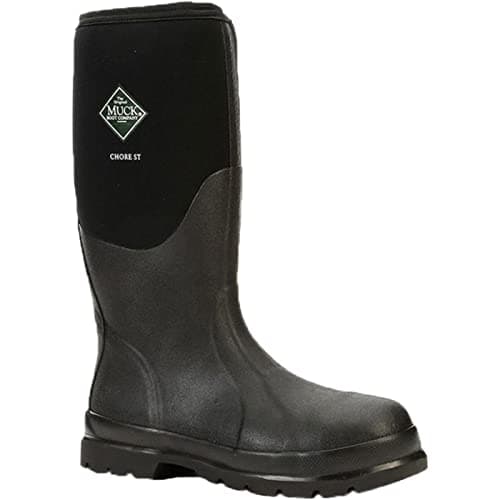 Muck Boot Chore Classic Tall Steel ToeA neoprene-and-rubber pull-on with a steel toe - genuinely waterproof, and comfortable enough to wear all day. | Daily wet work you walk in | 9.6 | |
| 2 | 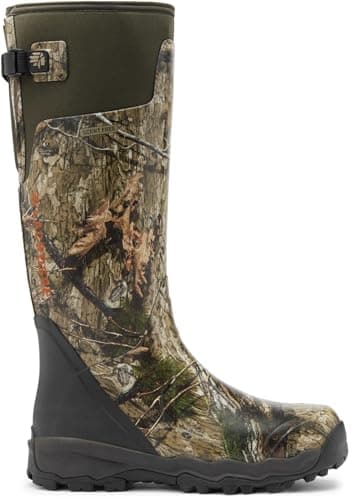 LaCrosse Alphaburly Pro 18" Rubber BootAn 18-inch hand-laid rubber boot with an adjustable gusset - height, and a fit you can actually tune. | Deep water and all-day standing in it | 9.4 | |
| 3 | 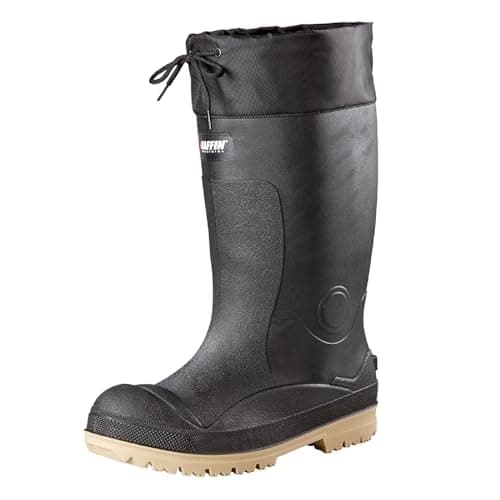 Baffin Titan Waterproof Steel Toe & Plate Slip-OnA rated steel-toe rubber slip-on with a multi-layer removable liner and a steel plate - built for cold wet ground. | Wet work in genuine cold | 9.3 |
#ad Prices pulled from Amazon and stamped as of November 14, 2026; they change, and we show no number we cannot verify. How we are funded.
Top pick · Daily wet work you walk in
Muck Boot Chore Classic Tall Steel Toe
A neoprene-and-rubber pull-on with a steel toe - genuinely waterproof, and comfortable enough to wear all day.
#ad Price as of November 14, 2026. How we are funded
- Our score
- 9.6/10
Category-defining
This is the rubber boot most people should buy, because it solves the problem that makes most rubber boots miserable: fit. A vulcanized rubber shell over a neoprene bootie means the boot flexes with your foot and holds some warmth instead of hanging loose and chafing like a plain wellington. Add a steel toe that satisfies ASTM F2413 and you have one boot that handles a wash-down bay, a dairy parlor, a flooded trench or a concrete pour.
The stretch-fit top is the detail that earns its keep. It seals against the calf well enough that debris and splash do not run down inside, and it still pulls off without a bootjack. For anyone who moves between wet and dry ground repeatedly - which is most wet work - that matters more than absolute height.
The limits here are inherent to the material. Rubber and neoprene do not breathe at all, so your feet will be damp from sweat by the end of a shift whatever the weather; the sole is soft and will wear noticeably faster than a leather boot's outsole on concrete and gravel; and there is no ankle support to speak of, so this is the wrong boot for carrying load over uneven ground.
Specs that matter
- Toe:
- Steel toe, ASTM F2413
- Material:
- Rubber over neoprene
- Waterproof:
- Fully waterproof, not just resistant
- Height:
- Tall shaft
Rubric profile
Raw per-criterion marks out of 10, before weighting — this is the shape of the pick, not its published score. A low mark is a scope limit, not a fault: how we score.
- Waterproofing
- 9.8
- Comfort
- 8.6
- Durability
- 7.8
- Sole life
- 7.0
- Value
- 8.4
Why we picked it
- Genuinely waterproof in a way no membrane boot matches
- Neoprene lining insulates and flexes
- Rinses clean with a hose
Good to know: Rubber does not breathe, so your sock choice matters more than usual here; the outsole wears quickly on abrasive concrete.
Best for deep water · Deep water and all-day standing in it
LaCrosse Alphaburly Pro 18" Rubber Boot
An 18-inch hand-laid rubber boot with an adjustable gusset - height, and a fit you can actually tune.
#ad Price as of November 14, 2026. How we are funded
- Our score
- 9.4/10
Outstanding
When the water is deeper than a mid-calf boot clears, height is not a preference, it is the spec. Eighteen inches of hand-laid rubber over a neoprene liner is what the job needs in flooded excavations, irrigation work, wetland and marsh work, and manure-handling. Hand-laid construction - rubber built up in layers over a last rather than injection-molded - is also why this type of boot resists the splitting that kills cheap wellingtons at the flex point behind the ball of the foot.
The adjustable rear gusset is the reason to pick this over a plain tall wellington. A tall boot that is loose around the calf pistons up and down as you walk, which chafes and makes you tired; being able to cinch it to your actual leg converts the boot from something you tolerate into something you can walk in. The removable liner also means the inside can be pulled out and dried properly overnight, which almost no other rubber boot allows.
It is heavy, it is expensive for a rubber boot, and it has no safety toe, so it fails a site PPE rule outright. Eighteen inches is also genuinely too much boot for general wet work - if you are not standing in water above mid-calf, the Chore is the better daily boot and this is specialist equipment.
Specs that matter
- Toe:
- Soft toe (this model)
- Height:
- 18 inch
- Waterproof:
- Fully waterproof rubber
- Fit:
- Adjustable rear gusset
Rubric profile
Raw per-criterion marks out of 10, before weighting — this is the shape of the pick, not its published score. A low mark is a scope limit, not a fault: how we score.
- Waterproofing
- 9.8
- Comfort
- 7.8
- Durability
- 9.0
- Sole life
- 8.0
- Value
- 7.6
Why we picked it
- Adjustable gusset solves the calf-fit problem that ruins most rubber boots
- 18 inches clears deeper water than a standard wellington
- Insulated versions handle genuine cold
Good to know: No safety toe on this model, and it is heavy for covering distance — buy it for standing in water and mud.
Best for cold · Wet work in genuine cold
Baffin Titan Waterproof Steel Toe & Plate Slip-On
A rated steel-toe rubber slip-on with a multi-layer removable liner and a steel plate - built for cold wet ground.
#ad Price as of November 14, 2026. How we are funded
- Our score
- 9.3/10
Outstanding
Cold plus wet is the combination rubber is uniquely good at, because a leather winter boot soaked through has lost most of its insulation value while a rubber boot's insulation sits dry inside a sealed shell. This one carries a removable multi-layer inner boot rated for serious cold, a steel toe and a steel puncture plate - so it is one of the few rubber boots that satisfies both a temperature problem and a site PPE rule at the same time.
The removable liner is the functional centerpiece. Liners are what get wet from sweat in any insulated boot, and being able to pull them out each night and dry them separately is the difference between a boot that works all winter and one that is cold and damp by January. It also means you can own a second set of liners and never start a shift in a damp boot.
It is the heaviest and bulkiest boot on this page by a clear margin, it is far too warm for anything above freezing, and the slip-on fit is loose through the ankle because it is designed to be worn with a thick liner and heavy socks. Treat it as winter-only equipment; for cold that is dry rather than wet, winter work boots has better options.
Specs that matter
- Toe:
- Steel toe, ASTM F2413
- Underfoot:
- Steel puncture plate
- Liner:
- Removable multi-layer insulation
- Style:
- Slip-on
Rubric profile
Raw per-criterion marks out of 10, before weighting — this is the shape of the pick, not its published score. A low mark is a scope limit, not a fault: how we score.
- Waterproofing
- 9.6
- Comfort
- 7.4
- Durability
- 8.8
- Sole life
- 8.2
- Value
- 7.8
Why we picked it
- Toe, plate and deep insulation in one boot — rare combination
- Removable liner dries overnight
- Built for genuine extreme cold, not just a cold morning
Good to know: Extreme-cold specialist with a steel toe and plate — far too warm above freezing, and heavy by any standard.
The three picks side by side
| If you are | Buy | Because |
|---|---|---|
| In and out of wet all day, walking | Muck Chore Classic Tall | Neoprene fit, steel toe, stretch top, comfortable for a shift |
| Standing in water above mid-calf | LaCrosse Alphaburly Pro 18" | Height, hand-laid rubber, adjustable calf gusset, removable liner |
| On cold wet ground below freezing | Baffin Titan Slip-On | Removable insulated liner plus a steel toe and a puncture plate |
| Mostly dry with occasional rain | A leather boot instead | You do not need rubber - see waterproof work boots |
Managing the sweat problem
- Wear merino or a merino blend, and change socks at lunch. Wool keeps insulating when damp and resists odor in a way synthetics do not. Cotton is the worst possible choice in a rubber boot. Best work socks covers the options.
- Pull the liner or footbed out every single night. A rubber boot cannot dry through its walls, so the only way moisture leaves is through the opening - and that happens far faster with the insides out.
- Dry with moving air, never heat. A boot dryer or a fan. Heat hardens rubber and attacks the adhesive bonding the outsole.
- Rotate two pairs if the work is daily. Rubber needs longer to dry than leather, not less, precisely because the water cannot leave through the material.
- Rinse the outside, including the sole voids. Concrete slurry, manure and fertiliser all degrade rubber compounds faster than water does, and dried slurry in the lug voids is also the grit that will scratch a floor later.
What we would skip
Skip plain molded PVC wellingtons for daily work - they are cheap because they crack at the flex crease, and a boot that fails in four months is not a saving. Skip 18-inch boots as general-purpose footwear; they are heavy, hot and unnecessary unless you are genuinely standing in deep water. Skip insulated rubber boots in anything above freezing, because the insulation cannot vent and you will finish the day in soaked socks. And skip rubber altogether if your work is merely occasionally wet rather than consistently wet - a membrane leather boot is a better daily boot, and waterproof vs water resistant explains what you actually get from one.
Two trades where this choice comes up constantly: concrete and agriculture. If you are placing and finishing concrete, wet cement is caustic and will burn skin through a soaked leather boot, which makes rubber the correct tool rather than merely the convenient one - work boots for concrete covers the standing-on-cured-slab case, which is a different problem. For livestock and field work, work boots for farming sets out the mix most people end up owning.
Frequently asked
What are the best rubber work boots?
The Muck Boot Chore Classic Tall for most wet work - a neoprene-lined rubber pull-on with a steel toe that is comfortable enough to wear for a full shift. For water deeper than mid-calf, the 18-inch LaCrosse Alphaburly Pro, and for wet work below freezing the Baffin Titan with its removable insulated liner.
Are rubber work boots better than leather?
For standing in water, slurry, manure or wet concrete, yes - a rubber boot has no seams to wick and no membrane to fail. For everything else leather is better: it breathes, it supports your ankle, and its outsole lasts longer. Most people doing genuinely wet work own both and choose by the day.
Why do my feet sweat so much in rubber boots?
Because rubber and neoprene do not transmit vapor at all, so the moisture your feet produce has nowhere to go. It is inherent to the material, not a fault with the boot. Merino socks changed at lunch, pulling the liner out every night, and rotating two pairs are the only things that genuinely help.
How long do rubber work boots last?
A good hand-laid boot in daily use typically gives one to three years, and a cheap molded PVC one often cracks at the flex crease within a season. The usual failure points are that crease and the outsole, and because rubber boots are not resoleable, either one ends the boot.
Do rubber work boots come with steel toes?
Some do, but far fewer than in leather. If your site requires ASTM F2413 footwear and the ground is wet, you are choosing from a short list of rated rubber boots - or wearing a waterproof leather boot with a membrane instead. Check for the rating stamped inside the shaft rather than trusting a product title.
Our recommendation
If you read nothing else on this page, these are the two to look at — the one we would buy, and the one to take instead if its trade-off suits you better.
Top pick · Daily wet work you walk in
Muck Boot Chore Classic Tall Steel Toe
A neoprene-and-rubber pull-on with a steel toe - genuinely waterproof, and comfortable enough to wear all day.
#ad Price as of November 14, 2026. How we are funded
Runner-up · Deep water and all-day standing in it
LaCrosse Alphaburly Pro 18" Rubber Boot
An 18-inch hand-laid rubber boot with an adjustable gusset - height, and a fit you can actually tune.
#ad Price as of November 14, 2026. How we are funded
Prices are read live from Amazon and stamped with the date. How we pick.
Sources
Back to Work Boots, or see how we pick. Spotted something wrong? We publish corrections — see our editorial policy.