Best for blisters
Best Work Gloves to Prevent Blisters
Blisters are a friction problem. More padding in a loose glove makes them worse, not better.
Blisters are the most common hand problem in the trades and the one least addressed by glove marketing, which is organized around cut levels and impact ratings. They are also the one most often made worse by the obvious solution: people buy a thicker, more padded glove, the padding makes the glove bulkier and looser, and the extra internal movement produces more blisters than before.
How a blister actually forms
A blister is a separation within the upper layers of skin caused by repeated shear - a surface sliding back and forth against your skin, which tears the layers apart and fluid fills the gap. Two things control it: how much sliding happens, and how fragile your skin is at that moment.
Moisture is the multiplier. Damp skin is considerably more susceptible to shear damage than dry skin, which is why blisters are far more common on hot days and in sealed gloves. So blister prevention has two levers: reduce the sliding, and keep the skin dry.
The fit rules that matter
- Snug, not tight. The glove should move with your hand. Any excess material in the palm will bunch and slide, and that bunching is where blisters appear.
- A secure wrist closure. Without it the glove shifts on your hand with every grip and release.
- No seams across pressure points. Check where the stitching sits relative to the base of your fingers and the heel of your palm - a seamless knit liner avoids the problem entirely.
- Breathable, so skin stays dry. A palm-coated glove with an open knit back is far better than a fully dipped one: see gloves for hot weather.
- Measure, do not guess. Hand circumference around the knuckles, excluding the thumb, against the brand's chart.
Quick picks
Ranked by our published scoring rubric. Tap any row for the full write-up.
| # | Product | Best for | Score | Price |
|---|---|---|---|---|
| 1 | 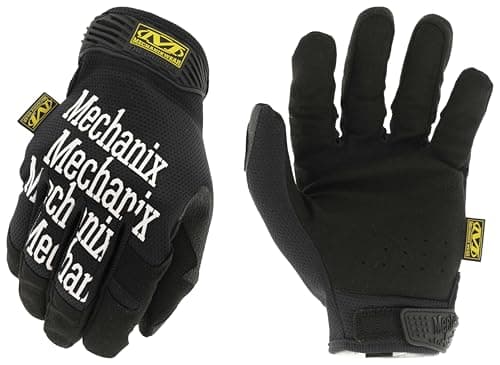 Mechanix Wear The Original Work GlovesClose-fitting with a secure wrist closure - the glove moves with your hand, not against it. | A snug fit with no internal movement | 8.7 | |
| 2 | 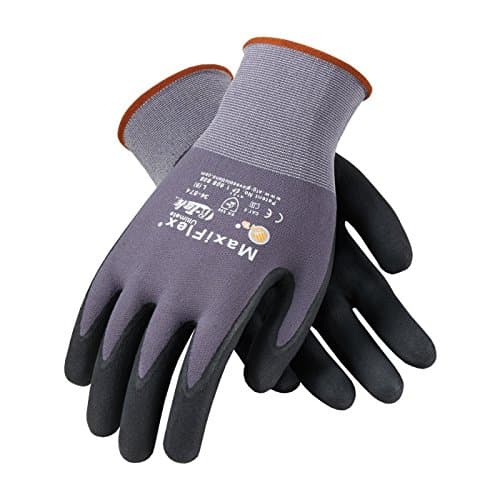 MaxiFlex Ultimate 34-874 Nitrile-Coated GlovesA seamless knit liner, so there is nothing to rub in the first place. | Seamless knit against the skin | 8.9 | |
| 3 | 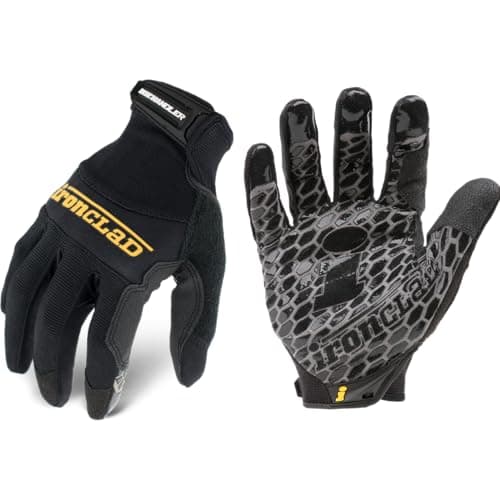 Ironclad Box Handler GlovesA tacky palm reduces the grip force you need, which reduces the friction causing blisters. | Repetitive lifting and handling | 7.9 |
#ad Prices pulled from Amazon and stamped as of October 6, 2026; they change, and we show no number we cannot verify. How we are funded.
Top pick · A snug fit with no internal movement
Mechanix Wear The Original Work Gloves
Close-fitting with a secure wrist closure - the glove moves with your hand, not against it.
Blisters form when a surface slides repeatedly against your skin. In a glove, that surface is the glove's own liner, and the amount of sliding is set almost entirely by how well the glove fits. A snug glove with an adjustable wrist closure has very little internal movement.
Thin single-layer synthetic palm with no seams across the main pressure areas. No protection of any kind, and the palm wears through within weeks of abrasive work - but for blister prevention specifically it is the right shape.
Specs that matter
- Palm:
- Synthetic leather, single layer
- Closure:
- Hook-and-loop wrist
- Cut rating:
- None
- Touchscreen:
- Yes
Our scoring
- Fit security
- 9.0
- Low friction
- 8.6
- Palm seams
- 8.8
- Breathability
- 7.6
- Value
- 8.6
What works
- Best dexterity in the Mechanix line — you can feel a bolt thread
- Machine washable and cheap enough to replace often
- Breathable TrekDry back
What to know
- No impact or cut protection whatsoever
- Thin palm wears out in weeks of abrasive work
- Offers no warmth
No. 2 · Seamless knit against the skin
MaxiFlex Ultimate 34-874 Nitrile-Coated Gloves
A seamless knit liner, so there is nothing to rub in the first place.
A seamless 15-gauge knit liner means no stitched ridges sitting against your palm, which removes the most common hot-spot sources. It also wicks moisture, and damp skin blisters far more readily than dry skin - which is why the breathable knit back matters here too.
Thin and snug, so almost no internal movement. ANSI A1, no padding, and a short lifespan on abrasive work.
Specs that matter
- Coating:
- Micro-foam nitrile, palm and fingers
- Liner:
- 15-gauge seamless knit
- Pack:
- Sold as 12 pairs
- Cut rating:
- ANSI A1 — minimal
Our scoring
- Fit security
- 8.6
- Low friction
- 9.0
- Palm seams
- 9.4
- Breathability
- 9.4
- Value
- 9.4
What works
- Dexterity close to bare hands — you can pick up a washer
- Breathable back, so hands do not swim in sweat
- Buying by the dozen drops the per-pair cost dramatically
What to know
- Almost no cut protection and no impact protection
- Nitrile coating fails within weeks on abrasive work
- Not waterproof and no warmth
No. 3 · Repetitive lifting and handling
Ironclad Box Handler Gloves
A tacky palm reduces the grip force you need, which reduces the friction causing blisters.
A different and clever mechanism. Repetitive handling blisters come from gripping hard enough to stop a load slipping - and if the palm is grippy enough, you simply do not have to squeeze as hard. Less grip force means less shear against your skin.
Padded palm for repetitive strain as well. No cut or impact protection, not for sharp or hot material, and the textured palm clogs with dust.
Specs that matter
- Palm:
- High-grip textured synthetic
- Build:
- Lightweight, padded palm
- Cut rating:
- None
- Care:
- Machine washable
Our scoring
- Fit security
- 7.8
- Low friction
- 8.0
- Palm seams
- 7.6
- Breathability
- 7.0
- Value
- 8.4
What works
- Grip on cardboard and totes is genuinely better than a generic glove
- Light enough for a full shift of handling
- Padded palm reduces repetitive strain
What to know
- No cut or impact protection
- Not for sharp or hot material
- Palm texture clogs with dust
The grip-force insight
Worth separating out because it is non-obvious and genuinely useful. A lot of handling blisters are not caused by the tool or load moving - they are caused by you squeezing hard to stop it moving. Grip force itself creates shear between your skin and the glove.
Which means a glove with a genuinely tacky palm reduces blisters by letting you hold things loosely. The same logic applies to tools: a worn, slick tool handle makes you squeeze harder than a grippy one. If your blisters come from repetitive lifting rather than from one specific task, this is the lever to pull.
Treating one, since you will get them
General first-aid guidance is to leave an intact blister alone where possible - the skin over it is a sterile barrier - and cover it with a protective dressing. If it is large, painful or in a spot that will certainly break, that is worth a conversation with a clinician rather than a pocket knife. Once broken, keep it clean and covered; hands on a jobsite are a poor environment for an open wound, and infection is the real risk rather than the blister itself.
And address the cause rather than re-dressing the same spot every day. A blister in the same place each week is telling you something specific about your glove's fit or a seam's position.
What we would skip
Skip buying a more padded glove to fix blisters - padding adds bulk, bulk adds looseness, and looseness is the cause. Skip gloves without a wrist closure for repetitive work. Skip working through a broken blister without covering it. And skip cotton glove liners, which hold moisture against exactly the skin you are trying to keep dry. If your feet have the same problem, socks for sweaty feet applies the same reasoning.
Frequently asked
How do I stop getting blisters from work gloves?
Fit is the main lever: a snug glove with a secure wrist closure and no seams across your palm pressure points has almost no internal movement to cause friction. Keep the skin dry with a breathable palm-coated glove, and use a grippy palm so you do not have to squeeze as hard.
Do padded gloves prevent blisters?
Often the opposite. Padding adds bulk, bulk makes the glove looser, and a loose glove slides against your skin - which is what causes blisters. A thin, snug, seamless glove usually prevents them far better than a thick padded one.
Why do I get blisters in the same spot every time?
Almost always a seam or a bunching point in the glove sitting over that exact spot, or a specific task concentrating shear there. Look at where the stitching falls relative to the base of your fingers and the heel of your palm, and try a seamless knit liner.
Should I pop a blister from work?
General first-aid guidance is to leave an intact blister alone where you can - the skin over it is a sterile cover - and protect it with a dressing. If it breaks, keep it clean and covered, because a jobsite is a poor environment for an open wound and infection is the real risk.
Sources
Back to Work Gloves, or see how we pick. Spotted something wrong? We publish corrections — see our editorial policy.