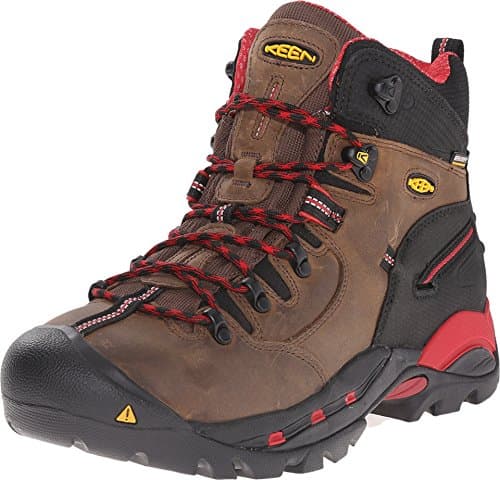
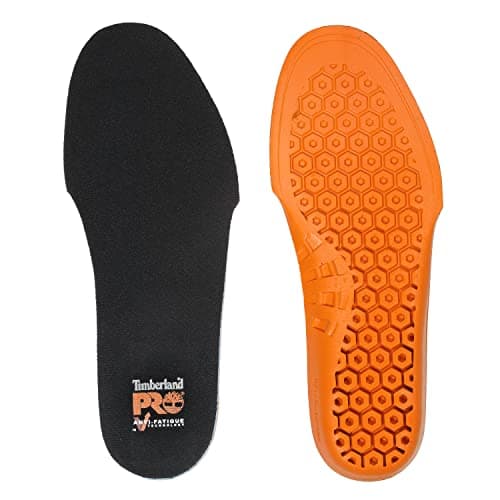
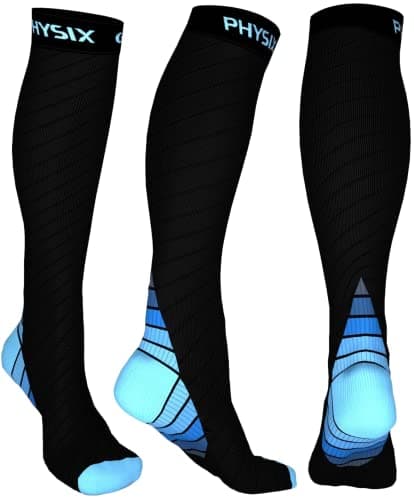
Best for concrete
Best Work Boots for Standing on Concrete All Day
Concrete does not give. That one fact changes which boot is right, and most lists get it backwards.
Standing on a concrete slab all day is the most common foot complaint in the trades and the one most badly served by general boot advice. The usual recommendations - stiff midsoles, aggressive lugs, heavy protective construction - are answers to a different problem. Those features help on broken ground. On a flat, unyielding slab they are either irrelevant or actively counterproductive.
Why concrete specifically is so hard on feet
Every surface you stand on absorbs some of the energy of your body weight. Soil, timber decking, even asphalt flex a little and give some of it back. A cured concrete slab is effectively rigid: it absorbs nothing, so all the load goes into your foot, and all of the shock absorption has to happen in the boot, the insole and your own tissues.
The second factor is static loading. Walking is a cycle - weight moves from heel to toe, muscles pump blood, pressure points keep changing. Standing nearly still does none of that: the same two square inches under the heel and the ball of the foot carry the load for hours, blood pools in the lower leg, and the plantar fascia stays under constant tension. That is why people who walk ten miles a day on concrete often hurt less than people who stand in one place on it, and why boots for standing all day and this page recommend slightly different things.
What actually helps
- A flat sole that spreads load. A wedge contacts the floor across its whole area; a heeled lug concentrates on the heel and forefoot. On flat ground the wedge wins clearly - see wedge sole vs heel.
- A cushioning midsole, not just a soft footbed. The midsole is thicker and does more work. This is where Anti-Fatigue-style constructions earn their keep.
- Low weight. Every ounce is held up by the same muscles for nine hours.
- Room for your feet to swell, because they will, measurably, over a shift. See work boot fit and sizing.
- A real insole, which is the cheapest and biggest lever: insoles for concrete.
Quick picks
Ranked by our published scoring rubric. Tap any row for the full write-up.
| # | Product | Best for | Score | Price |
|---|---|---|---|---|
| 1 | 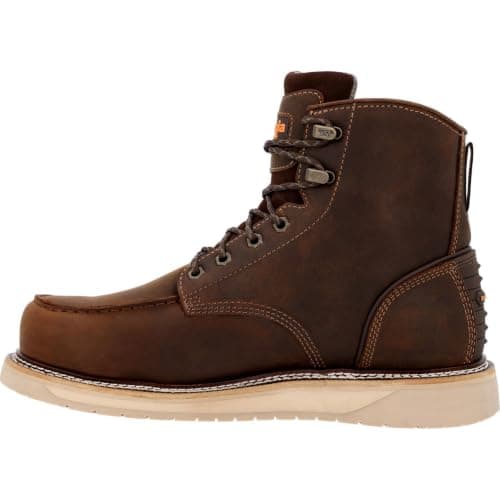 Georgia Boot AMP LT Wedge Waterproof Composite ToeA waterproof composite-toe wedge built specifically for standing, not walking. | All-day standing on a slab | 8.9 | |
| 2 | 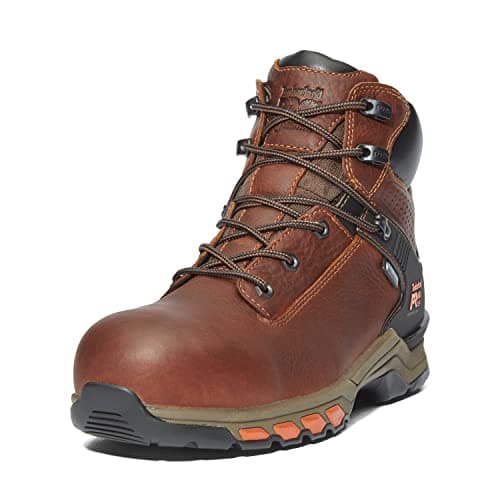 Timberland PRO Hypercharge 6" Composite Toe WaterproofThe Anti-Fatigue midsole is designed for exactly this problem, and it works. | Standing plus walking, mixed shifts | 8.6 | |
| 3 | 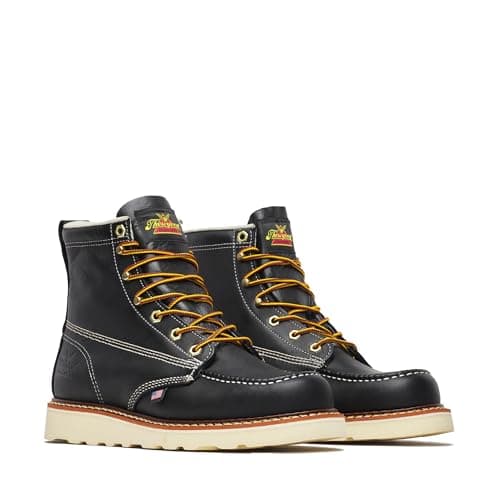 Thorogood American Heritage 6" Moc ToeThe traditional wedge boot, and the one you can have rebuilt instead of replaced. | Shop floors and resoleability | 8.6 | |
| 4 | 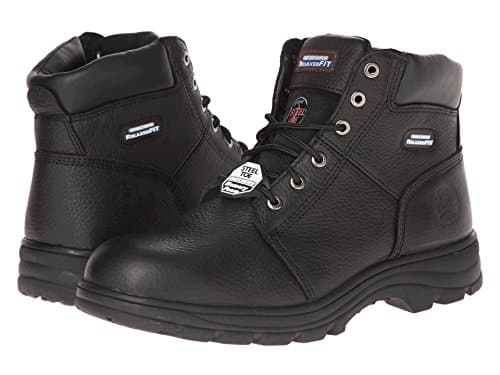 Skechers Work Workshire Relaxed Fit Steel ToeSoft, roomy, EH rated and cheap - with a six-month lifespan to be honest about. | Immediate comfort on a budget | 8.0 |
#ad Prices pulled from Amazon and stamped as of October 6, 2026; they change, and we show no number we cannot verify. How we are funded.
Top pick · All-day standing on a slab
Georgia Boot AMP LT Wedge Waterproof Composite Toe
A waterproof composite-toe wedge built specifically for standing, not walking.
The wedge is the whole argument. A flat wedge sole spreads your weight across the entire footprint, which on an unforgiving surface means lower peak pressure under the heel and the ball of the foot - the two places that hurt after a nine-hour shift. A heeled lug sole concentrates load on those same two points.
The AMP LT pairs that geometry with a light build, a better-than-average stock footbed, a composite toe and a waterproof membrane. For a job that is mostly standing on a flat surface, this is the most complete answer here.
Specs that matter
- Toe:
- Composite toe, ASTM F2413
- Sole:
- Flat wedge
- Waterproof:
- Yes
- Height:
- 6 inch
Our scoring
- Standing cushioning
- 9.2
- Load spreading
- 9.4
- Low weight
- 8.6
- Durability
- 7.8
- Value
- 8.2
What works
- Waterproof, safety-rated wedge is a genuinely uncommon spec
- Light enough to wear on a long standing shift
- Better stock insole than most boots at the price
What to know
- Wedge sole is wrong for ladders and loose ground
- Less durable upper than the heritage brands
- Not resoleable
No. 2 · Standing plus walking, mixed shifts
Timberland PRO Hypercharge 6" Composite Toe Waterproof
The Anti-Fatigue midsole is designed for exactly this problem, and it works.
Timberland PRO's Anti-Fatigue midsole uses a geometric cone structure that compresses and rebounds under the pressure points, and unlike most cushioning marketing it is aimed specifically at static standing rather than at running impact. That is the right target: the concrete problem is not impact, it is sustained load with no relief.
It is also light for a waterproof composite-toe boot, which matters if your shift includes real walking as well as standing. The athletic upper will not outlast thick full-grain leather.
Specs that matter
- Toe:
- Composite toe, ASTM F2413
- Height:
- 6 inch
- Waterproof:
- Yes
- Midsole:
- Anti-Fatigue Technology cushioning
Our scoring
- Standing cushioning
- 9.0
- Load spreading
- 8.2
- Low weight
- 8.8
- Durability
- 7.6
- Value
- 7.8
What works
- Much lighter on the foot than the Boondock at the same protection level
- Anti-Fatigue midsole is a real difference on long standing shifts
- Waterproof without feeling like a rubber boot
What to know
- Athletic-style uppers wear out faster than thick full-grain
- Not resoleable
- Breathes poorly in genuine heat
No. 3 · Shop floors and resoleability
Thorogood American Heritage 6" Moc Toe
The traditional wedge boot, and the one you can have rebuilt instead of replaced.
There is a reason the moc-toe wedge became the standard boot in shops, breweries, kitchens and factories. The flat MAXwear wedge spreads load, does not mark floors and does not pack debris, and the leather molds to your foot over months in a way a synthetic upper never does.
A Goodyear storm welt means the outsole can be replaced when it wears, which in an indoor standing job is the only part that ever wears out. Soft toe, so check your requirement - the 8-inch steel-toe version is the same platform with a cap.
Specs that matter
- Toe:
- Soft toe (no safety rating)
- Height:
- 6 inch
- Sole:
- MAXwear wedge, slip-resisting
- Build:
- Goodyear storm welt, resoleable
Our scoring
- Standing cushioning
- 7.8
- Load spreading
- 9.2
- Low weight
- 7.6
- Durability
- 9.6
- Value
- 8.4
What works
- Welt construction means a cobbler can resole it instead of you rebuying
- Flat wedge does not pack mud and does not scuff finished floors
- Removable footbed, so an aftermarket insole drops straight in
What to know
- Soft toe only — not legal where a safety toe is required
- Wedge sole gives up grip on wet steel and ladder rungs
- Premium price for a boot with no safety rating
Best value · Immediate comfort on a budget
Skechers Work Workshire Relaxed Fit Steel Toe
Soft, roomy, EH rated and cheap - with a six-month lifespan to be honest about.
If your feet hurt now and the budget is small, this is the pragmatic answer. There is essentially no break-in, the relaxed fit suits feet that swell, and it is EH rated, which plenty of boots at twice the price are not.
The soft cushioning that makes it feel good on day one is also what packs out within a few months of full-time standing. Treat it as a six-month boot, replace the insole early, and it is good value rather than a bargain that disappoints.
Specs that matter
- Toe:
- Steel toe, ASTM F2413
- Height:
- 6 inch
- Fit:
- Relaxed fit, roomy
- Electrical hazard:
- EH rated
Our scoring
- Standing cushioning
- 8.4
- Load spreading
- 7.4
- Low weight
- 8.2
- Durability
- 6.2
- Value
- 9.5
What works
- No break-in worth mentioning
- Cheapest EH-rated steel toe we would actually recommend
- Relaxed fit suits wide and swollen feet
What to know
- Soft cushioning packs out within months of daily wear
- Not waterproof
- Upper is the first thing to fail on rough sites
The twenty-five-dollar fix nobody mentions
If you read nothing else here, read this. The insole that came in your boots is thin die-cut foam whose job is to make the boot shippable. It is not a comfort component, and boot makers do not pretend otherwise. Pulling it out and putting in a proper cushioning insole produces a bigger improvement, for most people on concrete, than spending an extra hundred dollars on boots.
Match the type to the symptom, though, because this is where people waste the money. General fatigue and aching is a cushioning problem - a foam or cone-geometry insole. Arch pain, heel pain in the morning, or a collapsing arch is a structural problem, and soft gel will do nothing for it; you need a semi-rigid shell. Insole types explained sets out the difference, and if your symptom is heel pain specifically, go to boots for plantar fasciitis instead of this page.
The other half: socks and compression
A cushioned sock is effectively a second thin insole, and on concrete the padded-sole varieties genuinely help with hot spots - see best work socks. More interestingly, if your complaint is heavy, aching, swollen legs rather than sore feet, that is venous pooling from static standing, and graduated compression socks at 20-30 mmHg are the intervention with real support behind them: compression socks for work.
Two practical habits are free and work: shift your weight deliberately between feet, and use an anti-fatigue mat if your workstation is fixed. Both interrupt the static loading that causes the problem in the first place.
What we would skip
Skip heavy industrial boots with stiff midsoles and deep lugs - all of that is built for broken ground and costs you comfort on a slab. Skip steel shanks you do not need. Skip insulation. And skip the assumption that a more expensive boot will fix sore feet: on concrete, the ranking of what helps is insole first, sole geometry second, weight third, and price a distant fourth.
Frequently asked
What are the best work boots for standing on concrete all day?
Light boots with a flat, load-spreading sole - typically a wedge - and a genuinely cushioning midsole rather than just a soft footbed. Then replace the factory insole, which is the single biggest improvement available for about twenty-five dollars. Avoid stiff, heavy boots with aggressive lug soles; those are built for broken ground.
Why does standing on concrete hurt more than walking?
Walking cycles the load across your foot, pumps blood back up the leg and keeps changing the pressure points. Standing nearly still keeps the same small areas loaded for hours, lets blood pool in the lower leg, and holds the plantar fascia under constant tension. It is a static-load problem, not an impact one.
Are wedge sole boots better for concrete?
On flat surfaces, yes. A wedge contacts the floor across its entire area, which lowers the peak pressure under your heel and forefoot, and it does not mark floors or pack debris. The trade-off is poor performance on ladders and loose ground, where a heeled lug sole is better.
Do insoles really help with concrete floors?
More than any other single purchase. Factory insoles are thin die-cut foam that exist to make the boot shippable. A proper cushioning insole typically helps more than spending another hundred dollars on boots - but match the type to the symptom: cushioning for general fatigue, a semi-rigid support shell for arch or heel pain.
Should I wear compression socks for standing on concrete?
If your complaint is heavy, aching or swollen legs rather than sore feet, graduated 20-30 mmHg compression socks are the intervention with the best evidence behind them. They do not help arch or heel pain, which is an insole problem. Check with a clinician first if you have diabetes or any circulatory condition.
Sources
Back to Work Boots, or see how we pick. Spotted something wrong? We publish corrections — see our editorial policy.