Best heated jackets
Best Heated Work Jackets
The battery platform is the real decision. Zones are mostly a spec-sheet number.
Heated jackets are the most-bought and most-regretted item in this category, for a reason that has nothing to do with heating performance. Most of them work. What determines whether you wear one all winter or leave it in the truck is battery logistics - and that is a decision you make at purchase and cannot change afterwards.
The two platforms
Consumer platforms come with a proprietary battery included. One charger, one battery, works out of the box, and compatible with nothing else you own. If you do not have cordless tools, or run a brand with no heated line, this is the right choice - and you should not buy into a tool platform just to get a jacket.
Tool platforms run on the same batteries as your cordless tools. If you already have M12 or 20V MAX packs on the charger every night, your jacket joins a routine that already exists, you can swap a pack at lunch from the same pool, and you are never caught out. That logistical advantage is worth more in daily use than any difference in heating elements - which is why a tool-platform jacket is the top pick here despite costing more.
Quick picks
Ranked by our published scoring rubric. Tap any row for the full write-up.
| # | Product | Best for | Score | Price |
|---|---|---|---|---|
| 1 | 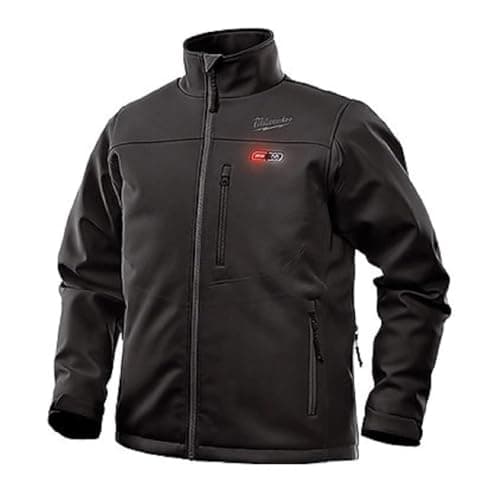 Milwaukee M12 Heated TOUGHSHELL Jacket KitShares batteries with your tools, which is what actually makes a heated jacket usable daily. | Anyone already running M12 | 8.7 | |
| 2 | 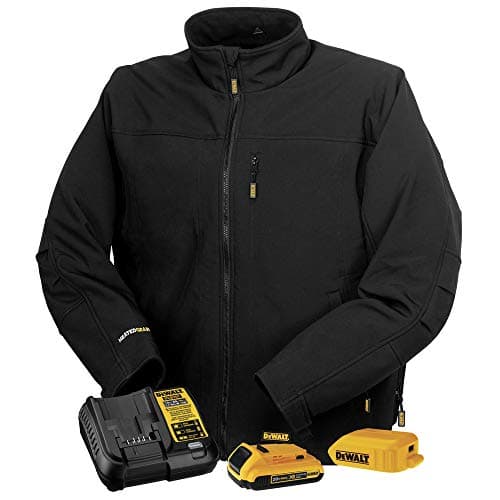 DEWALT Heated Soft Shell Jacket Kit (20V MAX)The tool-platform benefit with the battery and adapter in the box. | 20V MAX users, battery included | 8.3 | |
| 3 | 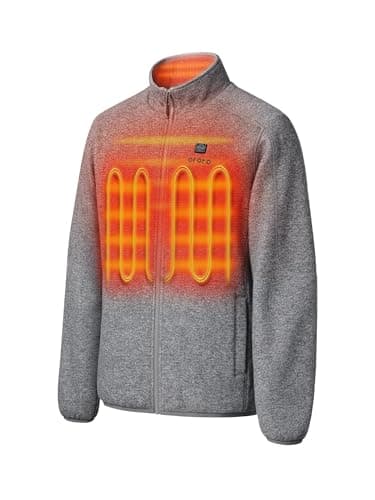 ORORO Men's Heated Fleece Jacket, 4 ZonesThe best consumer option: battery included, four zones, and a collar element. | Not owning a tool platform | 8.2 | |
| 4 | 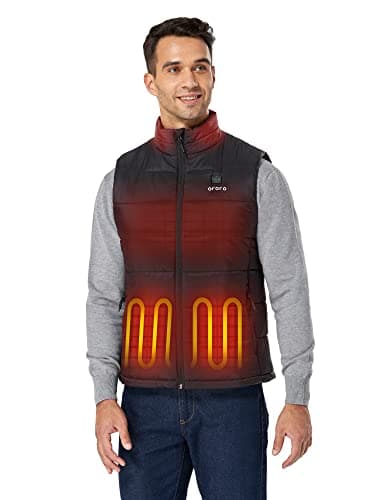 ORORO Men's Lightweight 4-Zone Heated VestNot a jacket - and for most people the better first purchase, for three reasons. | What most people should actually buy first | 8.2 |
#ad Prices pulled from Amazon and stamped as of October 6, 2026; they change, and we show no number we cannot verify. How we are funded.
Top pick · Anyone already running M12
Milwaukee M12 Heated TOUGHSHELL Jacket Kit
Shares batteries with your tools, which is what actually makes a heated jacket usable daily.
The decisive advantage is logistics, not heat. If you already run M12 tools, their batteries are on the charger every night as a matter of routine - so your jacket is never flat, and you can swap a pack mid-shift from the same pool. Consumer jackets with a proprietary battery mean one more thing to remember to charge.
The TOUGHSHELL shell is also a genuine work shell rather than a fleece, so it survives site abrasion. It is the most expensive option here and pointless unless you already own the platform.
Specs that matter
- Battery:
- M12 REDLITHIUM (kit includes one)
- Shell:
- TOUGHSHELL ripstop, wind and water resistant
- Heating zones:
- 3 — chest and back
- Platform:
- Shares batteries with M12 tools
Our scoring
- Battery logistics
- 9.6
- Shell durability
- 9.2
- Heat coverage
- 8.0
- Weight
- 6.8
- Value
- 7.4
What works
- Shares batteries and chargers with your M12 tools — the real advantage
- Shell is a work shell, not a fashion fleece
- Holds up to site abrasion in a way consumer jackets do not
What to know
- Most expensive option here
- Pointless unless you already run M12
- Heavier than a consumer heated jacket
No. 2 · 20V MAX users, battery included
DEWALT Heated Soft Shell Jacket Kit (20V MAX)
The tool-platform benefit with the battery and adapter in the box.
The DEWALT equivalent, with one real advantage over Milwaukee's bare-tool jackets: the kit includes a battery and adapter, so there is no additional purchase to make it work. If you run 20V MAX tools, this is the straightforward choice.
A soft shell is quieter and more flexible than a ripstop and abrades faster. The 20V pack is a noticeably bigger brick in the pocket than an M12, and there is no collar heating zone - the zone people most often say they notice.
Specs that matter
- Battery:
- 20V MAX / 12V, included with adapter
- Shell:
- Soft shell, water and wind resistant
- Heating zones:
- 3
- Platform:
- Shares batteries with DEWALT 20V tools
Our scoring
- Battery logistics
- 9.0
- Shell durability
- 8.0
- Heat coverage
- 7.4
- Weight
- 6.4
- Value
- 8.2
What works
- Battery and adapter included, which Milwaukee's bare jackets are not
- Soft shell is quieter and more flexible than a ripstop
- Works with the 20V packs most sites already have
What to know
- The 20V pack is a brick in the pocket compared with an M12
- Soft shell abrades faster than TOUGHSHELL
- No collar heating zone
No. 3 · Not owning a tool platform
ORORO Men's Heated Fleece Jacket, 4 Zones
The best consumer option: battery included, four zones, and a collar element.
If you do not already own M12 or 20V MAX, do not buy into a platform for a jacket - take the consumer route. This includes its own battery, has four zones including the collar, and costs considerably less than the tool-brand jackets.
The collar element is the one people consistently notice most, which makes the coverage better than the zone count suggests. The fleece shell is not a work shell - it snags and abrades - and the battery is proprietary, so it shares with nothing.
Specs that matter
- Heating zones:
- 4 — chest, back, collar
- Battery:
- Included, proprietary pack
- Shell:
- Fleece, water resistant
- Washable:
- Yes, battery removed
Our scoring
- Battery logistics
- 7.6
- Shell durability
- 6.4
- Heat coverage
- 8.8
- Weight
- 8.4
- Value
- 8.6
What works
- Battery is included, unlike every tool-brand jacket
- Collar heat is the zone people notice most
- Machine washable once the battery is out
What to know
- Proprietary battery — no sharing with your tool platform
- Fleece shell is not a work shell; it snags and abrades
- Run time drops sharply on the highest setting
No. 4 · What most people should actually buy first
ORORO Men's Lightweight 4-Zone Heated Vest
Not a jacket - and for most people the better first purchase, for three reasons.
Included deliberately. A vest layers under the work coat you already own, costs substantially less, leaves your arms completely unrestricted for tool work, and heats your core - which is what drives your body's decision to send blood back to your hands and feet.
USB-C charging means a standard cable and any power bank work, which is a real convenience advantage over proprietary packs. No arm warmth and no weather shell, so it needs an outer layer in wind - see heated vests.
Specs that matter
- Heating zones:
- 4
- Battery:
- USB-C rechargeable, included
- Fit:
- Layerable under a shell
- Weight:
- Lightweight puffer
Our scoring
- Battery logistics
- 8.4
- Shell durability
- 6.0
- Heat coverage
- 7.0
- Weight
- 9.2
- Value
- 9.0
What works
- USB-C charging means a standard cable and power bank work
- Layers under your existing work coat instead of replacing it
- Leaves the arms unrestricted for tool work
What to know
- No arm or hand warmth at all
- Puffer shell punctures on rough material
- Thin enough that it needs an outer layer in wind
Run times, read honestly
Published figures are quoted on the lowest heat setting, which is not how people use these garments in genuine cold. A realistic expectation:
| Setting | Realistic run time | When you would use it |
|---|---|---|
| High | ~2-3 hours | First warm-up, or genuinely severe cold |
| Medium | ~4-6 hours | Sustained use in real cold |
| Low | Close to the advertised figure | Maintenance heat on a mild day |
This is not false advertising so much as the manufacturer answering a different question from the one buyers ask. The practical consequence: if you need heat all day on a high setting, you need a second battery, and that cost belongs in your comparison. The tool-platform jackets have an advantage here too, since you probably already own several packs.
Zones: the number is mostly marketing
Garments advertise heating zones, and the count has become a spec-sheet arms race - you can buy a vest advertising fifteen. What matters is where the elements are, not how many there are, and a fifteen-zone garment is usually subdividing the same area a four-zone garment covers.
Core coverage across the chest and mid-back does most of the useful work. A collar element is the single addition people consistently say they notice, because the back of the neck is a significant heat-loss area. Judge coverage by where the elements run, and treat a high zone count with the same skepticism you would apply to any other inflated number.
When a jacket is the right buy
When you need the heating element and the weather shell together - when your outer layer is what is failing you in wind and wet, not just your core temperature. If your coat is fine and you are simply cold, a heated vest under it is cheaper and less restrictive. If your actual complaint is cold hands or cold feet, a jacket does nothing for either: see heated gloves and heated socks.
What we would skip
Skip buying into a tool battery platform you do not already own. Skip fleece-shelled jackets as your outer layer on an abrasive site. Skip judging garments by zone count. Skip washing with the battery connected or tumble drying, both of which damage the element wiring. And skip heated gear entirely where FR is required.
Frequently asked
How long do heated jacket batteries last?
Manufacturer figures assume the lowest setting. Realistically expect two to three hours on high, four to six on medium, and the advertised number only on low. If you need all-day heat on a high setting, budget for a second battery.
Should I buy a tool-brand or consumer heated jacket?
If you already run M12 or 20V MAX tools, buy that brand's jacket - the batteries are already on your charger every night, which is what makes a heated garment usable daily. If you do not own a tool platform, take a consumer jacket with its own battery rather than buying into a platform for a coat.
Do heating zones matter in a heated jacket?
Where the elements are matters; how many there are mostly does not. A garment advertising fifteen zones is usually subdividing the area a four-zone garment covers. Core coverage across chest and mid-back does the work, and a collar element is the addition people notice most.
Can you wash a heated jacket?
Most are machine washable on a gentle cold cycle with the battery removed, then air dried. Never wash with the battery connected and never tumble dry - heat and tumbling damage the element wiring. A few are hand wash only, so check the garment label.
Can I wear a heated jacket for welding or hot work?
No. Heated garments contain wiring and a lithium battery and are not flame resistant, so they are unsuitable anywhere FR clothing is required or near flame, sparks or molten metal. Use wool layering and certified FR clothing instead.
Sources
Back to Heated Work Gear, or see how we pick. Spotted something wrong? We publish corrections — see our editorial policy.