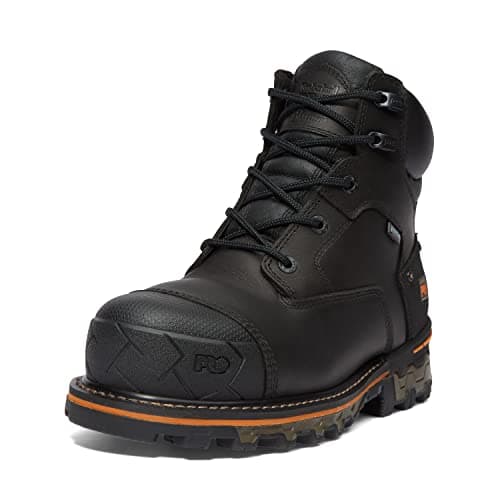
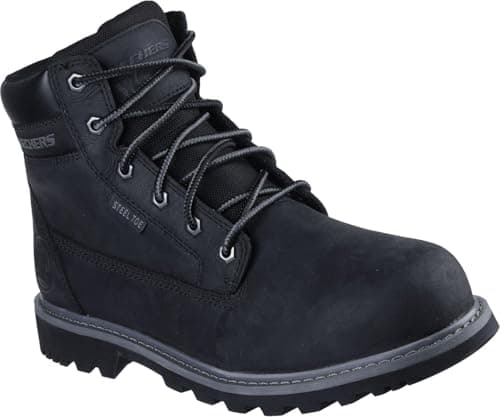
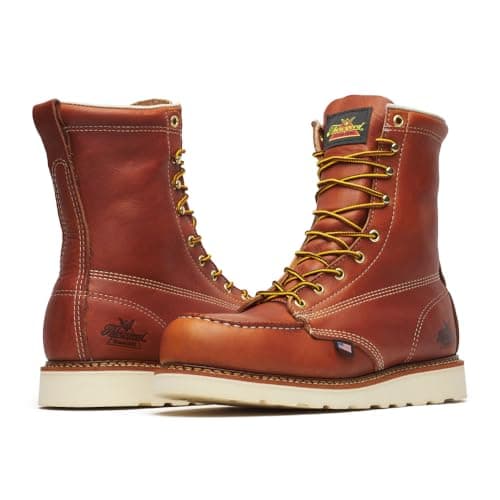
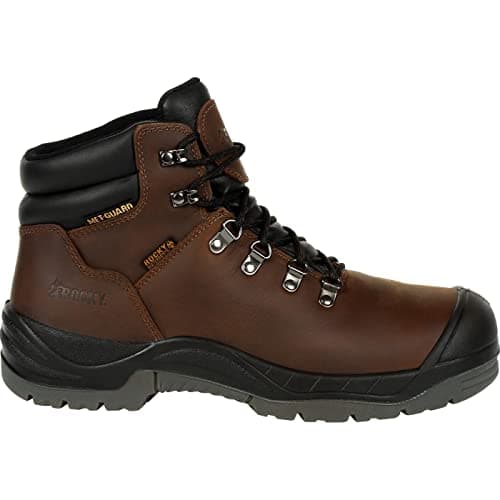
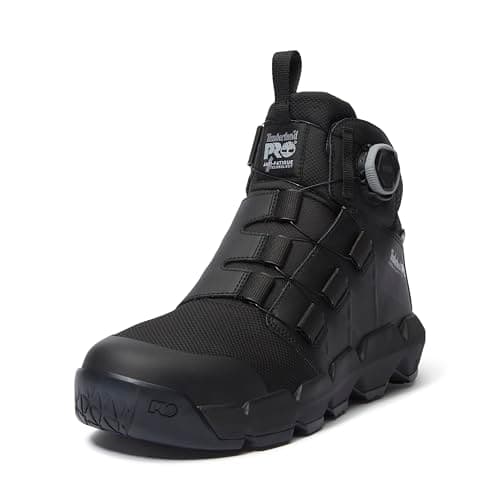
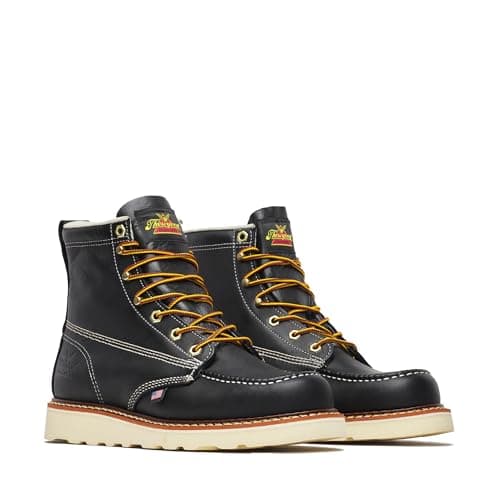
Best under $200
Best Work Boots Under $200
The fifty dollars above $150 does not buy a better everyday boot. It buys a specialist one - a welt you can resole, a guard over your instep, a dial instead of laces.
Two hundred dollars is an awkward number to shop at, because it sits just above the band where work boots stop making compromises and just below the one where they start being heirlooms. The useful way to think about it is this: the step from $100 to $150 buys you the basics - a membrane, a non-metallic cap, a midsole worth standing on. The step from $150 to $200 buys you almost none of that, because you already had it. What it buys instead is a specific capability that the cheaper band does not offer at all, and if you do not need that capability you should not spend the money.
What the extra fifty dollars actually buys
| Feature | Under $150 | Under $200 |
|---|---|---|
| Safety toe rating | Yes - same ASTM rating | Yes - same ASTM rating |
| Waterproof membrane | Normal | Normal |
| Composite / non-metallic toe | Widely available | Widely available |
| Goodyear welt / resoleable | A couple of exceptions | Real options, not just exceptions |
| Metatarsal guard | Rare and usually steel-toe only | Available with a composite toe |
| BOA or dial closure | Essentially absent | Entry models appear |
| Genuine wide fittings (EE+) | Occasionally stocked | Stocked across more models |
| Specialist soling (SD, heat-resistant) | Rare | Available |
Notice what is identical in both columns. The safety toe is the same, because the ASTM F2413 rating is a pass-or-fail threshold rather than a scale - a cap either withstands the specified impact and compression or it does not, and the cheap cap that passes protects your toes exactly as well as the expensive one that passes. The ASTM F2413 guide explains the marking in full. Waterproofing is the same too. If you are shopping at this price because you assume more money means more protection, that assumption is wrong and it will cost you fifty dollars.
Quick picks
Ranked by our published scoring rubric. Tap any row for the full write-up.
| # | Product | Best for | Score | Price |
|---|---|---|---|---|
| 1 | 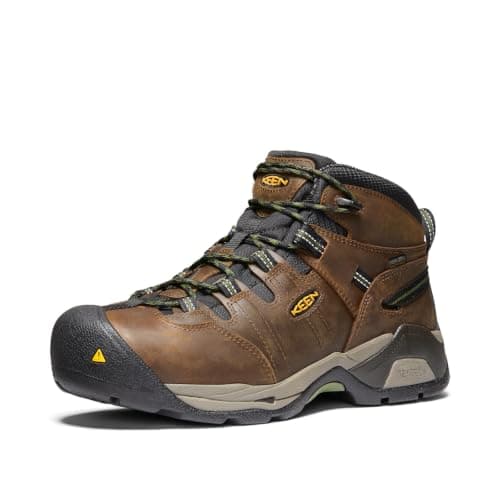 KEEN Utility Detroit XT Mid Steel Toe WaterproofWaterproof steel toe that flexes from the first morning, and it is genuinely stocked in EE rather than a roomy D. | One boot for most trades, in a real wide fitting | 9.5 | |
| 2 | 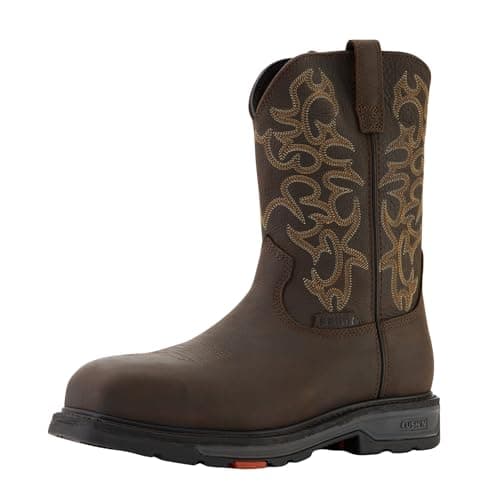 BRUNT Vastbinder Welted 10" Square ToeGoodyear-welted with a nano composite toe - the feature on this page with the biggest effect on what the boot costs you per year. | A boot you can resole, under $200 | 9.4 | |
| 3 | 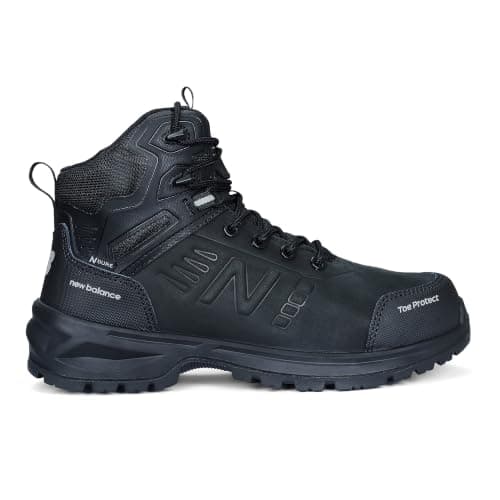 New Balance Calibre SD-10 Met Guard Composite ToeMetatarsal protection plus SD soling plus a non-metallic toe - a combination that normally costs well over this band. | A met guard and static-dissipative soling without paying specialist prices | 9.3 | |
| 4 | 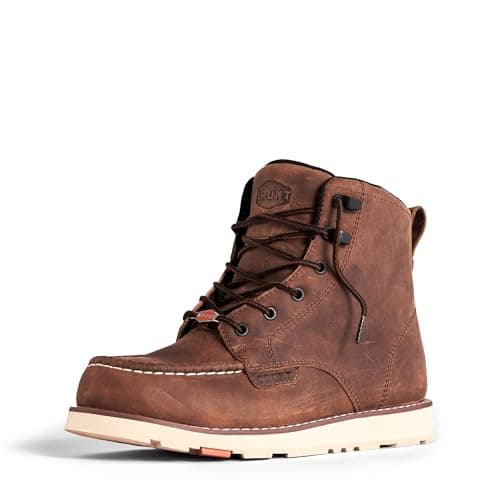 BRUNT Marin 6" Waterproof Composite Toe WedgeA waterproof composite-toe wedge with an adjustable width system - the right shape for flat ground, and almost no break-in. | Standing on a concrete slab all day | 9.4 | |
| 5 | 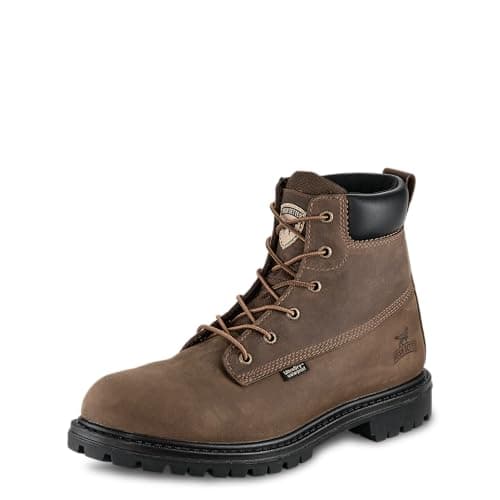 Irish Setter Hopkins 6" Aluminum ToeWaterproof, aluminum-toe and aggressively lugged - the one here built for ground that is not flat. | Rough, loose and wet ground | 9.4 | |
| 6 | 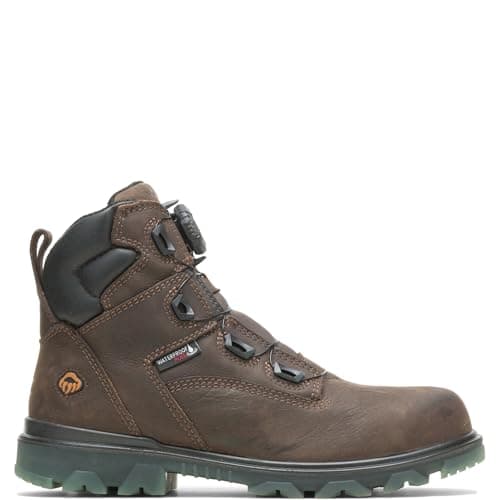 Wolverine I-90 EPX BOA 6" CarbonMaxThe cheapest honest route into a BOA boot, with a CarbonMax toe and a waterproof lining - and the lowest live price here. | A dial closure for the least money | 9.4 |
#ad Prices pulled from Amazon and stamped as of November 19, 2026; they change, and we show no number we cannot verify. How we are funded.
Top pick · One boot for most trades, in a real wide fitting
KEEN Utility Detroit XT Mid Steel Toe Waterproof
Waterproof steel toe that flexes from the first morning, and it is genuinely stocked in EE rather than a roomy D.
#ad Price as of November 19, 2026. How we are funded
- Our score
- 9.5/10
Category-defining
If you want one boot off this page and you do not have a specialist requirement, this is it. It is a waterproof mid-cut with a steel toe rated to ASTM F2413, it flexes out of the box instead of demanding a fortnight of break-in, and - the part that matters most and gets advertised least - it is actually stocked in an EE width rather than a D that the marketing calls roomy. A large share of the complaints people have about work boots are width complaints wearing a comfort costume, and no feature on a spec sheet fixes a boot that is too narrow across the ball of your foot.
Three cons worth knowing. It is cement-constructed, so it cannot be resoled - which on this page specifically is a real comparison, because the boot below it can. The upper is softer than a traditional work boot's, so it creases and scuffs early and will look worn well before it is worn out. And the mid cut is coverage rather than genuine ankle support, so read it as a six-inch boot and not an eight. If width is your actual problem, work boots for wide feet is the full shortlist, and KEEN Utility work boots sorts the rest of the brand's range by job.
Specs that matter
- Toe:
- Steel toe, ASTM F2413
- Height:
- Mid / 6 inch
- Waterproof:
- Yes
- Widths:
- D and EE
Rubric profile
Raw per-criterion marks out of 10, before weighting — this is the shape of the pick, not its published score. A low mark is a scope limit, not a fault: how we score.
- Protection
- 8.4
- Waterproofing
- 8.6
- Comfort
- 8.8
- Durability
- 7.2
- Value
- 8.6
Why we picked it
- Actually stocked in EE wide, not just a roomy D
- Flexes out of the box rather than demanding a break-in
- Lighter than the Pittsburgh at the same protection
Good to know: A softer, more flexible upper than a traditional work boot, so it creases early; the mid cut is coverage rather than full ankle support.
Best resoleable · A boot you can resole, under $200
BRUNT Vastbinder Welted 10" Square Toe
Goodyear-welted with a nano composite toe - the feature on this page with the biggest effect on what the boot costs you per year.
#ad Price as of November 19, 2026. How we are funded
- Our score
- 9.4/10
Outstanding
This is the pick that justifies the whole price band. A Goodyear welt means the outsole is stitched to the boot rather than glued to it, so when the tread wears smooth - which is what ends almost every work boot - a cobbler replaces the sole for a fraction of a new pair. On a full-time trade where you flatten a set of soles inside a year, that single construction detail turns a sub-$200 boot into a multi-year purchase, and it is the reason a welted boot can be cheaper per year than two cemented ones. It also carries a nano composite toe rated to ASTM F2413-24 and runs a PU midsole rather than EVA, which holds its support considerably longer.
The compromises are specific and you should take them seriously. It is water-resistant, not waterproof - there is no membrane, which is deliberate so the ten-inch shaft can breathe, but it will wet through in standing water. A ten-inch shaft is also hot and slow to pull on, and it is a square toe, which looks wrong to anyone who wanted a classic profile. Buy it for height, heat and resoleability together; if you need waterproofing, something else on this page is the better boot. Work boot sole types explains the constructions, and are expensive work boots worth it runs the cost-per-year arithmetic.
Specs that matter
- Toe:
- Nano composite toe, ASTM F2413-24
- Height:
- 10 inch
- Build:
- Goodyear welt, resoleable
- Water:
- Water-resistant, not waterproof
Rubric profile
Raw per-criterion marks out of 10, before weighting — this is the shape of the pick, not its published score. A low mark is a scope limit, not a fault: how we score.
- Protection
- 8.2
- Waterproofing
- 5.4
- Comfort
- 7.8
- Durability
- 9.2
- Value
- 9.0
Why we picked it
- Ten inches of shaft without a membrane trapping heat
- Resoleable welt and a PU midsole rather than EVA
- Square toe gives more room across the toes than a round cap
Good to know: Water-resistant rather than waterproof, and a 10-inch shaft takes time to get on — a ranch and yard boot above all.
Best specialist spec · A met guard and static-dissipative soling without paying specialist prices
New Balance Calibre SD-10 Met Guard Composite Toe
Metatarsal protection plus SD soling plus a non-metallic toe - a combination that normally costs well over this band.
#ad Price as of November 19, 2026. How we are funded
- Our score
- 9.3/10
Outstanding
This is the clearest example of what the money above $150 actually buys. A metatarsal guard covers the top of your foot, which the toe cap does not, and it is the spec that matters if your hazard is something heavy rolling or dropping onto your instep rather than onto your toes. Pairing that with a composite toe - so the whole boot is non-metallic at the front - and with static-dissipative soling puts three specialist features in one boot at a price where most ranges are still selling you a plain steel toe. It also keeps the wide and extra-wide sizing of the standard Calibre, which specialist boots often drop.
Read the ratings carefully, because the trap here is a real one: SD is static-dissipative and EH is electrical hazard, and they are different, non-interchangeable ratings. SD soling bleeds static charge away in a controlled way for electronics and sensitive-equipment work; EH insulates you from an open circuit from the bottom up. Buy whichever one your site names, and do not assume one covers the other. Beyond that, a met guard adds weight and stiffens the instep, and size availability on this model is the patchiest in the line. Metatarsal guard work boots explains when the guard is worth the stiffness, and electrical hazard work boots covers the EH side properly.
Specs that matter
- Toe:
- Composite toe, ASTM F2413 rated
- Metatarsal:
- Met guard per the listing
- Static dissipative:
- SD-10 marked per the listing
- Outsole:
- Non-slip
Rubric profile
Raw per-criterion marks out of 10, before weighting — this is the shape of the pick, not its published score. A low mark is a scope limit, not a fault: how we score.
- Protection
- 9.4
- Waterproofing
- 5.0
- Comfort
- 7.4
- Durability
- 7.6
- Value
- 8.8
Why we picked it
- Met guard plus a non-metallic toe is a hard combination to find
- SD soling is the right spec for electronics and clean-room adjacent work
- Same wide and extra-wide sizing as the standard Calibre
Good to know: SD soling is not the same rating as EH — buy whichever your site names. Availability by size is the patchiest in the line.
Best for concrete · Standing on a concrete slab all day
BRUNT Marin 6" Waterproof Composite Toe Wedge
A waterproof composite-toe wedge with an adjustable width system - the right shape for flat ground, and almost no break-in.
#ad Price as of November 19, 2026. How we are funded
- Our score
- 9.4/10
Outstanding
If your day is spent nearly still on a slab, the sole shape matters more than anything else in the boot. A flat wedge spreads your weight across the whole footprint instead of concentrating it under a heel block, and on concrete that is what keeps your feet from aching by hour seven. Getting that shape with a composite toe, a waterproof build and an EH rating under $200 is good value on its own; the adjustable width system is the part worth trying if other brands pinch, because it changes the fit across the forefoot rather than just the lacing.
The cons are the ones every wedge carries, plus one about the brand. A wedge gives up grip on ladder rungs, wet steel and loose dirt - if you are up and down a ladder all day this is the wrong sole. It is cemented, so the sole's life is the boot's life, which is the direct trade against the welted pick above. And BRUNT is a young company with a shorter durability record than the heritage names, which is worth a sentence of honesty rather than a shrug. Work boots for standing on concrete goes deeper on the sole-shape argument, and wedge sole vs heel is the direct comparison.
Specs that matter
- Toe:
- Composite toe, ASTM F2413
- Height:
- 6 inch
- Sole:
- Flat wedge, slip and oil resistant
- Waterproof:
- Yes, waterproof build
Rubric profile
Raw per-criterion marks out of 10, before weighting — this is the shape of the pick, not its published score. A low mark is a scope limit, not a fault: how we score.
- Protection
- 8.0
- Waterproofing
- 8.4
- Comfort
- 9.0
- Durability
- 7.2
- Value
- 8.8
Why we picked it
- Composite-toe wedge at a price the heritage brands do not reach
- EH rated with an adjustable width system, which is rare at this price
- Very little break-in
Good to know: A cemented wedge boot, so the sole's life is the boot's life; the adjustable width system is the reason to try it if other brands pinch.
Best for rough ground · Rough, loose and wet ground
Irish Setter Hopkins 6" Aluminum Toe
Waterproof, aluminum-toe and aggressively lugged - the one here built for ground that is not flat.
#ad Price as of November 19, 2026. How we are funded
- Our score
- 9.4/10
Outstanding
This is the boot on the page for broken ground, mud, loose rock and gravel, and the reason is the outsole. Deep lugs bite into surfaces a flat wedge simply slides across, and the Hopkins pairs them with Irish Setter's UltraDry waterproofing and a heat-resistant compound rated to 475 °F, which is the sort of specification that matters on hot-mix, roofing and foundry-adjacent work. The aluminum toe is the clever part: it meets the same ASTM F2413 impact rating as steel while weighing less, and an aluminum cap is thinner than steel at the same rating, so there is marginally more room over your toes.
Three honest limits. Aluminum is still metal, so it conducts cold in winter and it will trip a metal detector - if either is part of your day, a composite or carbon-fiber cap is the right choice instead. Deep lugs pack mud and then track it across finished floors, which makes this the wrong boot for interior finishing work. And it is a direct-attach build, so it cannot be resoled. Irish Setter work boots sorts the rest of the range, and steel toe vs alloy toe covers how the metal caps compare.
Specs that matter
- Toe:
- Aluminum toe, ASTM F2413
- Height:
- 6 inch
- Waterproof:
- UltraDry waterproofing system
- Outsole:
- Lugged, heat resistant to 475F
Rubric profile
Raw per-criterion marks out of 10, before weighting — this is the shape of the pick, not its published score. A low mark is a scope limit, not a fault: how we score.
- Protection
- 8.8
- Waterproofing
- 9.0
- Comfort
- 7.6
- Durability
- 8.2
- Value
- 8.4
Why we picked it
- Aluminum toe hits the same ASTM rating as steel while weighing less
- Lugged outsole bites on loose ground where a flat wedge slides
- Waterproof and EH rated together at a mid-market price
Good to know: An aluminum cap still conducts cold and still shows on a detector; the deep lugs track mud onto finished floors.
Best value · A dial closure for the least money
Wolverine I-90 EPX BOA 6" CarbonMax
The cheapest honest route into a BOA boot, with a CarbonMax toe and a waterproof lining - and the lowest live price here.
#ad Price as of November 19, 2026. How we are funded
- Our score
- 9.4/10
Outstanding
A dial closure is the feature people are most skeptical about until they use one with cold hands or gloves on. You turn a dial and the boot closes evenly across the whole instep instead of in whatever increments the eyelets allow, and it does not loosen through the day the way laces do. BOA boots normally sit well above this band; this one carries the dial, a non-metallic CarbonMax toe rated to ASTM F2413-18 M/I/C EH, a waterproof lining and Wolverine's EPX footbed, which is one of the better stock insoles at any price near this. It is also the lowest live price on this page, which makes it the value pick as well as the novelty one.
Be clear on the limits. Direct-attach construction means no resoling, so when the sole goes the boot goes. It is sold on Amazon as colorway-plus-size SKUs, so stock in any one size comes and goes and you should check before you plan around it. And a six-inch shaft with a single dial zone gives less lockdown than the wrap-style systems on more expensive boots - this is a dial that fits the boot well, not one that transforms it. BOA work boots ranks the dial boots against each other, and Wolverine work boots covers the rest of the lineup.
Specs that matter
- Toe:
- CarbonMax composite toe, ASTM F2413-18 M/I/C EH
- Height:
- 6 inch
- Closure:
- BOA Fit System dial
- Build:
- Waterproof lining, direct-attach, TPU lug outsole
Rubric profile
Raw per-criterion marks out of 10, before weighting — this is the shape of the pick, not its published score. A low mark is a scope limit, not a fault: how we score.
- Protection
- 8.2
- Waterproofing
- 8.2
- Comfort
- 8.6
- Durability
- 7.4
- Value
- 9.2
Why we picked it
- Materially cheaper than every other BOA boot here while keeping the same ASTM rating
- EPX footbed is one of the better stock insoles in this price band
- TPU outsole resists oils and splitting better than a rubber compound
Good to know: Sold as colorway-plus-size SKUs, so stock in any one size comes and goes — check before you plan around it.
Buy in this band only if you need one of these four things
- A resoleable welt. The outsole is what ends a work boot's life. If a cobbler can replace it, the boot's useful life stops being capped by its sole, and on a full-time trade that is the single biggest economic difference on this page.
- A metatarsal guard. The toe cap protects your toes and nothing else. If your hazard is a heavy object rolling or dropping onto your instep - steel handling, masonry, foundry, heavy fabrication - the guard is the spec and nothing cheaper substitutes for it.
- A dial closure. Worth real money if you work in cold or gloves, or if your laces keep loosening through the day. Worth nothing at all if neither of those is true.
- A genuine wide fitting. Not a roomy D - an actual EE or wider. More models carry one at this price, and for a wide forefoot that single fact beats every other feature in the boot.
If you read those four and none of them is you, then the honest recommendation is to spend less and put the difference into an insole and decent socks. That is not false modesty about the picks above - they are good boots - it is that a hundred-and-forty-dollar waterproof composite-toe boot plus a thirty-dollar insole will outperform a two-hundred-dollar boot with a factory footbed for most people standing on most floors. Insoles for concrete and the best work socks are where that money goes furthest.
How we picked
- Every pick is under $200 on live pricing, not on list price. Prices on this page come from the live price layer rather than being typed into the copy, so a boot that drifts above the line shows you that it has.
- Each pick had to earn a different job. Six boots that are all the same waterproof six-inch composite toe is a list, not a recommendation. One is the all-rounder, one is resoleable, one carries a met guard, one is shaped for a slab, one is for broken ground and one is the dial.
- Specialist ratings are quoted as the manufacturer marks them. SD, EH, M/I/C and F2413-24 all mean specific things, and we name which boot carries which rather than writing "safety rated" and leaving you to guess.
- Construction is stated on every pick. Welted, direct-attach or cemented changes the cost per year more than the purchase price does, so it is on every card.
- Width availability counts as a feature. A boot stocked in EE is a different product from one stocked only in D, and at this price enough models offer it that it belongs in the comparison.
- Cons are the ones that would change your mind. Not "runs slightly warm" filler - the water-resistant pick says it will wet through, the wedge says it is wrong on ladders, the aluminum toe says it trips detectors.
Where this band is genuinely the wrong call
Three cases. If your site requires only a basic rated toe and you work indoors on flat floors, you are paying for capability you will never use - go to work boots under $150 or even under $100 and spend the difference on an insole. If you are a full-time tradesperson who wears boots out annually and wants the lowest cost per year rather than the lowest purchase price, the welted heritage boots above this band - Thorogood, Red Wing - are arguably the cheaper purchase over five years even though they cost more today.
And if you need genuine cold-weather insulation, this is not the band for it. Insulated waterproof boots exist here, but the thing that matters most in real cold is whether the liner comes out to dry overnight, and removable-liner boots sit higher. Winter work boots makes that argument properly, and boot insulation grams explained covers how to read a warmth claim before you pay for one.
What we would skip
Skip any boot in this band whose only advantage over a $140 boot is the brand on the side - at this price you should be able to name the specific feature you are buying. Skip a metatarsal guard you do not need, because it adds weight and stiffness across the instep every single day in exchange for a hazard that is not present on your site. Skip a dial closure if you never wear gloves and your laces stay tied. Skip a wedge sole if you spend your day on ladders, and skip a lugged sole if you spend it on finished floors. And skip assuming a welted boot is automatically better - a welt is only worth money if you will actually take the boot to a cobbler rather than replacing it. How long work boots last covers that decision honestly, and Blundstone work boots is the cautionary example of paying welted-boot money for a cemented pull-on.
Frequently asked
Are $200 work boots worth it over $150 ones?
Only if you need a specific capability the cheaper band does not offer - a resoleable welt, a metatarsal guard, a dial closure or a genuine EE-plus fitting. Toe protection, waterproofing and cushioning are already normal under $150, so if none of those four applies to you, the extra fifty dollars buys very little.
What is the best work boot under $200?
For most trades, a waterproof steel-toe mid that flexes from the first wear and is stocked in a real wide fitting - that is the KEEN Detroit XT on this page. If you want the lowest cost per year instead, the resoleable welted pick is the better buy, and if your hazard is your instep rather than your toes, the met-guard pick is the only right answer.
Can you get a Goodyear-welted work boot under $200?
Yes, though the options are limited. A welt means a cobbler can replace the outsole rather than you buying a new pair, which on a full-time trade usually makes a welted boot cheaper per year than two cemented ones. Expect to trade something for it at this price - usually a waterproof membrane.
Do more expensive work boots protect your feet better?
Not at the toe. ASTM F2413 is a pass-or-fail threshold, so a $150 boot and a $300 boot at the same rating protect your toes identically. What more money buys is longevity, water protection, comfort, resoleability and specialist features like metatarsal guards and puncture-resistant plates.
Is a metatarsal guard worth the money?
If your hazard is heavy objects rolling or dropping onto the top of your foot - steel handling, masonry, foundry, heavy fabrication - yes, because the toe cap does nothing for your instep. If that hazard is not present, no: the guard adds weight and stiffness across the instep every day for nothing.
What is the difference between SD and EH on a work boot?
They are different, non-interchangeable ratings. Static-dissipative soling bleeds static charge away in a controlled way, which matters around electronics and sensitive equipment. Electrical hazard soling insulates you from an open circuit from the bottom up. Buy whichever one your site specifically names.
How long should a $200 work boot last?
In full-time trade use, commonly nine to eighteen months for a cemented or direct-attach pair, with the outsole and the midsole going first. A welted pair at the same price can be resoled instead, which is what turns it into a multi-year boot rather than an annual purchase.
Our recommendation
If you read nothing else on this page, these are the two to look at — the one we would buy, and the one to take instead if its trade-off suits you better.
Top pick · One boot for most trades, in a real wide fitting
KEEN Utility Detroit XT Mid Steel Toe Waterproof
Waterproof steel toe that flexes from the first morning, and it is genuinely stocked in EE rather than a roomy D.
#ad Price as of November 19, 2026. How we are funded
Runner-up · A boot you can resole, under $200
BRUNT Vastbinder Welted 10" Square Toe
Goodyear-welted with a nano composite toe - the feature on this page with the biggest effect on what the boot costs you per year.
#ad Price as of November 19, 2026. How we are funded
Prices are read live from Amazon and stamped with the date. How we pick.
Brands: want your product tested? For Brands.
Sources
Back to Work Boots, or see how we pick. Spotted something wrong? We publish corrections — see our editorial policy.