Replacement timing
How Long Do Work Boots Last?
The leather outlasts the protection. By the time boots look worn out, they stopped working months ago.
Work boots almost never fail the way people expect. The leather upper, which is what you look at, is usually the most durable part - and the components doing the protective work fail quietly months earlier. Which means the question "how long do work boots last" has a different answer depending on what you mean by last: look serviceable, or still protect you.
Expected life by usage
| Usage | Cemented boot | Welted boot (with resoling) |
|---|---|---|
| Full-time heavy trade - abrasive surfaces, high mileage | 6-9 months | 2-4 years |
| Full-time general trade | 9-18 months | 3-5 years |
| Full-time indoor / flat floors | 12-24 months | 4-6 years |
| Part-time or occasional | 2-4 years | 5+ years |
| Rubber boots, wet work | 1-2 years | Not applicable |
These are bands rather than promises, and surface matters more than hours: abrasive concrete and gravel eat outsoles far faster than timber decking or sealed floors.
The signals that actually matter
- The outsole tread is worn smooth, especially at the heel strike. This is the most important signal, because it means you have lost slip resistance - and slips are a leading injury cause.
- The boot no longer feels supportive underfoot. The midsole has compressed, so you are getting far less shock absorption than you did. Often felt as new foot or leg aching with no other explanation.
- Uneven heel wear, especially one boot more than the other. You are now standing on a tilted platform all day: boots for back pain.
- You can feel what you step on. Underfoot protection has thinned - a serious issue where there are fasteners on the floor.
- Cracks through the leather at the flex crease, not just surface crazing. Water will get in and the upper is structurally compromised.
- The sole is separating from the upper on a cemented boot. That is terminal.
Quick picks
Ranked by our published scoring rubric. Tap any row for the full write-up.
| # | Product | Best for | Score | Price |
|---|---|---|---|---|
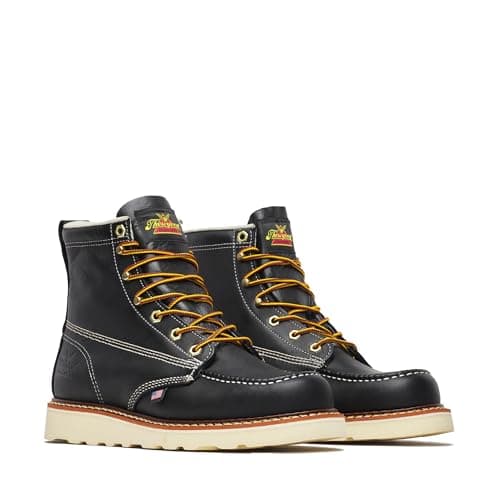
| 1 | 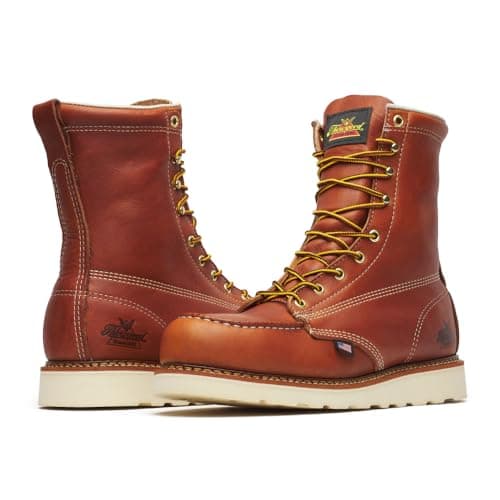 Thorogood American Heritage 8" Steel ToeA storm welt turns the replacement question into a resoling question. | Boots you resole instead of replacing | 8.9 | |
| 2 | 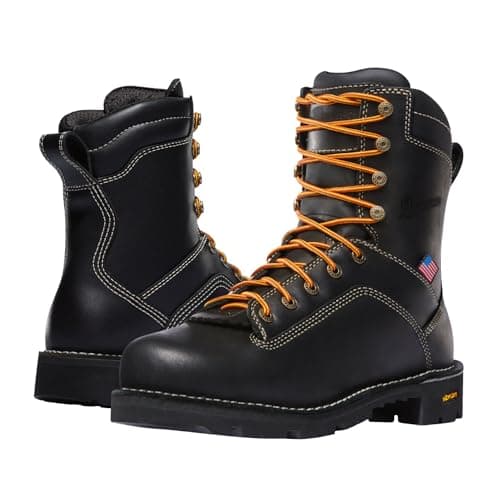 Danner Quarry 8" Waterproof Alloy ToeRecraftable, which is a step beyond resoleable - the whole lower can be renewed. | A boot designed to be rebuilt repeatedly | 8.9 | |
| 3 | 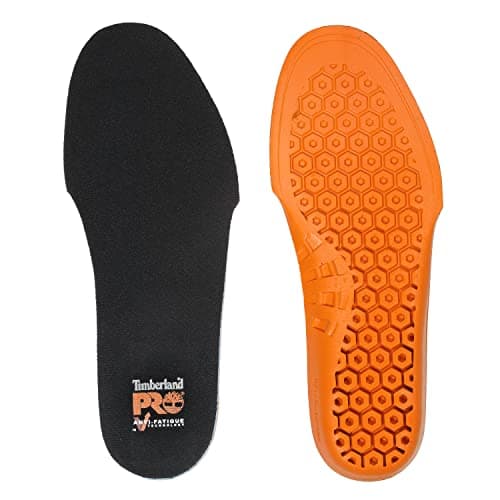 Timberland PRO Anti-Fatigue Technology Replacement InsoleNot a boot - the component that stops working in months and nobody replaces. | The part you should replace long before the boot | 6.4 |
#ad Prices pulled from Amazon and stamped as of October 6, 2026; they change, and we show no number we cannot verify. How we are funded.
Longest service life · Boots you resole instead of replacing
Thorogood American Heritage 8" Steel Toe
A storm welt turns the replacement question into a resoling question.
Since the outsole is nearly always what ends a work boot's life, a boot whose outsole can be replaced has a fundamentally different lifespan. A Goodyear storm welt means a cobbler can cut the stitching and sew on a new sole for a fraction of a new pair.
On a full-time trade that can turn an eighteen-month boot into a five-year boot. The caveat is behavioral: you have to actually do it. Steel toe and 8-inch shaft here.
Specs that matter
- Toe:
- Steel toe, ASTM F2413 rated
- Height:
- 8 inch
- Sole:
- MAXwear wedge
- Build:
- Goodyear storm welt
Our scoring
- Resoleability
- 9.4
- Upper durability
- 9.2
- Outsole life
- 7.4
- Midsole life
- 8.0
- Value over time
- 9.0
What works
- Safety toe plus resoleable welt construction in one boot
- Taller shaft keeps debris out on demolition and dirt work
- Full-grain leather that takes conditioner and keeps going
What to know
- Steel conducts cold in winter — composite is warmer
- 8 inch shaft takes longer to break in across the ankle
- Heavier than the composite-toe competition
No. 2 · A boot designed to be rebuilt repeatedly
Danner Quarry 8" Waterproof Alloy Toe
Recraftable, which is a step beyond resoleable - the whole lower can be renewed.
Stitchdown construction and a factory recrafting service mean this boot can be substantially rebuilt rather than just resoled, which is why boots like this stay in service for many years. Gore-Tex and an alloy toe.
Expensive up front, stiff and heavy, and a poor choice for flat-concrete standing. For someone who keeps gear and uses the service, the cost per year is low.
Specs that matter
- Toe:
- Alloy toe, ASTM F2413
- Height:
- 8 inch
- Waterproof:
- Gore-Tex lined
- Build:
- Stitchdown, recraftable
Our scoring
- Resoleability
- 9.6
- Upper durability
- 9.4
- Outsole life
- 8.0
- Midsole life
- 8.6
- Value over time
- 8.6
What works
- Danner will recraft it, so the price is spread over many years
- Gore-Tex is the most reliable waterproof lining in footwear
- Alloy toe is lighter than steel at the same rating
What to know
- Expensive up front
- Stiff and heavy for flat-concrete work
- Long break-in
No. 3 · The part you should replace long before the boot
Timberland PRO Anti-Fatigue Technology Replacement Insole
Not a boot - the component that stops working in months and nobody replaces.
Included because it is the most actionable item on this page. Cushioning insoles compress permanently within three to six months of daily wear and stop working while still looking fine, and people attribute the returning foot soreness to age, weather or the boots.
Replacing a cheap insole two or three times a year keeps a boot feeling far newer than it is. Low volume, so it fits most boots - see insoles for concrete.
Specs that matter
- Type:
- Cushioning insole with cone geometry
- Arch:
- Moderate contour
- Volume:
- Low to moderate
- Target:
- Standing fatigue
Our scoring
- Resoleability
- 2.0
- Upper durability
- 2.0
- Outsole life
- 2.0
- Midsole life
- 6.0
- Value over time
- 9.2
What works
- Designed for static standing, which is the actual concrete problem
- Cheap enough to replace every few months
- Fits most boots without crowding the toe box
What to know
- Foam compresses within months of daily wear
- Little structural arch support
- Not an orthotic — will not fix plantar fasciitis alone
Ratings expire with the sole
Worth stating plainly because almost nobody thinks about it. The EH rating depends on the dielectric integrity of the sole and heel - a worn-through outsole, or one with a nail or metal swarf embedded in it, no longer provides that protection, though the marking inside the boot still says EH. The same applies to puncture resistance if the plate is exposed or the sole is thin, and to slip resistance once the tread is smooth.
So for anyone relying on those ratings - electricians, linemen, framers - sole condition is a safety inspection item rather than a cosmetic one. ASTM F2413 safety ratings explained covers what each rating depends on.
Resole or replace?
Resole if the boot is welted or stitchdown, the upper is sound, and the boot fits you well - a resole costs a fraction of a new pair and you keep a boot already molded to your foot. Replace if the boot is cemented (the sole is glued, so there is nothing to stitch to), if the upper is cracked through at the flex crease, or if the boot never really fitted.
Work boot sole types explains how to tell which construction you have - the quick check is whether you can see stitching running around the sole edge.
Making them last
- Rotate two pairs on alternate days. The single most effective measure - boots absorb a lot of sweat and a damp boot degrades faster.
- Pull the insoles out nightly so the inside dries.
- Never dry boots with direct heat. It cracks leather and delaminates adhesives: boot care and conditioning.
- Condition leather regularly, especially after wet or chemical exposure.
- Replace insoles every three to six months, which keeps the boot feeling far newer than it is.
- Clean off concrete, mortar and chemicals rather than letting them dry on the leather.
Frequently asked
How often should you replace work boots?
For full-time trade use, commonly every six to eighteen months for a cemented boot, judged by the outsole and midsole rather than the upper. A welted boot can be resoled instead, which often extends total service life to several years.
How do I know when my work boots need replacing?
The outsole tread worn smooth at the heel strike is the most important signal, because it means you have lost slip resistance. Also watch for the boot no longer feeling supportive underfoot, uneven heel wear between the two boots, and cracks through the leather at the flex crease.
Do work boots lose their safety rating as they wear?
Effectively, yes, for the ratings that depend on sole integrity. An EH rating relies on the dielectric integrity of the sole and heel, so a worn-through outsole or one with metal embedded in it no longer provides it - even though the marking inside the boot still says EH.
Is it worth resoling work boots?
If the boots are welted or stitchdown, the upper is sound and they fit you well, yes - a resole costs a fraction of a new pair and you keep a boot already molded to your foot. Cemented boots cannot practically be resoled, since the sole is glued rather than stitched.
What makes work boots last longer?
Rotating two pairs on alternate days is the most effective single measure, because boots absorb substantial sweat and a damp boot degrades faster. Beyond that: pull the insoles out nightly, never dry boots with direct heat, condition the leather, and replace insoles every few months.
Sources
Back to Guides, or see how we pick. Spotted something wrong? We publish corrections — see our editorial policy.