Care & conditioning
Work Boot Care and Conditioning
One drying mistake destroys more work boots than wear does. Everything else here is simple.
Boot care is unglamorous and genuinely effective: a conditioned, properly dried pair of leather boots can last two or three times as long as an identical pair that gets soaked, baked dry on a heater and never treated. The routine is simple, takes a few minutes a week, and starts with avoiding one mistake that destroys more work boots than wear does.
The weekly routine
- Brush off dirt and dust with a stiff brush. Grit abrades leather every time the boot flexes, so this is not cosmetic.
- Wipe down with a damp cloth if they are genuinely soiled, then let them dry at room temperature.
- Check the outsole. Tread worn smooth means lost slip resistance, and that is a replacement signal: how long work boots last.
- Check the stitching and the sole joint for separation.
- Re-lace properly, replacing frayed laces before they break mid-shift.
The nightly habits that matter most
- Pull the insoles out. A closed boot with the insole in dries at a fraction of the rate, and a damp boot cushions worse, breaks down faster and is a better environment for fungal problems.
- Loosen the laces fully and open the boot so air can circulate.
- Rotate two pairs on alternate days. The single most effective thing you can do - boots absorb substantial sweat and one night is not enough: boots for sweaty feet.
- Do not leave boots in a sealed bag or box overnight.
Quick picks
Ranked by our published scoring rubric. Tap any row for the full write-up.
| # | Product | Best for | Score | Price |
|---|---|---|---|---|
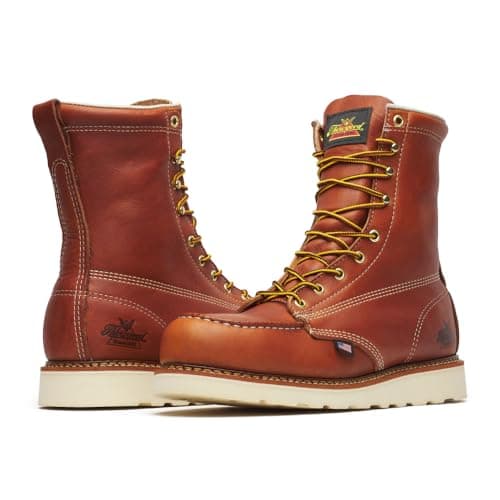
| 1 | 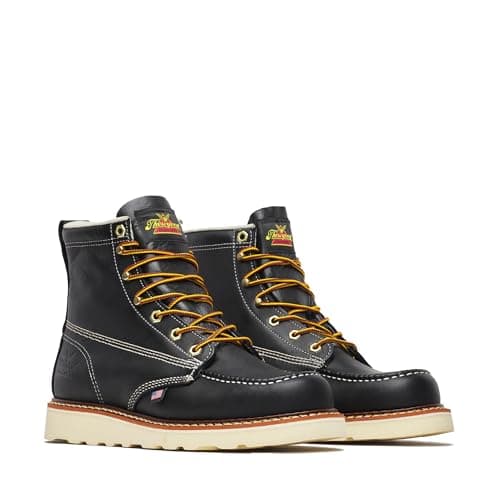 Thorogood American Heritage 6" Moc ToeFull-grain leather on a welt - the construction where care genuinely pays off. | A boot worth maintaining | 8.9 | |
| 2 | 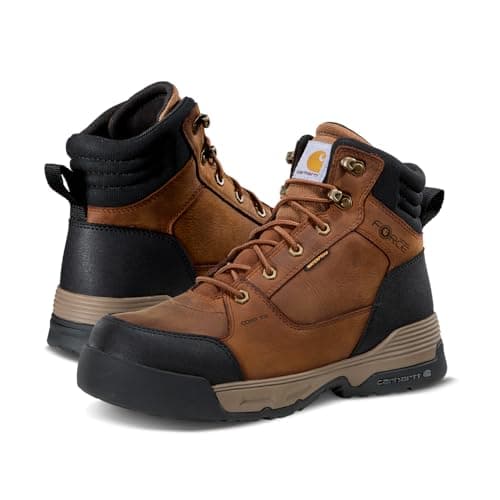 Carhartt Force HD 6" Composite Toe WaterproofAlready oil-impregnated, which is why it survives the exposure that cracks other uppers. | Oil-tanned leather and chemical exposure | 7.8 | |
| 3 | 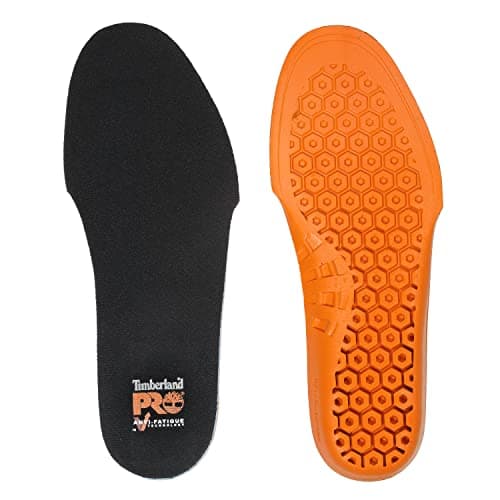 Timberland PRO Anti-Fatigue Technology Replacement InsoleNot care product - the component whose replacement is part of maintaining a boot. | The maintenance item people forget | 6.2 |
#ad Prices pulled from Amazon and stamped as of October 6, 2026; they change, and we show no number we cannot verify. How we are funded.
Worth maintaining · A boot worth maintaining
Thorogood American Heritage 6" Moc Toe
Full-grain leather on a welt - the construction where care genuinely pays off.
Maintenance makes the biggest difference on full-grain leather over a resoleable welt, because the boot's potential lifespan is long enough for care to matter. Keep the leather conditioned and the boot can go through several outsoles.
On a cemented synthetic boot the same effort buys far less, since the boot's life is capped by its glued sole. Soft toe on this model; the wedge limits it on ladders.
Specs that matter
- Toe:
- Soft toe (no safety rating)
- Height:
- 6 inch
- Sole:
- MAXwear wedge, slip-resisting
- Build:
- Goodyear storm welt, resoleable
Our scoring
- Benefits from care
- 9.4
- Leather quality
- 9.0
- Resoleable
- 9.4
- Durability
- 9.2
- Value
- 8.2
What works
- Welt construction means a cobbler can resole it instead of you rebuying
- Flat wedge does not pack mud and does not scuff finished floors
- Removable footbed, so an aftermarket insole drops straight in
What to know
- Soft toe only — not legal where a safety toe is required
- Wedge sole gives up grip on wet steel and ladder rungs
- Premium price for a boot with no safety rating
No. 2 · Oil-tanned leather and chemical exposure
Carhartt Force HD 6" Composite Toe Waterproof
Already oil-impregnated, which is why it survives the exposure that cracks other uppers.
A useful illustration of why conditioning works. Oil-tanned leather is impregnated with oils during tanning, so it starts with what conditioning adds - and it tolerates the solvent and oil exposure that strips ordinary chrome-tanned leather and cracks it at the flex crease.
Still benefits from conditioning after chemical exposure. Composite toe, waterproof, available in wide; heavy for a 6-inch boot.
Specs that matter
- Toe:
- Composite toe, ASTM F2413
- Height:
- 6 inch
- Waterproof:
- Yes
- Upper:
- Oil-tanned full-grain leather
Our scoring
- Benefits from care
- 8.4
- Leather quality
- 9.0
- Resoleable
- 2.0
- Durability
- 9.0
- Value
- 8.0
What works
- Oil-tanned leather resists the chemical splash that cracks cheaper uppers
- Non-metallic toe keeps the cold out better than steel
- Available in wide widths from stock
What to know
- Heavy for a 6-inch boot
- Break-in is real — expect a week
- Cement construction, not resoleable
No. 3 · The maintenance item people forget
Timberland PRO Anti-Fatigue Technology Replacement Insole
Not care product - the component whose replacement is part of maintaining a boot.
Worth including under care because it belongs in the routine. Cushioning insoles compress permanently within three to six months and stop working while looking fine, so replacing them periodically is maintenance rather than an upgrade.
Pulling insoles out nightly to dry is also the single most effective drying step there is. Low volume, so it fits most boots.
Specs that matter
- Type:
- Cushioning insole with cone geometry
- Arch:
- Moderate contour
- Volume:
- Low to moderate
- Target:
- Standing fatigue
Our scoring
- Benefits from care
- 4.0
- Leather quality
- 2.0
- Resoleable
- 2.0
- Durability
- 6.0
- Value
- 9.2
What works
- Designed for static standing, which is the actual concrete problem
- Cheap enough to replace every few months
- Fits most boots without crowding the toe box
What to know
- Foam compresses within months of daily wear
- Little structural arch support
- Not an orthotic — will not fix plantar fasciitis alone
Conditioning: what, when and how much
Leather is a fiber structure kept supple by oils. Water, solvents, heat and time all remove those oils, and dry leather cracks. Conditioning replaces them.
| Product | What it does | When |
|---|---|---|
| Leather conditioner / oil | Replaces lost oils, restores suppleness | Every few weeks, or after any soaking or chemical exposure |
| Mink oil / boot grease | Heavier conditioning plus water repellency | Seasonally on heavy work boots; it darkens leather |
| Wax or silicone spray | Surface water repellency | Monthly in wet seasons - does not replace conditioning |
| Saddle soap | Cleans without stripping all the oils | Before conditioning heavily soiled boots |
| Nothing | Suede and nubuck - use a dedicated nubuck product instead |
Apply sparingly with a cloth, work it in, let it absorb, buff off the excess. More is not better: over-oiling softens the leather past the point where it supports your foot, and can clog a waterproof membrane. And note that a waterproofing spray improves surface repellency - it does not make a boot waterproof or repair a failed membrane: waterproof vs water resistant.
Specific situations
Concrete, mortar and lime are alkaline and genuinely damaging to leather - rinse them off while wet rather than letting them dry on the boot. Oil and solvents strip leather's oils, so condition after exposure; oil-tanned leather tolerates it far better, which is why it is the recommendation at boots for mechanics. Manure and urine break leather down and are the reason rubber boots dominate livestock work: boots for farming. Road salt should be rinsed off, since it is corrosive to both leather and eyelets.
What care cannot do
Being honest about the limits. Conditioning will not restore leather that has already cracked through. It will not repair a failed waterproof membrane. It will not revive a compressed midsole or a worn-smooth outsole, which are the components that usually end a boot's protective life. And no amount of care makes a badly fitting boot fit: work boot fit and sizing.
Frequently asked
How do you dry wet work boots?
At room temperature, out of direct sun, with the insoles removed and the laces loosened so air circulates. Never with direct heat - radiators, heaters, hair dryers and hot vehicles drive the oils out of leather and delaminate the adhesives holding the sole on.
How often should you condition work boots?
Every few weeks for boots in regular use, and always after a soaking or chemical exposure. Apply sparingly and buff off the excess - over-oiling softens leather past the point where it supports your foot and can clog a waterproof membrane.
What is the best thing to put on work boots?
A leather conditioner or boot oil for suppleness, with a wax or spray on top for surface water repellency in wet seasons. Use saddle soap first on heavily soiled boots. Do not use any of these on suede or nubuck, which need a dedicated product.
Does conditioning make boots waterproof?
No. Conditioning keeps leather supple and adds some water repellency at the surface, which is useful, but it is not waterproofing and it cannot repair a failed membrane. A waterproof boot relies on a membrane or a rubber construction, not on treatment.
Why did my work boots crack?
Almost always dried-out leather - from heat drying, repeated soaking, solvent exposure, or simply never being conditioned. Cracks appear first at the flex crease across the toe, which is where the boot bends most and where water then gets in.
Sources
Back to Guides, or see how we pick. Spotted something wrong? We publish corrections — see our editorial policy.