Break-in guide
How to Break In Work Boots
The important part of this guide is the list of things not to do. Several popular methods ruin boots.
Breaking in boots is a real process with a sensible method, and it is also the subject of more bad internet advice than almost any other footwear topic. The useful content here is as much about what to avoid as what to do, because several of the popular shortcuts will shorten your boots' life considerably while barely helping.
What break-in actually is
Two things happen. The leather softens and creases where your foot flexes, so the upper stops resisting your foot's movement. And the footbed compresses to the shape of your sole, which is why a broken-in boot feels custom.
Crucially, neither of those changes the boot's dimensions meaningfully. A boot does not get longer, and a safety cap does not get wider. That is the basis of the most important diagnostic on this page.
A sensible schedule
- Days 1-3: two to three hours a day. At home, around the yard, on errands - not a full shift.
- Days 4-7: half days. Keep your old boots accessible so you can switch if a hot spot develops.
- Week 2: full days, watching the usual pressure points - heel, instep crease, toes.
- Weeks 2-3: a stiff welted 8-inch boot may still be settling. A soft cemented boot is usually done by now.
- Throughout: wear your work socks, lace properly every time, and stop if you feel a blister forming rather than pushing through it.
Expect a stiff full-grain welted boot to take two to four weeks of real wear. A flexible cemented boot with a soft upper is often comfortable within days.
Quick picks
Ranked by our published scoring rubric. Tap any row for the full write-up.
| # | Product | Best for | Score | Price |
|---|---|---|---|---|
| 1 | 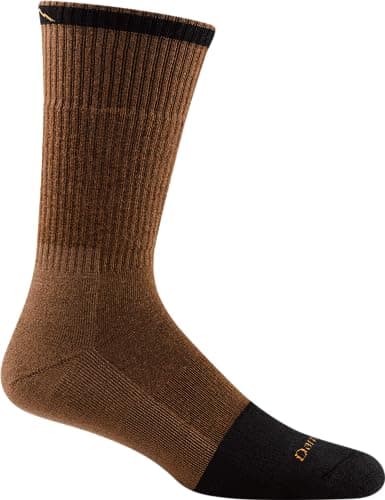 Darn Tough Steely Boot Midweight Cushion SockA cushioned reinforced-toe sock is the most useful thing you can buy for a break-in. | Getting through the break-in | 8.9 | |
| 2 | 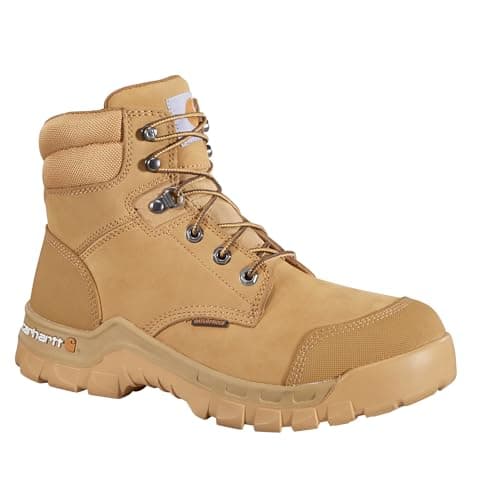 Carhartt Rugged Flex 6" Composite Toe WaterproofEssentially no break-in - the honest answer if you cannot afford two painful weeks. | Avoiding a break-in entirely | 8.4 | |
| 3 | 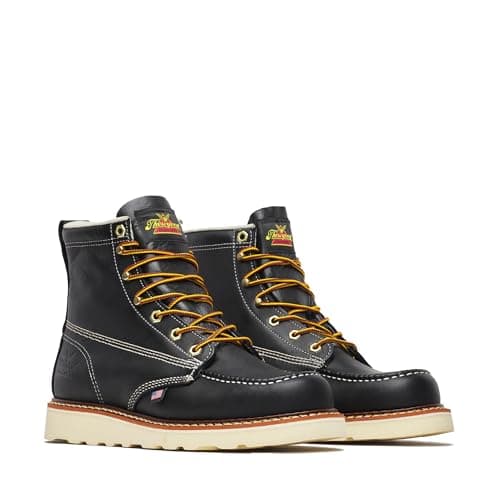 Thorogood American Heritage 6" Moc ToeThe case for enduring it: full-grain leather that molds to your foot and keeps going. | A boot worth breaking in | 7.8 |
#ad Prices pulled from Amazon and stamped as of October 6, 2026; they change, and we show no number we cannot verify. How we are funded.
Most useful during break-in · Getting through the break-in
Darn Tough Steely Boot Midweight Cushion Sock
A cushioned reinforced-toe sock is the most useful thing you can buy for a break-in.
Break-in discomfort concentrates at specific contact points - the heel, the instep crease and the toes under a safety cap. A properly cushioned sock with a reinforced toe box pads exactly those places while the leather softens around your foot.
Merino also manages the moisture that makes skin more blister-prone during long wear. The sock changes boot volume, though, so fit new boots wearing it.
Specs that matter
- Fiber:
- Merino wool blend
- Cushion:
- Midweight, full cushion
- Toe:
- Reinforced for safety-toe boots
- Guarantee:
- Unconditional lifetime
Our scoring
- Break-in help
- 9.0
- Blister prevention
- 8.8
- Toe padding
- 9.4
- Durability
- 9.2
- Value
- 8.0
What works
- Full-cushion toe box is the fix for a safety toe rubbing your toenails
- Merino regulates temperature and resists odor
- Lifetime guarantee makes the price rational over years
What to know
- Most expensive sock here per pair
- Midweight is too warm for genuine summer heat
- Merino needs gentler washing than synthetics
No. 2 · Avoiding a break-in entirely
Carhartt Rugged Flex 6" Composite Toe Waterproof
Essentially no break-in - the honest answer if you cannot afford two painful weeks.
If you need boots that work on day one - a new job, a short contract, no tolerance for sore feet - a flexible cemented boot with a soft upper is the sensible choice. This one flexes immediately and needs no breaking in worth mentioning.
The trade is longevity: a soft upper and an EVA midsole will not last like full-grain leather on a welt, and it cannot be resoled.
Specs that matter
- Toe:
- Composite toe, ASTM F2413
- Height:
- 6 inch
- Waterproof:
- Yes
- Midsole:
- Cushioned EVA
Our scoring
- Break-in help
- 9.5
- Blister prevention
- 8.4
- Toe padding
- 7.0
- Durability
- 7.6
- Value
- 8.6
What works
- Flexes immediately — close to no break-in
- Lighter than the Force HD with the same toe protection
- Cushioned midsole helps on hard floors
What to know
- EVA midsole compresses over a year of daily wear
- Softer upper than the Force HD
- Membrane runs hot in summer
No. 3 · A boot worth breaking in
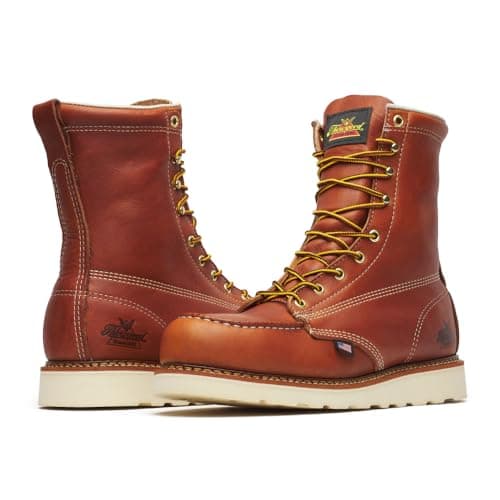
Thorogood American Heritage 6" Moc Toe
The case for enduring it: full-grain leather that molds to your foot and keeps going.
Break-in exists because full-grain leather is stiff, and the reason to tolerate it is that the same leather then molds to the shape of your foot and stays serviceable for years - with a welt that lets the sole be replaced when it wears.
Expect two to three weeks of increasing wear. Soft toe on this model, and the wedge sole is the usual limitation on ladders and loose ground.
Specs that matter
- Toe:
- Soft toe (no safety rating)
- Height:
- 6 inch
- Sole:
- MAXwear wedge, slip-resisting
- Build:
- Goodyear storm welt, resoleable
Our scoring
- Break-in help
- 5.5
- Blister prevention
- 7.0
- Toe padding
- 7.0
- Durability
- 9.6
- Value
- 8.2
What works
- Welt construction means a cobbler can resole it instead of you rebuying
- Flat wedge does not pack mud and does not scuff finished floors
- Removable footbed, so an aftermarket insole drops straight in
What to know
- Soft toe only — not legal where a safety toe is required
- Wedge sole gives up grip on wet steel and ladder rungs
- Premium price for a boot with no safety rating
Break-in problem or fit problem?
This is the diagnostic that saves people months of pointless suffering. Break-in softens leather and compresses a footbed; it does not change length or cap width. So:
| Symptom | Break-in or fit? | What to do |
|---|---|---|
| Stiffness across the instep crease | Break-in - the leather needs to crease | Keep going; it will resolve |
| Mild heel rub that is improving week to week | Break-in - the heel counter is softening | Keep going; heel-lock lacing helps |
| Toes touching the safety cap | Fit - the boot is too short | Return it. This will never improve |
| Pressure on the sides of the forefoot | Fit - the cap is too narrow | Return it. A cap cannot be stretched |
| Heel slipping badly and not improving | Fit - too long or too wide at the heel | Return it, or try heel-lock lacing first |
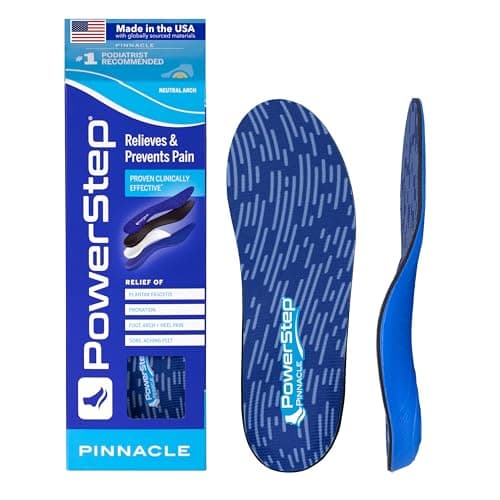
| Arch aching | Neither - a support issue | Insoles for flat feet |
In short: anything about leather stiffness improves, and anything about dimensions does not. If it is a dimension problem, return the boots while you still can - and read work boot fit and sizing before buying the replacement.
What not to do - and this matters
What genuinely helps
- Good socks. Cushioning at the heel, ball and toes reduces the pressure points where break-in hurts: best work socks.
- Leather conditioner, sparingly, on a stiff full-grain upper. It softens the leather the way it is meant to be softened: boot care and conditioning.
- Correct lacing. Heel-lock lacing through the top eyelets holds the heel back and prevents most break-in blisters.
- Two pairs in rotation, if you have an older pair - it lets you stop at the first hot spot.
- A professional stretch from a cobbler for a tight leather upper - the only safe way to change a boot's dimensions, and it cannot help with a safety cap.
- Covering a hot spot early with tape or a blister plaster, before it becomes a blister.
Frequently asked
How long does it take to break in work boots?
A flexible cemented boot with a soft upper is often comfortable within a few days. A stiff full-grain welted boot, especially an 8-inch one, commonly takes two to four weeks of increasing wear. Build up gradually rather than going straight into a full shift.
How do you break in work boots fast?
Gradually is the only safe way: two to three hours a day at first, building to full days over one to three weeks, with good cushioned socks and correct heel-lock lacing. The fast methods circulating online - heat, soaking, freezing, alcohol - all damage leather or adhesives.
Should I soak my work boots to break them in?
No. Soaking stretches the leather unpredictably, strips the oils that keep it supple and can rot the stitching. Leather conditioner applied sparingly softens the upper the way it is designed to be softened, without the damage.
How do I know if my work boots are too small or just need breaking in?
Break-in softens leather and compresses the footbed; it does not change the boot's length or the cap's width. So stiffness across the instep improves, while toes touching the safety cap or pressure on the sides of the forefoot never will - those are fit problems, and you should return the boots.
Does leather conditioner help break in boots?
Yes, used sparingly on a stiff full-grain upper - it softens the leather in the way it is meant to be softened and helps it crease where your foot flexes. Do not saturate the boot, and do not use it as a substitute for wearing the boots in gradually.
Sources
Back to Guides, or see how we pick. Spotted something wrong? We publish corrections — see our editorial policy.