Diagnose the pain
Why Work Boots Hurt
Where it hurts tells you what is wrong. Most of these fixes cost less than new boots.
When work boots hurt, the instinct is to buy different boots. Often the boots are fine and something specific and cheap is wrong - the wrong insole type, cotton socks, a lacing pattern, half a size of length. The location of the pain narrows the cause down considerably, so this guide works backwards from the symptom.
The symptom map
| Where it hurts | Likely cause | The fix |
|---|---|---|
| Sharp heel pain, worst on first steps in the morning | Plantar fasciitis - the classic presentation | Support insole with a deep heel cup, stiffer boot, stretching: plantar fasciitis |
| Arch aching, midfoot fatigue | Insufficient support, or a collapsing arch | Semi-rigid or rigid support insole: flat feet |
| Whole foot aching after a shift, no specific spot | Standing fatigue on a hard surface | Cushioning insole, flat load-spreading sole: concrete |
| Bruised or black toenails | Boot too short, or loose so the foot slides into the cap | Correct length, heel-lock lacing, reinforced-toe socks |
| Blisters at the heel | Heel slip - the heel pocket is too wide or boot too long | Heel-lock lacing, volume-filling insole, narrower last |
| Numbness across the forefoot | Boot too narrow, or laced too tight | Wider width, or ease the lower lacing: wide feet |
| Pain across the top of the foot | Lacing pressure, or a high instep in a low boot | Skip an eyelet pair; higher-volume boot |
| Burning or hot spots on the ball of the foot | Pressure plus moisture, often with thin cushioning | Cushioned socks, better insole: work socks |
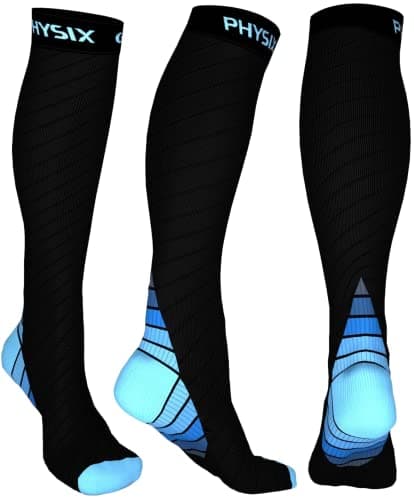
| Heavy, swollen, aching calves and ankles | Venous pooling from static standing - not a foot problem | Graduated 20-30 mmHg compression socks |
| Knees aching after kneeling | Kneeling load, not footwear | Knee pads |
| Lower back aching after standing | Multiple causes; worn or uneven boots can contribute | Level, cushioned footwear: back pain |
Quick picks
Ranked by our published scoring rubric. Tap any row for the full write-up.
| # | Product | Best for | Score | Price |
|---|---|---|---|---|
| 1 | 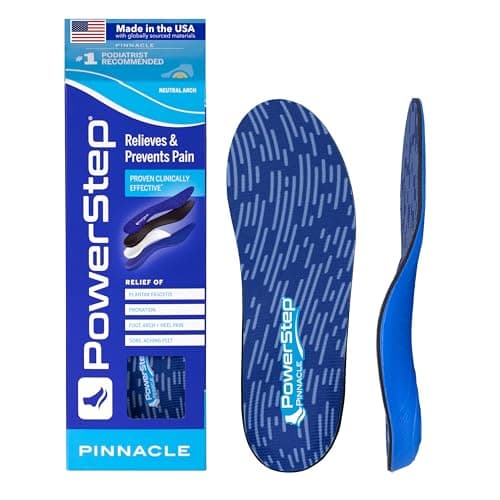 PowerStep Pinnacle Orthotic InsolesThe fix for the most common complaint - a semi-rigid shell with a deep heel cup. | Arch and heel pain | 8.8 | |
| 2 | 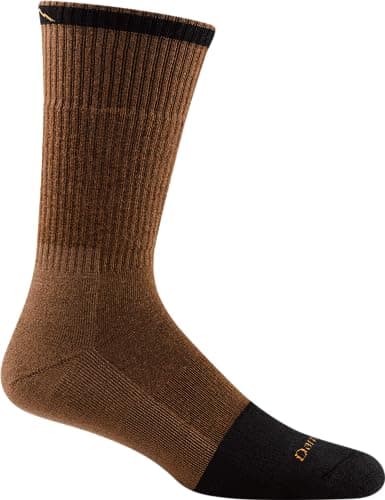 Darn Tough Steely Boot Midweight Cushion SockA reinforced cushioned toe box, which resolves a surprising share of toe complaints. | Sore toenails and heel blisters | 7.6 | |
| 3 | 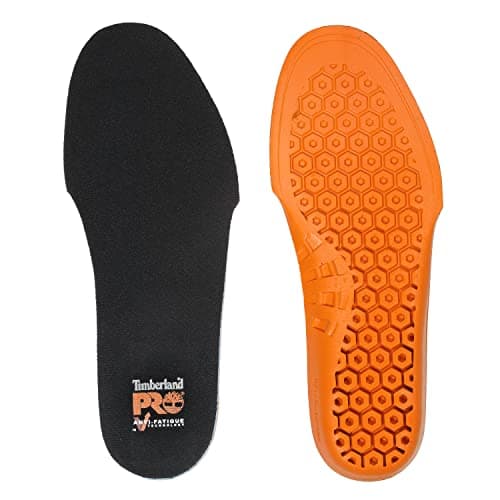 Timberland PRO Anti-Fatigue Technology Replacement InsoleThe cheap fix for undifferentiated fatigue - cushioning designed for standing. | General aching from hard floors | 8.0 |
#ad Prices pulled from Amazon and stamped as of October 6, 2026; they change, and we show no number we cannot verify. How we are funded.
Most common fix · Arch and heel pain
PowerStep Pinnacle Orthotic Insoles
The fix for the most common complaint - a semi-rigid shell with a deep heel cup.
Arch aching and heel pain are support problems, and this is the most commonly recommended over-the-counter answer: a semi-rigid shell that limits arch flattening with a deep heel cup that controls heel movement, under a cushioned top layer so it is wearable immediately.
Moderate volume, so it fits more boots than a full rigid shell. For severe collapse a rigid shell gives more control - see insoles for flat feet.
Specs that matter
- Type:
- Semi-rigid shell plus dual-layer cushion
- Arch:
- Neutral to moderate
- Volume:
- Moderate
- Made in:
- USA
Our scoring
- Arch pain
- 9.0
- Heel pain
- 8.8
- Standing fatigue
- 7.6
- Fits most boots
- 7.6
- Value
- 8.8
What works
- Support and cushioning balanced, so adaptation is easy
- Fits a wider range of boots than Superfeet
- Most commonly recommended for heel pain by podiatry sources
What to know
- Less support than a full rigid shell for severe arch collapse
- Top cover wears through before the shell does
- Needs trimming to fit
No. 2 · Sore toenails and heel blisters
Darn Tough Steely Boot Midweight Cushion Sock
A reinforced cushioned toe box, which resolves a surprising share of toe complaints.
Two symptoms with one cheap answer. A reinforced cushioned toe box pads the point where toes meet a rigid safety cap, which is the usual cause of sore and discoloured nails. And a well-fitting cushioned sock reduces the movement that causes heel blisters.
Merino manages the moisture that makes skin blister-prone. Note it changes boot volume, so fit boots wearing it.
Specs that matter
- Fiber:
- Merino wool blend
- Cushion:
- Midweight, full cushion
- Toe:
- Reinforced for safety-toe boots
- Guarantee:
- Unconditional lifetime
Our scoring
- Arch pain
- 4.0
- Heel pain
- 6.0
- Standing fatigue
- 8.0
- Fits most boots
- 8.6
- Value
- 8.0
What works
- Full-cushion toe box is the fix for a safety toe rubbing your toenails
- Merino regulates temperature and resists odor
- Lifetime guarantee makes the price rational over years
What to know
- Most expensive sock here per pair
- Midweight is too warm for genuine summer heat
- Merino needs gentler washing than synthetics
No. 3 · General aching from hard floors
Timberland PRO Anti-Fatigue Technology Replacement Insole
The cheap fix for undifferentiated fatigue - cushioning designed for standing.
When the complaint is simply that your whole foot aches at the end of a shift on a hard floor, with no specific location, that is standing fatigue and it is a cushioning problem. This is designed for static standing rather than walking impact, which is the right target.
Cheap enough to replace every three to six months, which you should - foam compresses and stops working while looking fine. Almost no arch support, so it will not address heel or arch pain.
Specs that matter
- Type:
- Cushioning insole with cone geometry
- Arch:
- Moderate contour
- Volume:
- Low to moderate
- Target:
- Standing fatigue
Our scoring
- Arch pain
- 4.0
- Heel pain
- 4.5
- Standing fatigue
- 9.2
- Fits most boots
- 9.0
- Value
- 9.2
What works
- Designed for static standing, which is the actual concrete problem
- Cheap enough to replace every few months
- Fits most boots without crowding the toe box
What to know
- Foam compresses within months of daily wear
- Little structural arch support
- Not an orthotic — will not fix plantar fasciitis alone
The four things to check before buying anything
- Your insole. If it is the factory one, that is thin shipping foam and replacing it is the cheapest meaningful upgrade available: insole types explained.
- Your socks. If they are cotton, that is causing or worsening blisters, hot spots and moisture problems. Merino or synthetic, never cotton: best work socks.
- Your lacing. Heel-lock lacing through the top eyelets fixes most heel slip, and skipping an eyelet pair relieves instep pressure. Both are free.
- Your boots' age. A worn-smooth outsole and a collapsed midsole cause new aching with no obvious change: how long work boots last.
People who work through that list before shopping resolve a large share of foot complaints for under fifty dollars.
The cushioning-versus-support mistake
Worth isolating because it causes so much wasted money. For fatigue, soft cushioning is correct. For arch or heel pain, cushioning does nothing and a firm supportive shell is what helps - because the problem is the arch flattening under load, not impact. People with heel pain buy gel insoles because they feel nicer in the shop and then conclude insoles do not work.
Equally: a boot that is too soft and flexible aggravates heel pain, which is why boots for plantar fasciitis recommends stiff boots rather than cushioned ones.
Frequently asked
Why do my work boots hurt my feet?
Most often the insole, the socks, the lacing or the boot's age rather than the boot itself. Where it hurts narrows the cause: heel pain points to support, whole-foot aching to cushioning, sore toenails to length, forefoot numbness to width.
Why do my feet hurt even in new work boots?
New boots ship with thin factory insoles that are not comfort components, and a stiff boot needs breaking in gradually. If the pain is from toes touching the safety cap or pressure on the sides of the forefoot, that is a fit problem which will not improve with wear.
Will better insoles fix foot pain from work boots?
Often, if you choose the right type. Cushioning insoles help general standing fatigue; semi-rigid or rigid support shells help arch and heel pain. Buying soft gel for a structural problem is the most common mistake and will not help.
Why do my legs ache rather than my feet?
Heavy, swollen, aching calves and ankles after standing is venous pooling rather than a foot problem, and graduated 20-30 mmHg compression socks are the intervention with the best support behind them. Insoles do not address it.
When should I see a doctor about foot pain from work?
If it is severe, worsening, or persists beyond a few weeks despite sensible changes; if numbness or tingling continues; if one foot or leg is swollen and the other is not; or for any foot problem at all if you have diabetes or a circulatory condition.
Sources
Back to Guides, or see how we pick. Spotted something wrong? We publish corrections — see our editorial policy.