Most comfortable overall
Most Comfortable Work Boots
Comfort is not one property. It is five, they trade against each other, and which boot wins depends on which one is hurting you.
Search for the most comfortable work boots and you will get ten lists of ten boots with almost no overlap, which should tell you something. Comfort is not a property a boot has; it is the absence of a specific problem, and there are at least five different problems people call discomfort. A boot that solves one of them usually makes another slightly worse. So the useful question is not which boot is most comfortable, but which of the five is wrecking your day.
Comfort is five separate properties
- Break-in. How the boot feels in the first week versus the fourth. Welted leather boots get better for a month; cemented athletic-style boots are at their best on day one and slowly decline. Neither is wrong, but they want different buyers.
- Weight. You lift each boot thousands of times per shift, so a few ounces per foot is a different day by hour ten. This is the factor most people never check and most often feel.
- Toe room. A safety toe is a rigid ceiling that cannot stretch. Width and height in the toe box are therefore permanent properties of the boot, not something that breaks in - and the single most common cause of the black-toenail complaint.
- Cushioning. How much of the impact the boot absorbs instead of your joints. More is not automatically better: soft foam under a standing worker bottoms out, and a collapsing arch needs structure rather than softness.
- Heel hold. Whether your heel stays put. Heel lift is what makes blisters, and it is a fit and lacing problem far more often than a padding problem.
We score every pick on those five rather than on a single comfort rating, because the average hides the answer. The Detroit XT wins on toe room and loses on weight; the Excavator wins on weight and gives up cushioning. Read the column that matches your complaint, not the overall.
How we weighted the scores
Our overall figure weights break-in and toe room most heavily, because those two are the ones you cannot fix afterwards. Cushioning and heel hold are weighted lower precisely because they can be improved later with an insole, a sock change, or a different lacing pattern. Weight sits in the middle. Full detail of how the scoring works is on our methodology page, and none of these scores appear in our structured data as a product rating, because they are our editorial opinion rather than aggregated reviews.
Quick picks
Ranked by our published scoring rubric. Tap any row for the full write-up.
| # | Product | Best for | Score | Price |
|---|---|---|---|---|
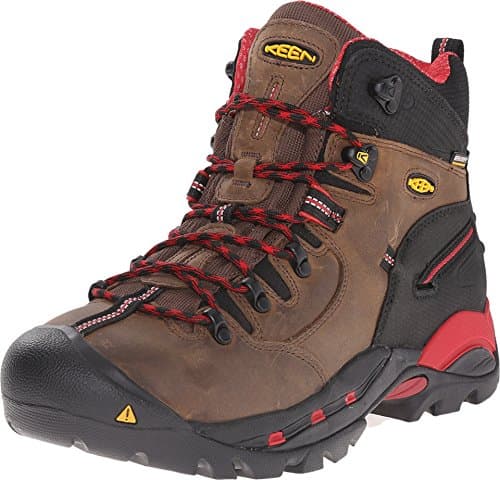
| 1 | 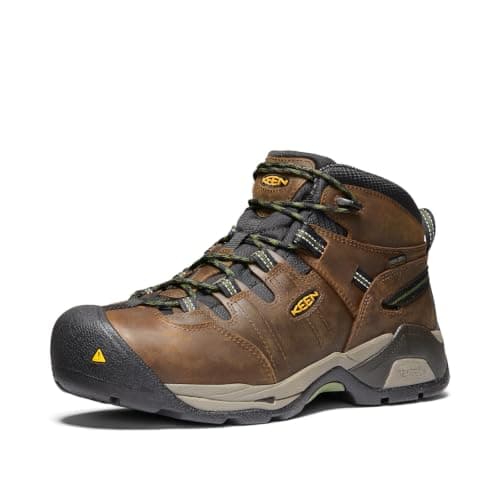 KEEN Utility Detroit XT Mid Steel Toe WaterproofThe closest thing to a work boot that needs no break-in, with the roomiest toe box of anything here. | Comfort on day one, and wide forefeet | 8.8 | |
| 2 | 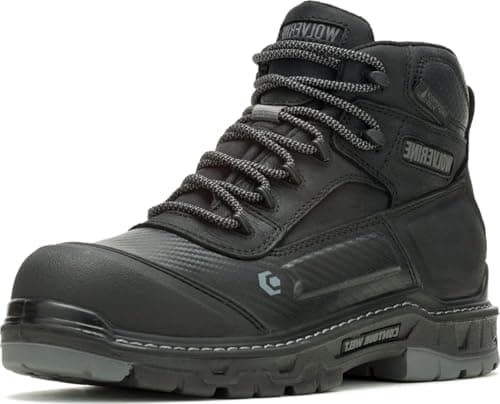 Wolverine Overpass 6" Composite Toe WaterproofThe most flexible safety boot here, and the one that feels least like wearing a boot. | Flex and a close, low-profile fit | 8.4 | |
| 3 | 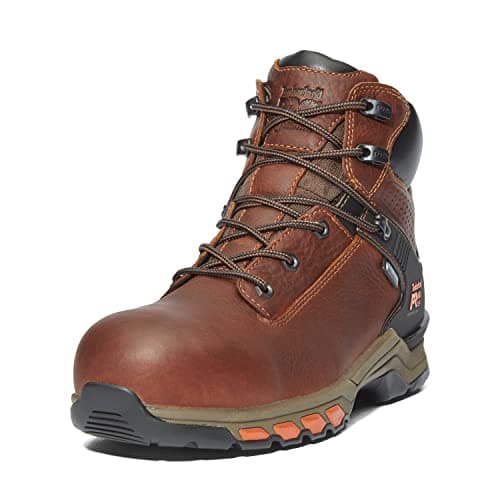 Timberland PRO Hypercharge 6" Composite Toe WaterproofThe best all-round cushioning here, and the one that handles mileage as well as standing. | Standing and walking in the same shift | 8.4 | |
| 4 | 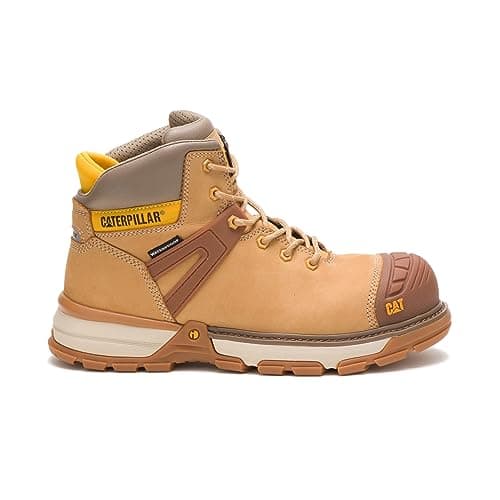 Caterpillar Excavator Superlite Waterproof Composite ToeThe lightest boot here by a clear margin, which is the comfort factor people most often ignore. | The least weight on your foot | 8.2 | |
| 5 | 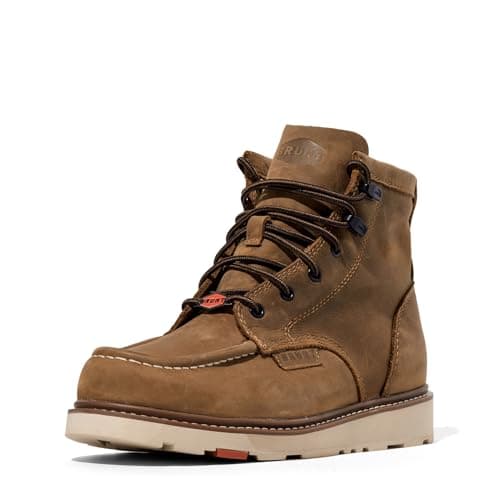 BRUNT Marin Composite Toe WedgeA soft, flat, floor-friendly wedge in a non-metallic safety boot - a combination that barely exists. | A flat wedge with a composite toe | 8.0 | |
| 6 | 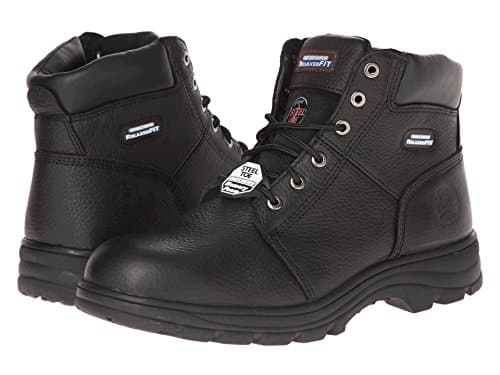 Skechers Work Workshire Relaxed Fit Steel ToeMemory foam and a relaxed fit for the least money - comfortable now, not comfortable for years. | Immediate comfort at the lowest cost here | 7.8 |
#ad Prices pulled from Amazon and stamped as of October 7, 2026; they change, and we show no number we cannot verify. How we are funded.
Top pick · Comfort on day one, and wide forefeet
KEEN Utility Detroit XT Mid Steel Toe Waterproof
The closest thing to a work boot that needs no break-in, with the roomiest toe box of anything here.
Almost every complaint about work boot comfort is really a complaint about the forefoot: a safety toe is a rigid ceiling, and if your foot is wider than the last it gets squeezed against something that will not move. KEEN builds on a genuinely wide forefoot, and the Detroit XT is the version of that last with a steel toe and a waterproof lining. The practical result is that it is comfortable in the first hour rather than the third week.
The trade is that the same roomy forefoot feels sloppy if your foot is narrow, and the waterproof membrane makes it warm - a real problem in summer. It is also not the most supportive boot here; the midsole is soft rather than structured, so if your arch is collapsing you want something stiffer. For most people with sore feet in an ordinary boot, this is the first thing to try.
Specs that matter
- Toe:
- Steel toe, ASTM F2413
- Height:
- Mid / 6 inch
- Waterproof:
- Yes
- Widths:
- D and EE
Our scoring
- Out of box
- 9.4
- Weight
- 7.8
- Toe room
- 9.5
- Cushioning
- 8.4
- Heel hold
- 8.2
What works
- Actually stocked in EE wide, not just a roomy D
- Flexes out of the box rather than demanding a break-in
- Lighter than the Pittsburgh at the same protection
What to know
- Cement construction — no resoling
- Softer upper creases and scuffs quickly
- Less ankle support than a true 8-inch boot
No. 2 · Flex and a close, low-profile fit
Wolverine Overpass 6" Composite Toe Waterproof
The most flexible safety boot here, and the one that feels least like wearing a boot.
The Overpass is built to bend. The upper is cut with flex panels at the ankle and the sole is deliberately soft through the forefoot, so the boot moves with your stride instead of resisting it. Over a day of climbing, kneeling and squatting, that matters more than cushioning does - it is the fighting-the-boot kind of fatigue rather than the impact kind.
Because it flexes, it supports less. There is less structure under the arch than in a traditional welted boot and the soft upper gives up abrasion resistance, so it is a shorter-lived boot than the price suggests. If you stand nearly still all day, the softness works against you and boots for standing on concrete is the better list.
Specs that matter
- Toe:
- Composite toe, ASTM F2413
- Height:
- 6 inch
- Waterproof:
- Yes
- Build:
- Contour Welt, flexible forefoot
Our scoring
- Out of box
- 9.0
- Weight
- 8.6
- Toe room
- 7.6
- Cushioning
- 8.0
- Heel hold
- 8.6
What works
- Flexes at the forefoot, so climbing and kneeling feel natural
- Light for a waterproof composite-toe boot
- Good ankle hold without an 8-inch shaft
What to know
- Flexibility costs some underfoot protection on rebar and rubble
- Outsole wears faster than a stiffer boot's
- Not a cold-weather boot
No. 3 · Standing and walking in the same shift
Timberland PRO Hypercharge 6" Composite Toe Waterproof
The best all-round cushioning here, and the one that handles mileage as well as standing.
Most cushioned boots are tuned for one thing: either standing on a slab or covering ground. The Hypercharge is the rare one that does both acceptably, because the anti-fatigue footbed is a geometry trick rather than a thick slab of foam, so it keeps returning energy instead of bottoming out by hour six. If your day is genuinely mixed, this is the safest pick on the list.
It runs a little narrow in the forefoot compared with the KEEN, and the composite toe box is lower, so toes-up comfort depends on getting the length right. The membrane also makes it warm. Nothing here is a flaw so much as a reminder that comfort is personal: this is the best average, not the best for everyone.
Specs that matter
- Toe:
- Composite toe, ASTM F2413
- Height:
- 6 inch
- Waterproof:
- Yes
- Midsole:
- Anti-Fatigue Technology cushioning
Our scoring
- Out of box
- 8.6
- Weight
- 8.4
- Toe room
- 7.4
- Cushioning
- 9.2
- Heel hold
- 8.8
What works
- Much lighter on the foot than the Boondock at the same protection level
- Anti-Fatigue midsole is a real difference on long standing shifts
- Waterproof without feeling like a rubber boot
What to know
- Athletic-style uppers wear out faster than thick full-grain
- Not resoleable
- Breathes poorly in genuine heat
No. 4 · The least weight on your foot
Caterpillar Excavator Superlite Waterproof Composite Toe
The lightest boot here by a clear margin, which is the comfort factor people most often ignore.
Weight is the comfort variable nobody shops for and everybody feels. You lift each boot several thousand times a shift, so a difference of a few ounces per foot compounds into a genuinely different day. The Excavator Superlite is built around that: a composite toe, a light EVA midsole, and a waterproof upper with as little mass as the brief allows.
Light construction is thin construction. The upper is less abrasion-resistant than full-grain leather, the sole will not take the chemical punishment a TPU outsole will, and it is not the boot for demolition or scrap work. Buy it where the ground is reasonable and the day is long.
Specs that matter
- Toe:
- Carbon composite toe, ASTM F2413
- Height:
- 6 inch
- Waterproof:
- Yes
- Weight:
- Lightweight construction
Our scoring
- Out of box
- 8.8
- Weight
- 9.4
- Toe room
- 7.8
- Cushioning
- 7.8
- Heel hold
- 8.0
What works
- Genuinely light for a waterproof safety boot
- Non-metallic throughout — no metal detector problems
- Cheaper than most composite-toe waterproof boots
What to know
- Light build means the outsole wears sooner
- Less underfoot protection than a heavier boot
- Not resoleable
No. 5 · A flat wedge with a composite toe
BRUNT Marin Composite Toe Wedge
A soft, flat, floor-friendly wedge in a non-metallic safety boot - a combination that barely exists.
A flat wedge spreads your weight over the whole footprint instead of loading a heel and a forefoot, which is why wedges dominate any conversation about standing comfort. Pairing one with a composite toe, so there is no metal to conduct cold or set off a detector, is unusual - and the Marin is noticeably softer underfoot than the heritage wedge boots it is styled after.
A wedge gives up grip on wet rungs and ladder treads, and a soft wedge wears faster than a lugged rubber outsole on abrasive ground. The Marin is also a newer boot without a decade of field history behind it, so we would not claim durability we cannot evidence.
Specs that matter
- Toe:
- Composite toe, ASTM F2413
- Height:
- 6 inch
- Sole:
- Flat wedge
- Weight:
- Lightweight, unlined
Our scoring
- Out of box
- 8.8
- Weight
- 8.2
- Toe room
- 8.4
- Cushioning
- 8.6
- Heel hold
- 7.8
What works
- Composite-toe wedge at an entry-level price
- Unlined, so it breathes better than membrane boots
- Very little break-in
What to know
- Unlined means no waterproofing at all
- Young brand with a shorter durability record than the incumbents
- Wedge sole limits it on ladders and loose ground
Best value · Immediate comfort at the lowest cost here
Skechers Work Workshire Relaxed Fit Steel Toe
Memory foam and a relaxed fit for the least money - comfortable now, not comfortable for years.
If the problem is that your current boots hurt and the budget is small, this is the honest answer. The relaxed fit is roomier than most steel-toe boots at any price, the memory-foam footbed feels good on day one, and it carries the same ASTM toe rating as boots that cost three times as much.
Memory foam compresses permanently, so the comfort it ships with is the best it will ever be - expect the footbed to flatten within months and plan on replacing it with a real insole. The upper is not full-grain leather and the sole cannot be resoled. It is a boot to replace, not a boot to keep.
Specs that matter
- Toe:
- Steel toe, ASTM F2413
- Height:
- 6 inch
- Fit:
- Relaxed fit, roomy
- Electrical hazard:
- EH rated
Our scoring
- Out of box
- 9.2
- Weight
- 8.0
- Toe room
- 8.6
- Cushioning
- 7.6
- Heel hold
- 7.0
What works
- No break-in worth mentioning
- Cheapest EH-rated steel toe we would actually recommend
- Relaxed fit suits wide and swollen feet
What to know
- Soft cushioning packs out within months of daily wear
- Not waterproof
- Upper is the first thing to fail on rough sites
Match the complaint to the fix
| What you feel | Usual cause | What to change |
|---|---|---|
| Toes going numb or nails bruising | Boot too short, so toes hit the rigid cap | Length and toe box - see fit and sizing |
| Burning in the ball of the foot by mid-shift | Hard ground, not enough load spreading | A flat sole and a load-spreading insole - boots for concrete |
| Arch aching, worse in the morning | Arch collapse, not lack of cushioning | Structure, not softness - boots for plantar fasciitis |
| Blisters on the heel | Heel lift from a loose fit or wrong lacing | Lacing and socks - work socks |
| Legs dead by the end of the day | Boot weight and total mileage | A lighter boot - lightweight work boots |
| Lower back sore after standing | Heel height and posture, not the footbed | A flatter sole - boots for back pain |
The two cheap changes to make before buying boots
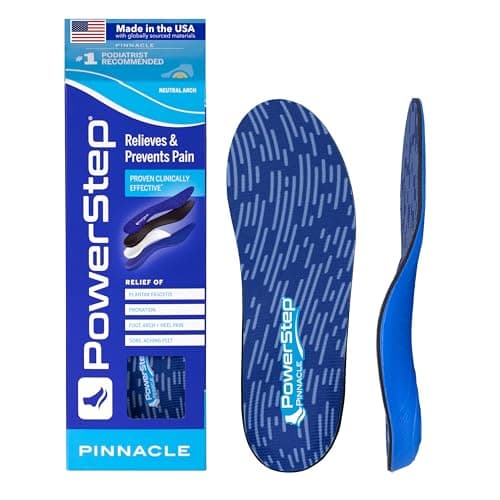
Most boots ship with a thin die-cut footbed that exists to fill the shoe, and replacing it is the single highest-return change in work footwear. Cushioning insoles and support insoles are opposite tools, though: cushioning for standing fatigue on hard ground, a firm or semi-rigid shell for arch collapse and heel pain. Insole types explained sorts out which one your symptom calls for, and insoles for standing on concrete covers the fatigue case specifically.
The second change is socks, and it is less obvious. Cotton holds moisture against your skin, and wet skin blisters at a fraction of the friction dry skin tolerates - which is why a blister problem is often a sock problem wearing a boot costume. A merino or synthetic work sock with real cushioning under the ball and heel also takes up volume, which can quietly fix a boot that was slightly too roomy. Best work socks covers the choice.
Fit beats features, every time
No feature list rescues a boot that does not fit your foot. If your forefoot is wide, that fact overrules cushioning, weight and every brand loyalty you have - and roomy D-width is not the same thing as a genuinely wide last, which is the whole subject of work boots for wide feet. If your arch collapses, structure beats softness every time. And because a safety toe cap will not give, length errors that would be harmless in a sneaker become painful here: fit late in the day, with the socks and insole you actually work in, and leave a thumbnail of room ahead of your longest toe.
Where comfort and the job disagree
Comfort is not the only constraint, and on some jobs it is not even the main one. If you spend the day nearly still on a slab, prioritize load spreading over flex: boots for standing on concrete. If you cover real distance, prioritize weight and breathability: boots for being on your feet all day. If your site specifies a metatarsal guard or a puncture-resistant plate, that spec wins and comfort is chosen within it. And if you want the comfort engineering without the lacing problem, a dial closure is now a real option - see BOA work boots.
Two of the picks here are from the same brand family, which is not an accident: Timberland PRO has spent a decade engineering around standing fatigue specifically. If you have already decided on the brand and just want the right model, Timberland PRO work boots compared walks the lineup.
What we would not call comfortable
Thick memory foam, as a headline feature. It feels excellent in a shop and compresses permanently within months, so the comfort you paid for is gone by the time the boot is broken in. Buying a half size up to create room, which creates heel lift and blisters instead. Any boot described as comfortable with no mention of its last width, since width is where work boot comfort is usually won or lost. And soft, unstructured boots for people whose actual problem is a collapsing arch - softness feels like relief for about an hour and then makes the problem worse. Why work boots hurt goes through the mechanisms one at a time.
Frequently asked
What are the most comfortable work boots?
There is no single answer, because comfort is five different properties. For immediate comfort and a wide forefoot, the KEEN Utility Detroit XT is the strongest pick here. For mixed standing and walking, the Timberland PRO Hypercharge. For the lowest weight, the Caterpillar Excavator Superlite. Work out which of the five is failing you - break-in, weight, toe room, cushioning or heel hold - and pick on that one.
Do comfortable work boots need breaking in?
It depends on the construction. Cemented and athletic-style boots are close to their best on day one and slowly soften from there. Welted leather boots feel stiff for two to four weeks and then mold to your foot, often ending up more comfortable long term. Neither is better in the abstract, but they suit different buyers - if you need comfort this week, buy the first kind.
Are more cushioned work boots always more comfortable?
No. Soft foam compresses under a static load, so a heavily cushioned boot can bottom out by mid-shift for someone standing nearly still, and softness actively works against a collapsing arch, which needs structure instead. Match the cushioning to the problem: foam for impact and mileage, a firmer load-spreading platform for standing on hard ground.
Will an insole make my work boots comfortable?
Often, and it is much cheaper than new boots. Most boots ship with a thin filler footbed, so replacing it is the highest-return change you can make. Pick the type by symptom: cushioning for standing fatigue, a firm or semi-rigid shell for arch pain and heel pain. What an insole cannot fix is a boot that is the wrong length or too narrow in the forefoot.
Should I buy work boots a half size up for comfort?
No. Extra length lets your heel lift, and heel lift is what causes blisters, while your toes still slide forward into the rigid safety cap on every downhill step. If the boot is tight across the forefoot you need a wider last, not a longer boot. Fit at the end of the day, in your work socks, and leave about a thumbnail of room in front of your longest toe.
Sources
Back to Work Boots, or see how we pick. Spotted something wrong? We publish corrections — see our editorial policy.