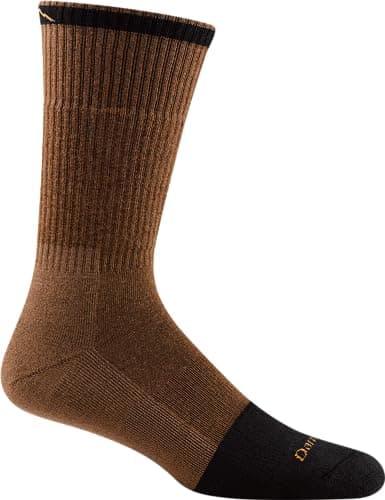
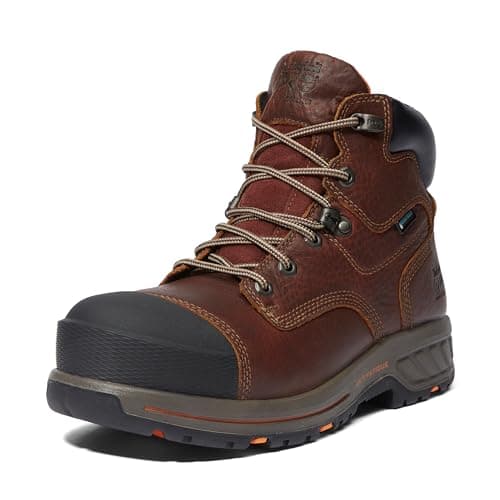
Best for winter
Best Winter Work Boots
A removable liner matters more than the insulation number. Here is why day two is the real test.
Winter boots are sold on a single number - grams of insulation - and that number tells you less than almost any other spec in footwear. It does not account for how damp the boot is, how much air space is inside it, how hard you are working, or how long you are outside. The people who are warm all winter are not the ones who bought the highest number; they are the ones who can dry their boots.
Day one is easy. Day three is the test.
Any insulated boot is warm on the first morning. The problem appears on day two and gets worse on day three, and the cause is moisture. Your feet put a significant amount of sweat into the boot during a shift. Water conducts heat far better than air does, so a damp liner loses much of its insulating value - and a sealed, membrane-lined boot with the insole still in it dries extremely slowly at room temperature.
A removable liner solves this outright: it comes out, it dries overnight in the warm, and it goes back in dry. That single feature is why a cheap removable-liner boot will often keep you warmer across a week than an expensive fixed-liner boot with a bigger insulation number. If your boots do have a fixed liner, the mitigations are to pull the insoles out every night, loosen the boots fully, and alternate two pairs.
Quick picks
Ranked by our published scoring rubric. Tap any row for the full write-up.
| # | Product | Best for | Score | Price |
|---|---|---|---|---|
| 1 | 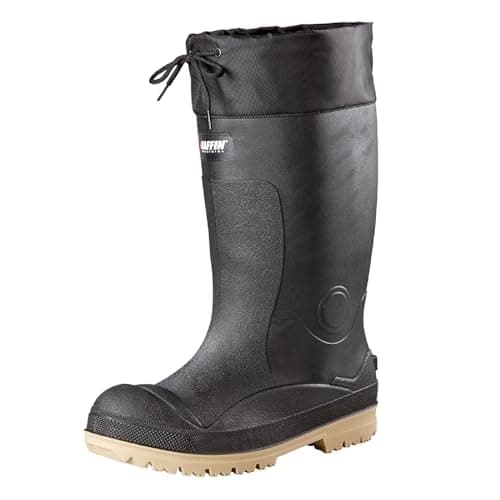 Baffin Titan Waterproof Steel Toe & Plate Slip-OnSteel toe, steel plate and a removable multi-layer liner - the industrial winter answer. | Sustained extreme cold with a safety requirement | 9.6 | |
| 2 | 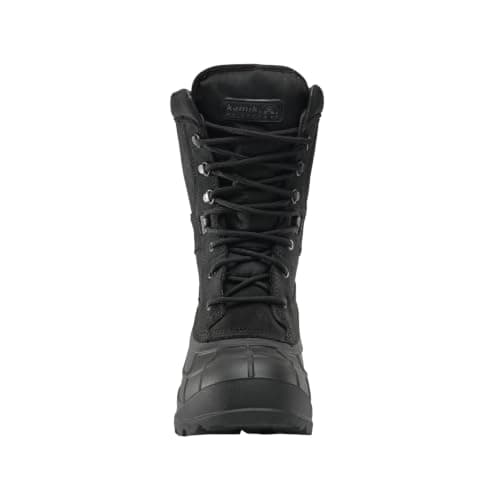 Kamik Nation Plus Waterproof Winter BootA removable liner for a fraction of the price - the single best value in winter footwear. | Cold weather on a budget | 9.4 | |
| 3 | 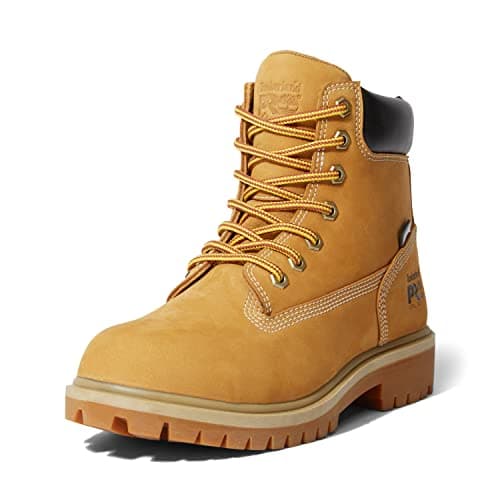 Timberland PRO Women's Direct Attach 6" Steel Toe Insulated WaterproofInsulated, waterproof, steel toe in a women's fit - a genuinely scarce combination. | A women's insulated safety boot | 9.1 | |
| 4 | 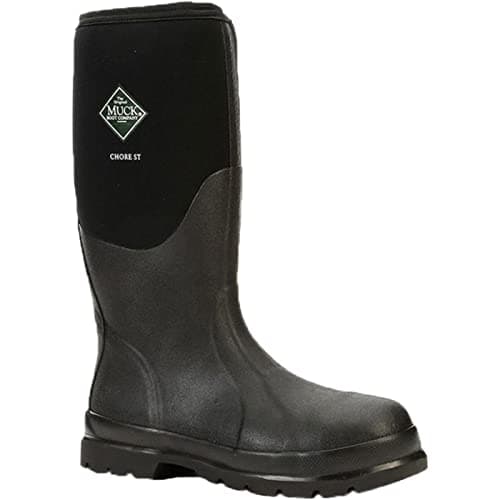 Muck Boot Chore Classic Tall Steel ToeNeoprene insulates and rubber cannot wet out - the right tool for slush and wash-down. | Cold and wet together | 9.1 |
#ad Prices pulled from Amazon and stamped as of November 22, 2026; they change, and we show no number we cannot verify. How we are funded.
Top pick · Sustained extreme cold with a safety requirement
Baffin Titan Waterproof Steel Toe & Plate Slip-On
Steel toe, steel plate and a removable multi-layer liner - the industrial winter answer.
#ad Price as of November 22, 2026. How we are funded
- Our score
- 9.6/10
Category-defining
This is the boot for people who work outdoors in genuine cold all winter and still need a safety rating. A steel toe, a steel puncture plate underfoot, deep insulation and - the part that matters most - a removable multi-layer liner that comes out at the end of a shift and dries overnight.
It is heavy, bulky and far too warm above freezing. That is not a criticism; it is a specialist tool, and treating it as an all-season boot is the mistake. Expect to size with the liner and a thick sock in place.
Specs that matter
- Toe:
- Steel toe, ASTM F2413
- Underfoot:
- Steel puncture plate
- Liner:
- Removable multi-layer insulation
- Style:
- Slip-on
Rubric profile
Raw per-criterion marks out of 10, before weighting — this is the shape of the pick, not its published score. A low mark is a scope limit, not a fault: how we score.
- Warmth
- 9.6
- Liner removability
- 9.5
- Protection
- 9.2
- Mobility
- 5.8
- Value
- 7.4
Why we picked it
- Toe, plate and deep insulation in one boot — rare combination
- Removable liner dries overnight
- Built for genuine extreme cold, not just a cold morning
Good to know: Extreme-cold specialist with a steel toe and plate — far too warm above freezing, and heavy by any standard.
Best value · Cold weather on a budget
Kamik Nation Plus Waterproof Winter Boot
A removable liner for a fraction of the price - the single best value in winter footwear.
#ad Price as of November 22, 2026. How we are funded
- Our score
- 9.4/10
Outstanding
The removable-liner design is not expensive technology, and this boot proves it. A waterproof rubber shell, a removable thick liner, and a manufacturer rating well below zero, for less than many uninsulated leather boots cost.
Soft toe, so it is not a safety boot, and it is bulky with poor feel for ladder rungs. For yard work, snow clearing, outdoor non-regulated work and anyone who just needs warm dry feet, it is hard to beat on value.
Specs that matter
- Toe:
- Soft toe
- Liner:
- Removable 8 mm Zylex liner
- Waterproof:
- Waterproof rubber shell
- Rated:
- Manufacturer rates it to -40 F
Rubric profile
Raw per-criterion marks out of 10, before weighting — this is the shape of the pick, not its published score. A low mark is a scope limit, not a fault: how we score.
- Warmth
- 9.0
- Liner removability
- 9.5
- Protection
- 5.0
- Mobility
- 6.4
- Value
- 9.5
Why we picked it
- Removable liner can be dried separately — the single most useful winter-boot feature
- Rubber shell shrugs off slush and road salt
- Cheap relative to the warmth
Good to know: A winter boot with no rated toe: warm and cheap, with little feel for a ladder rung.
No. 3 · A women's insulated safety boot
Timberland PRO Women's Direct Attach 6" Steel Toe Insulated Waterproof
Insulated, waterproof, steel toe in a women's fit - a genuinely scarce combination.
#ad Price as of November 22, 2026. How we are funded
- Our score
- 9.1/10
Outstanding
Women's winter work boots that are actually safety-rated are hard to find, and most of what exists is a men's boot in a smaller size, which fits wrong through the heel and instep. This is built on a women's last with insulation, a waterproof direct-attach construction and a steel toe.
The liner is not removable, which is the main limitation - it means overnight drying is slower, so rotating two pairs matters more. Too warm for anything but cold-season work.
Specs that matter
- Toe:
- Steel toe, ASTM F2413
- Insulation:
- 200 g primaloft-type insulation
- Waterproof:
- Yes
- Build:
- Direct-attach waterproof seal
Rubric profile
Raw per-criterion marks out of 10, before weighting — this is the shape of the pick, not its published score. A low mark is a scope limit, not a fault: how we score.
- Warmth
- 8.4
- Liner removability
- 3.0
- Protection
- 8.8
- Mobility
- 7.4
- Value
- 7.8
Why we picked it
- Insulated and waterproof in a women's fit, which is genuinely scarce
- Direct-attach construction seals the sole joint well
- EH rated
Good to know: 200g of insulation makes it a genuine winter boot and too warm for summer; the direct-attach sole is not resoleable.
No. 4 · Cold and wet together
Muck Boot Chore Classic Tall Steel Toe
Neoprene insulates and rubber cannot wet out - the right tool for slush and wash-down.
#ad Price as of November 22, 2026. How we are funded
- Our score
- 9.1/10
Outstanding
Winter is often wet as well as cold, and that combination defeats leather boots: a soaked boot loses most of its insulating value and takes days to dry. Rubber over neoprene cannot absorb water at all, and the neoprene provides genuine insulation while staying flexible in the cold.
Steel toe, hoses clean, and it handles road salt and slush that destroy leather. No breathability at all, so the sock does all the moisture work - and it is less warm than a true extreme-cold boot.
Specs that matter
- Toe:
- Steel toe, ASTM F2413
- Material:
- Rubber over neoprene
- Waterproof:
- Fully waterproof, not just resistant
- Height:
- Tall shaft
Rubric profile
Raw per-criterion marks out of 10, before weighting — this is the shape of the pick, not its published score. A low mark is a scope limit, not a fault: how we score.
- Warmth
- 7.6
- Liner removability
- 4.0
- Protection
- 8.4
- Mobility
- 6.8
- Value
- 8.8
Why we picked it
- Genuinely waterproof in a way no membrane boot matches
- Neoprene lining insulates and flexes
- Rinses clean with a hose
Good to know: Rubber does not breathe, so your sock choice matters more than usual here; the outsole wears quickly on abrasive concrete.
The sizing rule nobody mentions
Insulation does not warm you. Trapped still air does, and the insulation's job is to hold that air in place. If you lace a boot tightly over thick socks, you compress the air out of both the socks and the insulation, and you also restrict blood flow to the foot - which is the actual source of the heat. The result is genuinely colder feet in a warmer boot.
- Fit winter boots with the socks and liner you will actually wear, and leave room to wiggle your toes.
- Many people need a half size up for winter boots over their summer size. That is normal, not a fitting error.
- If your toes go numb in thick socks, try thinner socks in the same boot first - it is usually compression, not cold.
- Work boot fit and sizing covers measuring properly.
Steel toes and cold
A steel toe cap is a large piece of metal pressed against the front of your foot, and metal conducts heat away from you far faster than a composite does. In sustained cold this is a real and commonly reported effect, and it is one of the strongest arguments for choosing composite in winter work - same ASTM impact rating, considerably warmer toes. See composite toe vs steel toe and composite toe work boots.
Socks, and the heated option
Cotton socks in winter are actively dangerous for your comfort: once damp they lose their loft and hold water against your skin, which is how cold feet become numb feet. Merino is the right default - it insulates when damp, which no synthetic does as well - and the picks are at best work socks.
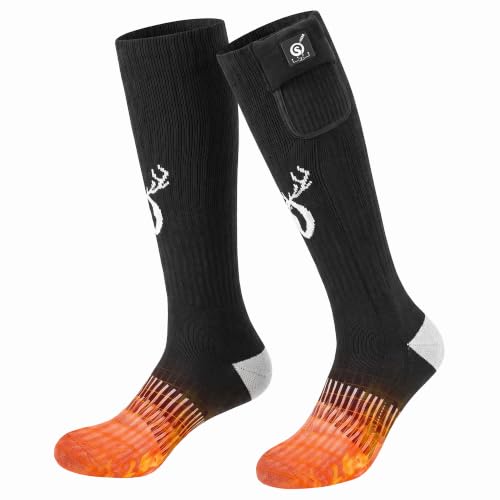
When insulation is not enough because you are static in the cold, battery-heated socks add heat rather than just slowing its loss, which is a different mechanism entirely: see heated socks and the broader heated work gear hub. Two caveats - heated socks are thick, so they need boot room, and they are not compatible with FR requirements.
What we would skip
Skip insulated boots as a year-round pair; you will regret them by April. Skip comparing insulation grams across brands as though it were a standard measure. Skip drying boots on a radiator, in front of a heater or with a hair dryer - direct heat cracks leather and delaminates adhesives, and boot care and conditioning covers the right way. And skip waterproof-only boots for genuinely wet winter work where water comes over the collar; that is a rubber-boot job. On the gram numbers themselves, work boot insulation grams explained sets out which level suits which winter. For a 600g insulated boot sorted against its uninsulated siblings in the same line, see Carolina work boots.
Frequently asked
What are the warmest work boots for winter?
In practice, the ones with a removable liner you can dry overnight - not necessarily the ones with the highest insulation rating. A damp liner loses much of its insulating value, so by day two a cheaper removable-liner boot often outperforms an expensive fixed-liner one.
How many grams of insulation do I need in work boots?
Treat it as a rough band rather than a specification, because it is not comparable across brands or activity levels. Around 200 grams suits active work in moderate cold; 400 to 600 suits less active work in real cold; 1,000 and up is for sustained static exposure. Fit room and dryness matter more than the number.
Should I size up for winter work boots?
Often yes, by about a half size, because insulation only works if there is still air inside the boot. Lacing tightly over thick socks compresses the air out and restricts circulation, which makes your feet colder in a warmer boot. Fit them with the socks and liner you will actually wear.
Are steel toe boots colder in winter?
Yes, noticeably. A steel cap conducts heat away from your toes far faster than a composite one does, and it is a very common winter complaint. Composite meets the same ASTM impact rating, so for cold-weather work it is usually the better choice.
Do heated socks work in work boots?
They do, and unlike insulation they add heat rather than slowing its loss, which is what you need if you are static in the cold. Two practical limits: they are thick, so the boot needs room for them, and they are not compatible with flame-resistant clothing requirements.
Our recommendation
If you read nothing else on this page, these are the two to look at — the one we would buy, and the one to take instead if its trade-off suits you better.
Top pick · Sustained extreme cold with a safety requirement
Baffin Titan Waterproof Steel Toe & Plate Slip-On
Steel toe, steel plate and a removable multi-layer liner - the industrial winter answer.
#ad Price as of November 22, 2026. How we are funded
Runner-up · Cold weather on a budget
Kamik Nation Plus Waterproof Winter Boot
A removable liner for a fraction of the price - the single best value in winter footwear.
#ad Price as of November 22, 2026. How we are funded
Prices are read live from Amazon and stamped with the date. How we pick.
Brands: want your product tested? For Brands.
Sources
Back to Work Boots, or see how we pick. Spotted something wrong? We publish corrections — see our editorial policy.