Best for flat feet
Best Work Boots for Flat Feet
Flat feet are not a problem to cushion. They are a problem to support, and the two are opposites.
Flat feet - more precisely, a low or collapsed arch, often with overpronation - is a structural characteristic rather than an injury, and it has clear footwear implications. People with flat feet who stand on hard floors report more arch and midfoot fatigue, more knee and hip complaints, and a higher rate of plantar fasciitis, because the arch is working at the limit of its range all day.
What overpronation actually is
Pronation is the normal inward roll of the foot as you take a step - it is how your foot absorbs shock. Overpronation is that roll going further and lasting longer than it should, usually because the arch is low and the supporting structures do not resist it. The knock-on effects run up the chain: the lower leg rotates inward, which changes loading at the knee and hip.
The footwear answer is motion control: structures that physically resist that inward roll. A firm midsole, a stiff shank, a wide outsole platform, a deep heel cup, and - most of all - a rigid or semi-rigid insole with a supportive arch. The exact opposite of a soft cushioned boot, which allows more movement rather than less.
Quick picks
Ranked by our published scoring rubric. Tap any row for the full write-up.
| # | Product | Best for | Score | Price |
|---|---|---|---|---|
| 1 | 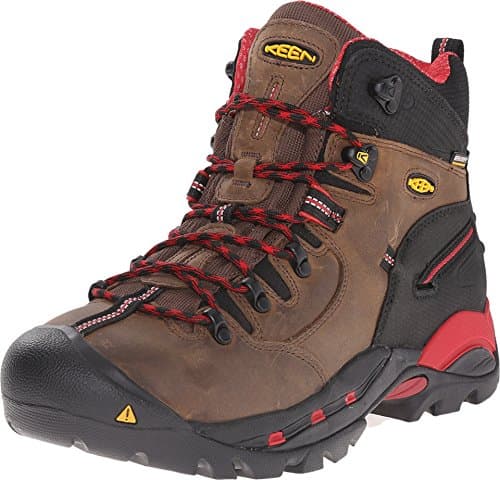 KEEN Utility Pittsburgh 6" Steel Toe WaterproofA stable, roomy, welted platform with the depth a rigid insole needs. | Overpronation with wide feet | 8.7 | |
| 2 | 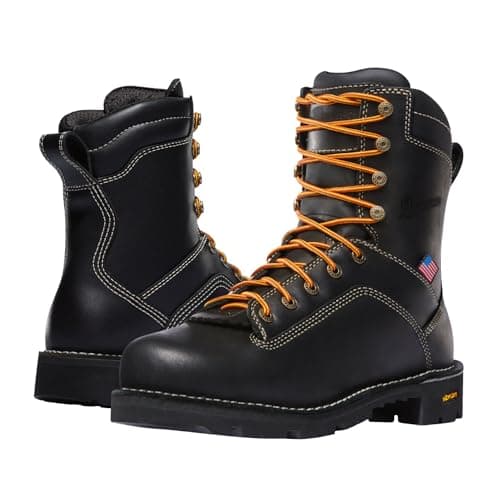 Danner Quarry 8" Waterproof Alloy ToeA genuine shank and stitchdown build - structural support that lasts years. | The strongest shank support here | 8.8 | |
| 3 | 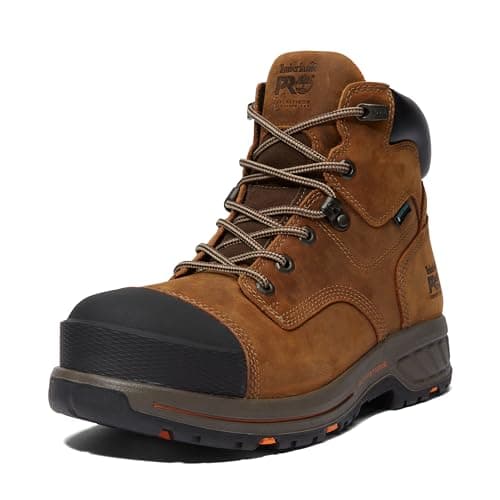 Timberland PRO Helix HD 6" Composite Toe WaterproofThe broadest base of the four - stability from geometry rather than stiffness. | A wide, stable platform | 8.2 | |
| 4 | 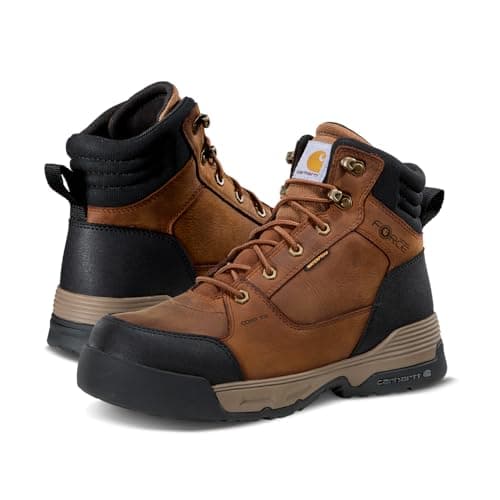 Carhartt Force HD 6" Composite Toe WaterproofAvailable in wide, stiff enough to support, and not a specialist price. | Wide widths from stock | 8.0 |
#ad Prices pulled from Amazon and stamped as of October 6, 2026; they change, and we show no number we cannot verify. How we are funded.
Top pick · Overpronation with wide feet
KEEN Utility Pittsburgh 6" Steel Toe Waterproof
A stable, roomy, welted platform with the depth a rigid insole needs.
Flat feet frequently come with a wider forefoot, because a collapsed arch spreads the foot out. That combination rules out a lot of otherwise supportive boots, which are built narrow. KEEN's asymmetrical toe caps and genuinely wide last solve it.
The welted construction is stiff and stable, and - the key point - there is enough internal volume to fit a full rigid shell insole without the boot becoming tight. That is what makes it the best base here.
Specs that matter
- Toe:
- Asymmetrical steel toe, ASTM F2413
- Height:
- 6 inch
- Waterproof:
- Yes, KEEN.DRY membrane
- Build:
- Goodyear welt
Our scoring
- Motion control
- 8.6
- Insole room
- 9.4
- Lateral stability
- 8.8
- Shank support
- 8.4
- Value
- 7.6
What works
- Left and right specific toe caps, so the toe box is shaped like a foot
- Welted, so it can be resoled
- The go-to recommendation for wide feet in a safety toe
What to know
- Runs large — most buyers size down a half
- Steel toe in a waterproof boot is heavy
- Toe box looks bulky if that bothers you
No. 2 · The strongest shank support here
Danner Quarry 8" Waterproof Alloy Toe
A genuine shank and stitchdown build - structural support that lasts years.
The shank is the stiffening element in the midfoot, and for a flat foot it does real work: it resists the boot collapsing in the same direction your arch wants to. A boot with a proper shank gives you something to stand on; a soft boot simply follows your foot down.
The Quarry has one, keeps it for years, and can be recrafted. For a permanent structural issue, that longevity is the right investment. Heavy and stiff, which here is the feature.
Specs that matter
- Toe:
- Alloy toe, ASTM F2413
- Height:
- 8 inch
- Waterproof:
- Gore-Tex lined
- Build:
- Stitchdown, recraftable
Our scoring
- Motion control
- 9.0
- Insole room
- 8.0
- Lateral stability
- 9.2
- Shank support
- 9.4
- Value
- 7.2
What works
- Danner will recraft it, so the price is spread over many years
- Gore-Tex is the most reliable waterproof lining in footwear
- Alloy toe is lighter than steel at the same rating
What to know
- Expensive up front
- Stiff and heavy for flat-concrete work
- Long break-in
No. 3 · A wide, stable platform
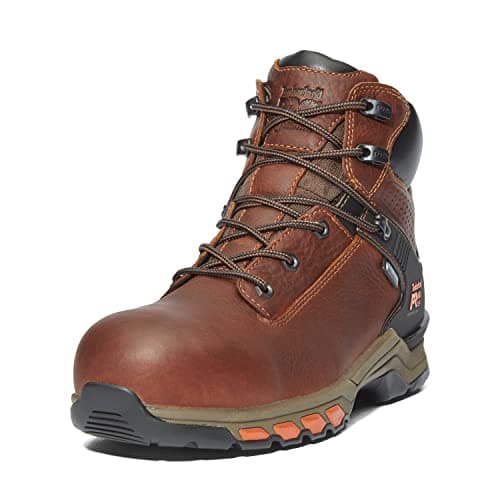
Timberland PRO Helix HD 6" Composite Toe Waterproof
The broadest base of the four - stability from geometry rather than stiffness.
Overpronation is a rolling-inward motion, and one of the simplest ways to resist it is a wide outsole platform: the further out the edges of the sole are, the more leverage the boot has against your foot rolling. It is an underrated and comfortable form of support.
The Helix HD is built on a notably wide platform, waterproof and non-metallic, and more comfortable than the stiff heavyweights above. Less absolute support than a true shanked boot, more comfort day to day.
Specs that matter
- Toe:
- Composite toe, ASTM F2413
- Height:
- 6 inch
- Waterproof:
- Yes
- Electrical hazard:
- EH rated
Our scoring
- Motion control
- 8.0
- Insole room
- 8.0
- Lateral stability
- 8.8
- Shank support
- 7.4
- Value
- 7.8
What works
- Balances cushioning and support better than either Boondock or Hypercharge
- Wide platform feels stable on ladders and scaffold planks
- EH rated and non-metallic
What to know
- Middle-of-the-range in every dimension, best at nothing
- Membrane means warm feet in summer
- Cement construction, not resoleable
No. 4 · Wide widths from stock
Carhartt Force HD 6" Composite Toe Waterproof
Available in wide, stiff enough to support, and not a specialist price.
A practical pick: oil-tanned leather, composite toe, waterproof, stocked in wide widths, and firm enough through the midsole to be a reasonable support platform once you add a proper insole.
Heavy for a 6-inch boot and it needs a real break-in. But it is the easiest of these to actually buy in a wide size, which for flat feet is often the binding constraint.
Specs that matter
- Toe:
- Composite toe, ASTM F2413
- Height:
- 6 inch
- Waterproof:
- Yes
- Upper:
- Oil-tanned full-grain leather
Our scoring
- Motion control
- 7.6
- Insole room
- 8.2
- Lateral stability
- 8.0
- Shank support
- 7.8
- Value
- 8.2
What works
- Oil-tanned leather resists the chemical splash that cracks cheaper uppers
- Non-metallic toe keeps the cold out better than steel
- Available in wide widths from stock
What to know
- Heavy for a 6-inch boot
- Break-in is real — expect a week
- Cement construction, not resoleable
Why the insole matters more than the boot
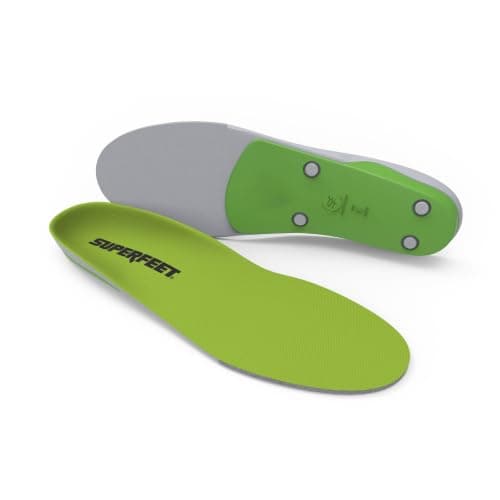
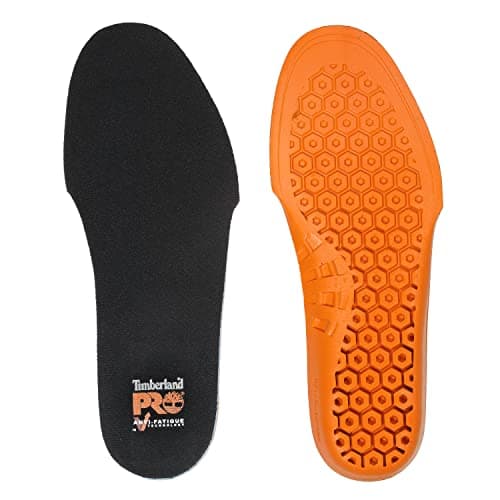
No work boot is built as an orthotic. Boot makers design for a population, and arch height varies enormously, so the stock footbed is a compromise with almost no structure. The intervention that genuinely changes how a flat foot loads is a rigid shell insole - and that is a twenty-to-sixty-dollar part, not a three-hundred-dollar boot.
So the sensible strategy is: buy a boot that is stable, stiff and deep enough to take a real insole, then buy the insole. Insoles for flat feet covers the picks. Two warnings - a rigid insole takes time to adapt to, typically one to two weeks of increasing wear, and it takes up volume, so a snug boot will become too tight. Always remove the factory footbed first.
The width problem
A collapsed arch lowers and lengthens the foot, which spreads the forefoot. That is why so many people with flat feet also need a wide boot, and why the combination is frustrating to shop for: the most supportive boots tend to be built on narrow lasts, and the roomiest boots tend to be soft. The brands that solve both are a short list, which is exactly what boots for wide feet is about.
What we would skip
Skip soft, flexible, heavily cushioned boots - they feel supportive in the shop because the footbed molds to your arch, and they offer no actual resistance to it collapsing. Skip gel insoles. Skip stacking an insole on top of the factory one. And skip pushing through week one of a rigid insole in a single twelve-hour shift: build up to it over a fortnight, or you will conclude it does not work when the problem was the adaptation.
Frequently asked
What work boots are best for flat feet?
Boots with a firm midsole, a genuine shank, a wide stable outsole platform, and enough internal depth to fit a rigid support insole. Avoid soft, flexible, heavily cushioned boots - they allow more arch collapse rather than resisting it.
Do I need arch support insoles for flat feet?
For work on hard floors, almost certainly. No stock boot footbed provides real structure, and a rigid or semi-rigid shell insole is the intervention that actually changes how a flat foot loads. Remove the factory insole first and build up wear over one to two weeks.
Is cushioning or support better for flat feet?
Support. Cushioning lets the foot move more, which is the opposite of what a low arch needs. The term to look for is motion control: a firm sole, a stiff shank, a wide platform and a deep heel cup.
Do flat feet make work boots feel tight?
Often, yes - a collapsed arch spreads the forefoot, so people with flat feet frequently need a wider boot as well as a more supportive one. That combination is genuinely hard to shop for, since supportive boots tend to be narrow and wide boots tend to be soft.
Sources
Back to Work Boots, or see how we pick. Spotted something wrong? We publish corrections — see our editorial policy.