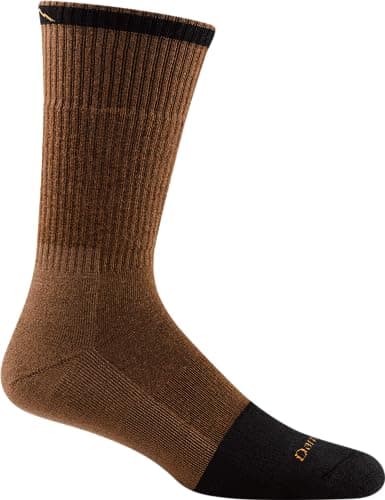
Best for cold weather
Best Cold Weather Work Gloves
Warmth and dexterity pull against each other. The trick is knowing which you can least afford to lose.
Cold-weather gloves are a genuinely hard problem, because the two things you want are in direct opposition. Insulation requires bulk, and bulk costs dexterity. There is no glove that is both very warm and very dextrous, and anyone who tells you otherwise is selling something. So the useful approach is to work out which failure you can least afford - cold hands or clumsy hands - and buy accordingly.
The thing most winter gloves get wrong
Ask people why their winter gloves failed and most will say they were not warm enough. Press further and the usual story is that the gloves got wet - and in most cases not from the outside but from water and snow running down the sleeve into the cuff, or from sweat during exertion with nowhere to go.
Wet insulation is barely insulation at all, because water conducts heat far better than the trapped air the insulation is holding. So the two features that matter most are a cuff that seals at the wrist - a knit cuff or a cinchable gauntlet under your sleeve - and some way of managing sweat, which usually means not wearing more glove than the conditions need.
Quick picks
Ranked by our published scoring rubric. Tap any row for the full write-up.
| # | Product | Best for | Score | Price |
|---|---|---|---|---|
| 1 | 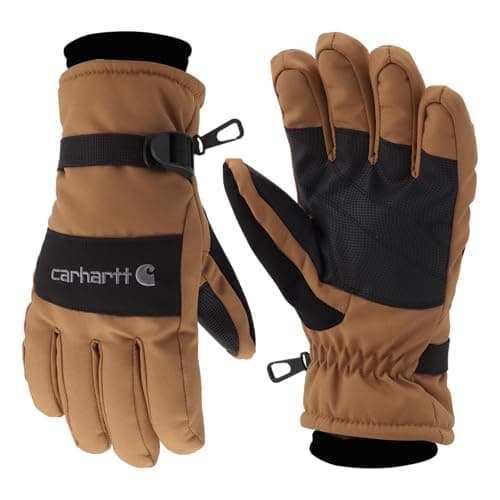 Carhartt Waterproof Insulated Knit-Cuff GloveA knit cuff that actually seals the wrist - the detail most winter gloves get wrong. | Cold and wet together | 8.3 | |
| 2 | 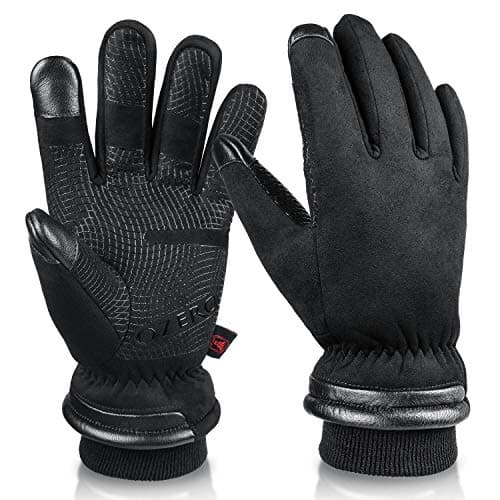 OZERO Winter Work Gloves (Waterproof, Touchscreen)Waterproof and insulated with working touchscreen fingertips, cheaply. | Keeping touchscreen use possible | 7.9 | |
| 3 | 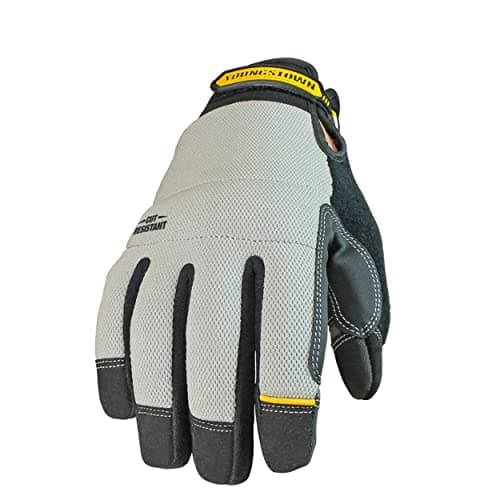 Youngstown Glove General Utility Lined with KevlarA lined utility glove for cool rather than cold - and you can still work in it. | Moderate cold with real dexterity | 7.4 | |
| 4 | 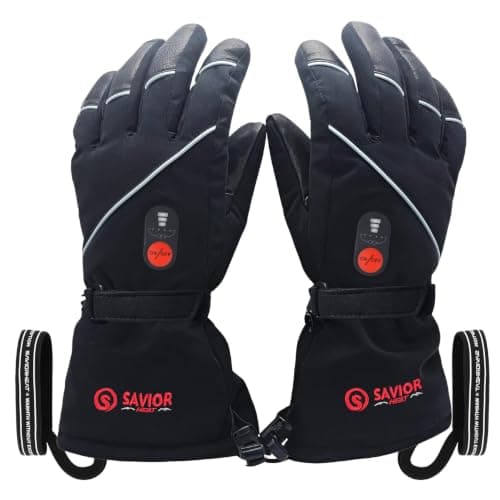 SAVIOR HEAT Rechargeable Heated Leather GlovesBattery heat to the fingertips - the only real fix for hands that have gone numb. | When insulation has stopped working | 7.8 |
#ad Prices pulled from Amazon and stamped as of October 6, 2026; they change, and we show no number we cannot verify. How we are funded.
Top pick · Cold and wet together
Carhartt Waterproof Insulated Knit-Cuff Glove
A knit cuff that actually seals the wrist - the detail most winter gloves get wrong.
The most common winter glove failure is not insufficient insulation, it is water and snow running down your wrist and soaking the lining from the inside. A knit cuff that grips the wrist stops that, and it is the feature that makes this glove work.
Genuinely waterproof with real insulation. No breathability, so hands sweat on exertion, and no touchscreen compatibility - which in practice means taking a glove off to use a phone.
Specs that matter
- Waterproof:
- Waterproof insert
- Insulation:
- Insulated lining
- Cuff:
- Knit, seals at wrist
- Touchscreen:
- No
Our scoring
- Warmth
- 8.6
- Waterproofing
- 9.0
- Dexterity
- 6.0
- Durability
- 8.0
- Value
- 8.4
What works
- Knit cuff keeps snow and water from running down your wrist
- Genuinely waterproof, not just resistant
- Warm without being a ski mitt
What to know
- Waterproof insert means no breathability
- Bulky, with limited dexterity
- No touchscreen compatibility
Best value · Keeping touchscreen use possible
OZERO Winter Work Gloves (Waterproof, Touchscreen)
Waterproof and insulated with working touchscreen fingertips, cheaply.
Most insulated waterproof gloves make you remove a glove to use a phone or tablet - and in cold weather that bare hand loses heat fast and takes a long time to recover. Touchscreen-compatible fingertips in a genuinely waterproof winter glove is a small feature with a disproportionate effect on a working day.
A fraction of the price of premium winter gloves. The membrane durability is the weak point, and it is not warm enough for sustained sub-zero work.
Specs that matter
- Waterproof:
- Waterproof membrane
- Insulation:
- Thermal lining
- Touchscreen:
- Yes, thumb and index
- Windproof:
- Yes
Our scoring
- Warmth
- 7.4
- Waterproofing
- 7.8
- Dexterity
- 7.4
- Durability
- 6.4
- Value
- 9.4
What works
- Keeps phone use possible in the cold, which most waterproof gloves do not
- A fraction of the price of premium winter gloves
- Warm enough for most outdoor trades above freezing
What to know
- Membrane durability is the weak point
- Not warm enough for sustained sub-zero work
- No impact or cut protection
No. 3 · Moderate cold with real dexterity
Youngstown Glove General Utility Lined with Kevlar
A lined utility glove for cool rather than cold - and you can still work in it.
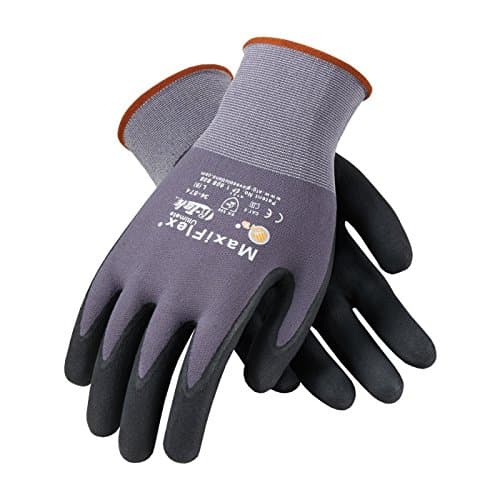
There is a large temperature band - roughly freezing to the mid-forties - where a full winter glove is too much and a bare coated glove is too little. A lined utility glove covers it, keeping enough dexterity for tool work while taking the edge off.
Not waterproof and not warm enough for genuine cold. The Kevlar lining adds useful cut resistance as a bonus, though with no published ANSI level.
Specs that matter
- Liner:
- Kevlar lined
- Palm:
- Synthetic leather, reinforced
- Cut resistance:
- Kevlar liner; ANSI level not published for this model
- Made in:
- Designed in USA
Our scoring
- Warmth
- 6.4
- Waterproofing
- 4.5
- Dexterity
- 7.6
- Durability
- 8.6
- Value
- 7.8
What works
- Kevlar lining adds real cut resistance to a normal-feeling glove
- Durable enough for utility and lineman work
- Good wrist coverage
What to know
- No published ANSI cut level, so you cannot spec it to a standard
- Warmer than an uncoated glove in summer
- Costs more than a plain utility glove
No. 4 · When insulation has stopped working
SAVIOR HEAT Rechargeable Heated Leather Gloves
Battery heat to the fingertips - the only real fix for hands that have gone numb.
Insulation only slows the loss of heat your hands are producing. Once your hands are cold enough that circulation has shut down, adding layers does nothing - which is the experience of anyone doing static work in real cold. A heating element adds heat, which is a different mechanism entirely.
The important detail is that the heat runs to the fingertips, since most heated gloves stop at the knuckles and the fingers are what go numb. Bulky, expensive, not a safety glove, and the cuff batteries catch on sleeves. See heated work gloves for the full case.
Specs that matter
- Heating:
- Back of hand through to fingertips
- Battery:
- Rechargeable, one per glove
- Material:
- Leather shell, insulated
- Settings:
- Three heat levels
Our scoring
- Warmth
- 9.6
- Waterproofing
- 6.8
- Dexterity
- 4.5
- Durability
- 7.0
- Value
- 7.0
What works
- Fingertip heating is what actually matters — most heated gloves stop at the knuckles
- Leather shell is durable enough for real work
- Three settings let you trade heat for run time
What to know
- Bulky; dexterity is poor
- Batteries in the cuffs catch on sleeves
- Expensive and not a safety glove in any respect
Why bare hands are worse than clumsy hands
The behavioral trap: a glove too bulky for the task gets pulled off, and in cold conditions a bare hand loses heat quickly and takes a long time to rewarm once circulation has reduced. So a cycle of removing warm gloves repeatedly can leave you colder than wearing thinner gloves continuously would have.
Two practical answers. Either wear the thinnest glove that is adequate, so you never need to remove it - the case for the lined utility glove above. Or buy a glove with touchscreen fingertips so phone use does not require stripping down. Both are more effective than buying the warmest glove available.
When to switch to heated gloves
This is the honest dividing line. If you are working hard in the cold, your body is producing heat and insulation is the right tool - your hands will be fine in a decent lined glove. If you are static - operating equipment, flagging, inspecting, waiting - your body is producing much less heat, circulation to the extremities drops, and no amount of insulation fixes it because there is little heat to retain.
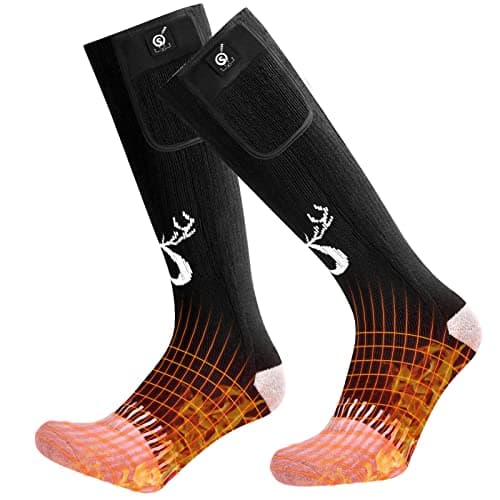
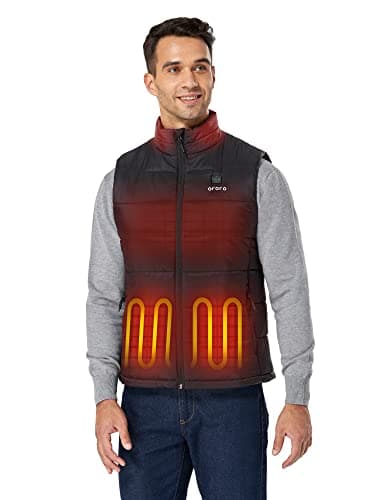
That is where battery heat genuinely changes things: it adds energy rather than conserving it. Heated work gloves covers the options, and the same logic applies to feet at heated socks and the core at heated vests. One hard limit: heated gear has wiring and a battery in it and is not flame resistant, so it has no place in FR environments.
What we would skip
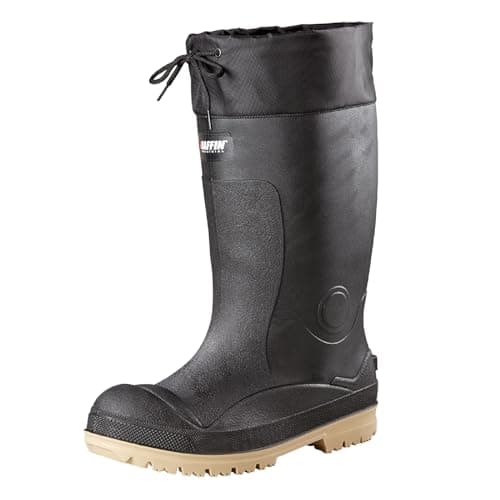
Skip gloves without a wrist seal for snow and wet work. Skip wearing your warmest gloves for active work, where you will sweat into them and be colder later. Skip cotton glove liners, which hold moisture. And skip heated gloves anywhere FR clothing is required. For the rest of the winter kit, winter work boots explains the removable-liner argument that applies to feet.
Frequently asked
What are the warmest work gloves for cold weather?
For active work, a waterproof insulated glove with a sealing knit cuff. For static work in real cold, battery-heated gloves are substantially warmer, because insulation only retains the heat your body makes and a static body makes little. Keep the wrist sealed either way.
Why do my hands still get cold in insulated gloves?
Usually because the insulation is wet - either from snow and water running down your sleeve into the cuff, or from your own sweat during exertion. Wet insulation conducts heat away rather than retaining it. A sealing cuff and not over-gloving for the conditions both help.
Are heated gloves worth it for work?
If your work is static in genuine cold - equipment operating, flagging, inspection - yes, because they add heat rather than just slowing its loss. If you are working hard, a good insulated glove is enough and far less bulky. Heated gloves are not flame resistant and must not be worn where FR clothing is required.
Should winter work gloves be waterproof?
If there is snow, slush or wet material involved, yes - wet insulation stops working. If your cold is dry, a waterproof membrane mainly traps sweat, which gets you wet from the inside instead. Match it to the conditions rather than buying waterproof by default.
Sources
Back to Work Gloves, or see how we pick. Spotted something wrong? We publish corrections — see our editorial policy.