Fit & sizing
How Work Boots Should Fit
A well-chosen boot in the wrong size performs worse than a mediocre boot that fits.
Fit matters more than any specification on a work boot. A three-hundred-dollar boot in the wrong size will hurt you more than a hundred-dollar boot that fits, and most of the complaints people attribute to boot quality - bruised toenails, heel blisters, numb toes, arch pain - are fit problems with specific, identifiable causes.
What a correct fit feels like
- Heel: barely lifts when you walk. A quarter-inch of movement in a new boot is acceptable and should reduce as the boot breaks in; more than that will not fix itself.
- Instep: firm pressure when laced, without needing to pull painfully tight. If you have to crush the laces to stop heel slip, the boot is too roomy for you.
- Toes: roughly a thumb's width of space ahead of your longest toe, and you should be able to wiggle them. Your toes must not touch the end when standing.
- Ball of the foot: the widest part of your foot should sit at the widest part of the boot. If the boot's flex point is behind or ahead of your ball, the length is wrong.
- Width: no pressure on the sides of your forefoot. This is permanent under a safety cap.
How to measure properly
- Measure late in the day. Feet swell measurably over a day, and more in heat and on your feet. A boot fitted at 9am will be tight by 6pm: boots for standing all day.
- Measure standing, with your weight on the foot, because the foot lengthens and widens under load.
- Wear your work socks. Thickness changes fit substantially - a thick padded sock can take up half a size of volume.
- Measure both feet. Most people have one longer foot; fit to the larger one.
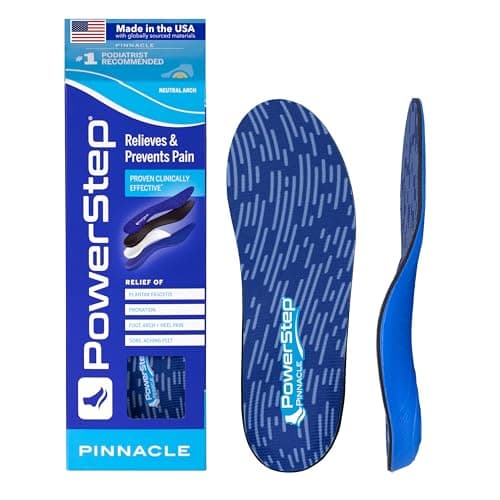
- If you use an aftermarket insole, bring it. A rigid insole consumes real volume: insoles for flat feet.
Quick picks
Ranked by our published scoring rubric. Tap any row for the full write-up.
| # | Product | Best for | Score | Price |
|---|---|---|---|---|
| 1 | 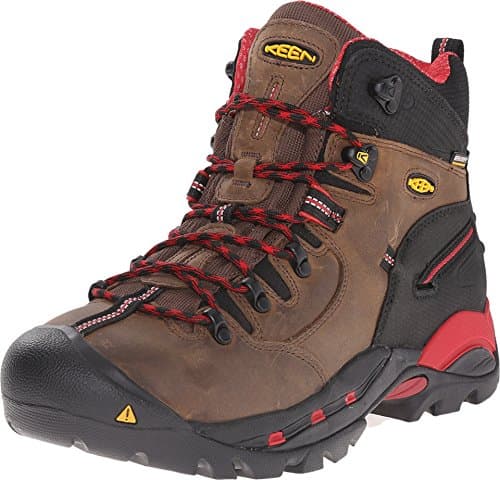 KEEN Utility Pittsburgh 6" Steel Toe WaterproofAsymmetrical caps and a wide last - the fit-first recommendation. | A boot whose fit geometry solves problems | 8.8 | |
| 2 | 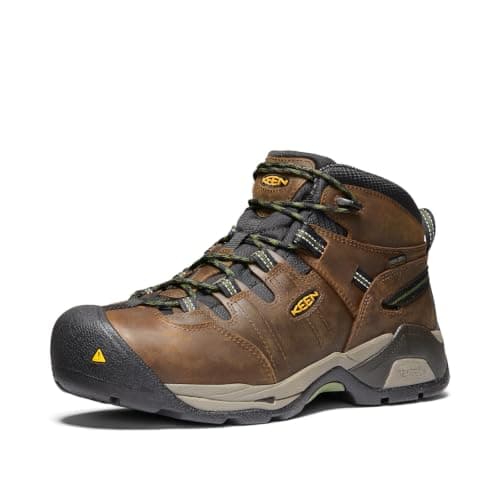 KEEN Utility Detroit XT Mid Steel Toe WaterproofStocked in a true EE, which very few safety boots are. | Needing a documented wide width | 8.6 | |
| 3 | 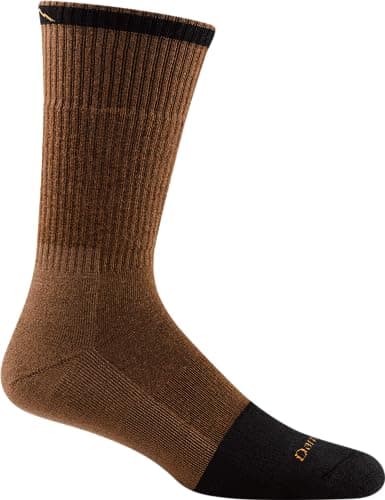 Darn Tough Steely Boot Midweight Cushion SockNot a boot - the reinforced-toe sock that resolves many sore-toenail cases. | Fixing a fit symptom cheaply | 7.2 |
#ad Prices pulled from Amazon and stamped as of October 6, 2026; they change, and we show no number we cannot verify. How we are funded.
Fit-first pick · A boot whose fit geometry solves problems
KEEN Utility Pittsburgh 6" Steel Toe Waterproof
Asymmetrical caps and a wide last - the fit-first recommendation.
Shaped left-and-right rather than as a symmetrical dome, so the toe box follows the shape of a foot. Since a safety cap is rigid and cannot be stretched, cap geometry is a permanent property and worth prioritizing at purchase.
There is also enough internal depth for a support insole, which matters if you need one. Note it runs large - size down a half - which is itself a reminder that brand sizing is not standardized.
Specs that matter
- Toe:
- Asymmetrical steel toe, ASTM F2413
- Height:
- 6 inch
- Waterproof:
- Yes, KEEN.DRY membrane
- Build:
- Goodyear welt
Our scoring
- Toe box shape
- 9.6
- Width options
- 8.0
- Insole room
- 9.4
- Heel hold
- 8.4
- Value
- 7.6
What works
- Left and right specific toe caps, so the toe box is shaped like a foot
- Welted, so it can be resoled
- The go-to recommendation for wide feet in a safety toe
What to know
- Runs large — most buyers size down a half
- Steel toe in a waterproof boot is heavy
- Toe box looks bulky if that bothers you
No. 2 · Needing a documented wide width
KEEN Utility Detroit XT Mid Steel Toe Waterproof
Stocked in a true EE, which very few safety boots are.
If a roomy D is not enough, you need a boot actually stocked in a wider width - and the EE here is a genuinely different last rather than the same boot with a looser upper. Width availability, not just width claims, is what solves this.
It also flexes from the first wear, which matters because a wide foot suffers most during break-in. Cemented, so no resoling.
Specs that matter
- Toe:
- Steel toe, ASTM F2413
- Height:
- Mid / 6 inch
- Waterproof:
- Yes
- Widths:
- D and EE
Our scoring
- Toe box shape
- 9.0
- Width options
- 9.5
- Insole room
- 8.0
- Heel hold
- 8.0
- Value
- 8.2
What works
- Actually stocked in EE wide, not just a roomy D
- Flexes out of the box rather than demanding a break-in
- Lighter than the Pittsburgh at the same protection
What to know
- Cement construction — no resoling
- Softer upper creases and scuffs quickly
- Less ankle support than a true 8-inch boot
No. 3 · Fixing a fit symptom cheaply
Darn Tough Steely Boot Midweight Cushion Sock
Not a boot - the reinforced-toe sock that resolves many sore-toenail cases.
Included because a great many fit complaints are solved at the sock rather than the boot. A reinforced cushioned toe box pads the exact point where toes meet a rigid safety cap, which is the usual cause of sore and discoloured toenails.
It also changes boot fit - a thicker sock takes up volume - so always fit boots in the socks you actually work in. Merino, with a lifetime guarantee.
Specs that matter
- Fiber:
- Merino wool blend
- Cushion:
- Midweight, full cushion
- Toe:
- Reinforced for safety-toe boots
- Guarantee:
- Unconditional lifetime
Our scoring
- Toe box shape
- 7.0
- Width options
- 7.0
- Insole room
- 6.0
- Heel hold
- 8.0
- Value
- 8.0
What works
- Full-cushion toe box is the fix for a safety toe rubbing your toenails
- Merino regulates temperature and resists odor
- Lifetime guarantee makes the price rational over years
What to know
- Most expensive sock here per pair
- Midweight is too warm for genuine summer heat
- Merino needs gentler washing than synthetics
Why a safety toe changes everything
This is the single most important thing on the page. In an ordinary boot, a toe pressing against the upper pushes the leather and the leather gives a little. Under a steel or composite cap there is no give at all - whatever clearance exists when you buy the boot is all the clearance it will ever have.
Two consequences. Length errors become painful rather than merely imperfect: if the boot is short, or if it is loose enough that your foot slides forward with each step, your toes strike the underside of a rigid cap repeatedly, and that is how toenails go black. And a pinching cap cannot be stretched - a cobbler can stretch a leather upper but nobody can reshape a composite cap, which is why cap geometry should be a purchase priority: boots for wide feet.
How width letters actually work
US widths run roughly B (narrow), D (standard men's), EE or 2E (wide), EEEE or 4E (extra wide). The thing most people do not know: a width letter is a proportion of length, not an absolute measurement. A D at size 13 is physically wider than a D at size 8.
That explains a common trap. Buying a longer boot does make it wider - and it also makes it too long, which under a safety cap means your toes slide forward and strike the cap. Sizing up is never a width fix. Buy the correct length in a wider width, and if your size is not stocked in a wide, change brands rather than lengths.
Diagnosing common symptoms
| Symptom | Likely cause | Fix |
|---|---|---|
| Bruised or black toenails | Boot too short, or too loose so the foot slides | Correct length; heel-lock lacing; reinforced-toe socks |
| Blisters at the heel | Heel slip - the heel pocket is too wide or the boot too long | Heel-lock lacing, a volume-filling insole, or a narrower last |
| Numbness across the forefoot | Too narrow, or laced too tight over the instep | A wider width, or ease the lower lacing |
| Pain across the top of the foot | Lacing pressure or a high instep in a low-volume boot | Skip an eyelet pair, or a higher-volume boot |
| Arch aching | Lack of support, not a sizing error | A support insole: insoles for flat feet |
| Toes cramped by evening only | Normal swelling plus a borderline fit | Fit later in the day; more toe room |
If your symptom is not in that table, why work boots hurt maps the rest - and if a boot is simply uncomfortable after a genuine break-in period, it is not going to improve: how to break in work boots explains how to tell the difference.
Frequently asked
How should work boots fit?
Snug at the heel and instep with almost no heel lift, and roomy at the toes with about a thumb's width ahead of your longest toe. The widest part of your foot should sit at the widest part of the boot. Measure standing, late in the day, in your work socks.
Should work boots be tight or loose?
Snug where the boot holds your foot - heel and instep - and roomy where your foot needs space, at the toes. If you have to lace painfully tight to stop heel slip, the boot is too large or too wide for you; the fix is a different boot, not more tension.
Should I size up in work boots for thick socks?
Fit the boots wearing the socks you actually work in rather than sizing up blind. A thick padded sock can take up half a size of volume, so the right approach is to bring them to the fitting - including any aftermarket insole you plan to use.
Can work boots be stretched if they are too narrow?
The leather upper can be stretched a little by a cobbler. A safety toe cap cannot - it is rigid steel or composite and will not change shape. So if the pinch is at the cap, stretching will not help and you need a boot with a different cap geometry.
Why do my work boots feel tight by the end of the day?
Feet swell measurably over a working day, more so in heat and on hard floors. That is normal - the fix is to fit boots late in the day with your work socks on, and to favor toe room over a snug fit when you are between sizes.
Sources
Back to Guides, or see how we pick. Spotted something wrong? We publish corrections — see our editorial policy.