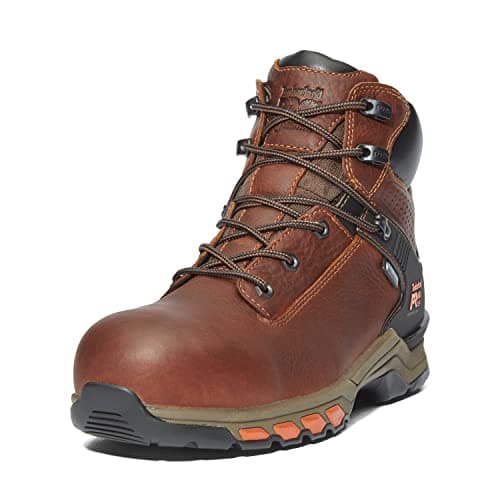
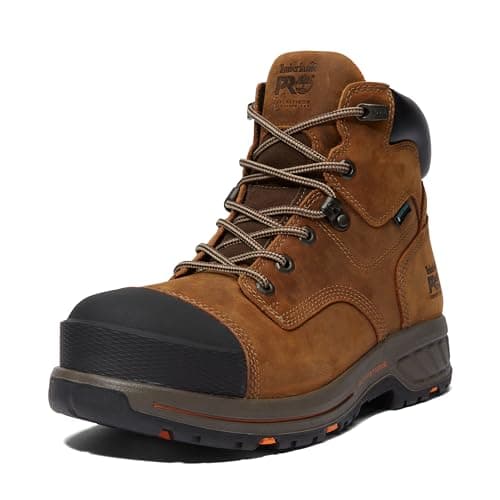
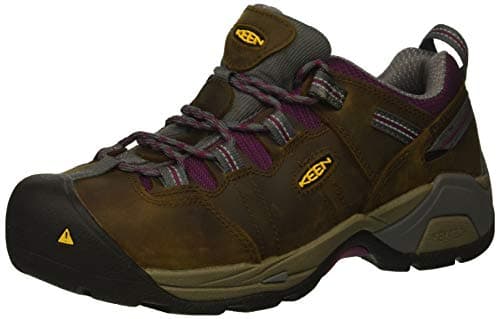
Best lightweight boots
Best Lightweight Work Boots
Weight is the cost you pay every step. Sometimes it buys protection you need; often it does not.
There is a persistent belief in the trades that a heavier boot is a safer boot, and it is mostly wrong. The protection in a safety boot is concentrated in specific components: the toe cap, and if present the puncture plate and metatarsal guard. Everything else contributing to the weight - thick leather, a membrane, a heavy lugged outsole, an 8-inch shaft - contributes to durability and conditions performance, not to the ASTM rating.
The arithmetic, since it is the whole argument
A heavy industrial boot and a light athletic safety boot can differ by a pound or more per pair. Somebody walking eight miles a shift takes roughly sixteen thousand steps, each of which lifts that weight. That is not a marketing claim; it is why people who switch describe the change in terms that sound overblown and are not. The effect is largest for the people covered by boots for warehouse work and boots for standing all day.
Weight also sits at the end of a long lever - your leg - so it costs more than the same weight carried on your torso. This is the same reason cyclists care about wheel weight more than frame weight.
Quick picks
Ranked by our published scoring rubric. Tap any row for the full write-up.
| # | Product | Best for | Score | Price |
|---|---|---|---|---|
| 1 | 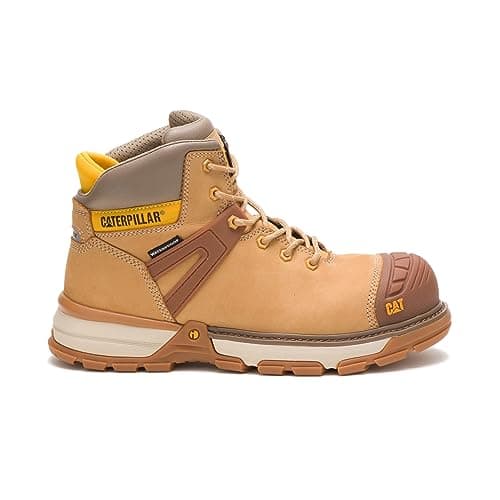 Caterpillar Excavator Superlite Waterproof Composite ToeCarbon composite toe, waterproof, and genuinely light - at a low price. | The lightest waterproof safety boot here | 8.7 | |
| 2 | 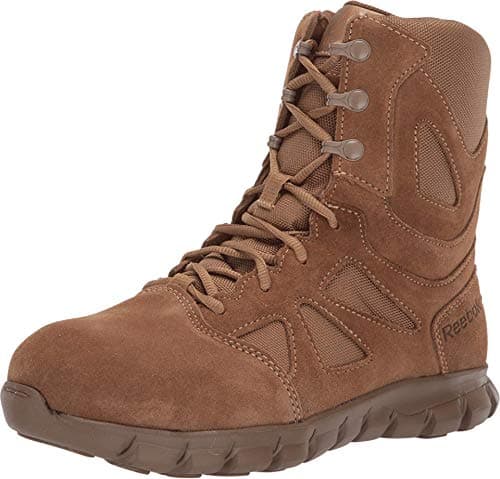 Reebok Work Sublite Cushion 8" Safety Toe Side-ZipAthletic-shoe construction with a safety toe and an 8-inch shaft. | Walking miles on hard floors | 8.5 | |
| 3 | 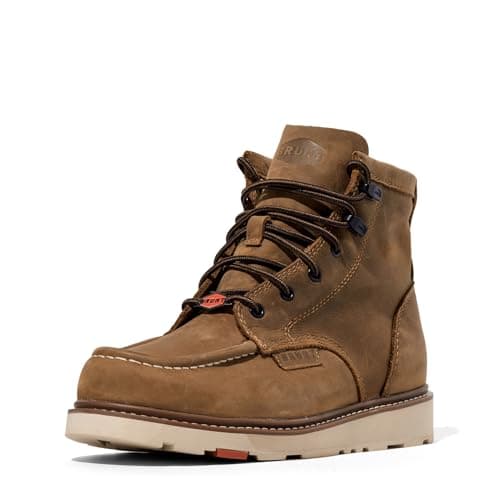 BRUNT Marin Composite Toe WedgeLight because it is unlined - which also makes it the most breathable here. | An unlined light wedge | 8.4 | |
| 4 | 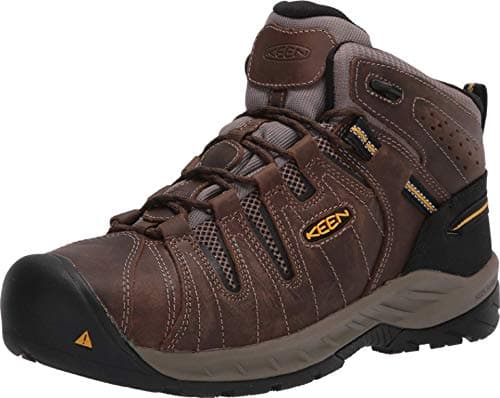 KEEN Utility Flint II Mid Steel ToeOne of the lighter steel-toe boots made, unlined and roomy. | Light with a wide toe box | 8.3 |
#ad Prices pulled from Amazon and stamped as of October 6, 2026; they change, and we show no number we cannot verify. How we are funded.
Top pick · The lightest waterproof safety boot here
Caterpillar Excavator Superlite Waterproof Composite Toe
Carbon composite toe, waterproof, and genuinely light - at a low price.
A deliberately light build around a carbon composite cap, with waterproofing included, at a price below most heavier boots. For anyone whose complaint is simply that safety boots are heavy, this is the straightest answer available.
Light construction means a thinner outsole that wears sooner and less protection underfoot. On clean sites that is a fine trade; on debris-strewn ground it is not.
Specs that matter
- Toe:
- Carbon composite toe, ASTM F2413
- Height:
- 6 inch
- Waterproof:
- Yes
- Weight:
- Lightweight construction
Our scoring
- Low weight
- 9.4
- Protection retained
- 7.6
- Comfort
- 8.4
- Durability
- 7.0
- Value
- 9.2
What works
- Genuinely light for a waterproof safety boot
- Non-metallic throughout — no metal detector problems
- Cheaper than most composite-toe waterproof boots
What to know
- Light build means the outsole wears sooner
- Less underfoot protection than a heavier boot
- Not resoleable
No. 2 · Walking miles on hard floors
Reebok Work Sublite Cushion 8" Safety Toe Side-Zip
Athletic-shoe construction with a safety toe and an 8-inch shaft.
Built like a running shoe with a safety cap, which is exactly right for facility, warehouse and hospital work where mileage is the hazard rather than falling steel. The 8-inch shaft gives ankle support most light safety footwear lacks, and the side zip is a real convenience.
Textile panels will not survive chemical or abrasive work, and there is little puncture protection. A clean-environment boot.
Specs that matter
- Toe:
- Safety toe, ASTM F2413
- Height:
- 8 inch
- Closure:
- Laces plus side zipper
- Weight:
- Athletic-shoe construction
Our scoring
- Low weight
- 9.4
- Protection retained
- 6.8
- Comfort
- 9.2
- Durability
- 6.6
- Value
- 8.0
What works
- Among the lightest 8-inch safety boots sold
- Side zip means you keep the lace tension and still get out quickly
- Cushioning suited to miles of walking on hard floors
What to know
- Zipper is the obvious failure point
- Textile panels tear on rough material handling
- Little underfoot puncture protection
No. 3 · An unlined light wedge
BRUNT Marin Composite Toe Wedge
Light because it is unlined - which also makes it the most breathable here.
Most weight in a work boot is in the lining, the membrane and the midsole, not the leather. Leaving the lining out drops the weight and improves airflow at the same time, which is why unlined boots feel so different on a hot day.
Composite toe on a flat wedge, so it suits finished floors and flat sites. No water resistance at all, and a younger brand with less durability history.
Specs that matter
- Toe:
- Composite toe, ASTM F2413
- Height:
- 6 inch
- Sole:
- Flat wedge
- Weight:
- Lightweight, unlined
Our scoring
- Low weight
- 8.8
- Protection retained
- 7.4
- Comfort
- 8.6
- Durability
- 7.4
- Value
- 9.0
What works
- Composite-toe wedge at an entry-level price
- Unlined, so it breathes better than membrane boots
- Very little break-in
What to know
- Unlined means no waterproofing at all
- Young brand with a shorter durability record than the incumbents
- Wedge sole limits it on ladders and loose ground
No. 4 · Light with a wide toe box
KEEN Utility Flint II Mid Steel Toe
One of the lighter steel-toe boots made, unlined and roomy.
Steel toes are usually the heavier option, and this is the exception worth knowing about: a genuinely light unlined steel-toe boot with KEEN's wide toe box and an EH rating.
No water resistance and a low shaft with limited ankle support. For warm indoor and summer outdoor work it is an excellent light option.
Specs that matter
- Toe:
- Steel toe, ASTM F2413
- Height:
- Mid
- Waterproof:
- No — unlined for airflow
- Electrical hazard:
- EH rated
Our scoring
- Low weight
- 8.6
- Protection retained
- 7.4
- Comfort
- 8.8
- Durability
- 7.6
- Value
- 8.4
What works
- No membrane, so it genuinely breathes in summer
- One of the lighter steel-toe boots on the market
- KEEN's wide toe box without the waterproof weight penalty
What to know
- Zero water resistance beyond the leather itself
- Low shaft offers little ankle protection
- Thin stock footbed
What you genuinely give up
This matters, because a light boot is the wrong choice for some jobs and we would rather say so.
| Property | Effect of going light | Does it matter for you? |
|---|---|---|
| Upper abrasion resistance | Textile and thin leather wear through faster | Yes on demolition, rubble, material handling |
| Puncture protection | Thin midsole, often no PR plate | Yes in framing and anywhere nails are on the floor |
| Underfoot protection | You feel rebar and rock through the sole | Yes on broken ground |
| Outsole life | Less rubber to wear away | Yes if you cover high mileage on abrasive surfaces |
| Resoleability | Light boots are cemented, not welted | Yes if you want to keep them for years |
| Toe cap protection | Unchanged at the same ASTM rating | No - this does not change |
So the decision is honest and simple: if your hazards are abrasion, punctures and rough ground, buy the weight - see boots for construction. If your hazards are mileage and hard floors, the weight is a cost you are paying for nothing.
Where the weight actually goes
Useful to know when reading a spec sheet. In descending order, the heavy parts are the outsole, the shaft height and leather thickness, the midsole and any plate, the toe cap, and the lining and membrane. Which means the two highest-leverage ways to drop weight are a shorter shaft and no membrane - and both of those are decisions about conditions, not protection. Composite toe work boots covers the cap side.
What we would skip
Skip light boots if you frame, demolish, or walk on rubble. Skip textile-paneled boots around solvents and chemicals - see boots for mechanics. Skip expecting a light boot to last as long as a welted leather one; it will not, and that is the deal. And skip the inverse error too: buying a heavy boot for a warehouse job because heavy feels safer.
Frequently asked
Are lightweight work boots less safe?
Not at the toe: a light boot can carry the identical ASTM F2413 impact and compression rating. What light boots usually give up is abrasion resistance at the upper and puncture protection underfoot, so it depends on whether your job presents those hazards.
What is the lightest safety toe material?
Composite materials - carbon fiber, fiberglass and Kevlar composites - are lighter than steel at the same ASTM rating. Alloy caps sit between the two. The cap, though, is a small part of a boot's total weight; the outsole, shaft and lining matter more.
Do lighter work boots wear out faster?
Generally yes. Less rubber in the outsole, thinner uppers and cemented rather than welted construction all shorten the life. The trade is often still worth it for high-mileage indoor work, but expect to replace light boots more often.
How much weight does going lightweight actually save?
Commonly around a pound or more per pair between a heavy industrial boot and an athletic safety boot. Over sixteen thousand steps in a high-mileage shift, lifted at the end of your leg, that is a meaningful amount of additional work removed from your day.
Sources
Back to Work Boots, or see how we pick. Spotted something wrong? We publish corrections — see our editorial policy.