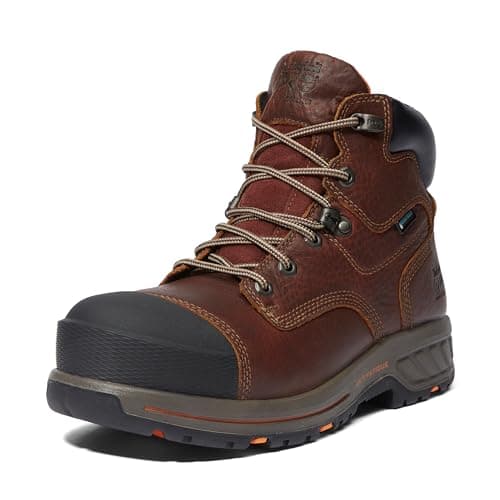
Best New Balance Industrial model
New Balance Work Boots, Model by Model
A running brand that moved sideways into safety footwear, and the width range is the reason to care. Nothing here gets resoled; several things here fit feet nobody else fits.
The short answer: buy the Calibre composite toe if you want one leather New Balance work boot with the full spec, the Allsite if your ground is wet and you walk all day, the Fresh Foam Cremorne Mid if you want the brand's cushioning for the least money, the Calibre SD-10 met guard if things land on the top of your foot or your site specifies static-dissipative soling, and the Logic if you do not need a boot at all.
New Balance is a running company that sells safety footwear, and the honest way to read this lineup is as athletic footwear with ASTM ratings added rather than as work boots with cushioning added. That is not a criticism - it is the whole reason the brand has customers in this category. If your complaint about work boots is that they are heavy, stiff, and take two weeks to stop hurting, a New Balance Industrial boot solves all three on the first morning. The cost is durability: nothing in the line is welted, most of the uppers are synthetic, and these are boots you replace rather than rebuild.
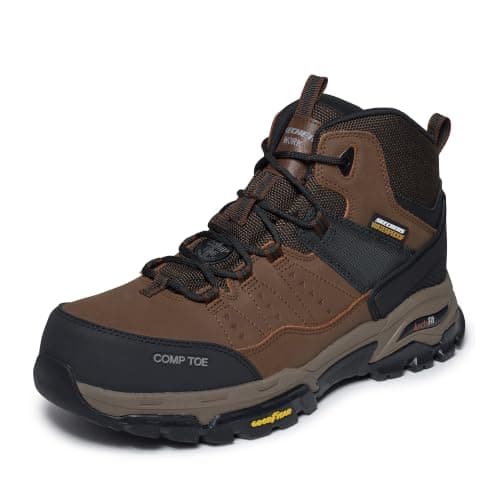
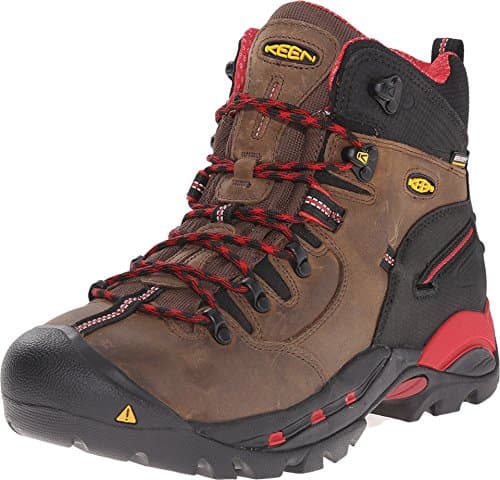
The quieter reason to shop here is fitting. New Balance built its running business on offering real widths rather than one roomy standard, and that discipline carried over - the Industrial line is sold in D, 2E and 4E across most models. If you have spent years lacing work boots loose to stop your forefoot being crushed, or sizing up a half size and then fighting heel slip, that is a width problem and no amount of cushioning fixes it. Work boots for wide feet covers the alternatives, but New Balance belongs on any list of brands that take width seriously. The honest cross-shops for this brand are Skechers work boots on comfort and KEEN Utility work boots on width plus durability.
The specs on the listings, decoded
- CT. Composite toe. A non-metallic cap - usually a resin or carbon composite - that meets the same ASTM F2413 impact and compression rating as steel while being lighter, detector-safe and far less conductive of cold. Nearly every model here is CT. Composite toe vs steel toe has the detail.
- EH. Electrical hazard. The sole and heel passed a dielectric test and give secondary protection against accidental contact with a live circuit in dry conditions. It is a backup, not insulation, and it stops working once the sole is wet or worn through.
- PR. Puncture resistant. A plate or flexible barrier in the midsole that resists something sharp coming up through the sole. This is the mark most buyers overlook and the one that prevents the most common serious foot injury on a construction site.
- SD / SD-10. Static dissipative. Soling that lets electrostatic charge bleed away in a controlled manner, specified in electronics, cleanroom-adjacent and some production environments. It is not the same as EH and the two are not interchangeable - buy the rating your site names.
- SR and HR. Slip resistant and heat resistant outsole marks. Slip resistance in US work footwear is tested under ASTM F2913; heat resistance refers to the outsole's tolerance of contact heat, not to insulation.
- Fresh Foam. New Balance's soft, high-volume midsole foam, carried over from the running line. It is the most comfortable thing in this lineup on day one and the fastest-compressing cushioning type over a year.
Quick picks
Ranked by our published scoring rubric. Tap any row for the full write-up.
| # | Product | Best for | Score | Price |
|---|---|---|---|---|
| 1 | 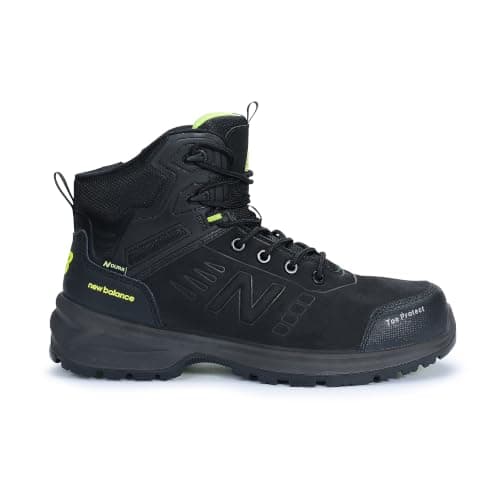 New Balance Calibre Composite ToeThe best New Balance work boot: leather upper, composite toe, EH protection and a puncture-resistant midsole. | A leather work boot with the full spec | 9.3 | |
| 2 | 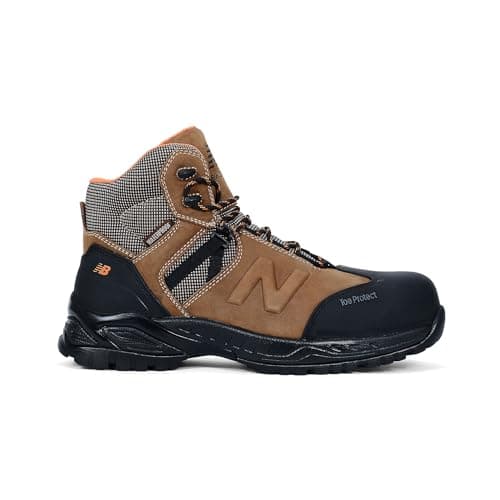 New Balance Allsite Composite Toe WaterproofThe waterproof work-hiker in the line - the New Balance to buy if your ground is wet rather than just hard. | Wet ground, long walking days | 9.3 | |
| 3 | 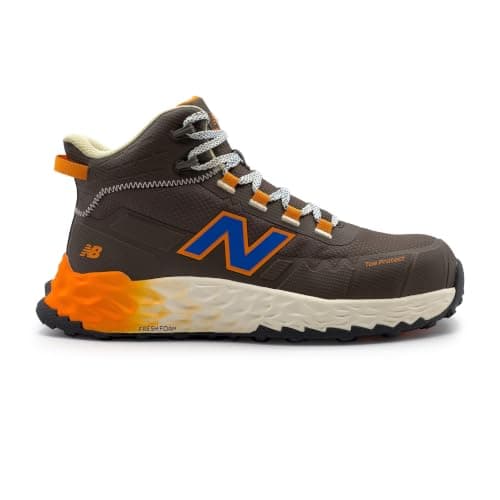 New Balance Fresh Foam Cremorne Mid Composite ToeFresh Foam under a mid-cut safety toe - the softest and cheapest boot in the line. | Cushioning on hard floors, lowest boot price | 9.2 | |
| 4 | 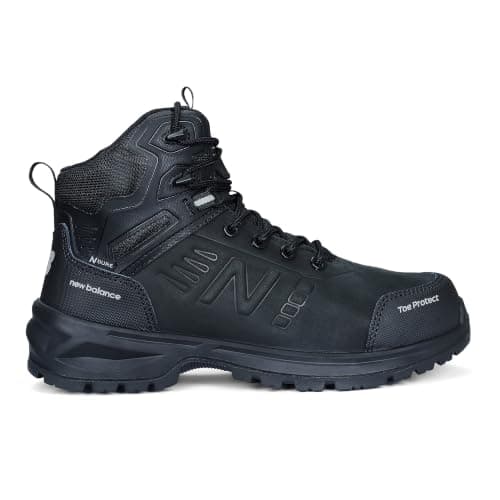 New Balance Calibre SD-10 Met Guard Composite ToeThe Calibre with a metatarsal guard and static-dissipative soling - niche, and the only model here that covers the instep. | Metatarsal hazards and static-sensitive work | 9.2 | |
| 5 | 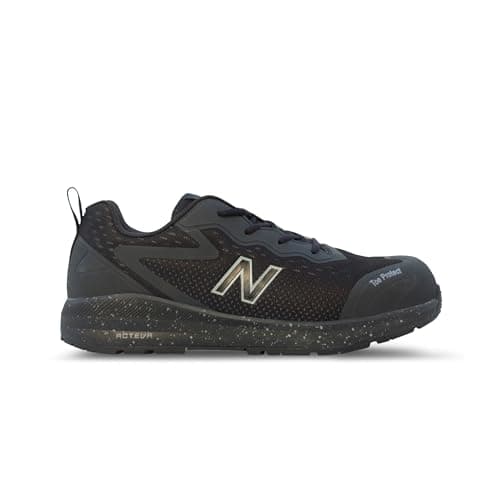 New Balance Logic Composite Toe Work ShoeNot a boot - the low-cut work shoe with the same composite toe, EH and puncture-resistant specs as the Calibre. | A rated toe with no boot at all | 9.1 |
#ad Prices pulled from Amazon and stamped as of November 14, 2026; they change, and we show no number we cannot verify. How we are funded.
Top pick · A leather work boot with the full spec
New Balance Calibre Composite Toe
The best New Balance work boot: leather upper, composite toe, EH protection and a puncture-resistant midsole.
#ad Price as of November 14, 2026. How we are funded
- Our score
- 9.3/10
Outstanding
If you want one New Balance work boot, buy the Calibre. It is the only model in the line with a leather upper rather than mesh and synthetic panels, and it carries the specification people actually need from a work boot: a composite safety toe rated to ASTM F2413, EH protection, and a puncture-resistance mark. That last one is the quiet reason to pick it over almost everything else at this price - a puncture-resistant midsole is what stops a roofing nail or a sheet-metal offcut coming up through the sole, and a toe cap does nothing about either. Non-metallic up front also means it clears metal detectors and does not conduct cold out of your toes.
The trade-offs are worth knowing up front. There is no waterproof membrane in the Calibre - New Balance puts that in the Allsite - so this is a dry-ground or lightly-damp boot, not a standing-in-water boot. It is cement-constructed, so when the outsole wears through the boot is finished; nothing in this brand's work line is resoleable. And it is priced like a leather work boot while competing against cheaper athletic builds, which means it only makes sense if you need the puncture resistance, the non-metallic toe, or the width. On that last point it is genuinely strong: this is one of the few work boots sold in real 2E and 4E lasts. See work boots for wide feet for the laced competition.
Specs that matter
- Toe:
- Composite toe, ASTM F2413 rated
- Upper:
- Leather
- Electrical hazard:
- EH rated per the listing
- Puncture resistance:
- PR marked per the listing
Rubric profile
Raw per-criterion marks out of 10, before weighting — this is the shape of the pick, not its published score. A low mark is a scope limit, not a fault: how we score.
- Comfort
- 8.2
- Durability
- 7.6
- Protection
- 8.8
- Weather
- 6.6
- Value
- 7.8
Why we picked it
- Non-metallic toe and a puncture-resistant midsole in one boot
- Leather upper rather than the mesh New Balance uses lower in the line
- Genuinely wide and extra-wide widths, which is the brand's real advantage
Good to know: Not waterproof — the membrane lives in the Allsite. Buy the Calibre for the puncture-resistant midsole and the genuine 2E/4E widths.
Best waterproof · Wet ground, long walking days
New Balance Allsite Composite Toe Waterproof
The waterproof work-hiker in the line - the New Balance to buy if your ground is wet rather than just hard.
#ad Price as of November 14, 2026. How we are funded
- Our score
- 9.3/10
Outstanding
The Allsite is the model that plays to the brand's actual strength. It is built like a hiking boot rather than a work boot: an athletic last, a cushioned midsole, a non-slip outsole and a waterproof membrane, with a composite safety toe rated to ASTM F2413 over the top. For anyone who covers ground all day - utility work, facilities, groundskeeping, meter reading, large sites where you walk more than you stand - running-shoe geometry with a waterproof lining is a genuinely good combination, and the break-in is close to zero.
Three compromises. A membrane keeps water out and heat in, so this runs warm in summer - that is the universal waterproof trade and no brand has solved it. The synthetic and mesh panels that make it light also abrade far faster than full-grain leather, so this is the wrong boot for handling rubble, scrap or rough timber. And unlike the Calibre, there is no puncture-resistant plate on this model, so if nails underfoot are your hazard the Allsite does not cover it. Stock also tends to be patchier by size than on the Calibre. Waterproof work boots ranks the whole field, and lightweight work boots covers the athletic-build competition.
Specs that matter
- Toe:
- Composite toe, ASTM F2413 rated
- Waterproof:
- Yes, per the listing
- Outsole:
- Non-slip
- Style:
- Athletic work-hiker build
Rubric profile
Raw per-criterion marks out of 10, before weighting — this is the shape of the pick, not its published score. A low mark is a scope limit, not a fault: how we score.
- Comfort
- 8.8
- Durability
- 6.8
- Protection
- 8.0
- Weather
- 8.6
- Value
- 7.8
Why we picked it
- Waterproof and non-metallic, which is the combination most sites actually want
- Running-shoe geometry means almost no break-in
- Lighter on the foot than a leather boot of the same height
Good to know: Waterproof and very light, with synthetic panels that abrade faster than leather and no puncture plate, unlike the Calibre.
Best cushioning · Cushioning on hard floors, lowest boot price
New Balance Fresh Foam Cremorne Mid Composite Toe
Fresh Foam under a mid-cut safety toe - the softest and cheapest boot in the line.
#ad Price as of November 14, 2026. How we are funded
- Our score
- 9.2/10
Outstanding
Fresh Foam is the one piece of genuine New Balance technology in this lineup, and the Cremorne Mid is where it lands in a boot. It is a soft, high-volume foam midsole of the kind the brand sells millions of in running shoes, under a mid-cut upper with a composite safety toe. The listing also carries EH, heat-resistant and slip-resistant outsole marks. For standing and walking on hard, flat, dry floors - a warehouse, a plant, a shop, a kitchen-adjacent role - this is the most immediately comfortable thing New Balance makes with a cap in it, and it is the cheapest route into the brand's boots.
The cons follow directly from the foam. Soft midsoles compress faster than firmer ones, so the cushioning you get in month one is not the cushioning you get in month twelve - and this is the pick most likely to feel flat before the upper wears out. It is not waterproof and not puncture resistant. And "Mid" is honest marketing but still worth saying out loud: this is a tall shoe rather than a boot, so it gives you very little ankle coverage and debris walks in over the collar. If cushioning on concrete is the actual problem, work boots for standing on concrete and the best insoles for concrete will both do more for you than switching boots.
Specs that matter
- Toe:
- Composite toe, ASTM F2413 rated
- Midsole:
- Fresh Foam
- Markings:
- CT / EH / HR / SR per the listing
- Height:
- Mid cut
Rubric profile
Raw per-criterion marks out of 10, before weighting — this is the shape of the pick, not its published score. A low mark is a scope limit, not a fault: how we score.
- Comfort
- 9.0
- Durability
- 6.4
- Protection
- 7.6
- Weather
- 5.8
- Value
- 8.8
Why we picked it
- Fresh Foam is the cushioning New Balance is actually known for
- Lowest price of the brand's safety-toe boots
- Heat-resistant and slip-resistant outsole marks on the listing
Good to know: The softest and cheapest boot New Balance makes, and soft foam settles fastest; not waterproof or puncture resistant.
Most protection · Metatarsal hazards and static-sensitive work
New Balance Calibre SD-10 Met Guard Composite Toe
The Calibre with a metatarsal guard and static-dissipative soling - niche, and the only model here that covers the instep.
#ad Price as of November 14, 2026. How we are funded
- Our score
- 9.2/10
Outstanding
This is the specialist. It is the leather Calibre platform with two additions: a metatarsal guard over the instep, and SD-10 static-dissipative soling. The met guard matters if anything heavy can land on the top of your foot - foundry work, steel handling, warehouse racking, anywhere pallets and bar stock move at shin height - because a toe cap protects roughly the front two inches of your foot and nothing behind it. The SD soling matters in electronics assembly, cleanroom-adjacent production and anywhere an electrostatic discharge is the hazard rather than a shock. Having both in a non-metallic-toe boot with wide and extra-wide lasts is unusual.
Three things to be clear about. SD is not EH - static-dissipative soling is designed to let charge bleed away in a controlled manner, and electrical-hazard soling is designed to resist current; they are different ratings and they are not substitutes, so buy the one your site actually specifies. A met guard adds weight and stiffness right across the instep, which some people never stop noticing. And availability is the worst in the line - sizes come and go, so check before you plan around it. Metatarsal guard work boots covers the external and internal guard options across brands.
Specs that matter
- Toe:
- Composite toe, ASTM F2413 rated
- Metatarsal:
- Met guard per the listing
- Static dissipative:
- SD-10 marked per the listing
- Outsole:
- Non-slip
Rubric profile
Raw per-criterion marks out of 10, before weighting — this is the shape of the pick, not its published score. A low mark is a scope limit, not a fault: how we score.
- Comfort
- 7.4
- Durability
- 7.8
- Protection
- 9.4
- Weather
- 6.4
- Value
- 7.4
Why we picked it
- Met guard plus a non-metallic toe is a hard combination to find
- SD soling is the right spec for electronics and clean-room adjacent work
- Same wide and extra-wide sizing as the standard Calibre
Good to know: SD soling is not the same rating as EH — buy whichever your site names. Availability by size is the patchiest in the line.
Best value · A rated toe with no boot at all
New Balance Logic Composite Toe Work Shoe
Not a boot - the low-cut work shoe with the same composite toe, EH and puncture-resistant specs as the Calibre.
#ad Price as of November 14, 2026. How we are funded
- Our score
- 9.1/10
Outstanding
The Logic is here because a lot of people searching for New Balance work boots actually want this: the full safety specification in something that weighs and feels like a sneaker. It has a composite toe rated to ASTM F2413, EH protection and a puncture-resistance mark - the same core spec as the Calibre boot above - in a low-cut athletic shoe at the bottom of the brand's price range. For a warehouse, a plant floor, a workshop, a delivery route or any indoor job where the hazard is what you drop and what you step on rather than what you walk through, that is the right amount of boot.
It is also the least boot-like thing on this page and the cons are exactly what you would guess. There is no ankle coverage at all, so debris, sparks, splashes and weather go straight in over the collar, and rolled ankles on uneven ground are entirely your problem. Mesh uppers are the first thing to fail on rough material. It is not waterproof. And it is glued, like everything else here. If a low cut is genuinely right for you, cross-shop it against the best work boots under $100 and work boots vs work shoes, which is the honest version of this decision.
Specs that matter
- Toe:
- Composite toe, ASTM F2413 rated
- Height:
- Low, shoe cut
- Electrical hazard:
- EH rated per the listing
- Puncture resistance:
- PR marked per the listing
Rubric profile
Raw per-criterion marks out of 10, before weighting — this is the shape of the pick, not its published score. A low mark is a scope limit, not a fault: how we score.
- Comfort
- 8.6
- Durability
- 6.2
- Protection
- 8.0
- Weather
- 5.0
- Value
- 8.8
Why we picked it
- Full safety spec in something that weighs like a sneaker
- Puncture-resistant midsole at the bottom of the brand's price range
- Multiple colorways including all-black for stricter dress codes
Good to know: A low-cut work shoe, not a boot — the full CT/EH/PR spec with no ankle coverage at all.
The lineup at a glance
| If your day is | Buy | Because |
|---|---|---|
| Mixed work on dry ground, nails a risk | Calibre Composite Toe | Leather upper, CT, EH and a puncture-resistant midsole |
| Walking all day on wet ground | Allsite Composite Toe Waterproof | Waterproof membrane on a light athletic work-hiker build |
| Standing on hard, dry, flat floors | Fresh Foam Cremorne Mid CT | The brand's running cushioning under a safety toe, at the lowest boot price |
| Instep hazards, or SD soling specified | Calibre SD-10 Met Guard | A metatarsal guard plus static-dissipative soling in a non-metallic boot |
| Indoor work, no ankle hazard | Logic Composite Toe Work Shoe | Same CT / EH / PR spec with no boot and the lowest price in the line |
Does New Balance actually make work boots?
Yes - the line is sold as New Balance Industrial, it has existed for years, and the models carry real ASTM F2413 ratings rather than work-styling. What trips people up is that the range is weighted toward shoes and low-cut athletic builds, so a search for New Balance work boots returns a lot of work shoes with boot-sounding names. Of the models readily available today, the Calibre is the one unambiguous leather work boot; the Allsite is a work-hiker boot; the Cremorne Mid is a mid-cut; and the Logic, Speedware and the numbered 989-series models are shoes.
The second thing to know is what the line does not do. There is no welted model, no recrafting program, no 8-inch logger, no insulated winter boot and no metatarsal option beyond the SD-10 Calibre. If you need any of those, this is the wrong brand and you should be reading winter work boots, pull-on work boots or Thorogood work boots instead. New Balance competes on comfort, weight and width, and it competes well on all three.
Sizing New Balance work boots
Order the same length you wear in New Balance running shoes - the Industrial line is built on comparable lasts and runs close to true to size. Where this brand pays off is in choosing a width rather than a length. If your measured width is 2E or 4E, buy that; do not buy a D and size up to find space, because a longer boot with a rigid safety cap lets your foot slide forward until your toenails hit the underside of the cap. That is the single most common cause of the bruised-toenail complaint and it is a fitting error rather than a defect.
Two brand-specific notes. The Fresh Foam models feel roomier when new than they will once the foam has taken a set, so judge those by heel hold rather than by how soft they feel in the first ten minutes. And on any of the composite-toe models, try your intended insole in the boot rather than fitting the boot as sold - the stock footbeds are thick enough that swapping one changes the internal volume noticeably. Work boot fit and sizing has the checks, and insole types explained covers which replacement suits which complaint.
What we would skip
Skip the Cremorne if your floors are wet or there is anything sharp underfoot - it has neither a membrane nor a plate, and the soft foam that makes it comfortable is also the component that gives up first. Skip the SD-10 met guard unless your site has specifically named static-dissipative soling or an instep hazard, because you are paying for weight and stiffness you do not need otherwise. And skip the Logic if you work outdoors or on uneven ground; a low-cut shoe is the right answer indoors and the wrong one anywhere else.
What New Balance does better than almost anyone in safety footwear is make a rated boot that does not hurt on day one and that can actually be bought in a genuine wide. What it does not do is longevity - these are glued boots with synthetic panels and soft foam, and they wear out rather than break in. If you measure a boot by how many years it lasts, buy elsewhere. If you measure it by how your feet feel at hour nine of a shift you have to work tomorrow as well, this brand earns its place.
Frequently asked
Does New Balance make work boots?
Yes - the New Balance Industrial line includes ASTM F2413 rated safety footwear, and the Calibre is its leather work boot. Be aware that much of the line is work shoes and low-cut athletic builds sold under boot-sounding names, so check the height on the listing before you order.
Which New Balance work boot is best?
The Calibre composite toe for most buyers - a leather upper with a non-metallic ASTM F2413 toe, EH protection and a puncture-resistant midsole, in genuine wide and extra-wide widths. If your ground is wet and you cover distance, the waterproof Allsite is the better pick.
Are New Balance work boots waterproof?
Only the Allsite in this list. The Calibre, the Cremorne Mid and the Logic have no waterproof membrane. New Balance does not fit a membrane across the line, so read the specific listing rather than assuming it from the brand.
Are New Balance work boots good for wide feet?
This is the brand's strongest argument. Most of the Industrial line is sold in D, 2E and 4E, which is far more width choice than typical work boot brands offer. If you have been lacing boots loose or sizing up to find forefoot room, a real 2E or 4E last will fix the problem that a bigger boot does not.
Can New Balance work boots be resoled?
No. The whole line is cement-constructed - the outsole is bonded rather than stitched to a welt - so when the tread wears through the boot is finished. Price these as replaceable boots rather than rebuildable ones.
What is the difference between EH and SD on a New Balance boot?
EH soling resists current and gives secondary protection against accidental contact with a live circuit in dry conditions. SD soling does the opposite job: it lets electrostatic charge bleed away in a controlled manner so it does not discharge into sensitive equipment. They are different ratings and they are not substitutes, so buy the one your site specifies.
Are New Balance work boots OSHA compliant?
OSHA does not approve or certify footwear; under 1910.136 it requires protective footwear where there is a foot hazard, and the recognized US standard is ASTM F2413. The New Balance Industrial models on this page carry ASTM F2413 toe ratings, so they meet a safety-toe requirement - but check your employer's specific spec, because site rules often name additional marks such as EH, PR, SD or MT.
How long do New Balance work boots last?
Less than a leather welted boot and about the same as other athletic-build safety footwear - judge it by the midsole and the outsole rather than the upper. Once the tread is smooth at the heel strike or the foam no longer feels supportive, the protection is gone even if the boot looks fine. The Fresh Foam models soften fastest.
Our recommendation
If you read nothing else on this page, these are the two to look at — the one we would buy, and the one to take instead if its trade-off suits you better.
Top pick · A leather work boot with the full spec
New Balance Calibre Composite Toe
The best New Balance work boot: leather upper, composite toe, EH protection and a puncture-resistant midsole.
#ad Price as of November 14, 2026. How we are funded
Runner-up · Wet ground, long walking days
New Balance Allsite Composite Toe Waterproof
The waterproof work-hiker in the line - the New Balance to buy if your ground is wet rather than just hard.
#ad Price as of November 14, 2026. How we are funded
Prices are read live from Amazon and stamped with the date. How we pick.
Sources
Back to Work Boots, or see how we pick. Spotted something wrong? We publish corrections — see our editorial policy.