Boots vs shoes
Work Boots vs Work Shoes
The question is not ankle support. It is whether debris gets in and whether the ground is level.
This comparison is usually framed around ankle support, and that is the least important factor in it. The genuine differences are about what gets into your footwear, how much weight you lift with every step, and how hot you are - and those have clearer answers than the support question does.
The ankle-support question, honestly
A laced boot shaft does restrict ankle motion, and restricted motion means less opportunity to roll an ankle - so there is a real mechanism. But the effect is modest, and it comes with a cost: reduced range of motion, which matters on ladders and uneven ground where you need your ankle to articulate.
It is worth noting that the research on high-top versus low-cut footwear and ankle injury in sport has been equivocal for decades. The honest summary is that a shaft helps somewhat on uneven ground and is not the decisive factor people treat it as. Which is why this page does not rank it first.
What the shaft actually does for you
- Keeps debris out. This is the real benefit. Gravel, mulch, grain, hot spatter, mud and snow all get into a low shoe and stay there. On loose ground that is constant - see boots for farming and boots for welding.
- Keeps water out higher up. A 6-inch boot is waterproof to six inches; a shoe to two. Waterproof vs water resistant.
- Protects the ankle and lower leg from abrasion and strikes - relevant in brush, demolition and around machinery.
- Allows tighter lacing control, which matters for climbing and pole work: boots for linemen.
Head to head
Ranked by our published scoring rubric. Tap any row for the full write-up.
| # | Product | Best for | Score | Price |
|---|---|---|---|---|
| 1 | 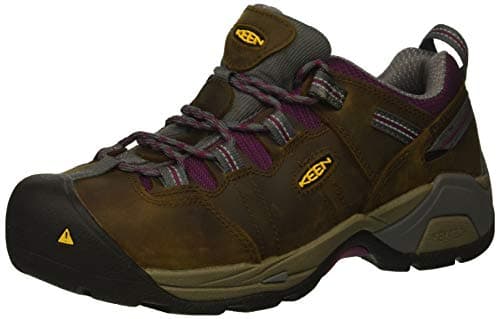 KEEN Utility Women's Detroit XT Low Steel Toe WaterproofWinner on flat floors: waterproof safety protection with no shaft weight. | Flat indoor work where a boot is more than you need | 7.8 | |
| 2 | 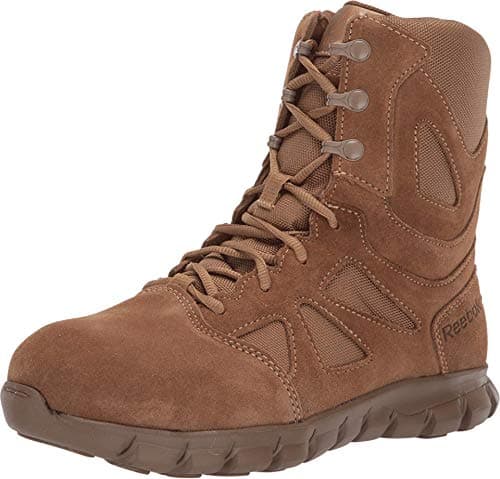 Reebok Work Sublite Cushion 8" Safety Toe Side-ZipWinner for most people: an 8-inch shaft at athletic-shoe weight. | The middle ground - a light boot | 8.4 | |
| 3 | 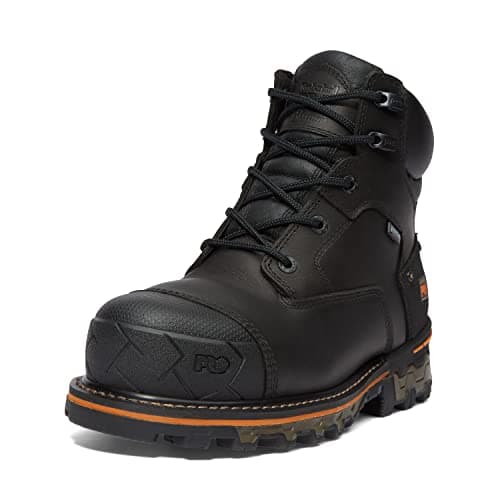 Timberland PRO Boondock 6" Composite Toe WaterproofWinner outdoors: a boot where the height and stiffness genuinely protect you. | When the shaft is doing real work | 8.0 |
#ad Prices pulled from Amazon and stamped as of October 6, 2026; they change, and we show no number we cannot verify. How we are funded.
Winner for flat floors · Flat indoor work where a boot is more than you need
KEEN Utility Women's Detroit XT Low Steel Toe Waterproof
Winner on flat floors: waterproof safety protection with no shaft weight.
On a flat sealed floor there is nothing for an 8-inch shaft to protect you from, and the weight and heat of it are a daily cost for no benefit. A safety-rated work shoe gives you the toe cap and the slip-resistant outsole and leaves the rest out.
This one is waterproof with KEEN's wide toe box, which is genuinely scarce in women's safety footwear. No ankle support whatsoever, and the low cut lets debris in - both fine indoors, both disqualifying outdoors.
Specs that matter
- Toe:
- Steel toe, ASTM F2413
- Height:
- Low / shoe cut
- Waterproof:
- Yes
- Toe box:
- KEEN wide fit
Our scoring
- Low weight
- 9.2
- Keeps debris out
- 3.0
- Ankle support
- 2.5
- Breathability
- 7.0
- Value
- 8.2
What works
- Wide toe box in a women's safety shoe is hard to find elsewhere
- Light and flexible out of the box
- Waterproof despite the low cut
What to know
- No ankle support at all
- Low cut lets debris in
- Membrane in a low shoe runs warm
The practical answer · The middle ground - a light boot
Reebok Work Sublite Cushion 8" Safety Toe Side-Zip
Winner for most people: an 8-inch shaft at athletic-shoe weight.
The honest answer for most of this comparison. The reason people want shoes is weight, and the reason they want boots is debris and support - and an athletic-construction 8-inch safety boot gives you the shaft at close to shoe weight.
The side zip means you keep the lace tension and still get out quickly. Textile panels will not survive chemical or abrasive work, and underfoot protection is limited.
Specs that matter
- Toe:
- Safety toe, ASTM F2413
- Height:
- 8 inch
- Closure:
- Laces plus side zipper
- Weight:
- Athletic-shoe construction
Our scoring
- Low weight
- 9.0
- Keeps debris out
- 8.6
- Ankle support
- 7.6
- Breathability
- 7.4
- Value
- 8.0
What works
- Among the lightest 8-inch safety boots sold
- Side zip means you keep the lace tension and still get out quickly
- Cushioning suited to miles of walking on hard floors
What to know
- Zipper is the obvious failure point
- Textile panels tear on rough material handling
- Little underfoot puncture protection
No. 3 · When the shaft is doing real work
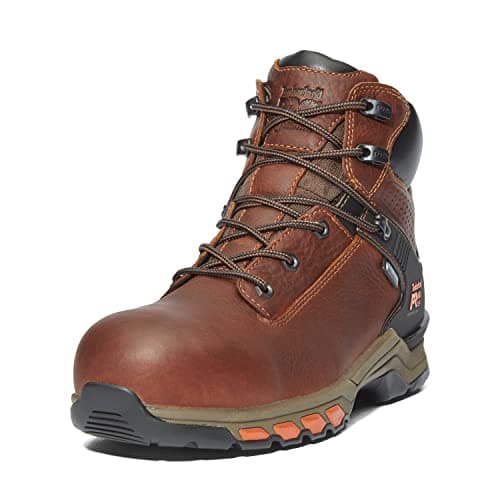
Timberland PRO Boondock 6" Composite Toe Waterproof
Winner outdoors: a boot where the height and stiffness genuinely protect you.
On broken ground, in trenches, around demolition debris and in mud, the shaft stops what you walk through from getting into your boot, and the stiffness stops what is on the floor from reaching your foot. Neither is theoretical on those surfaces.
It is heavy, stiff and hot - and on a flat indoor floor all of that is pure cost. This is the right boot for the environment it is built for and the wrong one everywhere else.
Specs that matter
- Toe:
- Composite toe, ASTM F2413
- Height:
- 6 inch
- Waterproof:
- Yes, membrane lined
- Sole:
- Aggressive lug, slip and oil resisting
Our scoring
- Low weight
- 5.5
- Keeps debris out
- 9.2
- Ankle support
- 8.6
- Breathability
- 5.5
- Value
- 7.8
What works
- Composite toe is non-metallic, so it clears metal detectors and conducts less cold
- Waterproof membrane plus a gusseted tongue genuinely keeps water out
- Outsole bites on broken ground where a wedge slides
What to know
- Heavy and stiff — a hard boot to stand on concrete in all day
- Long break-in; the outsole stays rigid for weeks
- Lug pattern tracks mud indoors
What a shoe gives you
Weight, coolness and freedom of movement. Over a high-mileage shift the weight difference is real - the arithmetic is on lightweight work boots - and in heat, less material around your ankle genuinely helps: boots for hot weather.
Safety-rated work shoes carry the same ASTM toe protection as boots, so you are not giving up the toe cap. What you give up is height, which is a debris and water question rather than a protection one.
Decide by ground, not job title
| Your ground | Choose | Why |
|---|---|---|
| Flat sealed concrete, indoors | Shoe or low boot | Nothing for a shaft to keep out; weight is the cost |
| Warehouse, plant, hospital, facility | Shoe or light boot | Mileage dominates: warehouse boots |
| Mixed site, some outdoors | 6-inch boot | Reasonable compromise |
| Broken ground, trenches, demolition | 8-inch boot | Debris and underfoot hazards are constant |
| Mud, grain, brush, spatter | 8-inch or taller pull-on | Height is the specification |
| Ladders and poles daily | Laced boot, 8 inch | Lacing control and heel breast both matter |
The verdict, plainly
Flat indoor floors: a safety work shoe or a low boot - the shaft is weight you are carrying for nothing. Outdoors, loose ground, debris, water: a boot, and the taller the messier your ground. Not sure, or mixed: a light 6-to-8-inch boot, which is why athletic-construction safety boots have taken over so much of this category.
Frequently asked
Are work boots or work shoes better?
It depends on your ground rather than your trade. On flat sealed floors a safety shoe gives the same toe protection with less weight and heat. On loose ground, in trenches or around debris, a boot's shaft keeps out what you walk through - which is its main real benefit.
Do work boots actually support your ankles?
Somewhat. A laced shaft restricts ankle motion, which reduces the opportunity to roll it, but the effect is modest and it costs range of motion. The research on high-top versus low-cut footwear and ankle injury has long been equivocal, so it should not be the deciding factor.
Are safety shoes as protective as safety boots?
At the toe, yes - safety-rated work shoes carry the same ASTM F2413 toe ratings. What you give up is shaft height, which protects against debris, water and lower-leg strikes rather than against crush injury.
How tall should work boots be?
Six inches covers most mixed work. Go to eight inches for loose fill, trenches and demolition debris, or taller pull-ons for mud, grain, brush and welding spatter. Below six inches, you are choosing a shoe, which is fine on flat floors.
Sources
Back to Comparisons, or see how we pick. Spotted something wrong? We publish corrections — see our editorial policy.